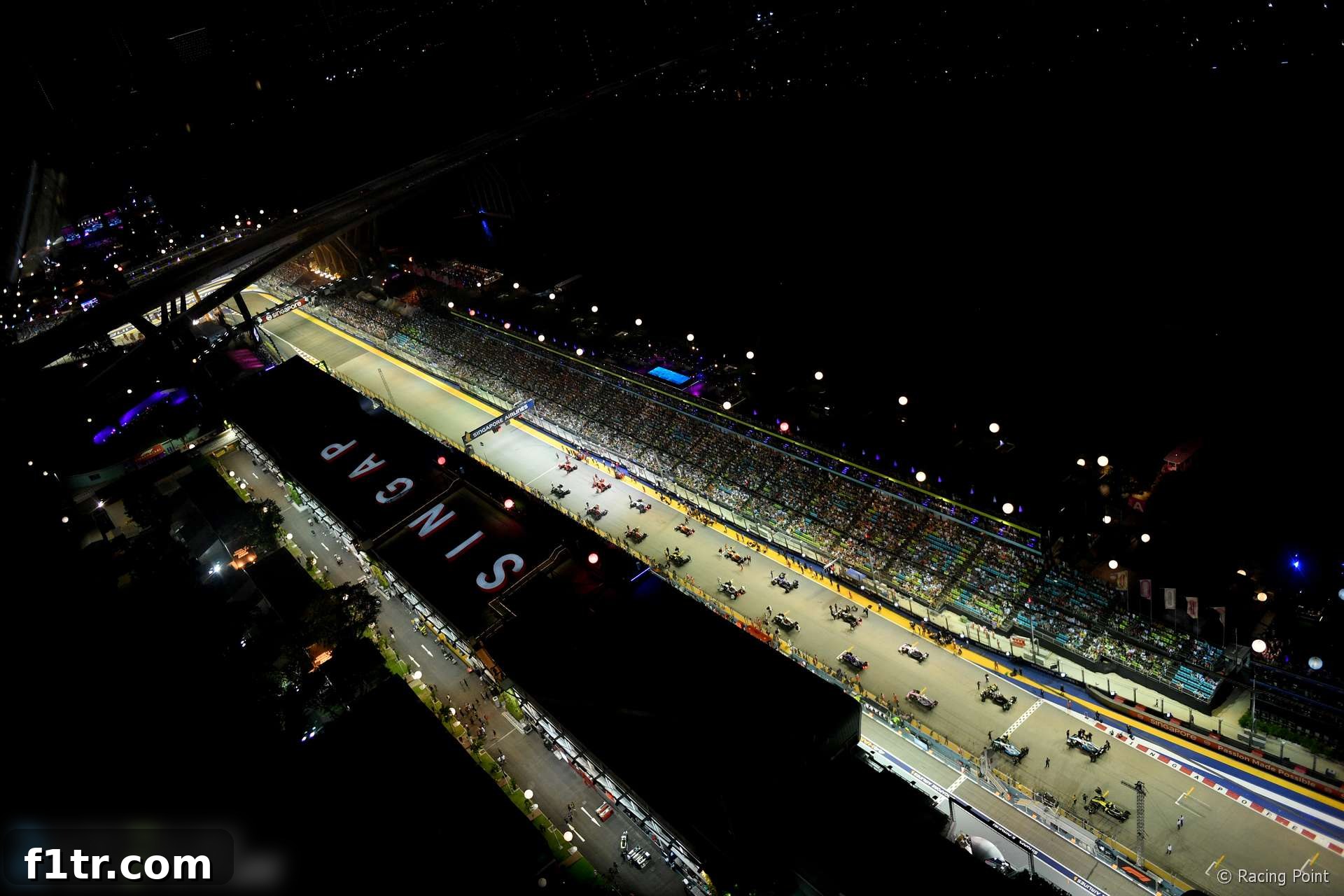
The 2020 Formula 1 season has been profoundly reshaped by the global health crisis, leading to the cancellation of three prominent Grand Prix events: Azerbaijan, Suzuka, and Singapore. These decisions underscore the immense challenges faced by international sports organizers in navigating widespread travel restrictions, public health concerns, and complex logistical hurdles. The loss of these highly anticipated races has significantly altered the F1 calendar, forcing series organizers to adapt with unprecedented flexibility to salvage a championship season.
The cancellations represent a major blow to the Formula 1 calendar, particularly as the sport attempted to re-establish a semblance of normalcy. While a revised European-focused schedule has been painstakingly crafted, the absence of these iconic “flyaway” races highlights the ongoing difficulties. The Singapore Grand Prix, a spectacular night race known for its unique street circuit and dazzling urban backdrop, would have been the first event of the year outside of Europe, marking a critical transition in the original calendar plan. Its absence leaves a significant void, both geographically and in terms of spectacle.
The organizers of the Singapore Grand Prix released a statement detailing the insurmountable obstacles they faced. “We regret to announce that we will be unable to proceed with the race due to the prohibitions imposed on access and construction of the event venue required for a street race to be held in the city,” their statement read. The intricate nature of setting up a street circuit, which typically involves months of preparation, road closures, and extensive infrastructure development, proved incompatible with the restrictive measures in place. Essential construction work, which would normally commence in May, could not begin, rendering it impossible to prepare the circuit in time.
Beyond the physical construction, the promoters cited “ongoing mass gathering and worldwide travel restrictions” as further challenges. These measures, implemented by the Singapore Government and various authorities, were crucial for prioritizing public safety and managing the spread of the COVID-19 pandemic. Colin Sym, Deputy Chairman of the Singapore Grand Prix, acknowledged the difficulty of the decision. “Ultimately, the health and safety of our contractors and their workers, spectators, Formula 1 crew, staff and volunteer marshals is our number one priority,” he affirmed. The cancellation, while disappointing for fans and organizers alike, underscores a collective commitment to public health during these extraordinary times. Despite the setback, the Singapore organizers expressed optimism for the future, looking forward to welcoming fans back for the next season.
The Azerbaijan Grand Prix, held on the thrilling Baku City Circuit, also fell victim to the pandemic’s relentless grip. Promoters announced the cancellation of what would have been the fifth running of their race, citing “the continuing uncertainty caused by the global coronavirus pandemic.” This decision followed extensive consultations with the Government of the Azerbaijan Republic, Formula One World Championship Ltd, and the Federation Internationale de l’Automobile (FIA). Initially postponed in March, all avenues were explored to stage the event safely and responsibly, prioritizing the health of all participants while still aiming to deliver an exciting spectacle for fans worldwide. However, it became clear that such an undertaking was no longer feasible within the current timeframe.
Baku quickly established itself as a fan-favorite since its debut in 2016, offering a unique blend of incredibly high-speed sections and tight, technical turns through the city’s historic core. The challenges of hosting a street race in such an environment are complex even under normal circumstances, and the added layer of pandemic-related restrictions proved insurmountable. The cancellation is a significant loss for the region, which has embraced Formula 1 with enthusiasm, and for the championship, which loses one of its most unpredictable and exciting venues. The decision reflects a pragmatic approach, acknowledging that under the prevailing global conditions, ensuring the integrity and safety of such a large-scale international event was not possible.
Further east, the Japanese Grand Prix at Suzuka Circuit also faced an unfortunate cancellation. This particular decision carries historical weight, as it marks the first time since 1986 that there will be no Japanese Grand Prix on the Formula 1 calendar. Suzuka is revered among drivers and fans alike for its challenging, flowing layout and passionate spectators. Its figure-of-eight design and iconic corners like the Esses and 130R have cemented its status as one of motorsport’s greatest tracks. The cancellation is a testament to the severity of the pandemic’s impact, as even a race with such deep roots and global appeal could not be immune.
The logistical complexities of bringing the F1 circus to Japan, coupled with ongoing travel restrictions and health protocols, made staging the event untenable. Japan had been particularly stringent with its border controls and health measures, which, while effective in managing the pandemic domestically, posed significant hurdles for large international sporting events. For Honda, the Japanese engine supplier to Red Bull Racing and AlphaTauri, the cancellation of their home race is also a disappointment, depriving them of a crucial opportunity to perform in front of their local supporters and executives. The absence of Suzuka highlights the global reach of Formula 1 and how deeply interconnected the calendar is with diverse international regulations and health situations.
In response to these and earlier cancellations, Formula 1 has been compelled to construct a radically revised calendar, primarily focusing on European venues to minimize travel and create a more controlled environment. The initial eight-race European schedule has seen multiple double-headers at circuits like Austria’s Red Bull Ring and Silverstone in the UK, a strategy designed to maximize racing opportunities while minimizing logistical risks. To potentially fill some of the gaps left by the canceled flyaway races, F1 is understood to be considering new or returning circuits within Europe. Options include a race at Italy’s Mugello circuit, a venue with rich motorsport heritage and a home track for Ferrari, potentially celebrating the Scuderia’s 1000th Grand Prix. Another possibility being explored is a second event at the Sochi Autodrom in Russia, leveraging existing infrastructure and avoiding extensive new travel arrangements.
The dynamic and ever-evolving nature of the 2020 F1 calendar has been a defining characteristic of the season. From initial postponements to outright cancellations, the sport has demonstrated remarkable agility in adapting to a global crisis. The focus remains on delivering a competitive and safe championship, even if it means sacrificing traditional venues for temporary solutions. The challenges posed by the pandemic have forced F1 to rethink its operational model, emphasizing flexibility, collaboration with host nations, and an unwavering commitment to health and safety protocols for all personnel involved, from drivers and team staff to marshals and medical teams.
The cancellations of the Azerbaijan, Suzuka, and Singapore Grands Prix serve as stark reminders of the profound and far-reaching impact of the global pandemic on even the most globally entrenched sports like Formula 1. While the immediate disappointment for fans and organizers is palpable, these decisions underscore a responsible prioritization of health and safety. The sport’s ability to navigate these unprecedented challenges, adapt its calendar, and explore innovative solutions for racing during a global crisis is a testament to its resilience and determination to deliver thrilling motorsport action to its dedicated fanbase, eagerly looking forward to a stronger return to these beloved circuits in future seasons.
The table below provides a comprehensive overview of how the original 2020 F1 calendar has been dramatically altered by the pandemic, detailing cancellations, postponements, and rescheduled events as of the latest updates.
How the Original 2020 F1 Calendar Has Changed
| Round | Event | Dates | Notes |
|---|---|---|---|
| Cancelled, will not be rescheduled | |||
| Cancelled, seeking replacement date | |||
| Cancelled, seeking replacement date | |||
| Cancelled, seeking replacement date | |||
| Cancelled, will not be rescheduled | |||
| 6 | Spanish Grand Prix | Moved to Aug 14-16 | |
| Cancelled, will not be rescheduled | |||
| Cancelled, will not be rescheduled | |||
| Cancelled, seeking replacement date | |||
| Cancelled, will not be rescheduled | |||
| 11 | Austrian Grand Prix | Jul 3-5 | Confirmed, will also hold second event on Jul 10-12 |
| 12 | British Grand Prix | Moved to Jul 31 – Aug 2, holding second race on Aug 7-9 | |
| 13 | Hungarian Grand Prix | Moved to Jul 17-19 | |
| 14 | Belgian Grand Prix | Aug 28-30 | Confirmed |
| 15 | Italian Grand Prix | Sep 4-6 | Confirmed |
| Cancelled, will not be rescheduled | |||
| 17 | Russian Grand Prix | Sep 25-27 | To be confirmed |
| Cancelled, will not be rescheduled | |||
| 19 | United States Grand Prix | Oct 23-25 | To be confirmed |
| 20 | Mexican Grand Prix | Oct 30-Nov 1 | To be confirmed |
| 21 | Brazilian Grand Prix | Nov 13-15 | To be confirmed |
| 22 | Abu Dhabi Grand Prix | Nov 27-29 | To be confirmed |
Go ad-free for just £1 per month>> Find out more and sign up
More on the 2020 F1 season
- Grosjean to make F1 test return tomorrow for first time since Bahrain horror crash
- Pictures: Wrecked chassis from Grosjean’s Bahrain fireball crash to go on display
- Bottas vs Rosberg: Hamilton’s Mercedes team mates compared after 78 races each
- F1 revenues fell by $877 million in Covid-struck 2020 season
- Hamilton and Mercedes finally announce new deal for 2021 season
Browse all 2020 F1 season articles