Formula One, a sport renowned for its high-octane drama and strategic brilliance, often provides fans with an intimate look into the decision-making process through live team radio communications. However, a recent incident during the Chinese Grand Prix has ignited a significant debate, with Scuderia Ferrari formally lodging a complaint with Formula One Management (FOM) over its handling of Lewis Hamilton’s radio messages. The Italian team expressed profound dissatisfaction, arguing that the selective editing created a misleading impression of a crucial on-track strategic maneuver.
Advertisement | Become a Supporter & Go Ad-Free
Ferrari’s Outcry: Frederic Vasseur Calls FOM’s Radio Edit a “Joke”
At the heart of the controversy is Ferrari team principal Frederic Vasseur, who reportedly did not mince words, describing FOM’s editing of Hamilton’s in-race communications as nothing short of a “joke.” This strong reaction underscores the perceived severity of the issue within the Maranello-based squad. For a sport that prides itself on transparency and real-time insight, any suggestion of manipulation or misrepresentation of critical team exchanges can significantly undermine trust and public perception. The incident quickly became a talking point, raising questions about the editorial process behind the global F1 television feed.
FOM is responsible for monitoring an immense volume of live radio communications from every driver throughout a Grand Prix weekend. While subscribers to F1 TV often have access to a more comprehensive feed, allowing them to tune into individual driver channels and hear the majority, if not all, of their radio exchanges, the world television feed operates differently. This globally broadcast feed presents a carefully curated and edited selection of these messages, intended to enhance the viewing experience by highlighting key strategic moments, dramatic exchanges, or significant driver insights. It is this selective editing process that Ferrari has now challenged.
The Misleading Narrative: Hamilton’s Role in the Car Swap
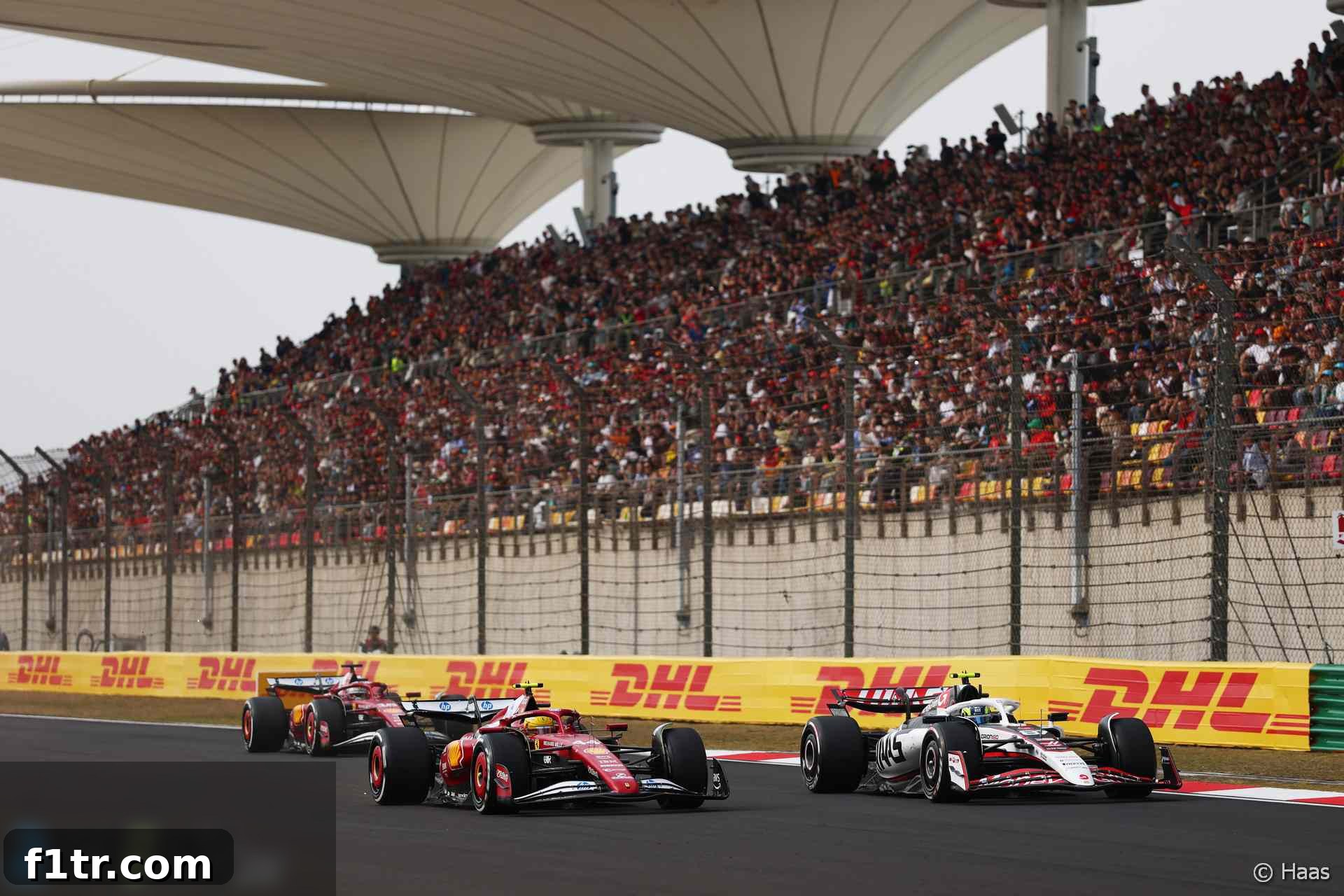
Vasseur’s primary grievance centered on the selection of Hamilton’s messages, which he felt gave a fundamentally misleading impression of the British driver’s role in a pivotal position swap between the two Ferrari cars during lap 21 of the Chinese Grand Prix. Such team orders and strategic adjustments are common in Formula One, particularly when drivers are on different tire strategies or experiencing varying levels of performance. The clarity and context surrounding these decisions are vital for both the team’s internal dynamics and the public’s understanding.
The sequence of events, according to Ferrari, began on lap 18. It was then that Lewis Hamilton, recognizing his struggles with tire degradation or overall pace, proactively suggested the cars swap places. He communicated this clearly to his race engineer, Riccardo Adami, stating: “I think I’m going to let Charles go, because I’m struggling.” This message was a direct, self-initiated proposal from the driver to optimize the team’s overall race performance by allowing his faster teammate, Charles Leclerc, to move ahead. Crucially, this significant communication, which initiated the strategic change, was not played on the world television feed.
Instead, the first radio message indicating Ferrari were considering a change of order to appear on the global broadcast was delayed, only being shown on lap 20. This clip, however, was a fragment from the previous lap (lap 19). In this broadcasted segment, Adami was heard instructing Hamilton, “we are swapping cars turn 14,” to which Hamilton replied, “When he’s closer, yeah.” While accurate in isolation, the timing and context of this clip, without the preceding message from Hamilton, painted a very different picture for millions of viewers worldwide.
From Ferrari’s perspective, the choice of radio messages by FOM deliberately overlooked Hamilton’s instrumental and proactive role in initiating the team orders. This selective omission, they argued, could lead fans to believe that Hamilton was either reluctantly complying with a direct team instruction or even hesitant about the swap, rather than being the catalyst for the strategic decision. Such a misrepresentation can have subtle yet significant implications for a driver’s public image and the perception of team cohesion.
Advertisement | Become a RaceFans Supporter andGo Ad-Free
FOM’s Defense: An Unintentional Oversight Amidst Race Dynamics
In response to Ferrari’s complaint, an FOM spokesperson provided an explanation to RaceFans, asserting that the omission had not been done deliberately. “There was absolutely no intention of presenting a misleading narrative regarding the Ferrari team radio,” the spokesperson stated. They further elaborated, explaining that, “Due to other situations developing during the race the message from Lewis was not played but this was not intentional.”
This explanation sheds light on the immense logistical and editorial challenges faced by FOM during a live Formula One Grand Prix. With 20 drivers on track, multiple team radio channels buzzing simultaneously, and countless on-track battles and strategic developments unfolding in real-time, the task of selecting the most relevant and impactful communications for a global audience is monumental. The discussions at Ferrari regarding Hamilton’s radio coincided with other significant developments elsewhere on the track, such as Lando Norris making a crucial pass on George Russell following their respective pit stops. Such concurrent events force FOM’s editorial team to make rapid-fire decisions on what to prioritize for broadcast, potentially leading to the unintentional omission of important contextual information.
While FOM’s explanation highlights the pressures of live broadcasting, it also brings to the fore the delicate balance between delivering an exciting, concise narrative and ensuring factual accuracy and complete context. For teams like Ferrari, where every public statement and broadcast snippet is scrutinized, the potential for even unintentional misrepresentation can be a source of frustration and concern.
The Significance of F1 Radio: Transparency, Strategy, and Fan Engagement
Radio messages in Formula One are far more than mere technical communications; they are the audible pulse of the race. They offer fans unparalleled insight into the complex world of F1 strategy, driver emotions, and the real-time problem-solving that defines the sport. From frantic calls for pit stops to calm, collected instructions, and even moments of raw frustration or jubilation, these snippets bridge the gap between the high-tech machinery and the human element of racing.
The decision to broadcast, or not broadcast, certain messages can significantly shape a fan’s perception of a driver, a team’s strategy, and even the unfolding drama of a race. When done well, they enhance understanding and engagement. When perceived as misleading, they can breed cynicism and questions about the sport’s integrity. This incident with Ferrari and Hamilton’s radio messages underscores the immense power and responsibility that FOM holds in curating this crucial aspect of the F1 broadcast. It highlights the fine line between editorial judgment for entertainment value and the imperative to accurately reflect on-track events and team dynamics.
The incident also serves as a reminder of the differing experiences for F1 viewers. Those with access to F1 TV Pro can often listen to raw, unedited radio feeds from individual drivers, providing a comprehensive, albeit sometimes overwhelming, stream of information. The world feed, by contrast, is designed for a broader audience, aiming to distill the most impactful moments into a coherent and entertaining narrative. The challenge for FOM is to ensure that this distillation process does not inadvertently distort or misrepresent key moments, particularly when they pertain to critical team decisions and driver input.
Enhancing the Fan Experience: The Path Forward
This latest controversy prompts a broader discussion about how Formula One can continue to balance the need for compelling live television with absolute fidelity to the events unfolding on track. As the sport continues to grow its global audience, the demand for transparent and accurate coverage will only intensify. Ensuring that key strategic communications are presented with full context, even if it requires slightly longer segments or brief on-screen explanations, could be a path to mitigating future complaints.
One possible consideration for FOM could be the implementation of clearer guidelines for radio message selection, particularly for team orders or significant strategic shifts. Providing a brief introductory or concluding remark from commentators about the sequence of events, especially when a broadcasted message might appear out of its original context, could also help prevent misinterpretations. Ultimately, the goal is to maintain the drama and excitement that F1 radio delivers, while upholding the highest standards of journalistic integrity in sports broadcasting.
The dialogue between Ferrari and FOM, while sparked by a specific incident, serves as a vital feedback mechanism for the sport’s broadcasting practices. It reinforces the notion that every detail matters in Formula One, not just on the track, but also in how the narrative is presented to millions of passionate fans around the globe. This ongoing discussion is crucial for ensuring that the sport continues to evolve, delivering an experience that is both thrilling and authentically representative of the incredible complexities of Formula One racing.
- Hamilton and Leclerc’s full radio messages during their position swap in China
Go Ad-Free for Just £1 per Month>> Find Out More and Sign Up
Stay Connected: Never Miss an Update from RaceFans
Receive a daily email with all our latest stories – and nothing else. No marketing, no ads. Sign up here:
More from the Chinese Grand Prix
- Norris names China and Canada as biggest missed opportunities this year
- Red Bull reassure Verstappen over ‘when we’ll have a winning car again’ in meeting
- Mercedes explain impact of Antonelli’s floor damage on his Chinese GP performance
- “I gave a lot of lap time away in that first stint”: Verstappen’s full Chinese GP radio
- Stats: Chinese Grand Prix saw most disqualifications in an F1 race for 21 years
Browse all Chinese Grand Prix articles