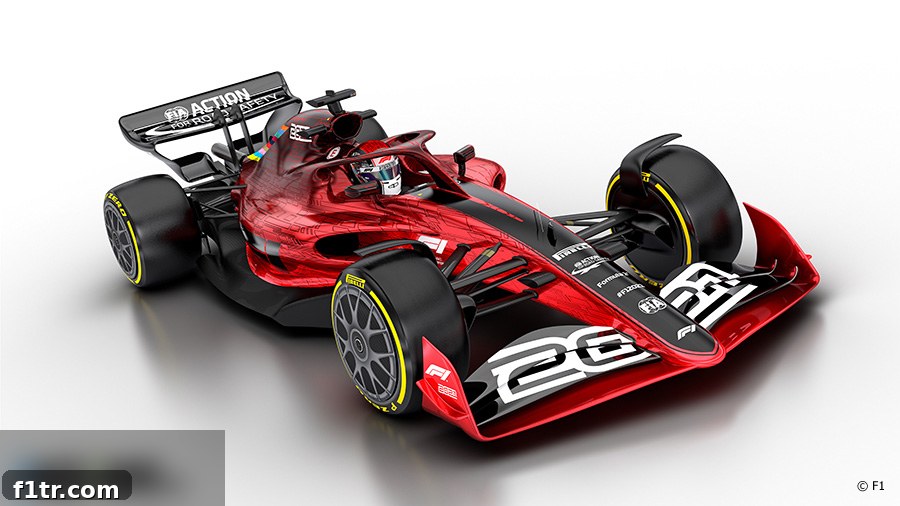
Formula 1 Delays Landmark 2021 Regulations Amidst COVID-19 Crisis
The world of Formula 1 is navigating uncharted territory, with the sport’s governing bodies and teams currently engaged in critical discussions regarding the postponement of its groundbreaking 2021 technical and financial regulations. This significant decision comes in response to the widespread disruption and financial strain imposed by the global Coronavirus pandemic, which has brought the motorsport calendar to a standstill and presented an unprecedented challenge to its future planning.
Originally envisioned as a transformative overhaul for the sport, the 2021 rule package was years in the making. It promised radical changes to car design, specifically engineered to foster closer racing and enhance overtaking opportunities, thereby improving the spectacle for fans worldwide. Beyond the aerodynamic and mechanical innovations, the new framework also included crucial financial regulations, most notably a stringent budget cap. This spending limit was designed to level the playing field, making Formula 1 more affordable for smaller teams and curbing the colossal expenditures of the sport’s dominant giants, ultimately aiming for a more competitive and sustainable ecosystem.
The Vision Behind F1’s Ambitious 2021 Reforms
The comprehensive reforms planned for the 2021 Formula 1 season were a cornerstone of commercial rights holder Liberty Media’s long-term strategy for the sport. Since acquiring F1 in 2017, Liberty Media, in collaboration with the FIA (Fédération Internationale de l’Automobile) and the ten competing teams, has been committed to enhancing Formula 1’s appeal. Their vision centered on three key pillars: making the sport more affordable for participants, increasing overall competitiveness on track, and consequently boosting its global popularity and fan engagement.
The technical regulations aimed to reduce the aerodynamic impact of a car on the one following it, a primary factor contributing to the difficulty of overtaking in modern F1. Simplified front wings, revised bargeboards, and new underbody aerodynamics were all meticulously designed to allow cars to race more closely without losing significant performance. The aesthetic aspect was also a consideration, with designs promising sleeker, more futuristic-looking machinery. These changes were not mere tweaks but a fundamental reimagining of what an F1 car could be, intended to deliver edge-of-the-seat racing and elevate the driver’s skill as the paramount differentiator.
Equally revolutionary were the financial regulations. For the first time in Formula 1 history, a strict budget cap was set to be introduced, limiting how much teams could spend over a season. This measure was a direct response to the escalating costs that threatened the viability of smaller, independent teams and created a significant performance gap between the lavishly funded outfits and their less affluent rivals. By imposing a financial ceiling, the sport aimed to encourage innovation within tighter constraints, reward efficiency, and ensure that a greater number of teams could genuinely compete for podiums and victories, moving away from a predictable top-heavy hierarchy.
These transformative proposals had undergone extensive debate, refinement, and negotiation over several years, finally receiving unanimous agreement and official ratification in October 2019. The stage was set for a new era of Formula 1, brimming with optimism and the promise of a revitalized spectacle.
COVID-19: An Unprecedented Halt to Progress
However, the global emergence and rapid spread of the Coronavirus (COVID-19) pandemic in early 2020 threw these meticulously laid plans into disarray. The pandemic triggered a cascade of unprecedented challenges, forcing the immediate cancellation or postponement of major sporting events worldwide, and Formula 1 was no exception. The initial four races of the 2020 season – the Australian Grand Prix, the Bahrain Grand Prix, the Vietnam Grand Prix, and the Chinese Grand Prix – were swiftly called off, marking a dramatic and unforeseen halt to the start of the championship.
This disruption extended far beyond the race calendar. International travel restrictions, nationwide lockdowns, and health safety protocols severely impacted team operations. Factories were forced to shut down, development work on existing and future cars ground to a halt, and vital revenue streams from race fees, sponsorship deals, and broadcasting rights evaporated. For many teams, particularly those with smaller budgets, the sudden loss of income coupled with ongoing operational costs created an immediate and severe financial crisis. The focus shifted from developing next-generation machinery to simply ensuring the survival of their current operations and workforce.
Under such volatile and uncertain circumstances, the feasibility of designing, developing, and manufacturing entirely new cars conforming to the complex 2021 regulations became an insurmountable task. Teams lacked the financial resources, the operational capacity, and the critical development time required to meet the original deadlines. The very nature of the sport, which relies on intricate global logistics, international travel, and close-knit team collaboration, made it particularly vulnerable to the pandemic’s widespread impact.
The Deliberation: A Collective Call for Stability
In light of this extraordinary situation, urgent discussions were convened between Formula 1 management, the FIA, and all ten competing teams. The central agenda point: whether to delay the introduction of the new rules package. This decision, while seemingly straightforward in its necessity, demanded careful consideration of a multitude of factors, balancing the long-term vision with immediate survival.
Ferrari team principal Mattia Binotto eloquently articulated the complexity of the situation in an interview with the official F1 website. He emphasized the need for a collaborative and responsible approach, stating, “We must carefully evaluate every aspect and see if it is not really the case to think about possibly postponing the introduction of the new 2021 technical rules. In any case, Ferrari is ready to take responsibility for a choice that must be made in the ultimate interest of this sport, it is certainly not the time for selfishness and tactics.” Binotto’s remarks underscored a rare moment of unity and shared purpose within the often fiercely competitive paddock, where the collective health of the sport outweighed individual team advantages.
The consensus among teams quickly leaned towards postponement. Proceeding with the original 2021 timeline would have placed immense financial strain on all constructors, potentially leading to bankruptcies for some and creating an even wider performance gap as only the wealthiest teams could afford to develop two distinct car generations (2020 and 2021 spec) simultaneously under such duress. Delaying the rules offered a vital lifeline, allowing teams to utilize their existing 2020 chassis for an additional season, thereby significantly cutting development costs and providing much-needed breathing room during an economically challenging period.
Implications of the Postponement
The decision to postpone the 2021 regulations, now widely anticipated to be pushed back to 2022, carries significant implications for the sport. On one hand, it represents a necessary pragmatic step to safeguard the immediate future and financial stability of Formula 1. By deferring the considerable investment required for a complete car redesign, teams can focus their resources on weathering the current economic storm, protecting jobs, and ensuring their continued participation in the championship.
This extension of the current car generation means that the technical regulations effectively remain frozen for an additional year, providing stability and reducing development costs. While this might temper the excitement of an entirely new era, it prioritizes economic resilience over immediate innovation. It allows the sport to regroup, assess the long-term economic fallout of the pandemic, and then re-launch its ambitious reforms when conditions are more stable and equitable for all participants.
On the other hand, the postponement delays Liberty Media’s strategic roadmap for a more competitive and popular Formula 1. The introduction of the budget cap and the new car designs were central to revitalizing the sport and attracting new fans. Pushing these changes back means that fans will have to wait longer for the promised improvements in racing quality and competitive balance. There is also a potential risk that without new technical challenges, the current car designs could become somewhat stale, though teams will undoubtedly continue to refine and optimize their existing packages.
However, the prevailing sentiment is that this delay is a prudent and essential measure. It underscores the shared commitment of Formula 1, the FIA, and the teams to collective survival and future prosperity. The temporary pause allows for a more considered and financially sustainable transition to the new regulatory era, ensuring that when the new rules eventually arrive, they do so under circumstances that maximize their positive impact on the sport.
Formula 1’s Enduring Adaptability
Formula 1 has a rich history of adapting to change, from evolving safety standards and engine regulations to aerodynamic overhauls designed to enhance spectacle. This latest decision to delay its landmark rule changes is another testament to the sport’s enduring adaptability in the face of unforeseen global challenges. It reflects a mature understanding that while innovation and progress are vital, the immediate health and viability of the participating entities must take precedence during times of crisis.
The current period of uncertainty is undoubtedly challenging, with further disruptions to the 2020 racing calendar still expected. However, by acting decisively and collaboratively to postpone the 2021 regulations, Formula 1 is taking a critical step towards securing its long-term future. This strategic deferral is not a retreat but a tactical regrouping, ensuring that when the new era of Formula 1 eventually dawns, it does so on a foundation of greater stability, equity, and resilience, ultimately delivering the thrilling, competitive racing experience fans worldwide eagerly anticipate.