Jeddah Corniche Circuit: Drivers Demand Urgent Safety Revisions After Mick Schumacher’s High-Speed Crash
The high-octane world of Formula 1 was gripped by concern following a harrowing crash involving Haas driver Mick Schumacher during qualifying for the Saudi Arabian Grand Prix. Schumacher miraculously emerged unharmed from the colossal shunt at Turn 10, a testament to modern F1 car safety. However, the incident has reignited urgent calls from a host of prominent drivers for substantial safety improvements at the lightning-fast Jeddah Corniche Circuit, a track rapidly gaining a reputation for its breathtaking speed and unforgiving nature.
The Perilous Nature of Jeddah: High Stakes and High Speeds
The Jeddah Corniche Circuit, a temporary street circuit snaking along the Red Sea coast, stands as the second-fastest track on the Formula 1 calendar. Its unique blend of blistering straights and high-speed, blind corners creates an unparalleled adrenaline rush for drivers and spectators alike. Yet, this very thrill comes with a profound downside: minimal run-off areas and barriers positioned perilously close to the track in numerous sections. This inherent design philosophy means that any misjudgment or technical failure carries potentially severe consequences, a fact underscored dramatically by Schumacher’s crash.
Mick Schumacher’s Impact: A Stark Reminder of Risk
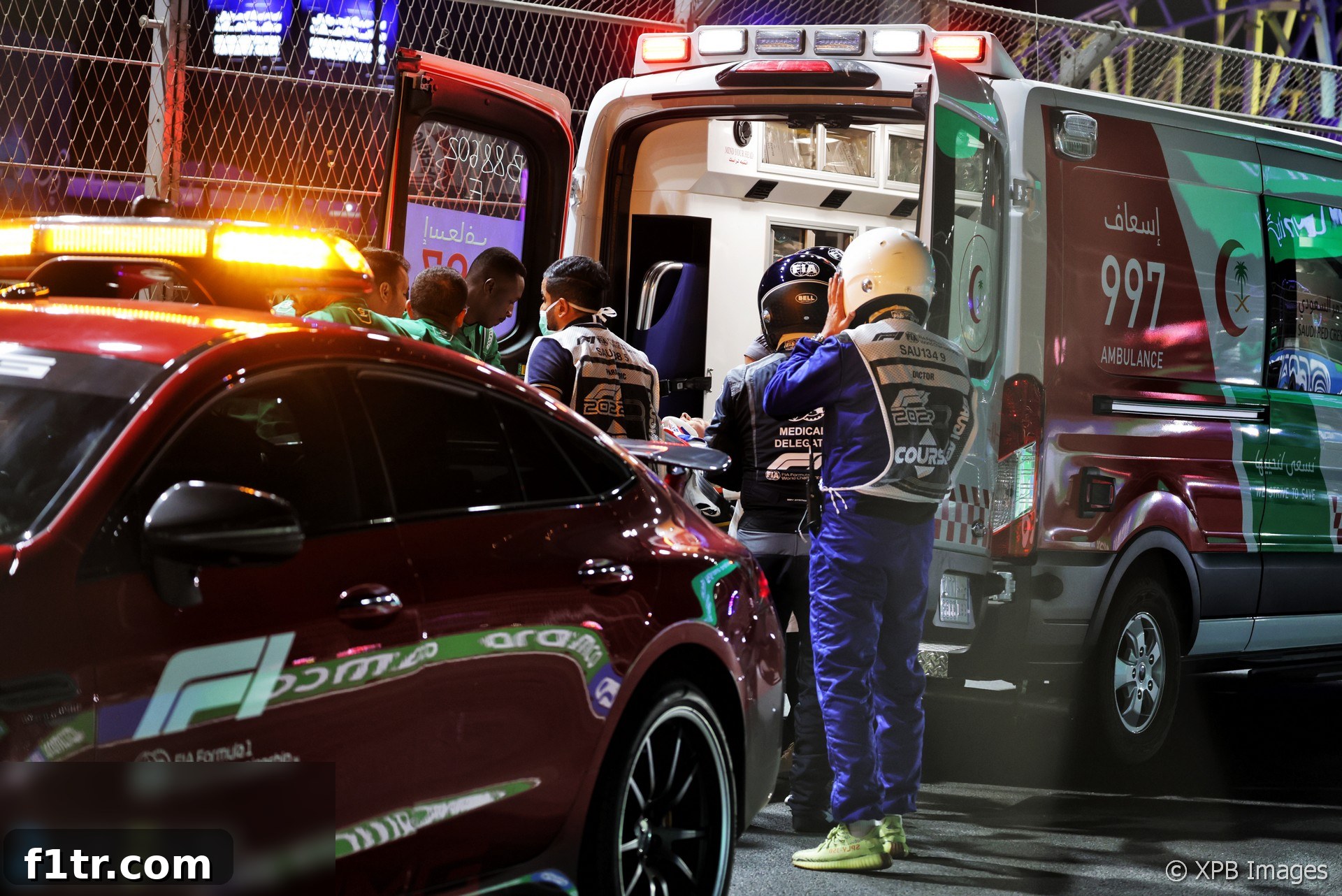
On Saturday, during the intense qualifying session, Mick Schumacher lost control of his Haas VF-22 at the challenging Turn 10, impacting the concrete barrier with tremendous force. The car was extensively damaged, and while Schumacher was cleared of serious injury, his participation in the rest of the race weekend was immediately ruled out. The severity of the crash, occurring at such high speed, served as a chilling reminder of the fine line between triumph and tragedy in motorsport, prompting immediate and widespread discussion among his fellow competitors about the circuit’s fundamental safety.
Drivers’ Unified Call: Balancing Thrill with Uncompromising Safety
The incident acted as a catalyst, prompting a chorus of F1 drivers to voice their concerns and collectively demand action. While acknowledging the unique challenge and excitement Jeddah presents, their primary focus remains on driver welfare and the necessity for a circuit design that mitigates, rather than amplifies, risk.
Charles Leclerc: The Challenge vs. The Imperative of Safety
Charles Leclerc, who secured a front-row start for today’s race, eloquently articulated the dilemma many drivers face. He confessed to enjoying the demanding nature of the circuit, particularly the thrill of a qualifying lap where the car feels “amazing.” However, he was quick to pivot to the more critical aspect of safety. “It is a very challenging place, it is one of the reasons why I like this track. But I still believe that there are things that we can do to improve some places,” Leclerc stated, emphasizing that “safety comes first.” He specifically highlighted the first sector as “extremely high speed” and “very tricky,” suggesting that modifications in these areas are crucial for the future.
Carlos Sainz Jnr: Questioning the Worth of Extreme Risk
Leclerc’s Ferrari teammate, Carlos Sainz Jnr, admitted to being “a bit in two minds” about the circuit’s inherent risks. He openly acknowledged the “adrenaline rush” that a qualifying lap at Jeddah provides, yet juxtaposed this excitement with a sobering assessment: “But at the same time, you know that here, if you crash, it probably hurts a bit more than in any other place in the calendar because the walls are closer and the speed is higher.” Sainz delved deeper into the philosophical question of whether the pursuit of excitement justifies such extreme dangers, even with the advancements in car safety.
The new generation of F1 cars introduced this year boasts significantly stronger crash structures, providing an unprecedented level of cockpit protection. Sainz reflected on this, noting, “When you see an accident like Mick’s gives us a bit the tranquillity that even at those speeds, the car is protecting you because the FIA has done a great job in giving us very safe cockpits.” However, this reassurance was tempered by a deeper concern: “But at the same time, is it really worth it? Having that huge accident when you can maybe hopefully push the walls a bit more further out and gives us a bit more space to slow down the car if we lose it like Mick lost it today. It’s a discussion that we need to have because it’s probably a bit on the limit. It’s exciting for Formula 1, it’s exciting for us, but it’s also on the limit.” His words underscore the critical debate between pushing the boundaries of performance and maintaining an acceptable threshold for driver safety.
Sergio Perez and Lando Norris: Pinpointing Critical Danger Zones
Pole-winner Sergio Perez did not mince words, describing Jeddah as “definitely the most dangerous place in the calendar.” While acknowledging the circuit’s demands on drivers, cars, and teams, he openly questioned the safety of specific sections. Perez singled out Turns 22 and 23 as “really high-speed sections” requiring urgent attention. Similarly, Lando Norris has been vocal in his call for immediate changes, particularly at Turn 10, the very corner where Schumacher’s devastating crash occurred. The consensus among drivers is clear: while the track offers an exhilarating challenge, several specific points pose an unacceptable level of risk.
Evolving Safety Standards vs. Static Circuit Design
The dialogue surrounding Jeddah’s safety extends beyond driver opinions, delving into the broader context of motorsport safety evolution and the practicalities of track modification.
The Paradox of Modern F1 Car Safety on a Hazardous Track
Formula 1 has consistently led the way in motorsport safety innovation. The introduction of the Halo device, highly advanced carbon fibre chassis, sophisticated HANS devices, and rigorous crash testing has transformed driver protection. These advancements are precisely why drivers like Mick Schumacher can walk away from impacts that would have been catastrophic in previous eras. However, the juxtaposition of these incredibly safe cars with circuits like Jeddah, characterised by unforgiving close walls and limited run-off, creates a concerning paradox. Drivers are protected within their cockpits, but the sheer energy dissipated in high-speed impacts against unyielding barriers still carries substantial risk, not just for the driver but also for track marshals and spectators if debris becomes an issue. This raises the fundamental question of where the balance lies between car safety and track design safety.
Previous Attempts at Modification: Too Little, Too Late?
Following its inaugural race, the FIA and Formula 1 reportedly requested up to 15 modifications to the Jeddah Corniche Circuit. However, due to the tight schedule between its first and second events, not all proposed changes could be implemented. Drivers who returned for the 2022 Saudi Arabian Grand Prix described the alterations made as “tiny” and likely to make “little difference.” This sentiment suggests a disconnect between the urgency perceived by drivers and the pace of track evolution, intensifying calls for more significant, impactful changes rather than minor adjustments. The drivers’ collective experience on the circuit provides invaluable feedback that the governing bodies and circuit designers must heed.
Lessons from Formula 2: A Pattern of Concern
The safety concerns at Jeddah are not exclusive to Formula 1. The F2 support race weekend also saw a significant incident, with Formula 2 driver Cem Bolukbasi suffering a concussion in a crash at Turn 10 on Friday. This incident in a junior category further highlights a potential systemic issue with the circuit’s design at critical points. Two high-profile crashes at the same corner within 24 hours across different racing series serve as a compelling argument that the risks are inherent and not merely a result of Formula 1’s extreme speeds.
The Road Ahead for Jeddah: A Crucial Dialogue for Driver Welfare
The discussions sparked by Mick Schumacher’s crash are more than just post-race commentary; they represent a crucial ongoing dialogue about the future of track safety in Formula 1. The challenge for the FIA and circuit promoters lies in preserving the thrilling character of high-speed street circuits while ensuring uncompromising safety standards. This might necessitate a more radical redesign of certain sections, including pushing back barriers where feasible, expanding run-off areas, or even re-profiling corners to reduce their inherent risk without sacrificing the essence of the challenge.
The Future of Safety at High-Speed Street Circuits
As Formula 1 continues to expand into new territories and embrace spectacular street circuits, the lessons learned at Jeddah will be invaluable. The balance between creating visually stunning and challenging tracks versus ensuring driver safety is a constant tightrope walk. The unified voice of the drivers, combined with advancements in accident analysis and simulation, will undoubtedly drive future modifications, not just at Jeddah but across the entire calendar, to ensure that the spectacle of Formula 1 remains precisely that: a spectacle of skill, speed, and courage, but always within acceptable bounds of safety.
Further Insights from the 2022 Saudi Arabian Grand Prix
Delve deeper into the events and discussions surrounding the 2022 Saudi Arabian Grand Prix:
- Vettel will return to race for Aston Martin at Australian Grand Prix
- Mercedes “a second per lap” off Red Bull’s pace – Russell
- Transcript: How Verstappen fought Leclerc on his radio and on the track in Jeddah
- F1 intends to keep racing in Saudi Arabia despite missile attack
- Paddock Diary: 2022 Saudi Arabian Grand Prix
Browse all 2022 Saudi Arabian Grand Prix articles