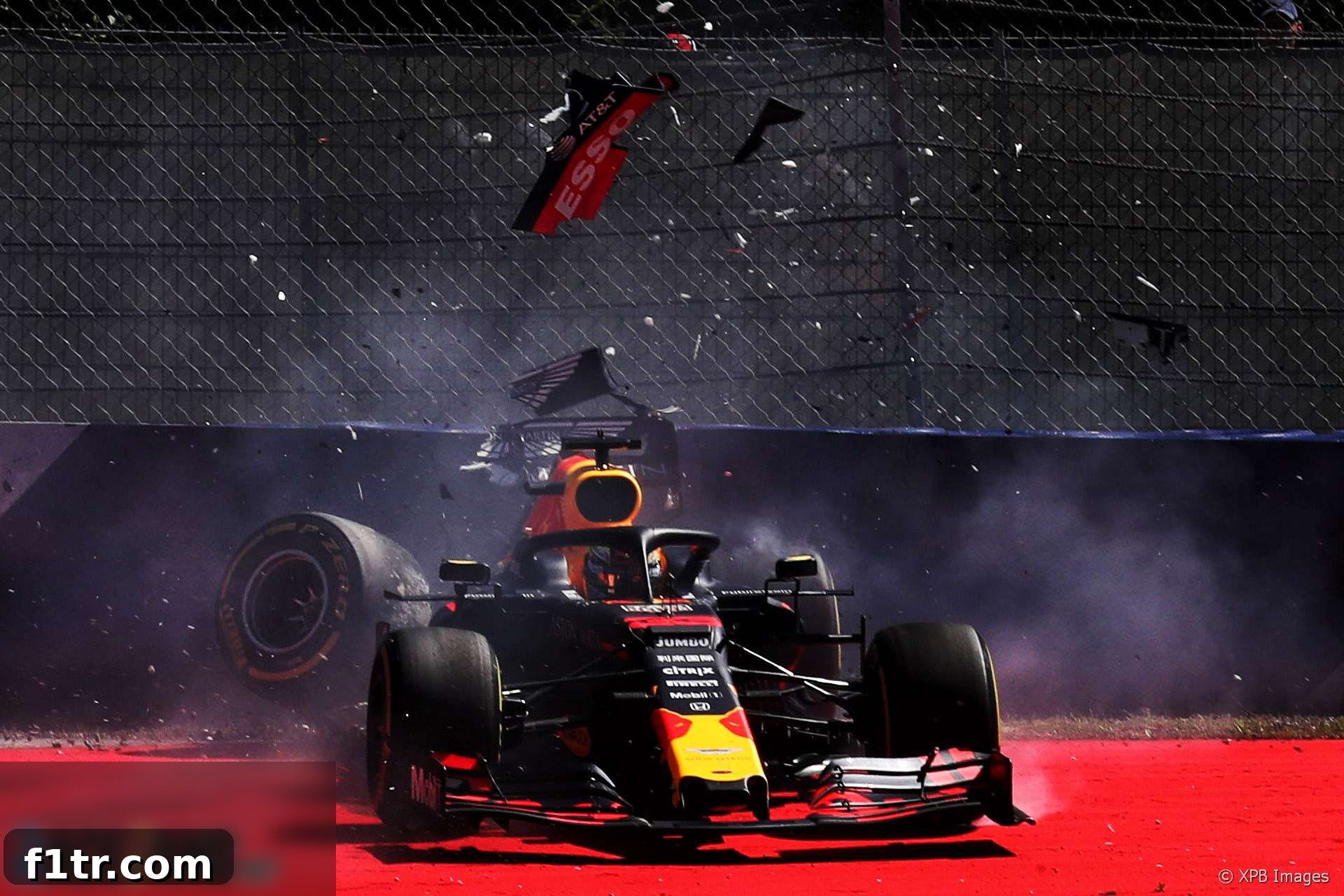
In the high-octane world of Formula 1, where every millisecond counts, the boundaries of the track have become a constant point of contention. The debate surrounding ‘track limits’ – the invisible lines drivers must adhere to – has intensified with the evolution of circuit design, particularly the widespread adoption of asphalt run-off areas. Once a straightforward matter of grass, gravel, or unforgiving walls, the modern circuit presents a nuanced challenge for regulators, drivers, and fans alike. Michael Masi, the former FIA race director, often found himself at the heart of this discussion, acknowledging a clear consensus among drivers: they desire consistent and impactful penalties for exceeding track limits. This ongoing dialogue underscores a critical balancing act for Formula 1: ensuring driver safety while simultaneously upholding the sporting integrity and competitive spirit that defines the pinnacle of motorsport.
Advert | Become a Supporter & go ad-free
The Evolution of Circuit Run-Offs: Safety vs. Sporting Consequence
The transition from traditional grass verges and gravel traps to expansive asphalt run-off areas marks a significant chapter in the evolution of Formula 1 circuit design. For decades, a driver’s misjudgment often resulted in an instant, unyielding penalty: a spin into the gravel, a loss of control on wet grass, or a painful encounter with a concrete barrier. These natural deterrents were an integral part of the challenge, ensuring that any excursion off the racing line came with a clear and often dramatic consequence, immediately punishing drivers for errors and deterring deliberate breaches of track limits.
However, as motorsport safety standards rapidly advanced, the inherent dangers of these traditional run-offs became increasingly apparent. Gravel traps, while effective at slowing cars, could also launch them into the air or cause them to dig in, potentially exacerbating impacts or trapping vehicles in vulnerable positions. Grass, especially when wet, offered minimal friction, leading to unpredictable spins. Concrete walls, while a clear boundary, posed a severe impact risk. The solution, embraced by modern circuit architects, was the asphalt run-off. These vast paved areas provide a controlled environment for cars that leave the track, offering a smooth, grippy surface that allows drivers to regain control more safely, reduce impact energies, and prevent cars from becoming stranded. Michael Masi himself emphasized the crucial role of these Tarmac run-offs from a safety perspective, stating, “One of the decisions that was made many years ago is the Tarmac run-offs, from a safety end, absolutely play their part and are an important part of the manner in which circuits have evolved.”
While undoubtedly a triumph for safety, this shift inadvertently introduced a new challenge: the dilution of natural penalties. With fewer immediate and tangible repercussions for running wide, the incentive for drivers to push beyond the white lines has grown. A small error, which once meant a lost position or a damaged car, might now simply translate to a slightly slower re-entry onto the track, or in some cases, even a perceived advantage. This subtle yet profound change has, as Masi pointed out, altered the “mindset” of drivers. The absence of a “concrete wall,” “grass,” or “gravel” means drivers are less likely to “concede” a position or time when going off-track, knowing the immediate sporting cost is minimal. This fundamental dilemma – how to preserve safety without compromising the sporting integrity – continues to be a central theme in Formula 1’s ongoing discussions about track limits.
Drivers Demand Consequences: The Battle for Sporting Integrity
The competitive nature of Formula 1 drivers ensures they will always exploit every available advantage, and track limits are no exception. If a few extra inches off the traditional racing line can shave milliseconds off a lap time, or provide a better angle for an overtake, drivers will naturally explore those possibilities. This relentless pursuit of performance, however, clashes with the fundamental principle of fair play and the agreed-upon boundaries of the circuit. The result is an enduring tension between the drivers’ instinct to push the envelope and the FIA’s need to maintain consistent and equitable rules.
Addressing this very issue, Michael Masi revealed a clear message from the drivers during a comprehensive discussion in Canada. “We had a long discussion with the drivers in Canada and they all said ‘we want consequences’,” Masi recounted. This collective sentiment highlights a shared understanding within the paddock that the current setup, particularly with extensive asphalt run-offs, often fails to adequately penalize breaches. Drivers, being the ultimate competitors, understand that if there are no meaningful repercussions for gaining an advantage by going off-track, then the rules become difficult to enforce fairly and consistently.
The “prime example” of this desire for consequences, Masi noted, was evident at circuits like the Red Bull Ring, where specific deterrents such as “orange bumps” are strategically placed. These bumps, often more aggressive than standard kerbs, are designed to unsettle a car or cause minor damage if driven over too aggressively, thereby providing an immediate and tangible penalty for exceeding track limits. Such physical deterrents offer a clear illustration of what drivers mean by “consequences” – a direct and unavoidable disadvantage for going off-line. This direct feedback is crucial for maintaining discipline and ensuring that the fastest lap is truly achieved within the defined confines of the circuit, rather than by exploiting the safety features designed to prevent accidents.
However, there’s an interesting dichotomy in how drivers communicate these desires. Masi hinted at this, noting that drivers sometimes voiced their opinions more vocally to the media than during official briefings. “I think the drivers said more to some of you guys about sausages and yellow bumps and consequences than they did to me,” he remarked, suggesting that “silence is an acknowledgement in some regards and approval.” This observation points to the complexities of internal discussions versus public commentary, but the underlying message remains consistent: drivers want a level playing field where pushing beyond the track limits comes with a real and discernible cost, ensuring that the spirit of competition remains uncompromised.
FIA’s Dilemma: Balancing Paramount Safety with Effective Deterrents
The core challenge for the FIA, and particularly for the race director, lies in striking a delicate balance between two non-negotiable objectives: ensuring the absolute safety of the 20 drivers on track and maintaining the sporting integrity of the competition. Michael Masi articulated this primary concern unequivocally, stating, “at the end of the day the safety, making sure that the 20 guys that start effectively come back safe and sound, is the primary objective.” This commitment to driver well-being is paramount and underpins every decision regarding circuit design and race management. The extensive asphalt run-offs, while a contributing factor to the track limits debate, were adopted precisely because they offer a superior safety solution compared to their predecessors.
The difficulty arises when these safety enhancements inadvertently create loopholes for sporting advantage. If a safety measure, such as a large run-off area, allows a driver to gain time or position without penalty, it fundamentally undermines the fairness of the race. The FIA is therefore tasked with finding innovative solutions that can act as effective deterrents without reintroducing significant safety risks. This isn’t a simple task, as every proposed solution must be rigorously evaluated for its potential impact on car performance, driver behavior, and, most importantly, safety outcomes in various racing scenarios.
One such experimental solution trialled at circuits like Paul Ricard involved the implementation of special ‘return lanes’ at specific corners. These dedicated routes are designed to force drivers who exceed track limits to take a longer, slower path back onto the circuit, thereby ensuring a time loss. Masi indicated that such return lanes could potentially be deployed at more circuits, provided they can be effectively tailored to each corner’s unique characteristics. The goal is to ensure that the penalty is sufficient and consistent. For instance, at the 2019 French Grand Prix, Sergio Perez received a time penalty after utilizing the return lane at Turn 5 to overtake two cars on the opening lap. While he rejoined safely, the incident highlighted the need for these systems to be foolproof in penalizing time lost, rather than inadvertently facilitating strategic gains.
Masi reflected on the initial trials in France: “We trialled a couple of items in France being the bollard that we discussed to turn two and obviously the one at five. The one at turn two was a success, the one at turn five, yes they rejoined safely but didn’t lose time.” This anecdote perfectly encapsulates the FIA’s predicament: a solution might achieve the safety objective (rejoining safely) but fail the sporting objective (losing time). The constant challenge is to fine-tune these mechanisms, whether they are physical deterrents like bollards and sausage kerbs, or digital monitoring systems, to ensure they consistently deliver the intended penalty without compromising driver safety. This ongoing “balance” is something the FIA continuously monitors and evolves, striving for a framework that supports both safety and fierce, fair competition.
Current Solutions and the Road Ahead for Track Limits Enforcement
The quest for an optimal solution to the track limits conundrum is a continuous journey for Formula 1 and the FIA. As circuits evolve and cars become ever more capable, the methods of enforcing boundaries must adapt in kind. Beyond the structural changes to run-off areas, various tactical interventions have been introduced and experimented with to instill the ‘consequences’ that drivers and officials seek.
At the forefront of these solutions are physical deterrents. The “orange bumps” and “sausage kerbs” discussed by Michael Masi, particularly those found at circuits like the Red Bull Ring, represent a direct approach. These elevated sections of kerbing are designed to be uncomfortable or even damaging to a car if driven over excessively. Their very presence serves as a clear physical warning, making it impossible for a driver to gain an advantage by consistently straying wide without suffering a performance penalty or risking mechanical damage. While effective in certain contexts, these physical deterrents must be carefully designed and implemented to avoid unintended consequences, such as launching cars or causing dangerous deflections.
Another increasingly sophisticated approach involves the use of ‘return lanes,’ as seen at Paul Ricard. These specially designed escape routes divert drivers who exceed limits, forcing them to navigate a predefined, slower path before rejoining the track. The success of these lanes hinges on their ability to consistently impose a time penalty. As Masi noted regarding the Turn 5 return lane at Paul Ricard, while it ensured safe rejoining, it failed to deliver a sufficient time loss for drivers like Sergio Perez, necessitating further refinement. The effectiveness of these solutions often depends on the specific characteristics of each corner – the speed, angle, and potential for advantage – requiring a highly tailored approach.
Looking ahead, the future of track limits enforcement will likely involve a combination of these physical deterrents and advanced technological solutions. Electronic monitoring systems, which use precise GPS data or sensor arrays to detect infringements, are becoming more prevalent. These systems offer the promise of objective, real-time detection and consistent application of penalties, removing much of the subjectivity often associated with human observation. The challenge remains in their accuracy, reliability, and the ability to distinguish between an intentional advantage and an unavoidable brief excursion.
The FIA’s strategy, as outlined by Masi, is one of continuous evaluation and evolution. This involves ongoing dialogue with drivers, circuit designers, and engineers to explore new materials, smart kerb technologies, and dynamic penalty systems that could automatically adjust based on the severity of the infringement. The overarching goal is to achieve a system that is transparent, fair, and consistently applied across all circuits and conditions. Ultimately, the aim is to foster a racing environment where drivers are encouraged to push to the absolute limit within the track’s boundaries, ensuring thrilling competition without compromising the fundamental principles of safety and fair play. This intricate dance between innovation, regulation, and the relentless pursuit of speed will continue to shape the landscape of Formula 1 for years to come.
Advert | Become a RaceFans supporter andgo ad-free
2019 F1 season
- Crying in the Melbourne car park at 2019 grand prix was my career low – Ocon
- McLaren Racing reports reduced £71 million loss in 2019
- Kvyat: Hockenheim podium last year was “my biggest achievement” so far
- How the FIA’s new encrypted fuel flow meter targets Ferrari’s suspected ‘aliasing’ trick
- “He smashed my office door”: 23 must-see moments from ‘Drive to Survive’ season two
Browse all 2019 F1 season articles