Monaco Grand Prix: A Diamond in the Crown Until 2035
The prestigious Monaco Grand Prix, a fixture synonymous with the pinnacle of motorsport glamour and tradition, has officially secured its future on the Formula 1 calendar with a significant contract extension. This latest agreement ensures that the principality will continue to host its legendary race until at least 2035, building upon a deal announced less than a year prior. This multi-year commitment solidifies Monaco’s enduring status as a cornerstone event in the world of Formula 1, much to the delight of traditionalists and a new generation of fans alike.
Advertisement
Formula 1 CEO Stefano Domenicali voiced his enthusiasm for the renewed partnership, underscoring the race’s unique appeal. “The Monaco Grand Prix is an iconic race that is loved by all drivers and fans,” Domenicali stated, highlighting its “unique vibe thanks to its location on the world’s most glamorous principality.” His remarks encapsulate the profound connection between the sport and its most historic venue, recognizing the unparalleled atmosphere and challenge that Monte Carlo presents. He extended a special thanks to His Serene Highness, Prince Albert II of Monaco, Michel Boeri, President of the Automobile Club of Monaco (ACM), and everyone instrumental in safeguarding the long-term future of this historic collaboration.
The Enduring Allure and Unique Challenges of Monte Carlo
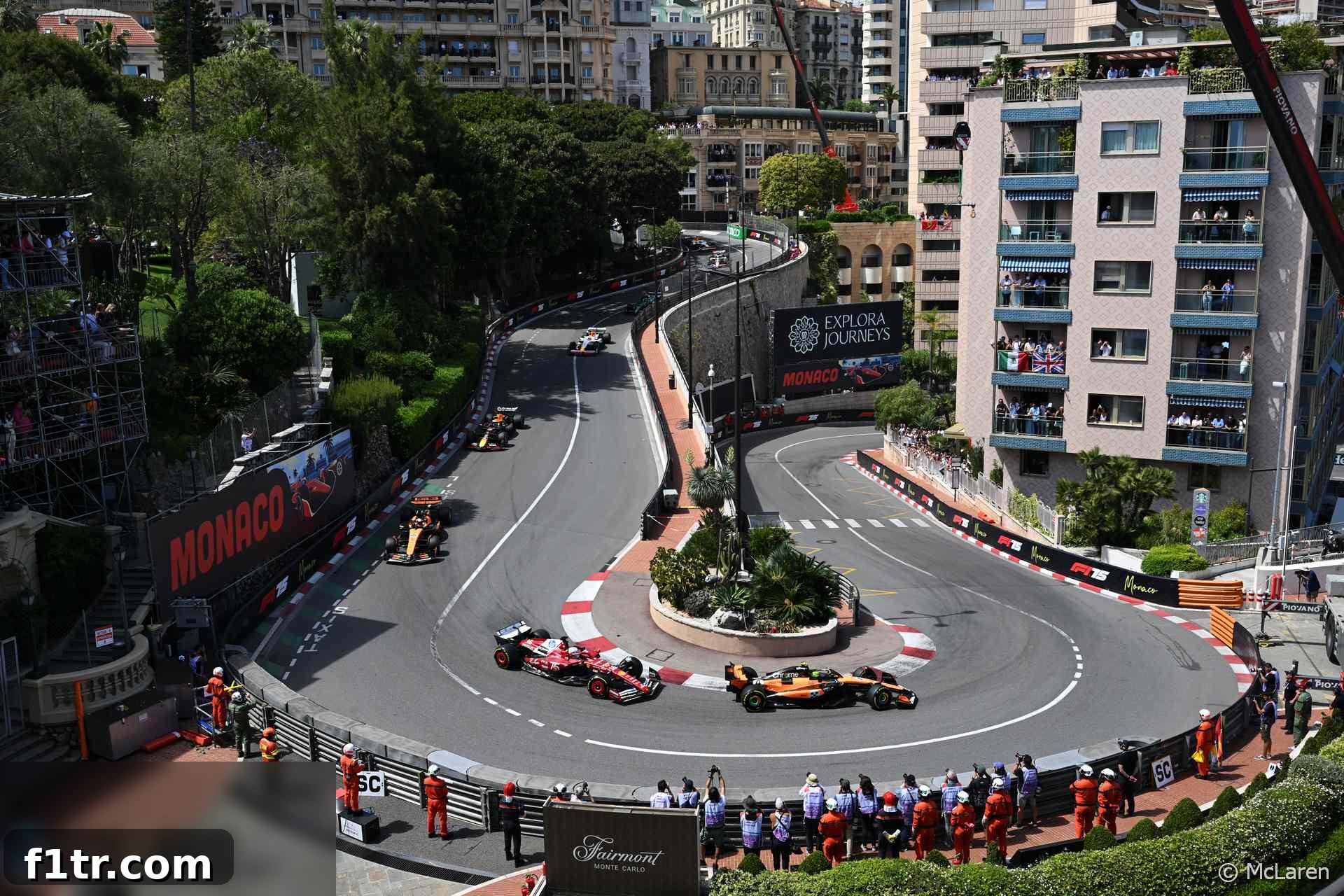
For decades, the Monaco Grand Prix has captivated audiences with its breathtaking scenery, demanding street circuit, and an aura of opulence unmatched anywhere else on the F1 calendar. Drivers navigate the incredibly narrow, winding streets of Monte Carlo, brushing inches from unforgiving barriers, with little to no room for error. The circuit’s tight corners, elevation changes, and iconic sections like the Casino Square, the Loews Hairpin, and the Tunnel, test the ultimate limits of precision, skill, and bravery. Unlike modern purpose-built tracks designed with vast run-off areas, Monaco offers an old-school challenge where consequences are immediate and severe.
This inherent difficulty, while contributing to its legendary status, has also become a focal point of discussion in recent years, particularly concerning the scarcity of overtaking opportunities. As Formula 1 cars have evolved, growing in size and aerodynamic complexity, the challenge of passing on the tight Monaco streets has intensified. The 2017 regulations, which saw F1 cars widen from 1.8 meters to a substantial two meters, demonstrably exacerbated this issue, transforming many races into strategic processions rather than dynamic overtaking spectacles. Recognizing this, upcoming regulations, specifically for 2026, aim to mitigate this by reducing the maximum width of the cars to 1.9 meters, a change that many hope will inject more on-track action into future Monaco Grands Prix.
The Controversial 2025 Tyre Strategy Rule and Its Repercussions
In an effort to inject more excitement and strategic variability into the Monaco Grand Prix, Formula 1 introduced a novel and controversial rule for the 2025 event: a mandatory two-pit stop strategy for all drivers. This deviation from the traditional one-stop approach, often seen as the optimal strategy on a track where track position is paramount, aimed to force teams into more dynamic decision-making and potentially create more varied race outcomes. The expectation was that multiple pit stops would break up the field, offer different tyre compounds into play, and compel drivers to push harder.
However, the implementation of this rule led to an unexpected and widely criticized outcome. Instead of promoting more aggressive racing, the mandatory two-stop rule inadvertently encouraged a tactical game of cat-and-mouse. Several teams instructed their drivers, particularly those positioned further down the grid or with teammates ahead, to intentionally lap slowly. The objective was to create gaps for their leading cars to make their mandatory second pit stop without losing valuable track positions to rivals. This tactic, designed to maximize team advantage within the new regulatory framework, resulted in segments of the race where pace was deliberately managed, leading to a spectacle that many found underwhelming and frustrating.
Race winner Lando Norris was among the prominent voices criticizing the new regulation, candidly describing it as an attempt to “manufacture” racing. This sentiment was echoed by other drivers who felt the rule “backfired” spectacularly, leading them to label the race as “ugly” and artificial. The frustration stemmed from the perception that genuine racing competition was sacrificed for a forced strategic gambit that ultimately diminished the on-track product. Despite the significant backlash from competitors and sections of the fanbase, Stefano Domenicali staunchly defended the race and the regulation, emphasizing the tradition and unique challenges Monaco presents, suggesting that the strategic elements are part of its unique charm. The regulation technically remains in the rule book for the 2026 season, but given the strong negative reactions, there is considerable anticipation that it may be revised or even scrapped before the next Monaco Grand Prix.
Advertisement
A Legacy Forged in Time: Monaco’s Unrivaled History
The Monaco Grand Prix holds an unparalleled place in the annals of motorsport history. Its origins trace back to 1929, an era when Prince Pierre of Monaco inaugurated the first official Grand Prix event. When the Formula 1 World Championship was established in 1950, Monaco was one of the inaugural races on the calendar, immediately cementing its importance. Following a brief absence, it triumphantly returned in 1955 and has proudly hosted a Grand Prix every single year since, with the sole exception of 2020 due to the global Covid-19 pandemic. This remarkable unbroken streak underscores its resilience and irreplaceable stature.
Over the decades, the circuit has been the stage for countless iconic moments, witnessing the triumphs and tragedies of racing legends. From Juan Manuel Fangio’s masterful drives to Graham Hill’s unparalleled five victories, earning him the moniker “Mr. Monaco,” and Ayrton Senna’s six record-breaking wins, the principality has been the ultimate arbiter of driver skill. These legends, along with subsequent multiple winners like Michael Schumacher and Lewis Hamilton, have etched their names into the very tarmac of Monte Carlo, creating a tapestry of motorsport folklore that resonates through generations. Monaco is not just a race; it’s a living museum of racing history, a testament to speed, daring, and engineering prowess, and one of the three legs of motorsport’s coveted Triple Crown, alongside the Le Mans 24 Hours and the Indianapolis 500.
The Future of a Fabled Race: Balancing Tradition with Modern Demands
The extended contract for the Monaco Grand Prix until 2035 is a clear affirmation of its intrinsic value to Formula 1, acknowledging its unique blend of heritage, glamour, and challenge that no other circuit can replicate. However, securing its future is also a continuous balancing act. In an era where Formula 1’s global appeal is skyrocketing, and new venues are constantly vying for a spot on the increasingly crowded calendar, traditional races like Monaco face intense scrutiny. Modern Formula 1 demands not only rich history but also exciting racing, strong commercial returns, and state-of-the-art facilities.
While the economic contributions of Monaco and its unparalleled visual spectacle for global audiences are undeniable, the ongoing debate regarding overtaking and the recent controversial tyre rule highlight the pressure on the Automobile Club of Monaco and F1 to ensure the race remains compelling. Future car regulations, circuit modifications, and innovative race formats will all play a role in evolving the Monaco Grand Prix to meet contemporary expectations while preserving its revered character. This long-term agreement signifies a commitment to finding that balance, ensuring that the “jewel in the crown” continues to shine brightly for years to come, captivating new fans and honoring its storied past as an essential component of the Formula 1 World Championship.
Formula 1: Further Reading
- The Evolution of F1 Car Design and Its Impact on Racing
- Strategic Masterminds: Famous Pit Stop Gambles in F1 History
- Debating the Authenticity: Are Modern F1 Races Too “Manufactured”?
- The Thrills and Dangers: Exploring Driver Safety in Formula 1
- Expanding Horizons: New Venues and F1’s Global Footprint
Browse all Formula 1 articles