The Future of Power: How Formula 1 Can Lead the Sustainable Fuel Revolution
Since Liberty Media acquired Formula 1’s commercial rights in 2017, a comprehensive master plan was set in motion. The initial strategy involved operating F1 largely under existing regulations until the end of 2020, followed by a monumental overhaul from 2021 onwards. This ambitious transformation was designed to introduce new commercial structures, refined governance protocols, and extensively revised technical and sporting regulations. Crucially, for the first time in the sport’s history, financial regulations in the form of a budget cap were slated to be introduced, aiming to foster a more level playing field among competitors. Regarding the power units, a prior agreement stipulated retaining the established architecture: 1.6-litre turbo engines utilizing 5.75% bio-content fuel, augmented by sophisticated heat and kinetic energy recovery units, with only minor adjustments. A five-year stability period was broadly agreed upon, promising a rare alignment of F1’s diverse timelines, a first in the 21st century.
However, the global landscape shifted dramatically with the onset of Covid-19, plunging the world – and by extension, Formula 1 – into unprecedented uncertainty. In response to the ensuing turmoil, F1 stakeholders unanimously agreed to defer the introduction of the new technical and sporting regulations by one year, pushing them to 2022. Despite this, the original implementation dates for commercial agreements and governance processes, collectively known as the ‘Concorde Agreement’, were maintained. The much-anticipated ‘budget cap’ regulations were also introduced on schedule, driven by an urgent necessity to control costs amidst the pandemic’s economic impact.
The staggered implementation, however, created new complexities, particularly concerning the expiration dates for the sporting and technical regulations. A critical question emerged: would their validity be reduced by a year to align with other agreements expiring in 2025, or would they run for their full five-year term, thus being out of sync? Alternatively, could all covenants be extended to expire concurrently at the end of 2026? This regulatory uncertainty highlights the dynamic and often challenging environment in which Formula 1 operates, constantly balancing tradition with innovation and practical necessity.
The Engine Conundrum: Balancing Innovation and Relevance
When pressed on these crucial questions, F1 managing director Ross Brawn acknowledged that no definitive decisions had yet been made, but he indicated that the future of F1’s engine regulations would likely be the next focal point of discussion. Brawn articulated the multi-faceted considerations involved: “The focus now is on the next powertrain, [but] before you can say what it is, you’ve got to decide what the objectives are. Where is the relevance, how does this stand in terms of defining the spectrum of the future, what’s the economic climate, how do you encourage investment in a potential new powertrain?” He emphasized the need for a holistic approach, ensuring that Formula 1 remains attractive to engine and powertrain suppliers. The economic viability for teams, coupled with the delivery of competitive racing engines, forms the bedrock of F1’s future success.
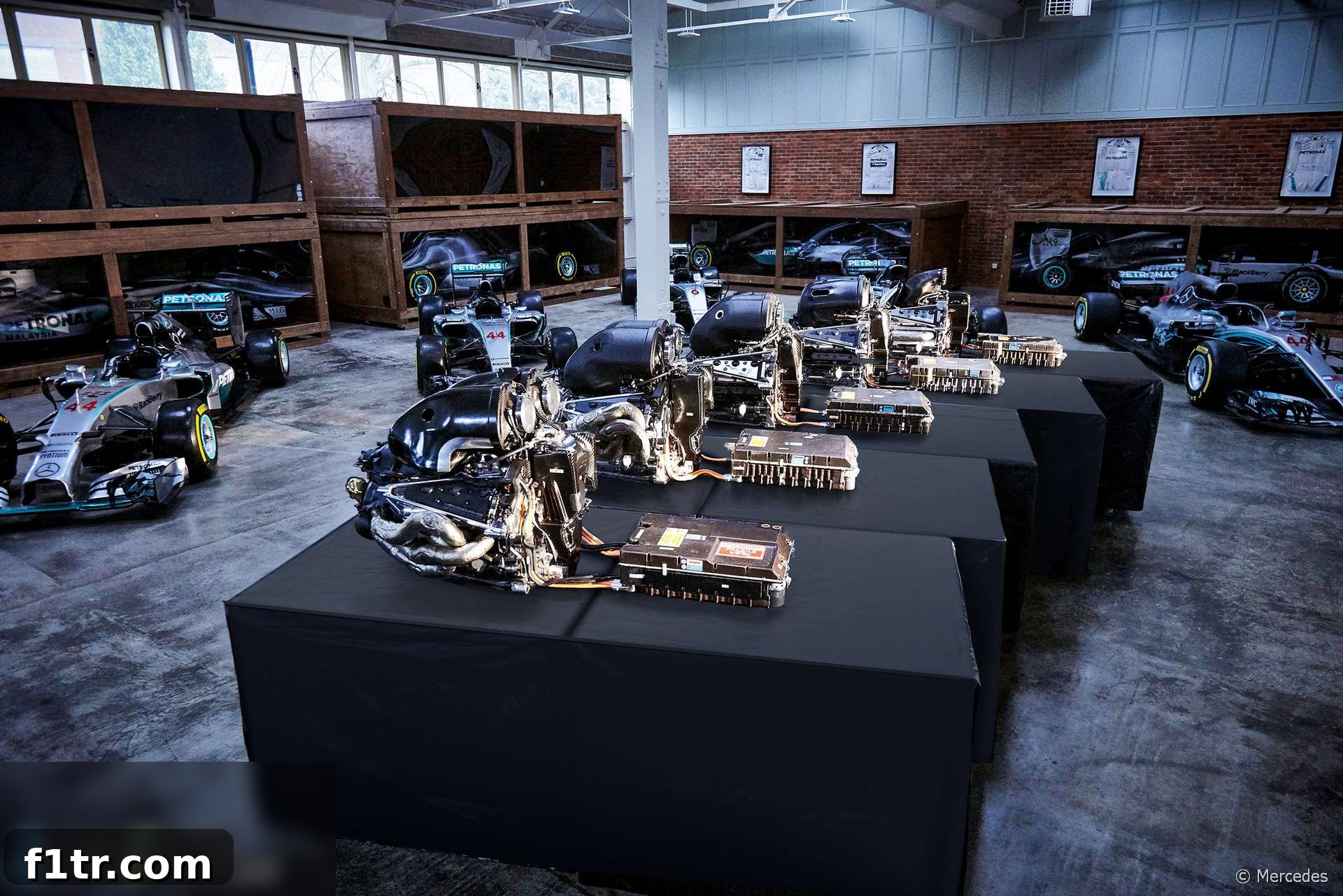
The development cycle for Formula 1 engines is considerably longer than that for chassis components, a factor that complicates strategic planning. This is particularly true if the sport aims to attract new suppliers. F1 currently relies heavily on Mercedes, Renault, and Honda, none of whom have committed beyond 2021, while Ferrari occasionally hints at a potential exit. Such an environment puts F1 in a precarious position, necessitating a swift and decisive direction. The debate often includes calls from traditionalists for a return to the roaring V8s or even V10s of yesteryear. However, such engines are now largely relics of the past, as relevant to F1’s technological future as aluminium monocoque chassis or manual clutch pedals are to modern road cars.
The global automotive industry is unmistakably shifting towards electrification, a trend that, while perhaps unappealing to hardcore petrolheads, cannot be ignored. Contemporary motor manufacturers simply cannot afford to be associated with engines perceived as gas-guzzling and high-emission, non-hybrid units. Furthermore, there aren’t enough independent suppliers capable of providing the diversity of engines required by the sport. A single engine supplier model, reminiscent of GP2 a decade ago, would fundamentally alter F1’s identity. Cosworth, F1’s last independent engine supplier, withdrew when the sport transitioned to hybrid technology, unable to construct a compelling business case for continued involvement. This stark reality underscores that F1 needs motor manufacturers more than they need F1, compelling the sport to align with the future needs and priorities of the global automotive industry.
Road Relevance: Why F1’s Hybrid Power Units Matter More Than Ever
In the current global climate, road relevance is paramount for any automotive technology. This is closely followed by two seemingly contradictory, yet equally critical, priorities: low emissions and low costs. For Formula 1 to maintain its appeal and secure investment, these three factors must converge at the lowest possible common denominator. Without this alignment, securing approval for an F1 feasibility study, let alone a full program, becomes an insurmountable challenge for any manufacturer, whether producing supercars or family runabouts. Indeed, had F1 not embraced hybridization in 2014, it is highly probable that at least three of the four current engine suppliers would not be on the grid today, given their parent companies’ public commitments to electrification. Even Ferrari, a bastion of traditional automotive excellence, now produces hybrid derivatives boasting combined outputs of 1,000bhp.
Therefore, F1’s immediate imperative is twofold: to retain its current lineup of engine suppliers and to attract at least one additional supplier as a crucial backstop. This is especially vital if the sport hopes to expand the grid with an extra team or two. A roster of five engine brands would alleviate supply pressures, potentially reduce costs, and introduce welcome variety to the competition. It is important to remember that while teams pay approximately $20 million annually for two-car engine supplies, these engine programs are heavily subsidized by their parent companies, highlighting the significant financial commitment involved. It’s an enduring truism in Formula 1 that change incurs substantial costs. Equally true is that the current V6 hybrid engines are the most expensive in the sport’s history, even accounting for inflation. Retaining their architecture minimizes future design, development, and production expenses, while still making the formula appealing to prospective suppliers, given that most technological frontiers have been explored and regulations have largely stabilized.
When introduced in 2014, after a year’s delay, these engines were remarkably ahead of their time. Only now are they truly gaining widespread recognition for their road relevance. A prime example of this is the recent announcement by Mercedes-AMG CEO Tobias Moers, who is set to join Aston Martin later this year. Moers revealed that Mercedes-AMG plans to integrate F1’s heat energy recovery technology from exhaust systems (MGU-H) into its road car range. He stated, “In a first step this includes the electrified turbocharger – an example of the transfer of Formula 1 technology to the road, something with which we will take turbocharged combustion engines to a previously unattainable level of agility.” The prospect of F1 suddenly abandoning such cutting-edge technology, which is directly contributing to advancements in mainstream automotive engineering, would be illogical and detrimental to its image as a technological pioneer.
This development is not an isolated incident; Audi, for instance, already incorporates electric turbochargers, powered by recovery generators, into its premium sports models. Such instances unequivocally strengthen the case for retaining F1’s current engine architecture on the grounds of road relevance. With two out of three critical boxes (relevance and cost efficiency through architectural stability) effectively ticked, the remaining challenge lies in addressing the question of sustainability moving forward. This is precisely where Formula 1 can play a pivotal role in shaping the future of the internal combustion engine (ICE), which intrinsically depends on ‘greenness’ – not only in terms of clean burning but also clean extraction and/or production of fuels. After all, the cleanest exhaust pipes in the world mean little if the entire process leading up to that point is environmentally detrimental.
Beyond Electric: F1’s Role in Sustainable Internal Combustion
This is a critical area where battery electric vehicles (BEVs) currently fall short. While often lauded as emission-free, BEVs effectively shift pollution upstream, relying on a diverse array of energy sources—some more environmentally friendly than others—to generate the electricity they consume. Furthermore, the mining of crucial battery constituents often wreaks havoc on delicate ecosystems, challenging the narrative that EVs are the silver-green bullet for environmental salvation. Current optimistic estimates place the global electric vehicle park at around 15 million units. In stark contrast, the world currently operates approximately 1.5 billion fossil-fuelled vehicles, a vast majority of which are not nearing scrappage anytime soon. The sheer scale of this existing fleet means that even if all ICE vehicles were suddenly outlawed, every scrap yard on the planet would be overwhelmed, and there would be no market for used spare parts.
Adding to this immense fleet are an estimated 300 million motorcycles, predominantly found in Asian countries, alongside another 200 million ‘other’ internal combustion engines operating globally, serving purposes ranging from stationary power generators to lawnmowers. This totals an astounding two billion internal combustion engines worldwide. Comparing 15 million EVs to two billion ICEs reveals a ratio of roughly 0.75% electric. To achieve a 50:50 ratio by 2030, an improbable 100 million electric cars would need to be sold annually, contingent on the availability of sufficient charging infrastructure and, more fundamentally, sufficient electricity generation capacity.
The Green Fuel Imperative: Biofuels, Synthetics, and Carbon Capture
Given these compelling statistics, the logical solution for F1 to maintain its road relevance is to accelerate the development of alternative, environmentally friendly fuels for internal combustion engines. These include biofuels, derived from sustainable crops, and synthetic fuels, artificially manufactured using carefully selected fuel constituents. Such advancements would significantly reduce pollution at both the source and the exhaust. The potential for ‘carbon capture’ technology further sweetens this proposition, offering a triple benefit by actively removing carbon from the atmosphere. While F1’s 2022 technical regulations already mandate an almost doubling of bio-components in fuels, requiring “a minimum of 10% of the fuel must comprise advanced sustainable ethanol” (a target delayed from 2021), F1’s long-term vision extends much further. The ultimate goal is to achieve net-zero carbon engines by 2030, powered 100% by fully advanced, sustainable fuels. An F1 spokesperson confirmed this ambitious trajectory: “That might be biofuels, that might be some kind of second-generation (recycled food crop) fuel. None of this will be first-generation, it will be second-generation. By 2030 the fuel that goes into all F1 cars will be 100% advanced, sustainable fuel.” This represents an extraordinary tenfold advancement in just nine years. To facilitate this, F1 should realistically aim to hit 50% sustainable fuel content by 2026, leaving a manageable five-year window to close the remaining gap. The strategy is clear: largely retain the highly efficient current engines, further enhance their stellar thermal efficiency, and actively contribute to the development of suitable ‘green’ fuels. In essence, F1 must make itself an irresistible platform for both motor manufacturers and fuel companies.
Industry Leaders Weigh In: The Path to a Cleaner Future
This vision, while ambitious, is far from fanciful. During a recent FIA press conference in Monaco, Cyril Abiteboul, then of Renault F1 (whose team partners with BP), was asked for his perspective on F1’s future power units. The French engineer offered a remarkably prescient outlook: “Obviously in 2025 the world will be different, electrification will be a profound trend, so it’s not going away. In my opinion, we need to look at the next couple of years to form an opinion regarding MGU-H road relevance, because it’s clearly a component that was introduced for that purpose.” Abiteboul further emphasized, “One thing that might be interesting is not necessarily the next generation of engine but the next generation of fuel, because we believe Formula 1 is about hybrid technology, not full electric, for a number of reasons. There will be new forms of fuel coming up in the next few years, whether biofuel, a different composition, or synthetic fuel from non-fossil sources. These could be attractive and require new development. So, probably the way forwards. Less exciting, obviously, than high-revving, normally-aspirated engines, but still probably the way forward if we want to be relevant, not just to car makers, but to society.” His words highlight a crucial shift in focus.
But is Abiteboul’s vision truly realistic? We posed this question to Pat Symonds, F1’s technical director, who has been deeply involved in F1’s ‘greening’ initiatives alongside the FIA and the Formula 1 Fuel Advisory Panel (FOFAP). Specifically, is it feasible for F1 to achieve 100% low-carbon or even zero-carbon fuel? Symonds began by stating, “Right at the moment, it’s not. If you said, ‘Could we do it tomorrow?’ the answer is [also] ‘no’ because there are several types of sustainable fuels.” He explained that while alcohol-based fuels could be produced in sufficient quantities for F1 right now, the engines would require modifications to run properly at a 100% level. Symonds clarified that “We gave an undertaking to engine manufacturers that prior to 2025 we won’t make major modifications to engines,” citing regulatory rather than technical hurdles for the immediate impossibility.
He then elaborated on a second type of fuel: “The second type of fuel is a ‘drop-in’ fuel, where you synthesize a fuel that is essentially like a sort of iso-octane, like conventional gasoline. It’s called a drop-in fuel because you put it in an engine with no modifications. It’s essentially the same as what came out of the ground.” However, this technology is currently expensive. Symonds believes ‘carbon capture’ offers a viable solution: “You can arguably in certain areas ‘clean up’ CO2. Overall, what you’re trying to do on a global scale is not introduce more CO2 into the system. So the CO2 that’s in the system, which has come from burning fuels, take the carbon out, strip the oxygen, and you’ve re-used that carbon. So you’re not adding to the net CO2 of the planet. We don’t need to reduce – we need to maintain.” This concept transforms the environmental challenge into a circular economy opportunity.
The automotive industry is already exploring these avenues. Various high-performance car manufacturers, including Bentley, Porsche, and McLaren, are actively investigating the use of synthetic fuels. Jens Ludman, McLaren COO, told Autocar, “The technology around synthetic fuels is still being developed, but if you consider it can be produced using solar energy, easily transported and pumped [into cars] as we know today, there are potential benefits in terms of emissions and practicality. Today’s engines would need only small modifications, and I would like to see this technology get more airtime.” Porsche CEO Oliver Blume also sees a future for synthetic fuels, believing they will prolong the acceptance of internal combustion engines, a vital consideration for a brand synonymous with its iconic flat-six engine. He informed enthusiast magazine Total 911, “We’re already running tests with historic cars like the 911 and 993,” acknowledging that while they are currently expensive, costs could decrease if produced via “linked energy sources like solar energy.” Blume foresees a natural progression: “The first step for synthetic fuels being in motorsport because the [initial] cost isn’t so important as for normal customers.”
A Pivotal Role: F1 as the Catalyst for Global Change
It is abundantly clear that Formula 1 has a crucial and immediate role to play in the development and proliferation of advanced bio and/or synthetic fuels. These innovations possess direct road relevance for the two billion internal combustion engines currently operating across the world, offering a viable pathway to significant global emission reductions. On this basis, F1 does not necessarily require an entirely new engine formula in 2025. Instead, its most impactful contribution would be the introduction of a new, cutting-edge fuel formula by 2025, cementing its legacy as a true innovator driving sustainable change for the automotive world at large.
RacingLines
- The year of sprints, ‘the show’ – and rising stock: A political review of the 2021 F1 season
- The problems of perception the FIA must address after the Abu Dhabi row
- Why the budget cap could be F1’s next battleground between Mercedes and Red Bull
- Todt defied expectations as president – now he plans to “disappear” from FIA
- Sir Frank Williams: A personal appreciation of a true racer
Browse all RacingLines columns