French Grand Prix: Ericsson’s Crash, Paul Ricard Traffic Woes, and F1 Weekend Highlights
The return of the French Grand Prix to the Formula 1 calendar at Paul Ricard was met with a mix of excitement and significant logistical challenges. While fans eagerly anticipated the on-track action, the weekend was marked by notable incidents and widespread discussion points. From a perplexing crash involving Sauber’s Marcus Ericsson, which prompted investigations into subtle environmental factors, to severe traffic congestion impacting fan attendance, and other crucial motorsport developments, the French GP provided a rich tapestry of stories and insights for the global racing community.
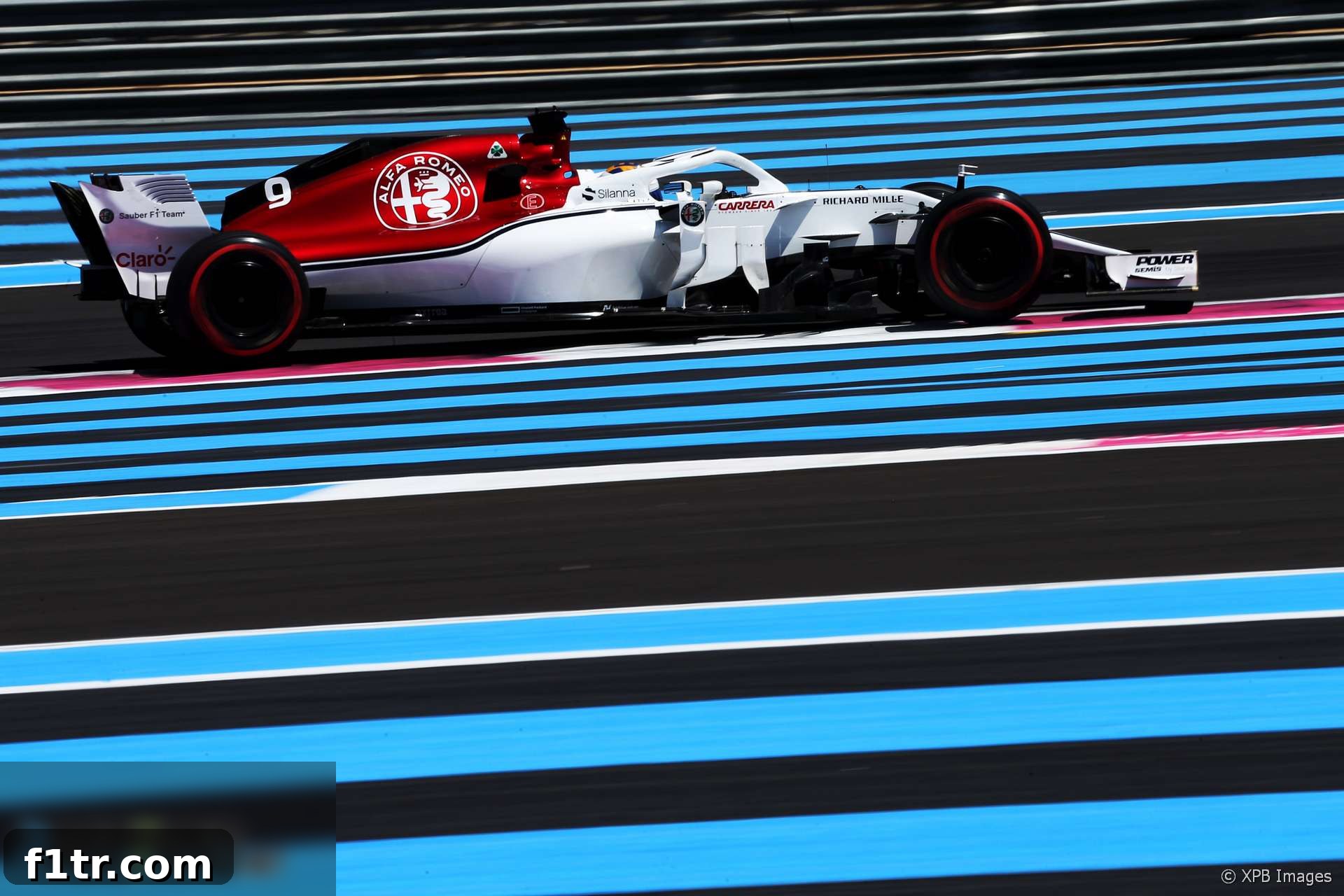
Marcus Ericsson’s Mysterious French Grand Prix Practice Crash
During the crucial practice sessions for the French Grand Prix, Sauber driver Marcus Ericsson experienced a heavy crash that left both him and his team searching for definitive answers. The incident occurred during what Ericsson described as a routine lap, yet it resulted in a complete and unexpected loss of control for the Swedish driver.
Driver’s Perspective on the Incident
I turned in like every other lap, not going any faster or anything different. And I just lost the rear end completely. It was one of those strange crashes that you don’t really find a good explanation [for].
We’ve analysed it a lot afterwards and can’t really see anything apart from the wind being quite different that lap compared with other laps. I had a lot less headwind so I had a lot less downforce because of that.
If that’s enough to lose a car completely like that, I wouldn’t think so, but it’s the only thing we can find. It’s really strange.
Quotes: Dieter Rencken
Ericsson’s candid account vividly highlights the perplexing nature of the crash. For a Formula 1 driver, operating at the absolute peak of motorsport, an intuitive understanding of the car’s behavior and track conditions is second nature. His assertion that he was “not going any faster or anything different” yet experienced a “complete” loss of the rear end suggests that an external, unforeseen, and highly influential factor must have been at play. This kind of sudden, unexplained incident can be particularly unsettling for drivers and engineers alike.
Following the incident, the Sauber team, in close collaboration with Ericsson, undertook an exhaustive analysis of all available telemetry and data logs. Their meticulous investigation pointed towards a subtle yet significant change in wind direction as the most plausible primary cause. A reduction in headwind, while often imperceptible to the casual observer, can have a profound impact on the aerodynamic balance and stability of a highly sensitive Formula 1 car. Less headwind directly translates to a decrease in the effective downforce generated by the car’s intricate aerodynamic surfaces, potentially rendering the vehicle more unstable, especially when navigating high-speed corners where aerodynamic grip is absolutely paramount for maintaining control.
While Ericsson himself expressed a degree of skepticism that wind alone could precipitate such a dramatic and complete loss of control, it remained the only discernible variable identified in their extensive post-crash examination. This incident serves as a potent and compelling reminder of the incredibly delicate balance inherent in Formula 1 machinery, where even seemingly minor environmental changes can trigger profound and immediate consequences. It also underscores the immense challenges faced by engineers in optimizing car performance across an ever-changing spectrum of conditions, and the incredibly razor-thin margin for error within which elite drivers like Ericsson must operate.
Advert | Become a RaceFans supporter andgo ad-free
Social Media Reacts to French GP Traffic and Race Incidents
The eagerly anticipated return of the French Grand Prix to the iconic Paul Ricard circuit, after a decade-long hiatus, was a moment of great excitement for many Formula 1 fans. However, this enthusiasm was quickly tempered, and in many cases, overshadowed by severe logistical challenges, most notably concerning traffic management around the circuit. Social media platforms rapidly transformed into a vibrant hub for real-time updates and candid expressions of frustration from attendees, journalists, and even members of the F1 paddock.
The most prominent and widely discussed issue was the unprecedented traffic congestion that plagued the roads surrounding the Paul Ricard circuit. Reports flooded in from various sources detailing fans enduring grueling multi-hour journeys to cover relatively short distances, leading to significant delays, missed practice sessions, and overall disappointment. This palpable frustration was vividly captured and amplified across platforms like Twitter and Instagram, painting a challenging and often chaotic picture for the event’s organizers and casting a shadow over the long-awaited return of the French GP.
Hey @WilliamsRacing, we really like you and @sirotkin_sergey but can we keep visit times to outside the sessions?
Our crew were a bit confused when he pulled into our pit box… 🤷♂️🤷♀️ #FrenchGP
— Aston Martin Aramco F1 Team (@AstonMartinF1) June 22, 2018
Beyond the logistical headaches, social media also provided a platform for sharing lighter, more amusing moments. One such instance involved Williams driver Sergey Sirotkin, who inadvertently pulled into the Aston Martin pit box, much to the amusement of both teams’ crews. Such anecdotes offer a charming, albeit brief, glimpse into the bustling, and at times, slightly chaotic environment that characterizes a Formula 1 Grand Prix paddock.
Journalists and Fans Document the Paul Ricard Traffic Chaos
Journalists present on the ground provided some of the most striking and immediate observations regarding the traffic situation. Fritz-Dieter Rencken of RacingLines highlighted the extraordinarily extreme travel times faced by attendees:
Want to know where all the fans for 1st practice session for 1st #FranceGP in 10yrs are? Sat in traffic – just heard it took tour operator 2hrs40 to cover 70kms; 2hrs for last 10kms. pic.twitter.com/hECjlffOAQ
— Fritz-Dieter Rencken (@RacingLines) June 22, 2018
Ben Hunt further amplified these concerns, sharing compelling images of sparsely populated grandstands, which served as a direct and stark visual consequence of the gridlock preventing tens of thousands of ticket holders from physically reaching the circuit in time for the sessions:
Empty grandstands at Paul Ricard as 65,000 people are stuck in traffic on the single road in and out of the track. #frenchGP pic.twitter.com/Mw0qRD5dRb
— Ben Hunt (@benjhunt) June 22, 2018
The underlying issues causing this chaos, as pointed out by Ben Evans, were not entirely unforeseen by those familiar with the circuit’s location and infrastructure. He highlighted Paul Ricard’s relatively remote setting and its limited road network as inherent vulnerabilities:
Re; Paul Ricard traffic woes, this shouldn’t be news – abundantly clear was always going to be an issue, single track roads to circuit with v limited accommodation close to the track
— Ben Evans (@bencommentator) June 22, 2018
Roberto Chinchero’s humorous, yet undeniably poignant, remark perfectly encapsulated the prevailing sentiment of exasperation, playfully suggesting that an helicopter might be the only genuinely viable mode of transport for attendees wishing to arrive on time and without stress:
Paul Ricard promoter did a good job. Nice place, good track, good services. They Just forgot a little information: do not come if you have not an helicopter. Rest is fine
— Roberto Chinchero (@RobChinchero) June 22, 2018
The pervasive traffic also raised serious concerns extending beyond mere inconvenience, touching upon critical aspects of safety and emergency response. Stuart Codling notably questioned the promptness of marshal arrival at the scene of Marcus Ericsson’s shunt, speculating whether the emergency personnel themselves might have been caught in the very same traffic:
There was a certain lack of promptness in the arrival of a fire extinguisher at the scene of ERI’s shunt. Marshals stuck in traffic?
— Stuart Codling (@CoddersF1) June 22, 2018
This widespread discontent and the seemingly overwhelming nature of the logistical problems led some, such as Sniffermedia, to reflect more broadly on the overall health and appeal of Formula 1. They questioned whether traffic congestion becoming the biggest story of the day indicated deeper underlying issues within the sport’s appeal or its event management strategies:
You know when a Sport is in poor health if it’s biggest story of the day is traffic congestion. #F1
— sniffermedia (@sniffermedia) June 22, 2018
In response to the overwhelming volume of criticism and fan complaints, the official Grand Prix de France F1 account acted swiftly. They announced immediate measures designed to alleviate future congestion, including the opening of additional parking lots much earlier on the subsequent day, demonstrating an effort to adapt and improve the situation for the remaining weekend activities:
Following today’s attendance, all parking lots around the circuit will be open tomorrow as of 6.30am. For further informations (access roads)⬇️https://t.co/71RR9V9Q6m
— Grand Prix de France F1 (@GPFranceF1) June 22, 2018
Other Notable Social Media Mentions and Insights
Amidst the chaos and discussions surrounding logistics, some observers managed to find unique perspectives on the Paul Ricard circuit itself. Valentin Khorounzhiy, for instance, highlighted the track’s distinctive and somewhat unconventional appearance:
Paul Ricard is a huge mess of layouts and looks like some secret polygon in the middle of nowhere, and I for one think that’s actually really cool. #F1
— Valentin Khorounzhiy (@vkhorounzhiy) June 22, 2018
Fritz-Dieter Rencken also drew attention to an intriguing and somewhat ironic legal detail concerning Williams Racing and its specific sponsors, especially when considering the circuit’s own historical connections:
Ironic @WilliamsRacing removes Martini logos to comply with French law – at circuit founded by Ricard family…Hence two-tone blue team gear for #FrenchGP as modelled by @AnnieBWansford pic.twitter.com/DjPZhxlTYT
— Fritz-Dieter Rencken (@RacingLines) June 22, 2018
Lastly, motorsport historian Keith Collantine shared an interesting historical tidbit, highlighting current F1 driver Pierre Gasly’s prior success at Paul Ricard on a specific circuit configuration, providing a fascinating link between the past and present:
Anorak note for fellow race track geeks: @PierreGASLY raced on the 1990 #F1 @PaulRicardTrack configuration when he was in French F4 seven years ago. He won both races beating, among others, @SebOgier. #FrenchGP
— Keith Collantine (@keithcollantine) June 22, 2018
- Find more official F1 accounts to follow in the F1 Twitter Directory
Further Motorsport News and Key Developments
Beyond the immediate French Grand Prix coverage, the wider world of motor racing continued to generate intriguing headlines and crucial developments. Here’s a curated selection of other interesting links and news from across the motorsport landscape:
IndyCar’s 2019 Silly Season Heats Up: Dixon to McLaren?
Dixon to McLaren? The 2019 IndyCar silly season is ramping up (Racer)
The speculative “silly season” in IndyCar, a period of intense rumor and speculation regarding driver and team movements for the upcoming year, was in full swing, with particularly potent rumors linking Scott Dixon, one of the sport’s most decorated and successful drivers, to a potential sensational move to McLaren. This significant speculation was further fueled by McLaren’s clearly stated broader interest in expanding its motorsport footprint, particularly within the highly competitive North American racing scene. Racer.com prominently highlighted a substantial $270 million investment from Canada’s Michael Latifi into McLaren, suggesting that a significant portion of these funds could potentially be earmarked specifically for the establishment of an ambitious IndyCar program. Latifi, whose son Nicolas was a prominent competitor in F2 at the time, reportedly harbored keen interests in both Formula 1 and IndyCar, potentially providing the crucial financial backing needed for McLaren to bypass the necessity of securing separate Honda funding for such an ambitious and costly venture. This kind of high-profile cross-series team expansion and driver movement invariably generates considerable buzz and has the potential to fundamentally reshape the competitive landscape of top-tier open-wheel racing.
FIA’s New Helmet Standard: A Leap Forward in Driver Safety
From Track to Research – New Helmet Standard (FIA via YouTube)
Driver safety consistently remains a paramount concern and a top priority in motorsport, and the FIA (Fédération Internationale de l’Automobile) relentlessly pushes for continuous advancements in protective technology. A compelling YouTube video produced by the FIA meticulously detailed the comprehensive journey “From Research to Track” concerning the development and implementation of a groundbreaking new helmet standard. This critical initiative gained significant traction and urgency following critical incidents such as Felipe Massa’s serious accident at the 2009 Hungarian Grand Prix, which starkly underscored the pressing need for enhanced head protection for drivers. The new standard, which is the direct result of extensive, multi-year research and rigorous development efforts, aimed to introduce even more stringent requirements for helmet construction, the advanced materials used, and their overall impact resistance capabilities. By integrating cutting-edge technological innovations and subjecting designs to rigorous testing protocols far exceeding previous benchmarks, the FIA sought to further significantly mitigate the inherent risks associated with high-speed impacts, thereby reinforcing its unwavering commitment to driver well-being across all sanctioned racing categories. This continuous and proactive innovation in safety standards stands as a testament to the sport’s profound dedication to protecting its most valuable assets: its athletes.
Advert | Become a Supporter & go ad-free
The French Grand Prix’s Triumphant Return: A Boost for French Motorsport
The French GP is back: ‘We love F1 here, its return is good for everybody’ (The Guardian)
The highly anticipated return of the French Grand Prix to the Formula 1 calendar was far more than just another race event; it symbolized a profound homecoming for an entire nation of ardent French motorsport enthusiasts. The Guardian newspaper captured this powerful sentiment perfectly, quoting the legendary French driver Jacques Laffite, who eloquently encapsulated the prevailing mood: “It is stressful but I love it, to race in my country. It felt like a real home race, especially with Ligier, and Gitanes in a French blue car. It was fun to see all these people supporting us.” Laffite’s heartfelt words resonate deeply, reflecting a deep-seated national pride and an enduring, passionate affection for Formula 1 that had, for a decade, been noticeably underserved. The Grand Prix’s return was widely perceived as a significant and much-needed boost, not only for the local economy in the region but also, crucially, for the overarching goal of nurturing and developing a new generation of French racing talent and rekindling the nation’s incredibly rich and storied motorsport heritage. The event therefore symbolized a resurgence, promising to bring the unparalleled thrill, spectacle, and excitement of Formula 1 back to its passionate and dedicated French fanbase.
CAMS Backs Renewed Formula E Adelaide Bid
CAMS backs renewed Formula E Adelaide bid (Speedcafe)
In Australia, the Confederation of Australian Motor Sport (CAMS) publicly and emphatically endorsed a renewed bid for Adelaide to once again host a prestigious round of the FIA Formula E Championship. Formula E, the innovative all-electric single-seater racing series, was, at the time, rapidly gaining significant global traction and expanding its presence across continents, making Australia a natural and logical next step for its continued growth. Speedcafe provided detailed reporting on CAMS’s strategic reasoning behind this endorsement, highlighting the acknowledged logistical difficulties of attempting to host such a major international event in densely populated metropolitan areas like Sydney or Melbourne. A CAMS representative explicitly stated, “We think the reality of making it happen in Sydney or Victoria is difficult, simply because shutting down Sydney is impossible and in Victoria they have got the Formula 1 Grand Prix which is a significant investment.” This clear assessment led to the conclusion that South Australia, with its established motorsport history, its highly adaptable urban environment, and comparatively less restrictive city planning, presented itself as the “next logical location” for an electric street racing event of this magnitude, potentially leveraging the celebrated legacy of the iconic Adelaide Street Circuit.
Paul Ricard Circuit Preview and Unique Challenges
French GP Preview (Motorsport Press)
A comprehensive preview article from Motorsport Press offered invaluable insights into the Paul Ricard circuit itself, delving into its unique physical characteristics and the distinct challenges it was expected to pose for both the competing teams and their drivers. While the surrounding Provençal countryside was universally praised for its “wonderful and rolling” landscapes, gracefully framed by distant mountains overlooking the track, the circuit surface itself was notably described as being situated “on a plateau and therefore flat, creating its own problems.” Paul Ricard is widely renowned for its expansive, visually striking blue and red striped asphalt run-off areas and its multitude of available track configurations, which collectively make it an exceptional and highly versatile testing venue. However, these very features can also present a different set of challenges when it comes to competitive racing, particularly in the critical aspects of tire degradation management and the quest for achieving optimal car balance. The relative flatness of the circuit, while offering excellent visibility in certain sections, meant that drivers had fewer natural elevation changes to strategically aid in braking zones or complex corner entries. This unique topography therefore demanded even greater precision from the drivers and an exceptionally high level of mechanical grip and aerodynamic efficiency from their sophisticated machines.
We always endeavour to credit original sources. If you have a tip for a link to feature in the next RaceFans round-up please send it in here:
- Contact RaceFans
Advert | Become a RaceFans supporter andgo ad-free
Fan Frustration: Comment of the Day Highlighting Traffic Woes
The widespread and deeply impactful traffic issues at Paul Ricard were vividly captured and articulated by numerous fan testimonials. @Ju88sy’s comment, specifically selected as the comment of the day, perfectly encapsulated the profound frustration and disappointment shared by thousands of attendees:
Having left Toulon at 09:30 still 4km away from the circuit at 15:42, incredible screwup by the circuit organisers. Why have they sold so many car park tickets? Today is Friday, typically a quiet day to attend a GP and the traffic has resulted in a wasted.
We have already put in a request for compensation. The circuit organisers have a lot of questions to answer about how they could screw up so badly for thousands of fans, will be missing FP2.
@Ju88sy
This compelling firsthand account powerfully underscores the sheer severity of the logistical failures experienced during the event. A journey of what should be a mere handful of kilometers taking over six hours is indicative of a fundamental miscalculation in event planning, capacity management, and infrastructure assessment. The palpable sentiment of a “wasted” day, particularly on a Friday – which is typically considered a less crowded day at a Grand Prix – highlights the profound disappointment, significant inconvenience, and even the financial loss incurred by dedicated and passionate fans. The explicit calls for compensation and accountability directed towards the circuit organizers reflect the depth of dissatisfaction and underscore the urgent need for significant and systemic improvements in future event logistics to meticulously restore fan confidence and ensure a more positive experience.
Join the Discussion: Share Your Paul Ricard Traffic Experience
- Have you experienced traffic problems at Paul Ricard? Tell us here
The RaceFans forum consistently provides an invaluable open platform for attendees to freely share their personal experiences, insights, and opinions, thereby contributing to a broader and more nuanced understanding of complex challenges such as the traffic issues encountered at Paul Ricard. Such vibrant community discussions are incredibly valuable for both event organizers, who can glean real-world feedback, and for prospective future attendees, offering practical insights and advice that official reports or press releases might inadvertently overlook.
Celebrating Motorsport Birthdays in Our Community!
A very special shout-out and a hearty Happy Birthday to our esteemed fellow RaceFans community members, Logan00Si and Irishf1! We sincerely hope you both had an absolutely fantastic day celebrating your passion for motorsport and enjoying your special occasion.
If you too would like a personalized birthday shout-out on our platform, please make sure to let us know when yours is via our convenient contact form or by simply adding your details to our dedicated birthday list here. We truly love celebrating these special moments with our vibrant and passionate community!
On This Day in F1 History: A Look Back
- 50 years ago today Jackie Stewart won the Dutch Grand Prix, scoring the first victory for Matra.
Reflecting on motorsport’s incredibly rich and storied history, this particular day marks a truly significant milestone: precisely five decades ago, the legendary and esteemed Sir Jackie Stewart clinched a memorable victory at the Dutch Grand Prix. This triumph was not merely a personal achievement for Stewart, solidifying his growing reputation as a racing titan, but it also represented a monumental landmark moment for the Matra team, unequivocally solidifying their emerging presence and competitive prowess within the fiercely contested world of Formula 1. Such historical anniversaries serve as powerful and poignant reminders, effectively connecting the present-day excitement and technological marvels of modern Formula 1 with the foundational moments, groundbreaking innovations, and the enduring legends that profoundly shaped and continue to influence the sport into the global phenomenon it is today.