The Las Vegas Grand Prix: A Spectacle of Compromises and High Stakes for Formula 1
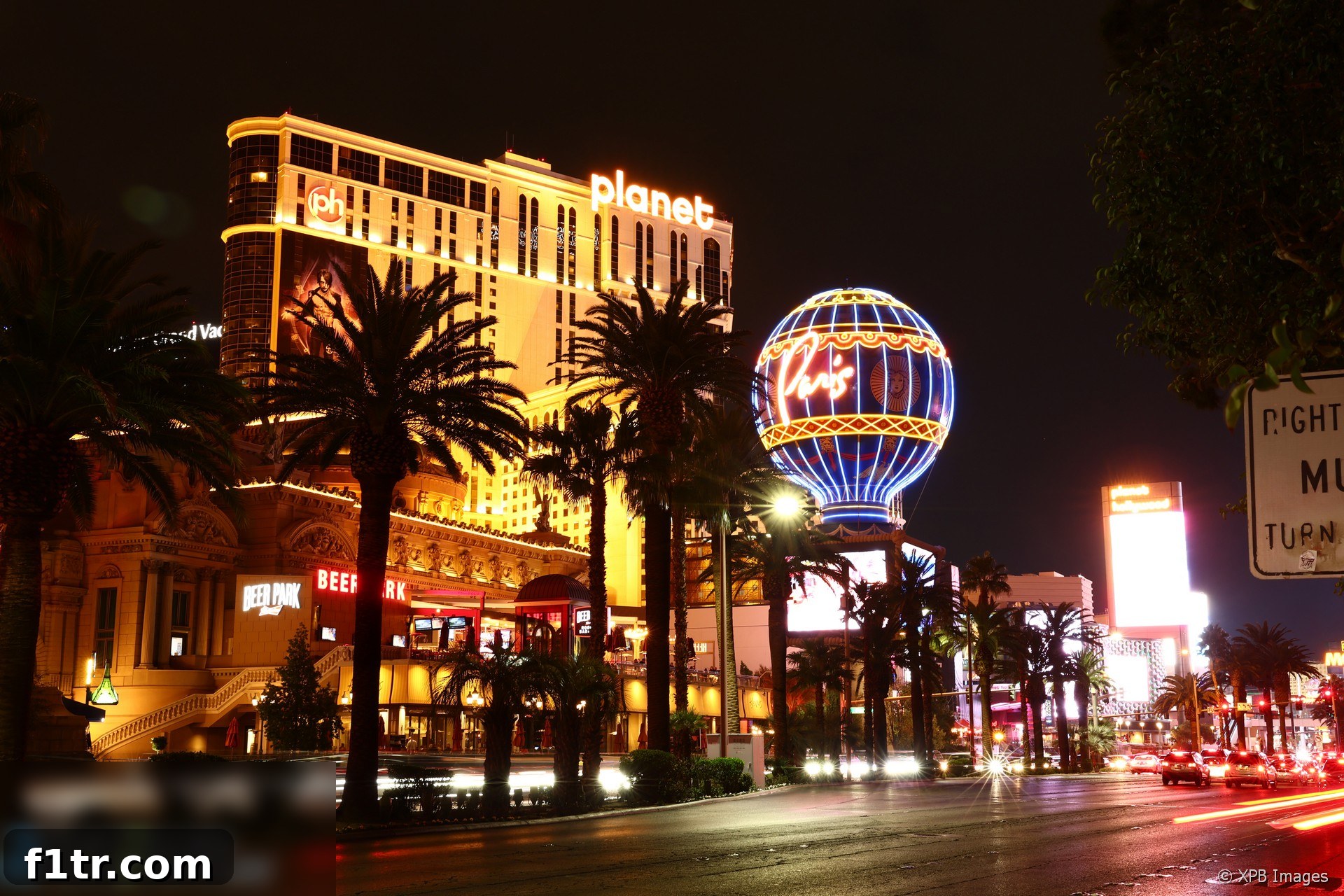
Formula 1 is gearing up for one of its most ambitious and visually stunning events: the highly anticipated Las Vegas Grand Prix. The aim is clear – to deliver an unforgettable show, transforming the iconic Las Vegas Strip into a high-speed motorsport arena. However, bringing this grand vision to life on November 18th has necessitated a series of unprecedented compromises, primarily driven by the unique demands and logistics of hosting an event in the heart of one of the world’s busiest entertainment capitals.
The decision to host the race on a Saturday, a rare occurrence not seen in Formula 1 since the 1985 South African Grand Prix, is a direct consequence of these logistical complexities. Furthermore, the schedule dictates a midnight start for qualifying and a 10 PM commencement for the main race. While these timings promise dramatic illuminated visuals against the city’s neon glow, they introduce a significant variable: extremely low ambient temperatures. Forecasters predict that the track action could take place in conditions barely above single digits Celsius, a stark contrast to many traditional F1 venues. To put this into perspective, last year’s coolest race, held at Imola, saw ambient temperatures peak at a relatively mild 14 degrees Celsius.
F1 CEO Stefano Domenicali shed light on the intricate planning behind these decisions, emphasizing the unique challenges presented by Las Vegas. “As always in life, there are opportunities you take when there is the possibility to do it,” Domenicali stated, highlighting the critical constraints Formula 1 faced regarding potential race dates. The primary factor influencing the schedule was the extraordinary hotel occupancy rate in Las Vegas. With over 150,000 hotel rooms, the city boasts a near-98% occupancy rate throughout most weekends of the year. The weekend before Thanksgiving, while slightly lower, still presented considerable logistical hurdles. “If you want to be in a place where we can be hosted, we need to find the place where there is the room available for us,” Domenicali explained, underscoring the necessity of selecting a date that could accommodate the massive influx of F1 teams, personnel, and fans.
Navigating the Cold: Driver Comfort and Car Performance
While the prospect of shivering spectators might be a concern, with Domenicali quipping about the need for “good jumpers” and “good jackets,” the cooler temperatures could surprisingly benefit the cars themselves. Preventing power units and tyres from overheating is a perennial challenge for drivers and teams at many of Formula 1’s hotter venues. Lower ambient temperatures typically mean denser air, which can lead to increased engine performance and more efficient cooling for critical components. This could allow teams to run more aggressive engine modes or optimize aerodynamic packages that might otherwise be compromised by thermal management issues.
However, the effect on tyre performance is a more complex equation. While overheating is less likely, getting the tyres into their optimal operating window could prove exceptionally challenging in cold conditions. Pirelli’s sophisticated compounds are designed to generate and retain heat for maximum grip. On a cold track, particularly one with less rubber laid down, achieving and maintaining this critical temperature range will be a key strategic battle. Drivers might struggle with initial grip, especially on out-laps or during restarts, leading to a potentially higher risk of incidents as they push to generate tyre temperature.
The Unprecedented Absence of Support Races
Perhaps the most significant compromise for the Las Vegas Grand Prix is the complete absence of support races. This decision comes as a considerable surprise to seasoned F1 fans, who are accustomed to a full weekend schedule featuring feeder series like Formula 2, Formula 3, and Porsche Supercup, which collectively appear at eight of this year’s 22 Grands Prix. Some events, such as the Australian Grand Prix in Melbourne, even boast an even more packed timetable, with local categories like Supercars joining the international support series. Even at other North American venues, such as the Canadian Grand Prix, fans enjoy Ferrari Challenge and F1600 racing, while the Circuit of the Americas hosts the F1 Academy and Porsche racing.
The trend of reduced support action is often observed at street circuits like Baku, Miami, and Singapore, where limited paddock space and parc fermé facilities restrict the number of categories that can be accommodated. Baku, for instance, only hosts F2, while Miami and Singapore only feature Porsches. However, this year, several permanent circuits such as Suzuka, Losail, Mexico City, Interlagos, and Yas Marina also feature significantly reduced support programmes, with some only offering domestic F4 series or just F2. Las Vegas, however, stands unique in having only Formula 1 on the bill, making it an unprecedented omission for a modern F1 Grand Prix.
The Critical Impact on Track Evolution and Race Quality
The lack of support races carries significant implications, particularly for the quality of racing at what is already one of the most hyped Grands Prix in history. The absence of multiple racing categories means considerably fewer laps will be completed on the newly laid Las Vegas Strip Circuit before the main event. This directly impacts track evolution – the process by which a racing surface gains grip as rubber from racing tyres is deposited onto it.
A highly relevant comparison can be drawn from IndyCar’s recent relocation of its Detroit Grand Prix to a new downtown street circuit. Despite initial skepticism about the narrow, angular course’s suitability for overtaking, the race proved surprisingly lively. Race winner Alex Palou initially confessed, “I thought there was going to be zero passes without a crash” around the challenging layout. Yet, the racing exceeded expectations, a fact Palou attributed to the sheer volume of rubber laid down by IndyCar and its many support series throughout the weekend.
“We had more grip than I expected,” Palou elaborated. “The track kept evolving with our sessions and with other series, like Indy Nxt and Trans-Am cars. You could see the driving lane, it was black, all full of rubber. That allowed for some more overtaking.” Before the Detroit Grand Prix began, IndyCar, Indy Nxt, Trans-Am, and the IMSA SportsCar Challenge collectively accumulated a staggering 5,900 laps on the new circuit. This extensive track usage led to an impressive 10 lead changes during the race, with several drivers making up six or more positions from their starting grid slots.
Palou wasn’t alone in recognizing the substantial improvements in track surface grip. McLaren’s Felix Rosenqvist echoed this sentiment, noting, “As you do more laps it gets grippier and grippier. I thought during the race it really came alive.” The lesson from Detroit is clear: more rubber on track directly translates to higher grip, better tyre performance, and ultimately, more exciting wheel-to-wheel racing.
For Las Vegas, this crucial benefit will be largely absent. In contrast to Melbourne, where 4,921 laps were set before the F1 race, or Jeddah with over 2,400 laps, Las Vegas is unlikely to see much more than 1,500 laps completed before Saturday night’s main event. With only Formula 1’s own practice sessions and qualifying contributing to this total, the track will evolve at a significantly slower pace, potentially leaving drivers with a low-grip surface that could hinder overtaking opportunities and elevate the risk of errors.
Further Logistical Constraints and Strategic Implications
The limited track action is also a byproduct of the unusual logistical arrangements designed to minimize disruption to local businesses. Formula 1 will only utilize the track after 6:30 PM on Thursday, Friday, and Saturday. This compressed schedule, while accommodating the bustling casino and hotel industries that rely on high footfall, severely restricts the amount of time available for track preparation, testing, and, crucially, rubber deposition. The challenge will be for F1 teams to quickly adapt to the evolving surface in extremely limited windows.
Adding another layer of complexity is the Las Vegas Grand Prix’s proximity to the season finale in Abu Dhabi, scheduled just one week later. This presents a strategic dilemma for teams and drivers regarding power unit component usage. Unless a driver has already exceeded their allocated power unit elements earlier in the season, they will be keen to conserve their components in Las Vegas. Replacing parts at this late stage would incur costly grid penalties for the final race at Yas Marina, a scenario teams will desperately want to avoid, particularly if championship positions are still undecided.
This conservation mindset could lead to drivers spending less time on track during practice sessions, opting for fewer laps to preserve engine and gearbox mileage. If multiple drivers adopt this cautious approach, it collectively reduces the overall track time and, consequently, the rubber laid down on the Las Vegas Strip Circuit. This, combined with the already cold temperatures which make rubber adherence to the track surface less efficient, further inhibits the crucial build-up of grip levels, potentially leading to a less predictable and challenging race surface come Saturday night.
The Spectacle vs. The Sport: A Question of Legacy
Formula 1 has set incredibly high expectations for its return to Las Vegas, aiming to erase the memory of its previous, somewhat uninspired ventures in the early eighties. The Caesars Palace Grands Prix, held in a casino car park, notably failed to capture the imagination of locals or global audiences, despite deciding championships. This time, the ambition is far grander.
Stefano Domenicali envisions the event as an unparalleled global showcase. “I think that it will be another experience where everyone wants to be, or want to come, in a place that is iconic,” he affirmed. He anticipates that “the TV spot that we’re going to share around the world of the start, on The Strip, in the place where there is light more in the night than in the day, will help also F1 to be promoted outside Vegas.” Indeed, he expects the Las Vegas Grand Prix to produce “an incredible postcard that we’re going to share all around the world.”
The visual spectacle of modern Formula 1 cars racing down the illuminated Strip, past world-famous landmarks, will undoubtedly be breathtaking and will provide invaluable promotional material for the sport. However, the ultimate success of the Las Vegas Grand Prix, particularly in the long term, will hinge on more than just aesthetics. The central question remains: will the extensive compromises made to arrange this extraordinary event inadvertently undermine the very quality of the racing that Formula 1 promises to deliver? Only when the lights go out on Saturday night will we discover if the dazzling show can also live up to the highest standards of motorsport competition.
Become a RaceFans Supporter
RaceFans is run thanks in part to the generous support of its readers. By contributing £1 per month or £12 per year (or the same in whichever currency you use) you can help cover the costs of creating, hosting and developing RaceFans today and in the future.
Become a RaceFans Supporter today and browse the site ad-free. Sign up or find out more via the links below:
- Become a RaceFans Supporter
- RaceFans Supporter FAQ
2023 Las Vegas Grand Prix Related Articles
- Norris ‘even more’ sure Canada penalty was wrong after review request fails
- McLaren seeking more than just downforce gains from major upgrade
- Winning more races won’t necessarily lead to F1 seat – Palou
- Red Bull’s testing restriction will “massively affect” 2024 car development
- Schumacher’s set-up input gives Mercedes a “super advantage” – Wolff
Browse all 2023 Las Vegas Grand Prix articles