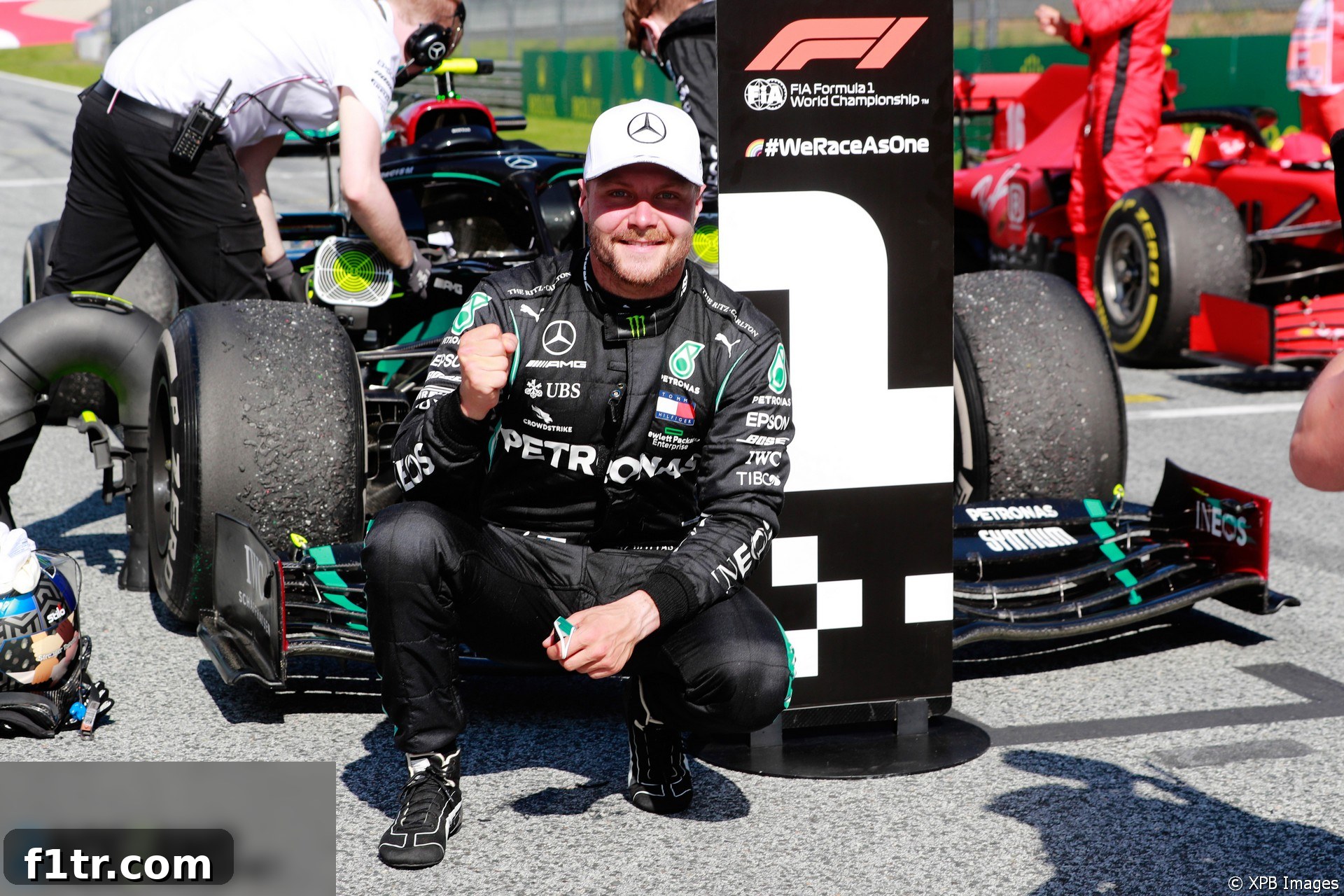
Valtteri Bottas delivered a masterful performance at the season opener, securing a hard-fought victory for Mercedes-AMG Petronas F1 Team. However, the triumph was not without its moments of intense worry and strategic driving, as Bottas admitted concerns over his car’s longevity after being advised to handle it with extreme caution. This revelation highlighted the delicate balance between pushing for victory and preserving critical components in the high-stakes world of Formula 1 racing, adding a layer of drama to an already thrilling start to the championship.
Valtteri Bottas Triumphs in Thrilling Season Opener Amidst Mercedes Reliability Scare
The opening Grand Prix of the 2020 Formula 1 season delivered immediate excitement, with Valtteri Bottas emerging victorious after a race fraught with incident and underlying mechanical tension. While the Finnish driver celebrated a significant win, giving him an early lead in the drivers’ championship, the victory was underscored by a palpable concern within the Mercedes garage regarding the reliability of their W11 cars. Both Bottas and his teammate, Lewis Hamilton, received urgent radio messages throughout the race, instructing them to exercise extreme care with their gearboxes. This unprecedented directive introduced an element of risk management into what was already a demanding contest, forcing Bottas to temper his natural aggression with a cautious approach to ensure his machine endured the full race distance.
Navigating the Edge: Gearbox Concerns Threaten Mercedes’ Early Dominance
From the cockpit, the tension was palpable. Bottas openly confessed to feeling “slightly worried” about his car’s condition, an unsettling sentiment for a driver leading a Grand Prix. The instruction to manage the car heavily, specifically by avoiding the aggressive use of kerbs, represented a significant compromise. In Formula 1, drivers typically utilize every inch of the track, including the kerbs, to maximize their speed through corners and achieve optimal lap times. Kerbs, while designed to delineate the track, are often harsh and can inflict severe jolts on a car’s suspension and, critically, its drivetrain components like the gearbox. To be told to avoid them meant Bottas had to adapt his driving style on the fly, sacrificing potential speed for mechanical preservation. This delicate balancing act tested his discipline and strategic thinking to the absolute limit. The radio exchanges, picked up by global broadcasts, underscored the severity of the situation, hinting at a potentially season-defining reliability vulnerability for the dominant Mercedes team even at this early stage.
The implications of a gearbox failure are catastrophic for an F1 car, leading to an immediate retirement from the race and potentially costly penalties for future events. For a team known for its meticulous engineering and bulletproof reliability, these warnings were particularly alarming. Bottas’s ability to maintain focus and execute such a precise, controlled race despite these underlying concerns speaks volumes about his mental fortitude and experience. He had to constantly recalibrate his approach, making split-second decisions about how much to push and when to back off, all while defending his lead against one of the sport’s greatest competitors.
A Masterclass in Race Management: Bottas’s Unyielding Focus
Valtteri Bottas’s performance was not merely about speed; it was a profound demonstration of strategic race management. He meticulously navigated the circuit, adhering to the team’s directives without visibly losing pace or control. “We had to manage the car quite a lot,” Bottas explained post-race. “I couldn’t really use all the kerbs and at some point I was slightly worried if everything would all be OK.” This quote perfectly encapsulates the mental tightrope he walked. Every corner presented a new challenge: how to maintain momentum and defend without overstressing the gearbox. This required a level of precision and control that truly separates the good drivers from the great. He had to be acutely aware of his car’s limits, listen intently to his engineers, and trust his instincts to bring the car home in one piece.
His careful management extended beyond just the gearbox. In Formula 1, ‘managing the car’ often encompasses tire preservation, fuel economy, and brake temperature. While the gearbox was the primary concern, Bottas’s holistic approach to race management ensured that no other critical system was unduly stressed. He showcased an impressive ability to maintain a consistent rhythm, avoiding major errors despite the immense pressure. This meticulous control allowed him to build a sufficient buffer when possible and then conserve his resources when necessary, demonstrating an often-underestimated aspect of Grand Prix winning drives.
Fending Off a Champion: The Relentless Pressure from Lewis Hamilton
Adding another layer of complexity to Bottas’s challenge was the relentless pursuit by his teammate, Lewis Hamilton. Despite starting further down the grid due to a penalty and later receiving another five-second penalty for causing a collision with Alexander Albon, Hamilton demonstrated blistering pace throughout the race. He aggressively worked his way through the field and, by the latter stages, was breathing down Bottas’s neck, creating an intense intra-team battle for the lead. “There was quite a bit of pressure all through the race,” Bottas admitted. “There were so many chances for Lewis to get the lead if I make even a small mistake and he was really quick today.”
This constant threat from Hamilton meant Bottas could ill-afford to relax or ease off entirely, even with the gearbox concerns. He had to maintain a competitive pace while simultaneously conserving his machinery. The duel highlighted the ferocious competition that often exists within top teams, where drivers are pushing each other to their absolute limits. Hamilton’s speed, even with penalties looming, served as a potent reminder of the caliber of the competitor Bottas was up against. The fact that Bottas managed to keep Hamilton at bay, under such unique mechanical constraints, further amplified the significance of his victory and his psychological strength. It required nerves of steel and impeccable judgment to control the race from his side, as he aptly put it.
Chaos and Composure: The Impact of Safety Car Periods
The race was further punctuated by a series of Safety Car interruptions, which dramatically altered the dynamics of the Grand Prix on multiple occasions. Each Safety Car period compresses the field, negating any hard-earned lead and placing immense pressure on the front-runner during the restarts. For Bottas, who was already dealing with internal car concerns and external pressure from Hamilton, these restarts were critical moments. He had to perfectly judge his braking, acceleration, and timing to ensure he maintained his position and didn’t allow Hamilton, or any other competitor, an opportunity to overtake.
Safety Car periods also introduce new variables, such as tire temperatures cooling down and the potential for new strategies from competitors who might opt for fresh tires. Bottas’s ability to remain composed and execute flawless restarts, repeatedly pulling away from Hamilton with confidence, demonstrated his exceptional racecraft and mental resilience. These moments are often where races are won or lost, and Bottas proved he had the temperament and skill to navigate the chaos, ultimately strengthening his grip on the lead with each resumption of racing.
A Resounding Start: Mercedes Leads the Constructor Standings
Beyond Bottas’s individual triumph, the overall result was immensely significant for the Mercedes-AMG Petronas F1 Team. Despite the underlying reliability concerns, both cars managed to finish the race, securing valuable points for the constructors’ championship. Even with Hamilton’s penalty, the team’s combined performance ensured a strong start to their title defense. “But I’m glad we managed to finish both cars and I think in the team standings we are leading so that’s a very good start,” Bottas remarked, underscoring the collective achievement. This sentiment highlights the importance of the team result in Formula 1, where every point contributes to the ultimate goal of the constructors’ championship. Starting the season by leading the standings provides a significant psychological boost and establishes an early advantage, setting a formidable benchmark for their rivals.
The strong points haul, despite the operational challenges, also speaks to the team’s ability to react under pressure and manage unforeseen circumstances. It reaffirms Mercedes’ status as a top-tier outfit, not just in terms of raw speed but also in strategic prowess and damage limitation when faced with adversity. This early demonstration of strength, coupled with Bottas’s commanding drive, sent a clear message to the rest of the grid about Mercedes’ intentions for the season.
Beyond the Chequered Flag: The Significance of Bottas’s Victory
For Valtteri Bottas, this victory was far more than just twenty-five points. It was a powerful statement of intent and a massive confidence booster at the outset of what promised to be an challenging season. “No better way to start the season,” Bottas added, a sentiment echoed by his previous success in the Australian season opener. His consistent ability to perform exceptionally well at the start of new campaigns highlights a characteristic strength: an innate ability to prepare and execute under immense pressure from the very first moment. This win solidifies his position within the team and strengthens his personal championship aspirations.
A victory earned under such demanding conditions – managing a potentially compromised car, fending off a seven-time world champion, and navigating multiple Safety Car periods – is a testament to Bottas’s all-round capability. It showcases his evolution as a driver, demonstrating not only his speed but also his strategic intelligence, mental resilience, and precision. This kind of hard-fought win often instills a deeper sense of self-belief that can carry a driver through the entirety of a grueling F1 season.
Looking Ahead: Setting the Tone for the Championship Battle
As the dust settled on a thrilling opening Grand Prix, Valtteri Bottas’s victory served as a compelling prelude to the season ahead. It immediately set a high bar, not only for Bottas himself but also for the entire Mercedes team, showcasing their ability to win even when faced with significant technical hurdles. The underlying gearbox concerns, while successfully managed in this instance, will undoubtedly remain a focal point for the engineers, highlighting the continuous development and reliability challenges inherent in Formula 1. This race proved that the championship would be far from straightforward, with internal and external pressures constantly testing the mettle of drivers and teams alike. Bottas’s strategic excellence and unwavering composure ensured that Mercedes started the season with a commanding lead, laying down a formidable challenge for all their rivals and promising an enthralling championship battle.