Valtteri Bottas’s Provocative Claim: Did F1’s ‘Quali Mode’ Ban Backfire on Red Bull at Monza?
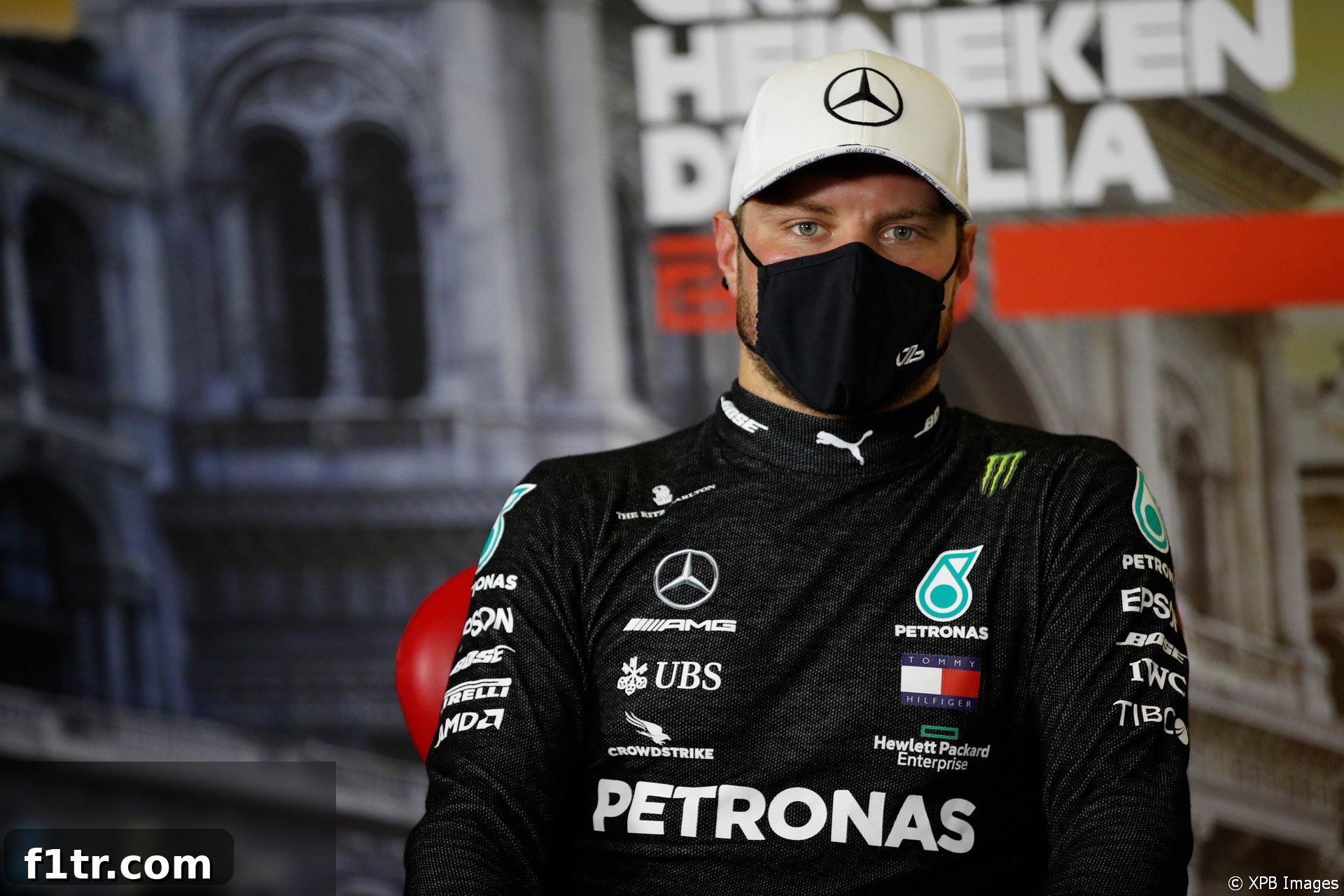
The 2020 Formula 1 season delivered its share of dramatic storylines, but few moments encapsulated the intricate political and technical dance of the sport quite like the introduction of the ‘quali mode’ ban at the Italian Grand Prix. In the aftermath of a dominant qualifying performance by Mercedes at Monza, Valtteri Bottas, fresh from securing a front-row start, offered a pointed assessment regarding Red Bull Racing’s potential dismay with the new regulations. His comments ignited a debate that underscored the persistent power struggle at the pinnacle of motorsport and the unexpected outcomes of regulatory changes designed to level the playing field.
The ‘quali mode’ ban, officially known as Technical Directive 037/20, was introduced by the FIA with the stated aim of preventing teams from using extreme, high-performance engine modes for short bursts during qualifying sessions. This measure, implemented at Monza, sought to reduce costs, simplify power unit policing, and, implicitly, to curb Mercedes’ perceived qualifying advantage. However, the initial results from the “Temple of Speed” suggested a different reality, sparking questions about the ban’s true impact and whether it inadvertently amplified Mercedes’ dominance rather than diminishing it.
The High-Stakes Qualifying Showdown at the Temple of Speed
Monza, with its long straights and fast corners, is a circuit where engine power is paramount. The 2020 Italian Grand Prix qualifying session was therefore seen as the ultimate test of the new engine mode restrictions. All eyes were on Mercedes, who had consistently demonstrated a superior power unit, especially in qualifying. The outcome, however, surprised many: Mercedes not only maintained their advantage but swept the front row, with Lewis Hamilton clinching pole position and Valtteri Bottas securing P2. Their closest rivals, Red Bull, could only manage fifth place on the grid with Max Verstappen, a significant gap that seemed to negate the very purpose of the ban.
The commanding performance by the Mercedes-AMG F1 team in the first qualifying session under the new rules immediately threw Red Bull’s prior lobbying efforts into sharp relief. Many within the paddock believed Red Bull had been a key proponent of the ban, hoping it would curtail Mercedes’ qualifying prowess and bring the field closer together. Yet, the opposite appeared to happen, leaving Red Bull – and indeed much of the F1 community – to ponder the true effectiveness and consequences of the new directive.
Bottas’s Sharp Assessment of Red Bull’s Fortunes
Valtteri Bottas, never one to shy away from candid remarks, wasted no time in highlighting the irony of the situation. Speaking to the media after his strong qualifying run, where his Mercedes W11 felt exceptionally balanced and potent, he expressed a subtle jab towards his rivals. “The car felt good, the engine felt good,” Bottas affirmed, exuding confidence. “Like I said before, it should be even better in the race.”
He then delivered the statement that resonated throughout the paddock: “So I’m not sure how happy Red Bull is now with this engine change.” This remark was more than just a passing comment; it was a direct challenge, suggesting that the very regulations Red Bull had hoped would hinder Mercedes had, in fact, done nothing of the sort, and perhaps even exacerbated their own struggles. Bottas’s words underlined Mercedes’ belief that their inherent engine and chassis superiority, rather than specific qualifying modes, was the true source of their consistent performance advantage. His confidence also hinted at the internal data Mercedes possessed, which suggested their race pace would be equally, if not more, formidable, a chilling prospect for the competition.
Red Bull’s Pre-Emptive Concerns and Christian Horner’s Hopes
The build-up to the Italian Grand Prix had been dominated by discussions surrounding the ‘quali mode’ ban. Red Bull team principal Christian Horner had been vocal about his concerns and hopes for the new regulations. Ahead of the Monza race weekend, Horner had publicly stated his apprehension, articulating his desire that the ban wouldn’t “make it worse” for his team. This sentiment reflected Red Bull’s ongoing struggle to match Mercedes’ single-lap pace, a deficit they frequently aimed to mitigate through race strategy and superior aerodynamic performance in race conditions.
Red Bull’s argument centered on the idea that the ban would prevent engine manufacturers from using specific, aggressive engine maps purely for qualifying, thereby evening the playing field. They had hoped that by forcing all teams to run a single, consistent engine mode throughout both qualifying and the race, Mercedes’ perceived advantage would diminish. However, the Monza qualifying results offered a stark rebuttal to these hopes, suggesting that Mercedes’ fundamental engine design and operational philosophy were simply superior, regardless of the specific modes allowed.
Lewis Hamilton’s Amused Dismissal of “Party Mode” Rhetoric
Further adding to the narrative, Lewis Hamilton, who clinched pole position at Monza, found the entire discussion surrounding “party mode” and the ban “amusing.” Speaking on Thursday before the qualifying session, Hamilton had already expressed his skepticism regarding the existence of such a definitive “party mode” within Mercedes’ operational framework. “I don’t even think we ever had a ‘party mode’,” Hamilton asserted, dismissing the popular term. “That’s something someone else made up.”
After taking pole position, Hamilton reiterated his stance, subtly challenging the premise behind the ban and the narrative that Mercedes relied on special modes for their qualifying prowess. When questioned whether he had noted any change in his car’s performance since the previous race weekend at Spa-Francorchamps, he replied with characteristic wit: “But who knows if we even used that mode in Spa anyways?” This statement cleverly implied that Mercedes’ dominance was not dependent on these “quali modes,” and their inherent performance was sufficient, irrespective of regulatory changes. Hamilton’s comments served to underscore Mercedes’ confidence in their comprehensive package, from engine to chassis to driver talent, which consistently delivered top-tier performance.
Deconstructing the Controversial ‘Quali Mode’ Ban
To fully appreciate the context of Bottas’s comments, it’s essential to understand the ‘quali mode’ ban itself. The FIA’s Technical Directive 037/20 prohibited teams from changing engine modes between qualifying and the race, mandating a single, consistent power unit setting for both sessions. The rationale provided by the FIA included several key points:
- Cost Control: Limiting engine mode flexibility could potentially reduce the complexity and cost of developing highly specialized, short-burst engine maps.
- Fair Competition: The FIA suggested that it would create a more level playing field by removing a perceived advantage held by certain manufacturers.
- Simplified Policing: A single engine mode would make it easier for the FIA to monitor power unit legality and ensure compliance with technical regulations, particularly regarding fuel flow and energy recovery systems.
While these reasons were presented by the governing body, many in the F1 paddock viewed the ban as a direct response to Mercedes’ consistent qualifying advantage. The perception was that Mercedes possessed a “party mode” – a specific, ultra-aggressive engine setting that could be deployed for a few laps in qualifying to extract maximum performance, something their rivals struggled to replicate or match. The ban was intended to curb this, forcing all teams to operate within a more constrained engine performance window.
The Impact on Teams: Shifting Dynamics or Status Quo?
The immediate aftermath at Monza indicated that the ban had failed to achieve its stated goal of reining in Mercedes. Instead, the German manufacturer continued its dominant run, suggesting their advantage was deeply embedded in their power unit design, efficiency, and overall car concept, rather than reliant on specific, short-lived engine modes. Mercedes’ engine, the M11 EQ Power+, was renowned for its thermal efficiency and robust performance, allowing it to maintain strong power output even when operating within more conservative parameters over an entire race weekend.
For Red Bull, the results were disheartening. Despite their hopes, the gap to Mercedes in qualifying not only persisted but, by some measures, seemed to widen on a power-sensitive circuit like Monza. This indicated that Red Bull’s Honda power unit, while competitive, still lagged behind Mercedes in raw power output, especially on tracks that demand sustained high-speed performance. The ban did not level the playing field as Red Bull had hoped; rather, it highlighted the inherent differences in power unit performance when run in consistent modes, inadvertently emphasizing Mercedes’ underlying strength.
Monza 2020: Beyond Qualifying – A Race of Surprises
While qualifying set the stage, the 2020 Italian Grand Prix race itself delivered one of the most unexpected and thrilling outcomes of the season. Pierre Gasly, driving for AlphaTauri, secured a sensational victory in a chaotic race that featured a safety car, a red flag, and numerous incidents. Lewis Hamilton, despite his pole position, received a penalty for entering the pit lane when it was closed, dropping him down the order and setting the scene for an incredible comeback drive.
Interestingly, Hamilton himself commented on the post-ban environment, suggesting that the new regulations might have impacted the racing spectacle. He noted that the ban on ‘quali modes’ had reduced overtaking opportunities at Monza. His argument was that without the ability to use different engine maps for offensive or defensive maneuvers, the cars were more limited in their performance variability during the race, potentially making it harder to overtake on a track already known for its slipstreaming battles. This added another layer to the ongoing discussion about the ban’s broader impact on the sport, beyond just qualifying performance.
Monza 2020, therefore, became a crucible where both technical regulations and competitive dynamics were severely tested, leading to a race that was both unpredictable and unforgettable, even if the qualifying session under the new ‘quali mode’ rules initially pointed to a familiar Mercedes dominance.
The Broader Implications for Formula 1’s Future Regulations
The ‘quali mode’ ban at Monza served as a poignant example of the often-unintended consequences of technical regulations in Formula 1. While the FIA’s intentions were clear – to promote fairness and control costs – the immediate outcome revealed the complex interplay of engineering excellence, strategic lobbying, and inherent team strengths. Mercedes’ ability to maintain, and arguably extend, its advantage demonstrated that their dominance stemmed from a deeper understanding and execution of power unit and chassis integration, rather than simply exploiting a loophole in engine mode usage.
This episode also highlighted the ongoing debate in F1 about the balance between allowing technical innovation and imposing strict controls to promote competitive parity. Every regulatory change, no matter how minor, has ripple effects across the entire grid, influencing development cycles, team strategies, and ultimately, the racing spectacle itself. The ‘quali mode’ ban became a symbol of the continuous quest by governing bodies to rein in powerful teams, and the equally relentless pursuit by those teams to find performance within, and sometimes despite, the rulebook.
Conclusion: The Persistent Pursuit of Performance
Valtteri Bottas’s provocative comments at Monza were more than just a passing remark; they were a snapshot of the intense rivalry and strategic gamesmanship inherent in Formula 1. The ‘quali mode’ ban, intended to shake up the established order, ultimately failed to dislodge Mercedes from their dominant position, at least in its initial application. Instead, it served to underscore the sheer engineering might and operational excellence of the Silver Arrows, leaving rivals like Red Bull to reassess their strategies and lobbying efforts.
While the 2020 Italian Grand Prix race itself defied expectations with a thrilling, unexpected winner, the qualifying session under the new engine mode rules provided a clear message: Mercedes’ advantage was deep-seated and not easily curtailed by single-point regulations. Bottas’s early assessment proved largely accurate – Red Bull was indeed unlikely to be happy. This episode remains a testament to Formula 1’s ever-evolving landscape, where technical innovation, political maneuvering, and raw talent converge in a relentless pursuit of performance and victory.
Stay connected with the latest from the world of Formula 1 and delve deeper into key moments:
- Grosjean “obviously jealous” but pleased for Gasly after win
- 2020 Italian Grand Prix Star Performers
- Gasly: I’m ready for Red Bull return
- Ban on ‘quali mode’ reduced overtaking at Monza – Hamilton
- Gasly beats Sainz in closest F1 finish for 10 years
Browse all 2020 Italian Grand Prix articles
For more exclusive content and to support independent Formula 1 journalism, consider becoming a RaceFans supporter.