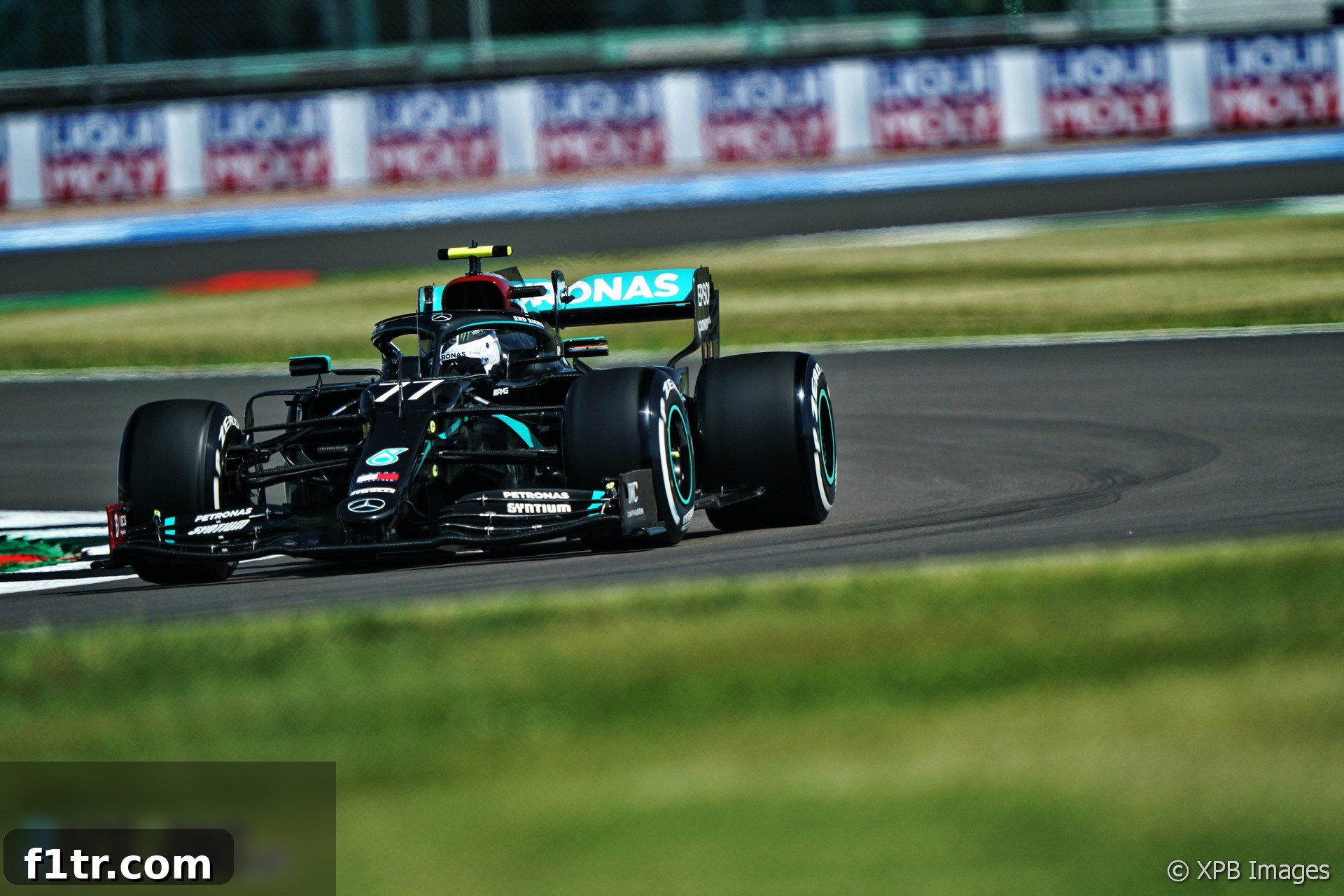
Valtteri Bottas Unprepared for Sudden British GP Tyre Failure
In a dramatic twist at the British Grand Prix, Mercedes driver Valtteri Bottas found himself battling more than just his rivals in the race’s closing stages. A sudden and unpredictable tyre failure shattered his hopes of a strong finish, leaving him questioning the circumstances and the safety implications. Bottas confirmed post-race that he had no forewarning of the impending puncture, a factor that ultimately cost him valuable championship points.
The Finnish driver, who was comfortably running in second position and aiming to challenge his teammate Lewis Hamilton, suffered a devastating puncture as he was passing the pit lane entrance. This critical timing meant he was forced to complete an entire lap on the compromised tyre, severely damaging his chances and causing a significant drop through the field. What looked like a guaranteed podium finish evaporated, pushing him out of the points entirely, eventually crossing the line in a disappointing 11th place.
“Of course, it’s really disappointing and very unlucky,” Bottas stated, reflecting on the incident immediately after the race. “I was aware I got a puncture, so I had to go around the whole lap. So, not ideal.” His words underscored the profound frustration of an incident that felt entirely out of his control, especially given the championship stakes.
The Strategic Build-Up: A Race Against Tyre Degradation
The 2020 British Grand Prix was already shaping up to be a test of strategy and tyre management, largely influenced by two early Safety Car periods. These interruptions forced both Bottas, his teammate Lewis Hamilton, and many of their competitors to switch to the harder compound tyres much earlier than initially planned. This early switch committed teams to exceptionally long stints on tyres that were designed for durability rather than outright speed, setting the stage for potential issues.
“We knew it was going to be a long stint with the hard tyre,” Bottas explained, acknowledging the strategic challenge. Throughout the middle phase of the race, his focus remained on applying relentless pressure to Hamilton, hoping to force an error or gain an advantage. However, as the laps ticked down, a more ominous problem began to manifest itself.
“But towards the end, I was starting to get more and more vibration. I reported that, and then at the end, I had in my mind that, who knows, there could be an issue. So, of course, I started to manage a bit,” he revealed. Despite his efforts to manage the escalating vibrations, the tyre failure was immediate and catastrophic. “But it just happened like this, so sudden, I couldn’t really predict it happening. Not much more to say, really.” This candid admission highlights the fine line drivers walk between pushing the limits and preserving their machinery, sometimes with outcomes that defy anticipation.
Pirelli’s Role and the Silverstone Double-Header Challenge
The incidents at Silverstone, which also saw similar tyre failures for Hamilton and Carlos Sainz, brought Formula 1’s official tyre supplier, Pirelli, under intense scrutiny. The specific conditions of the high-speed Silverstone circuit, combined with the long stints on hard compounds, created a perfect storm for tyre stress. In response to these events and with another race scheduled at the very same venue next weekend, Pirelli has chosen to bring softer tyre compounds. This decision is further complicated by the expectation of hotter ambient temperatures, potentially intensifying the challenge for teams and drivers.
Bottas was quick to recognize the potential ramifications of this change. “It’s going to be an issue for everyone,” he predicted. The shift to softer compounds, combined with the heat, strongly suggests that the one-stop strategy, which proved precarious this weekend, will be completely unfeasible for the upcoming race. “For sure, one stop is not going to happen with the compounds we have next week,” he asserted, indicating a necessary strategic rethink across the paddock.
The events of the British Grand Prix have undoubtedly provided crucial data and lessons. “So, I’m sure there still will be lots of things learned from this weekend. But just need to move on, I guess,” Bottas concluded, demonstrating a pragmatic outlook despite the personal setback. The emphasis will now be on understanding the exact cause of the failures and adapting strategies for the “70th Anniversary Grand Prix,” which will present an immediate opportunity for redemption – or further complications – on the very same track.
Championship Implications and Bottas’s Path Forward
For Valtteri Bottas, the puncture was not just a race incident; it was a significant blow to his championship aspirations. While Lewis Hamilton managed to secure victory despite his own late tyre drama, Bottas’s DNF-equivalent result further widened the points gap between the two Mercedes teammates. In a season where consistency is paramount, such an unpredictable event can be incredibly demoralizing, threatening to derail a driver’s momentum and confidence. Bottas needs to quickly regroup and harness the frustration into a renewed determination for the next race.
The reliability of the tyres, a fundamental component of Formula 1, has once again been thrust into the spotlight. While Pirelli aims to create exciting races with tyres that degrade, ensuring safety and preventing sudden, unpreventable failures is paramount. Teams will be meticulously analyzing their data, tire pressures, camber settings, and general car setup to mitigate any risks for the upcoming race. The pressure is immense, not just on the drivers, but on the engineers and strategists to find the optimal balance between performance and durability.
The upcoming “70th Anniversary Grand Prix” at Silverstone promises to be another thrilling encounter, with the added intrigue of different tyre compounds and the lessons learned from the previous weekend. For Bottas, it’s a chance to put the disappointment behind him and reignite his challenge for the 2020 title. The unpredictability of Formula 1, often its most captivating element, delivered a cruel blow to Bottas, but it also sets the stage for what promises to be an even more intense and strategically rich follow-up race.
Ultimately, the British Grand Prix served as a stark reminder of the fine margins in Formula 1, where fortunes can change in an instant, and even the most dominant teams can be vulnerable to unforeseen mechanical issues. Bottas’s experience highlights the constant battle against the elements and the relentless pursuit of perfection in a sport where every detail matters.
2020 F1 season – Related Articles
- Grosjean to make F1 test return tomorrow for first time since Bahrain horror crash
- Pictures: Wrecked chassis from Grosjean’s Bahrain fireball crash to go on display
- Bottas vs Rosberg: Hamilton’s Mercedes team mates compared after 78 races each
- F1 revenues fell by $877 million in Covid-struck 2020 season
- Hamilton and Mercedes finally announce new deal for 2021 season
Browse all 2020 F1 season articles