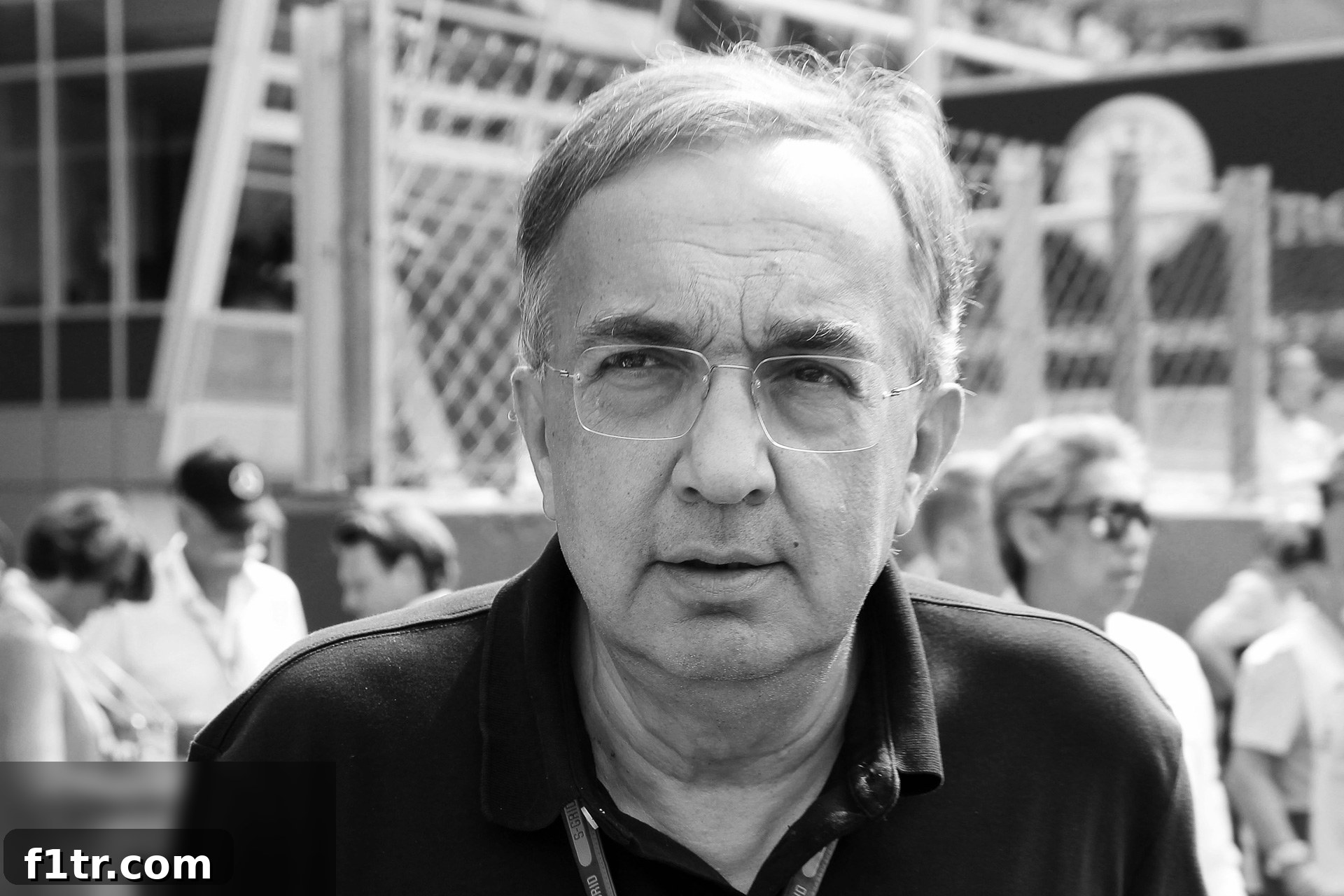
Sergio Marchionne: A Titan’s Enduring Legacy in the Automotive World and Formula 1
The global automotive and motorsport communities mourn the passing of Sergio Marchionne, the visionary former chairman and CEO of Ferrari, who tragically died at the age of 66. His death, confirmed on Wednesday, July 25, 2018, by John Elkann, current chairman of Fiat Chrysler Automobiles and Marchionne’s successor at Ferrari, came just days after he had stepped down from his roles due to severe ill health. Marchionne’s tenure was marked by a relentless drive and an unparalleled ability to transform ailing industrial giants into formidable market leaders, leaving an indelible mark on some of the world’s most iconic brands.
Early Life and the Genesis of a Leader
Born in Chieti, Italy, in 1952, Sergio Marchionne’s journey was one of ambition and adaptability. At the age of 14, his family immigrated to Toronto, Canada, a move that would expose him to diverse cultures and educational systems. He pursued an extensive academic path, earning degrees in philosophy from the University of Toronto, followed by a Bachelor of Commerce from the University of Windsor, and later an MBA from York University. His thirst for knowledge extended to law, acquiring a Bachelor of Laws from the Law Society of Upper Canada. This unique blend of philosophical, commercial, and legal education would later shape his unconventional yet highly effective approach to corporate leadership, equipping him with both strategic depth and a meticulous understanding of business operations.
Marchionne’s early career saw him hone his skills as a chartered accountant, navigating the complexities of corporate finance. His rise through the ranks was swift, demonstrating an inherent talent for problem-solving and executive management. By 1997, his capabilities were recognized on an international stage when he was appointed CEO of Algroup, a prominent Swiss international packaging and aluminium company. Six years later, in 2003, his growing reputation in the European business circuit led him to join the board of Fiat, the venerable Italian automotive conglomerate, setting the stage for one of the most remarkable corporate turnarounds in modern history.
The Fiat Challenge: Resurrecting an Automotive Giant
In 2004, when Marchionne joined the Fiat board, the company was in dire straits. By 2006, when he was appointed CEO of the struggling Fiat Group, the situation was critical. Fiat was hemorrhaging billions of dollars, burdened by inefficiency, a fragmented product line, and a pervasive sense of malaise. Many considered it beyond salvageable. However, Marchionne, with his signature no-nonsense attitude and a bold vision, refused to accept defeat.
He embarked on a radical restructuring program, dismantling bureaucratic layers and replacing long-standing executives with a lean, performance-driven team. Marchionne’s leadership style was direct, demanding, and intensely hands-on. He famously wore his characteristic dark sweaters, eschewing traditional corporate suits, a symbol of his pragmatic and often rebellious approach to business. Under his relentless guidance, Fiat underwent a profound transformation, shedding unprofitable ventures, streamlining manufacturing processes, and investing strategically in new models and technologies. Against all odds, Marchionne returned Fiat to profitability, proving his critics wrong and establishing himself as a formidable force in the global automotive landscape. His success at Fiat laid the groundwork for his next, even more audacious challenge.
The Chrysler Rescue: A Transatlantic Masterstroke
The year 2009 brought with it the throes of a global financial crisis, and with it, the near collapse of the American automotive industry. Chrysler, one of the “Big Three” U.S. automakers, found itself in bankruptcy, teetering on the brink of extinction. While many saw only risk, Marchionne saw an unprecedented opportunity. He orchestrated a daring bid to acquire a controlling stake in the struggling American giant, envisioning a synergistic transatlantic alliance that would create a truly global automotive powerhouse.
The acquisition and integration of Chrysler were not without immense challenges. Marchionne deftly navigated complex political landscapes, labor union negotiations, and the skepticism of market analysts. He applied the same rigorous restructuring principles that had saved Fiat, injecting new life into Chrysler through shared platforms, technological expertise, and a renewed focus on design and market relevance. Within a few years, Chrysler, under Marchionne’s direct stewardship, was pulled back from the precipice, stabilized, and returned to profitability. This masterful turnaround culminated in the formation of Fiat Chrysler Automobiles (FCA) in 2014, a testament to Marchionne’s strategic acumen and his ability to forge a unified corporate culture across continents, creating the seventh-largest automaker in the world.
Steering Ferrari: From Boardroom to Racetrack Paddock
A Shift in Leadership at Maranello
By 2014, while Fiat and Chrysler were on a steady path, the future of Fiat’s crown jewel, the luxury car brand Ferrari, began to command Marchionne’s full attention. Ferrari, with its rich heritage in both road cars and Formula 1, was a symbol of Italian engineering and passion. However, there were growing concerns about its performance, both financially and on the racetrack. The F1 team, Scuderia Ferrari, was no longer consistently challenging for championships, and the brand itself, while prestigious, needed a fresh strategic direction to unlock its full potential in a rapidly evolving luxury market.
In a bold and controversial move in October 2014, Marchionne ousted Luca di Montezemolo, who had been Ferrari’s charismatic chairman for 23 years. This decisive action underscored Marchionne’s belief that Ferrari needed a more aggressive, results-driven leadership to secure its future. Marchionne himself stepped into the role of chairman, signaling his deep personal commitment to revitalizing the iconic brand. His vision for Ferrari extended beyond the racetrack; he aimed to unlock its financial value by floating it on the New York Stock Exchange the following year, a move that successfully capitalized on the brand’s immense global appeal and strengthened its financial independence.
Revitalizing the Scuderia: The Formula 1 Mandate
Marchionne’s direct involvement with the Formula 1 team was characterized by his unwavering demand for excellence and a return to winning ways. He made it clear that second place was not an option for Ferrari, instilling a renewed sense of urgency and accountability within the Maranello factory. Under his watchful eye, and with significant investment in personnel and technology, the Scuderia began a gradual but determined ascent. The 2017 season marked a pivotal moment, as Ferrari emerged as a serious championship contender for the first time in five years, challenging the dominant Mercedes team. While Mercedes and Lewis Hamilton ultimately secured both titles that year, Ferrari’s resurgence was undeniable, reigniting hope among its legions of fans.
The momentum continued into the 2018 season. At the time of Marchionne’s enforced departure due to ill health in late July, Ferrari was leading the constructors’ championship, and their lead driver, Sebastian Vettel, was ahead in the drivers’ points standings. This competitive resurgence was a direct reflection of Marchionne’s influence, his high expectations, and his relentless pursuit of engineering perfection and strategic execution within the F1 team. He often challenged his engineers and strategists, pushing them to innovate and to constantly improve, embodying the very spirit of Enzo Ferrari himself.
Navigating the Future of Formula 1: The Liberty Media Standoff
Beyond his operational impact, Marchionne also played a critical role in shaping the future landscape of Formula 1. He took a firm and uncompromising position in Ferrari’s negotiations with F1 owners Liberty Media regarding the sport’s regulations and commercial agreements beyond 2020. Marchionne was vocal in his opposition to proposed standardized engine parts and new revenue distribution models, arguing that they would dilute Ferrari’s unique identity and competitive advantage within the sport. He famously threatened to pull Ferrari out of the championship if their future plans did not align with the Scuderia’s long-term interests and its historical role in F1.
This was not an empty threat; Marchionne understood Ferrari’s immense leverage as the only team to have competed in every F1 season since 1950. His firm stance was a strategic maneuver designed to protect Ferrari’s influence, ensure fair financial compensation, and preserve the technological distinctiveness that defines the sport. His bold negotiations underscored his commitment to safeguarding Ferrari’s legacy and ensuring its continued prominence at the pinnacle of motorsport.
A Legacy Defined by Transformation and Unwavering Vision
Sergio Marchionne’s passing marked the end of an extraordinary era in the automotive industry. His legacy is one of daring transformation, unyielding determination, and a profound impact on the financial and cultural revival of iconic brands like Fiat, Chrysler, and Ferrari. He was a leader who blended ruthless efficiency with a deep understanding of market dynamics, an individual who could inspire loyalty while simultaneously demanding nothing less than perfection.
He created a global automotive powerhouse in FCA, bringing together disparate corporate cultures and forging them into a cohesive, innovative entity. His vision extended beyond balance sheets; he understood the emotional resonance of brands and tirelessly worked to restore their prestige. Tributes from industry leaders across the globe poured in, recognizing his singular genius, his unparalleled work ethic, and his fundamental role in reshaping the competitive landscape of the global car industry. His directness, sharp intellect, and pragmatic leadership style will long be remembered as the hallmarks of a true titan of industry.
The End of an Era: Tributes and Continued Impact
Sergio Marchionne’s death sent shockwaves through the automotive world, confirming the abrupt end of a remarkable career. His successor as Ferrari chairman, John Elkann, spoke for many when expressing profound sorrow at his passing, acknowledging the immense void he left behind. The immediate impact was felt across all entities he touched, prompting reflections on the future direction of FCA and Ferrari without his guiding hand.
As a mark of respect and in light of this very sad news, our scheduled RacingLines column on the future of Ferrari has been postponed to tomorrow. Our heartfelt condolences go out to Marchionne’s family, friends, and colleagues during this incredibly difficult time. He will be remembered not just as a brilliant CEO, but as a driving force who irrevocably changed the course of automotive history.
Advert | Become a RaceFans supporter andgo ad-free
Related Articles: 2018 F1 Season Highlights
- F1 feared “death knell” for Drive to Survive after Ferrari and Mercedes snub
- McLaren staff told us we were “totally crazy” to take Honda engines in 2018 – Tost
- ‘It doesn’t matter if we start last’: How Red Bull’s junior team aided Honda’s leap forward
- Honda’s jet division helped F1 engineers solve power unit problem
- McLaren Racing losses rise after Honda split
Browse all 2018 F1 season articles