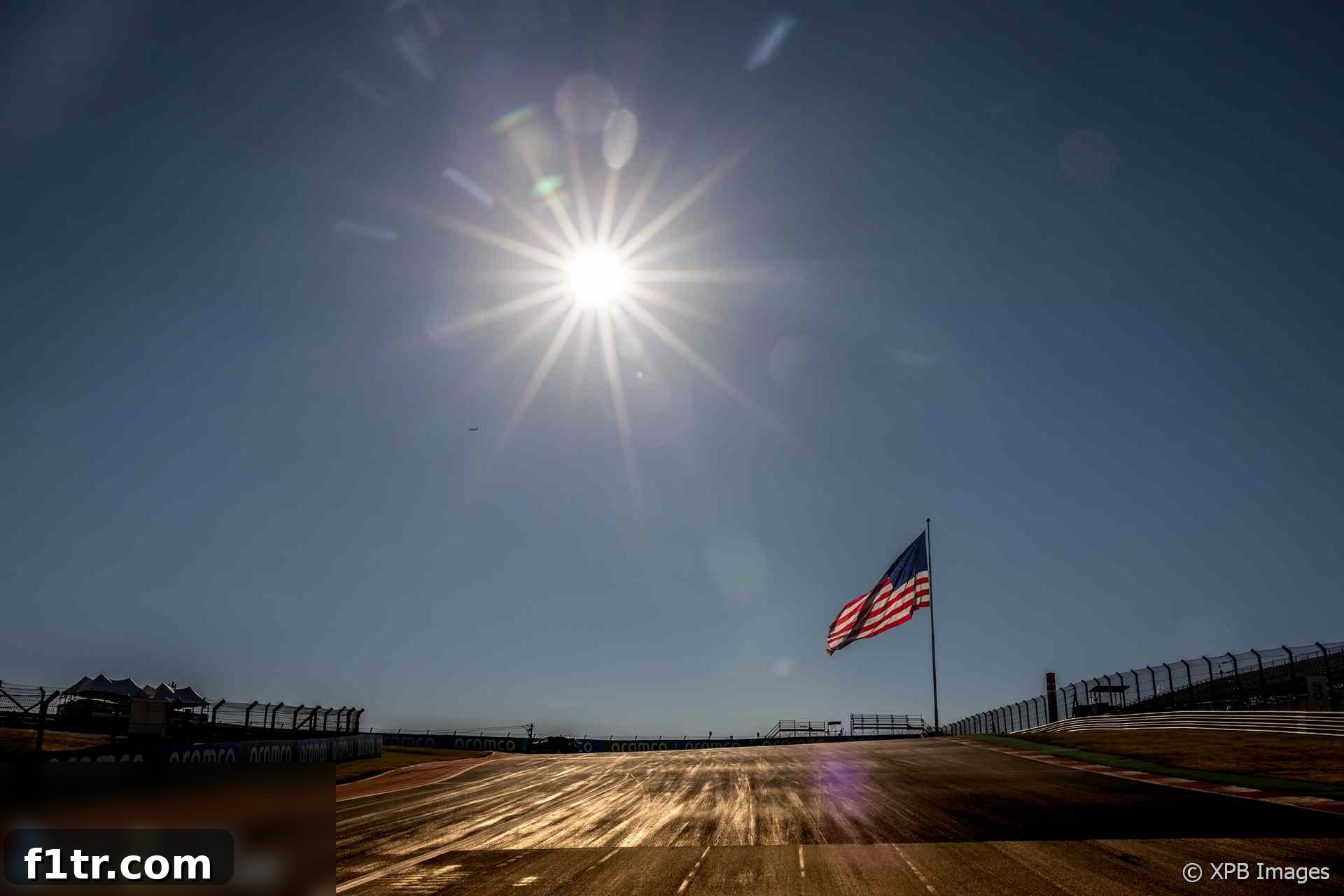
Following the gruelling weather conditions of the Qatar Grand Prix, which prompted the FIA to initiate an investigation into its severe impact on drivers, the Formula 1 paddock had hoped for a reprieve from extreme heat. However, as the championship heads to the United States for the first of three consecutive race weekends in the Americas, the forecast for the highly anticipated United States Grand Prix indicates yet another intense battle against the elements at the Circuit of the Americas (COTA).
The Heat is On: A Challenging Forecast for COTA
Last year, the US Grand Prix took place on the same October weekend, witnessing race day temperatures soaring to 33°C – the hottest F1 race held at COTA since its debut on the calendar in 2012. This year, temperatures are expected to be even slightly higher during some sessions, pushing the physical and mechanical limits of both drivers and their advanced machinery.
Session-by-Session Heat Expectations
- Friday: The sole practice session, scheduled for the middle of the day, is projected to see air temperatures around 32°C. Later in the day, qualifying for the Grand Prix will unfold under blazing sunshine with a scorching 35°C air temperature. These conditions demand immediate adaptation from drivers and teams, with limited time to fine-tune car setups in such demanding heat.
- Saturday: While the average daily high temperature for Austin, Texas, at this time of year is typically 27°C, F1’s sprint format sessions on Saturday will experience considerably hotter conditions. Sprint qualifying, starting early in the afternoon, will be held at 32°C. The sprint race itself, commencing at 5 pm, is forecast to hit 34°C, accompanied by 40% air humidity. This combination of heat and humidity will test endurance over a shorter, more intense race distance.
- Sunday: The main event, the United States Grand Prix, is scheduled for a 2 pm start. Drivers can anticipate conditions similar to the sprint race, with air temperatures fluctuating between 33°C and 34°C throughout the race. Humidity will remain around 40%, and a notable increase in wind is expected compared to the preceding days. This added variable could introduce further aerodynamic challenges and tire management complexities.
Driver Endurance: Lessons from Qatar and COTA’s Unique Challenge
The Qatar Grand Prix served as a stark reminder of the immense physical toll extreme heat and humidity can take on Formula 1 drivers. Multiple drivers suffered from heat exhaustion, dehydration, and even reported feeling on the verge of losing consciousness. The FIA’s subsequent investigation underscores the sport’s commitment to driver safety and welfare, particularly in the face of increasingly challenging climatic conditions.
While this weekend’s race at COTA promises high temperatures, drivers can expect it to be less demanding than their visit to the Losail International Circuit. The key difference lies in the humidity levels, which are projected to be lower in Austin (around 40%) compared to the oppressive humidity experienced in Qatar. Furthermore, the Circuit of the Americas, with its diverse layout featuring long straights and more open sections, offers more opportunities for drivers to find brief moments of respite between its many quicker corners. This allows for slightly better airflow into the cockpit and short recovery periods for the drivers, albeit minimal in the grand scheme of a Formula 1 race.
Nevertheless, the US Grand Prix will undoubtedly rank as one of the more physically demanding rounds of the year. The high G-forces through COTA’s challenging S-curves, the constant braking and acceleration, combined with sustained high temperatures, will push drivers to their absolute limits. Their rigorous physical training, sophisticated cooling systems within their race suits and helmets, and expert hydration strategies will be crucial in maintaining peak performance and avoiding heat-related issues.
The Circuit of the Americas: A Test of Man and Machine
The Circuit of the Americas, designed by Hermann Tilke, is a 5.513-kilometre (3.426-mile) track renowned for its elevation changes, particularly the dramatic uphill run to Turn 1. This unique characteristic, combined with a blend of high-speed sections and technical corners inspired by iconic tracks like Silverstone, Hockenheim, and Istanbul Park, makes COTA a demanding circuit even under normal conditions. The expected heat will amplify these challenges for both the drivers and their complex F1 machinery.
From a technical standpoint, high ambient and track temperatures will place significant stress on various car components. Tire degradation will be a paramount concern for teams, as hotter asphalt can lead to increased blistering and wear, necessitating careful management of compounds and strategic pit stops. Engine cooling systems will be working overtime, requiring teams to potentially open up bodywork more to allow for greater airflow, which can subtly impact aerodynamic efficiency. Brake performance will also be monitored closely, as overheating can lead to reduced stopping power and increased wear.
Teams will meticulously analyse data from Friday’s practice and Saturday’s sprint sessions to fine-tune their car setups, not just for optimal performance but also for enhanced reliability and driver comfort in the sweltering conditions. Cooling ducts, brake settings, and engine mapping will all be adjusted to mitigate the effects of the heat, aiming to strike a delicate balance between outright speed and enduring the full race distance.
Historical Context: COTA’s Growing Challenge
Since its inaugural race in 2012, the United States Grand Prix at COTA has consistently delivered thrilling racing. However, over the years, the temperature factor has become an increasingly prominent part of the narrative. The 2022 edition, with its 33°C race day, highlighted a trend of rising temperatures, challenging teams to adapt their strategies year after year. Drivers have frequently commented on the physical intensity of racing in Austin, particularly during the hot afternoon sessions. This historical data further reinforces the expectation that the 2023 race will continue this tradition of being a true test of endurance.
The continuous evolution of Formula 1 cars, becoming faster and generating more downforce, paradoxically places even greater physical demands on drivers, who are already experiencing higher G-forces for longer durations. When combined with extreme environmental conditions, it paints a picture of elite athletes pushing the absolute boundaries of human performance. The FIA’s focus on driver well-being post-Qatar signals a broader recognition of these escalating challenges, prompting discussions about future regulations concerning cockpit cooling, race duration, or even scheduling adjustments for races held in high-risk environments.
Anticipating the Action
Despite the inherent challenges, the promise of intense competition remains. The combination of a physically demanding track, high temperatures, and the added variable of Sunday’s increased wind ensures that the United States Grand Prix will be a captivating spectacle. Driver skill, team strategy, and the sheer resilience of both man and machine will be on full display as the F1 field battles for victory in Austin.
For more real-time updates on the track conditions during each session, keep a close eye on RaceFans Live and the RaceFans Twitter account. Don’t miss a moment of the action as Formula 1 once again embraces the heat and takes on the challenging Circuit of the Americas.
2023 United States Grand Prix
- US GP was Mercedes’ best race of 2023 despite disqualification – Wolff
- Singapore and Austin retirements cost me top 10 championship place – Ocon
- United States Grand Prix result unchanged as FIA rejects Haas’ call for review
- Sargeant admits he’s ‘struggled to use all the downforce at times’ in F1
- Mercedes’ Brazilian GP set-up was “conservative” after US GP disqualification
Browse all 2023 United States Grand Prix articles