Audi’s Ambitious Charge: Unveiling Formula 1 Preparations for 2026
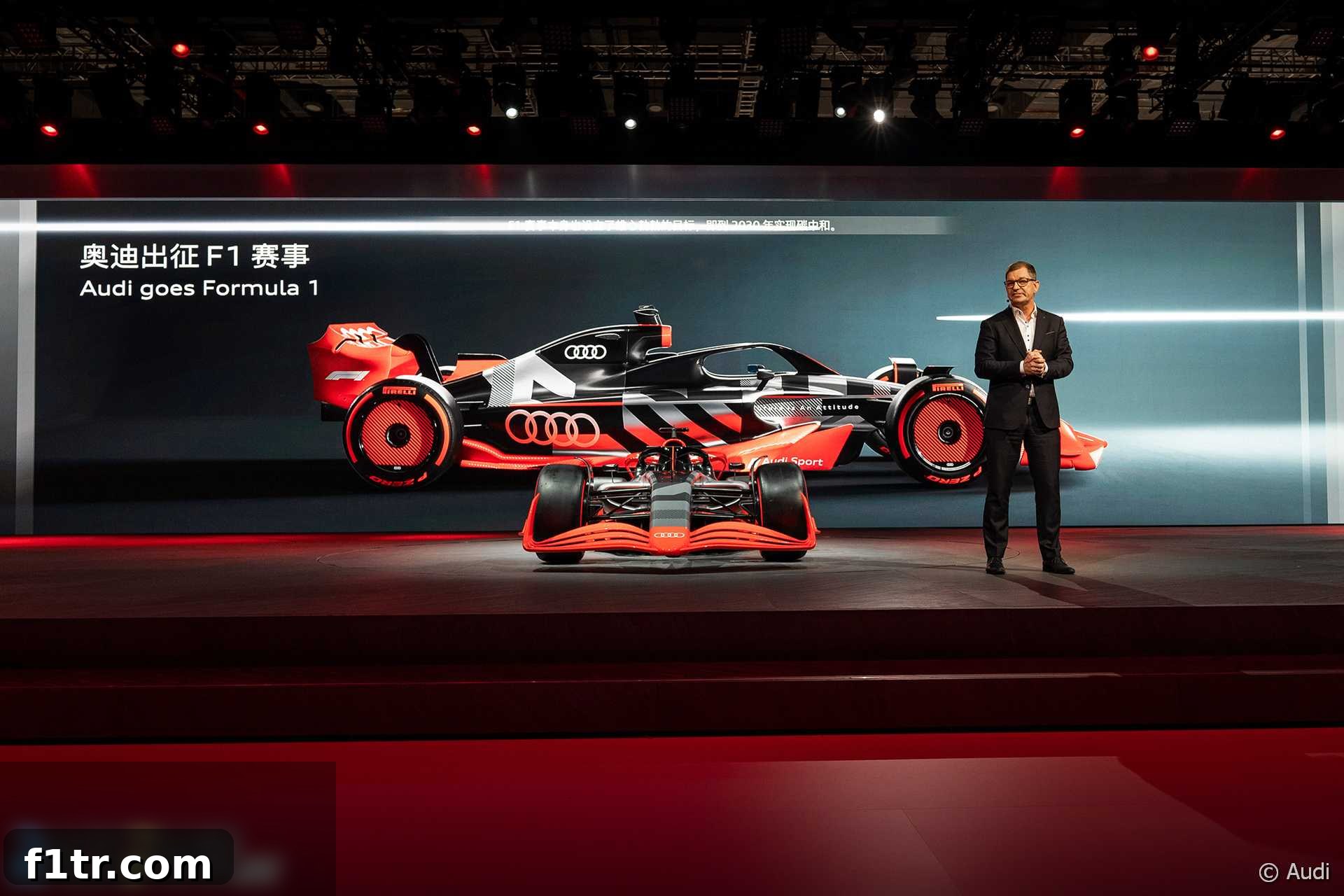
The highly anticipated entry of Audi into Formula 1 in 2026 continues to gather momentum, a journey underscored by a significant progress update shared at the prestigious Shanghai International Automobile Industry Exhibition. This pivotal event, held in Audi’s largest global market for car sales, served as a powerful platform for the German automotive giant to reiterate its unwavering commitment to motorsport’s pinnacle. Under the evocative slogan “F1 power made in Germany,” Audi showcased its dedication to engineering excellence and technological innovation, setting the stage for what promises to be a thrilling new chapter in Formula 1 history.
Leading the presentation were key figures from Audi’s management: CEO Markus Duesmann and Oliver Hoffmann, who oversees technical development on the brand’s management board. Their insights provided a comprehensive overview of the meticulous planning and rapid development currently underway in preparation for the 2026 season, a year that will usher in a new era of Formula 1 regulations.
The Road to 2026: Why Formula 1 Matters to Audi
Audi’s decision to join Formula 1 is not merely about racing; it represents a strategic alignment with the sport’s evolving ethos and global appeal. The 2026 regulations are specifically tailored to promote greater sustainability, featuring a radical overhaul of the power unit architecture with an increased focus on electrical power and the use of 100% sustainable fuels. This direction perfectly resonates with Audi’s long-term corporate strategy, which prioritizes electrification, advanced hybrid technologies, and environmental responsibility across its product portfolio.
Markus Duesmann emphasized the strategic significance of this venture, stating, “We are convinced that our Formula 1 commitment will strengthen Audi’s sporting focus. The racing series is continuously increasing its global reach, especially among young target groups and in our most important sales market: China.” This statement highlights the dual benefit of F1 participation: not only enhancing Audi’s high-performance image but also serving as a potent marketing tool to engage with new generations of car enthusiasts and solidify its presence in crucial emerging markets.
Engineering the Future: Inside the F1 Power Unit Development
Oliver Hoffmann provided a detailed look into the progress of Audi’s F1 technology development, underscoring the intensity and precision with which the project is being executed. “The Audi F1 project has really taken off in recent months,” Hoffmann revealed, indicating the accelerated pace of work at their Neuburg an der Donau facility. The core focus remains on the power unit, which is arguably the most complex and critical component of any modern F1 car. The ongoing concept phase is laying the fundamental groundwork for the entire drivetrain that will power Audi’s challengers in 2026.
This foundational work involves an obsessive attention to detail, spanning everything from the selection and testing of advanced materials to the refinement of sophisticated manufacturing technologies. Furthermore, a significant emphasis is placed on the intricate energy management systems required for a cutting-edge hybrid drivetrain. The 2026 regulations mandate a substantial increase in electrical power output, making efficient energy recovery and deployment absolutely crucial for performance and reliability. Audi’s engineers are tasked with optimizing every joule of energy, balancing the combustion engine with the advanced electrical components to create a seamless, powerful, and efficient unit.
From Single-Cylinder to Full Drivetrain: The Rigorous Testing Regimen
The development journey for Audi’s F1 power unit follows a meticulously planned, multi-stage process. Currently, the team has successfully developed a single-cylinder engine that has been actively running on specialized test beds since the end of last year. This initial phase allows engineers to rigorously test fundamental combustion principles, material resilience, and various component designs in a controlled environment, isolating variables before integrating them into a more complex system.
The development of these test beds themselves is a critical undertaking. These are not off-the-shelf solutions but highly specialized, custom-built facilities designed to simulate the extreme conditions an F1 engine endures on track. They must be capable of precise measurement, rapid data acquisition, and continuous operation under immense stress. As Audi progresses, these initial single-cylinder test beds will evolve and multiply to accommodate full-scale engine testing and eventually, complete hybrid drivetrain simulations.
Audi’s ambitious goal is to have a fully integrated hybrid drivetrain – encompassing all components of an F1 power unit, including the internal combustion engine, turbocharger, MGU-H, MGU-K, energy store, and control electronics – ready for comprehensive testing by the end of the current year. This accelerated timeline demonstrates the company’s aggressive approach to meeting the demanding deadlines of Formula 1 development. Furthermore, the advancements and learning gained from this F1 power unit project are intended to be a significant asset for Audi’s broader automotive portfolio. Elements of this cutting-edge hybrid model are expected to inform and accelerate the development of future production vehicles, creating a direct lineage between motorsport innovation and road car technology.
Building the Brains and Brawn: Simulators, Test Rigs, and Team Expansion
To support the intensive development and testing schedule, Audi is making substantial investments in its infrastructure. The existing dynamic development simulator at its Neuburg facility is undergoing a significant upgrade to meet the exacting “F1 standards.” This involves not just software enhancements but also potentially hardware modifications, ensuring the simulator can accurately replicate the physics, aerodynamics, and driver feel of a Formula 1 car. A state-of-the-art simulator is indispensable for driver training, car setup development, and exploring performance limits in a safe and cost-effective virtual environment, allowing for thousands of “laps” to be completed without ever turning a wheel on a physical track.
In addition to upgrading current facilities, new test rigs are being constructed to further expand Audi’s testing capabilities. These new additions, alongside the upgraded existing infrastructure, are targeted for completion by early 2024. This aggressive timeline underscores the urgency and scale of the project, as every piece of equipment plays a vital role in validating designs and optimizing performance ahead of the 2026 debut.
The human element is equally critical to this monumental undertaking. Audi’s F1 project currently boasts a dedicated team of 260 highly skilled individuals. This diverse workforce combines the extensive expertise already present within Audi’s vast engineering network with strategic new hires drawn from the competitive world of Formula 1. The influx of F1 veterans brings invaluable experience, understanding of the sport’s unique demands, and insights into successful team structures. Audi anticipates significant growth in this workforce, with the headcount projected to exceed 300 by the end of 2023, at which point the core F1 team is expected to be largely complete.
Strategic Vision: Audi, F1, and the Global Market
Audi’s presence at the Shanghai International Automobile Industry Exhibition and the emphasis on the Chinese market during their F1 update were no coincidence. China represents a vital strategic territory for the brand, and the appeal of Formula 1 within this market is rapidly expanding. While the Chinese Grand Prix has been absent from the F1 calendar since 2019 due to the global pandemic, its eventual return is highly anticipated, and Audi aims to be a prominent player when it does. The direct engagement with Chinese audiences during such a significant event showcases Audi’s long-term vision and commitment to its global fanbase.
The F1 platform offers unparalleled global visibility and a unique opportunity to connect with a diverse demographic. The sport’s increasing popularity among younger audiences, driven by digital engagement and exciting racing, aligns perfectly with Audi’s efforts to cultivate a future generation of customers. By associating its brand with the pinnacle of motorsport innovation, performance, and sustainability, Audi aims to reinforce its image as a forward-thinking, technologically advanced, and emotionally resonant automotive manufacturer worldwide.
Beyond the Track: F1 Technology’s Impact on Road Cars
The vast investment required for a Formula 1 entry is justified not only by marketing and brand exposure but also by the tangible technological advancements that can be transferred from the racetrack to road cars. The demanding environment of F1 acts as an ultimate proving ground for new materials, propulsion systems, energy recovery strategies, and aerodynamic principles. The insights gained from developing a highly efficient, high-performance hybrid power unit for F1 will undoubtedly influence Audi’s future production models, particularly its electric and hybrid vehicle lines.
Areas such as advanced battery technology, efficient motor-generator units, sophisticated thermal management systems, and lightweight construction techniques developed for F1 cars can directly find their way into consumer vehicles. This technological synergy allows Audi to push the boundaries of automotive engineering, ensuring that its customers benefit from state-of-the-art innovation driven by the relentless pursuit of performance and efficiency in Formula 1.
Anticipation Builds for Audi’s F1 Debut
As the 2026 Formula 1 season draws closer, the anticipation for Audi’s official entry continues to mount. The progress updates from Shanghai confirm that the project is on an aggressive but well-defined trajectory, backed by significant investment in human talent, infrastructure, and cutting-edge technology. With a clear vision and a relentless focus on engineering excellence, Audi is meticulously preparing to challenge the established order in Formula 1, promising an exciting and potentially transformative addition to the sport’s future landscape.
The “F1 power made in Germany” slogan encapsulates not just a geographical origin but a philosophy of precision, innovation, and performance that Audi aims to bring to the global stage of Formula 1.
Related Articles on the 2026 F1 Season
- What must Formula 1 fix with its new rules – and what should it leave unchanged?
- Alpine denies “sabotaging” Colapinto and criticises social media “hate” posts
- Verstappen starts season with lowest score over three rounds since his debut in F1
- Poor starts a ‘very high priority’ for Mercedes as drivers lose 21 places in four races
- “Two balls of steel!” How Leclerc won his battery battle with Hamilton and Russell
Browse all 2026 F1 season articles