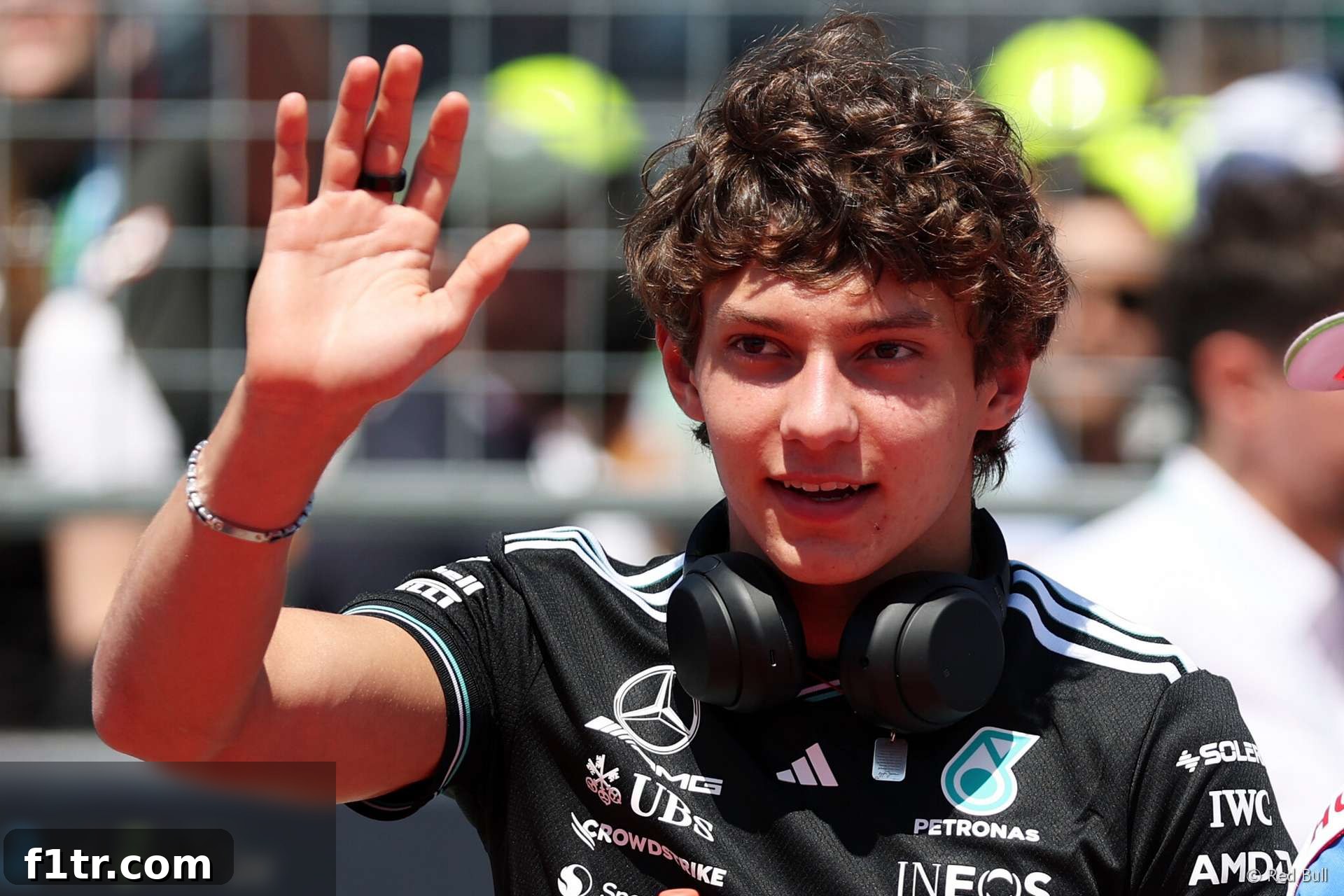
When Mercedes made the bold decision to fast-track Andrea Kimi Antonelli into Formula 1, it was a move that raised eyebrows and ignited widespread anticipation across the motorsport world. Barely half a dozen races into his highly anticipated F1 career, the audacious gamble by the German powerhouse appeared to be paying dividends, silencing early critics and vindicating their faith in the young Italian protégé.
Antonelli’s initial outings demonstrated a blend of raw speed, adaptability, and an impressive racing IQ that belied his rookie status. In those formative six races, he missed out on points only once – a regrettable turn of events in Bahrain that could largely be attributed to circumstances beyond his full control. A questionable strategy call from the team compounded his challenges, and a robust encounter with Carlos Sainz Jnr saw him unceremoniously bundled off the track. Despite these setbacks, he took the chequered flag hot on the heels of his former Formula 2 teammate, Oliver Bearman, hinting at untapped pace and the potential for a points finish that race.
A Dazzling Introduction: Antonelli’s Early F1 Exploits
Beyond the Bahrain anomaly, Antonelli’s inaugural stint in F1 was nothing short of impressive, marked by several standout performances despite the occasional, understandable rookie error. His resilience and opportunism were on full display in the rain-soaked chaos of Melbourne. While he might have ridden his luck on a few occasions amidst the treacherous conditions, his ability to navigate the challenge and emerge with a commendable fourth-place finish underscored his inherent talent and composure under pressure. It was a result that signaled his arrival as a force to be reckoned with.
The momentum continued in China, where a sixth-place finish represented a solid return, especially considering the car damage he sustained early in the race. This demonstrated his capacity to manage adversity and extract performance even when not at 100%. As the season progressed, Antonelli began to steadily narrow the performance gap to his vastly more experienced teammate, George Russell. At Suzuka, he finished practically on Russell’s tail, a clear indication of his burgeoning pace and understanding of the W15 chassis. His strong showing in Jeddah further cemented this perception, highlighting his growing confidence and ability to push the car to its limits on demanding street circuits.
The Miami Grand Prix weekend offered a particularly bright spotlight on Antonelli’s burgeoning talent. He immediately clicked with the unique, street-circuit-like characteristics of the Miami International Autodrome, sensationally snatching a surprise pole position for the sprint race. While he was ultimately muscled out of contention at the start by the front-runners – a harsh but invaluable lesson in the cut-throat world of F1 starts – his qualifying prowess was undeniable. He also qualified commendably for the main Grand Prix. Unfortunately, both races were marred by pit lane misfortunes, denying him the opportunity to convert his qualifying speed into potentially significant points, yet his raw speed left a lasting impression.
Navigating the Rookie Gauntlet: Mid-Season Hurdles and Setbacks
However, the unforgiving nature of Formula 1 means that even the most promising talents face inevitable troughs. From his home race in Imola, Antonelli’s season began to take a challenging turn. He openly admitted to over-committing himself off-track, a candid acknowledgment of the immense pressure and expectations resting on his young shoulders. The Imola weekend saw him drop out in Q2, struggling to master Pirelli’s new C6 tyre compound, a common hurdle for even seasoned drivers adapting to new rubber. His race ended prematurely due to a technical problem, an unfortunate stroke of bad luck that compounded his qualifying struggles.
The triple-header that followed proved to be particularly punishing. Crashing in qualifying at the notoriously unforgiving Monaco circuit effectively ruined his entire weekend, emphasizing the minimal margin for error at such a demanding venue. Spain brought another dose of frustration as yet another car fault claimed him, putting paid to his hopes of a strong finish. These incidents, while varied in their causation, highlighted the steep learning curve and the fine line between success and disappointment in Formula 1.
Andrea Kimi Antonelli: Performance Snapshot (Half-Season)
| Metric | Best | Worst |
|---|---|---|
| GP Start Position | 3 | 19 |
| GP Finish Position | 3 | 18 |
| Total Points (Mid-Season) | 64 | |
(Note: These figures represent a snapshot of his performance during the period discussed, highlighting his range of results.)
Resilience and Setbacks: The Emotional Rollercoaster
Just when the pressure seemed at its peak, Antonelli showcased his incredible resilience. A superb drive to third place in Canada, a race where his teammate George Russell clinched a memorable victory, provided a much-needed cause for optimism. This podium finish suggested that Antonelli had successfully drawn a line under the poor run of results and was ready to re-establish his earlier form. It was a performance that spoke volumes about his mental fortitude and ability to bounce back from adversity.
However, the fluctuating nature of a rookie season continued. In Austria, he slipped up badly on the very first lap, resulting in a collision that unfortunately wiped out championship contender Max Verstappen. This incident was a stark reminder of the fine margins and severe consequences of even minor errors at the pinnacle of motorsport, generating significant discussion and scrutiny. The British Grand Prix presented a different kind of challenge, as Antonelli was perhaps too quick to follow his team’s disastrous early call to switch to hard tyres. This strategic misjudgment by Mercedes immediately dropped him towards the back of the midfield, where he was subsequently taken out of the race by Isack Hadjar, an incident that was more a victim of circumstance and poor strategy than a driving error.
The Spa-Francorchamps weekend proved to be a particularly grim experience, one that visibly moved Antonelli to tears, underscoring the intense emotional toll and pressure that young drivers endure in Formula 1. This raw display of emotion humanized his journey and resonated with fans. Yet, amidst the struggles, a crucial development offered a glimmer of encouragement: a return to Mercedes’ earlier suspension specification provided Antonelli with a renewed sense of confidence and feel for the car. Although he still slipped up in qualifying, he demonstrated his fighting spirit and tactical awareness by grinding out a valuable points finish in a race where gaining positions proved exceptionally difficult.
The final race before the summer break in Hungary offered a contrasting picture within the Mercedes garage. While George Russell scored another impressive podium, Antonelli found himself knocked out in Q2. He managed to salvage the final point in the race, finishing tenth, but it was clear that consistency remained his biggest challenge. The rollercoaster of a rookie season was evident in every twist and turn.
The Verdict: Antonelli’s Place in F1 and Future Prospects
Despite the peaks and troughs, the moments of brilliance and the painful learning experiences, Andrea Kimi Antonelli has, without doubt, already done enough to prove his immense talent and rightful place at the elite Formula 1 level. His youth is a factor, but his performances have frequently belied his inexperience, showcasing a driver with a profound understanding of racing mechanics and a relentless desire to improve.
The early validation from Mercedes, followed by a demanding mid-season, has offered a comprehensive test of his capabilities. The crucial task for Antonelli now is to sustain this apparent step forward into the second half of the season. This means building on the lessons learned, converting potential into consistent results, minimizing rookie errors, and further reducing the performance gap to his established teammate. The raw speed and undeniable talent are there; the next phase of his F1 journey will be about refining these attributes into a consistent, championship-contending package. The motorsport world watches with bated breath to see how this incredibly promising young driver continues to carve his legacy in Formula 1.