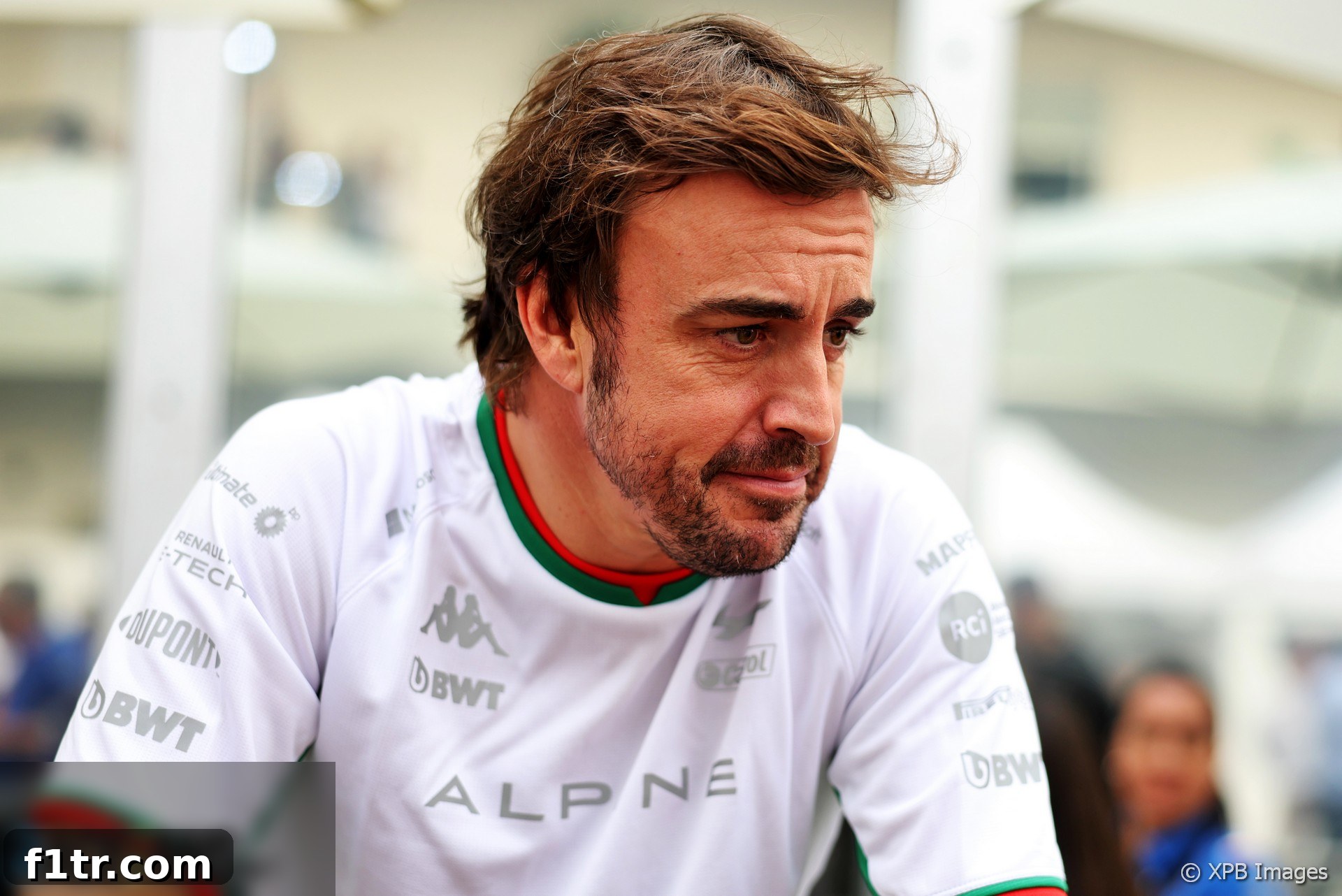
In a dramatic turn of events that captivated the Formula 1 paddock, Alpine launched a fierce legal battle to reclaim the points scored by their veteran driver, Fernando Alonso, at the United States Grand Prix. The saga, marked by protests, counter-protests, and reviews, underscored the complexities and sometimes contentious nature of stewarding decisions in elite motorsport. Initially, the FIA stewards had rejected Alpine’s attempt to reinstate Alonso to his hard-earned seventh-place finish, ruling their protest against the original penalty inadmissible. However, Alpine’s resolve remained unshaken, signalling their determination to fight for every single point.
The controversy first erupted following the Austin race when Alonso was handed a significant post-race penalty. This sanction stemmed from a protest lodged by the Haas F1 team, which alleged that Alonso’s A522 car was operated in an unsafe condition during the Grand Prix. The core of Haas’s complaint revolved around the right-hand-side wing mirror of Alonso’s car, which dramatically detached around 38 minutes into the race. This incident occurred after the mirror assembly had been damaged earlier in a high-speed collision with Aston Martin’s Lance Stroll. The visual evidence of a dangling, then completely missing, mirror provided Haas with what they believed was a clear case of a safety violation, arguing that the car should have been recalled to the pits for repairs.
Upon reviewing Haas’s initial protest, the stewards concurred with their assessment. They held Alpine responsible for ensuring the safety of their car throughout the race, deeming the operation of the A522 with a compromised mirror as a breach of safety regulations. In a notable observation, the stewards also took the opportunity to admonish Race Director Niels Wittich for his failure to display the black-and-orange flag to Alonso. This specific flag, universally recognized in motorsport, is used to instruct a driver to pit immediately for repairs to address a mechanical issue that could pose a safety risk. The stewards implied that Wittich’s oversight contributed to the car remaining on track in what they considered an unsafe state, escalating the post-race fallout.
Advert | Become a Supporter & go ad-free
Haas’s decision to protest was reportedly influenced by their own prior experiences with the black-and-orange flag. The team had been compelled to bring their cars into the pits on no fewer than three separate occasions earlier in the season due to similar safety concerns flagged by race control. This perceived inconsistency in stewarding and application of rules likely fuelled Haas’s determination to ensure a level playing field, leading them to protest Alonso’s continued participation in the race without intervention. They felt that if they had to comply, others should too, especially when a similar safety issue arose.
However, the initial protest from Haas itself was not without procedural flaws, which would later become the focal point of Alpine’s counter-arguments. The stewards, in their original verdict penalizing Alonso, explicitly acknowledged that Haas’s protest had been “lodged 24 minutes out of time,” exceeding the stipulated 30-minute deadline following the publication of the provisional race classification. This deviation from protocol typically renders a protest inadmissible. Nevertheless, the International Sporting Code (ISC) allows for exceptions, stating that stewards may grant leniency “in circumstances where the stewards consider that compliance with the thirty-minute deadline would be impossible.” In their initial decision, the stewards invoked this clause, concluding that “compliance with the deadline was not possible in this case and that the protest was admissible.” This crucial decision to accept a late protest was what Alpine sought to vigorously challenge.
Alpine’s initial counter-protest aimed squarely at this perceived procedural irregularity. The French team argued that the stewards had erred in accepting Haas’s late submission, contending that there were no valid grounds for invoking the “impossible compliance” exception. They believed that upholding the established deadlines was fundamental to the integrity of the sporting regulations and that any deviation should be critically scrutinized. However, this challenge from Alpine was also met with rejection by the stewards, who dismissed their protest on multiple grounds. Irony would have it that Alpine’s own protest was deemed untimely, having been submitted one hour and eight minutes after the decision on Haas’s original protest was published. This put Alpine in a similar, though slightly more delayed, procedural bind.
The stewards further elaborated on the proper channels for dispute resolution within Formula 1’s intricate judicial framework. They clarified that decisions made by the stewards, as well as summons to hearings, are generally not subject to direct protest. Instead, the correct course of action for Alpine, had they disagreed with the stewards’ initial decision regarding Alonso’s penalty, would have been to appeal to the FIA International Court of Appeal. Such an appeal, they noted, requires notice of intention to be given to the stewards within one hour of the decision, as precisely prescribed in the FIA International Sporting Code and the FIA Judicial and Disciplinary Rules. This rigorous adherence to procedural timelines is a cornerstone of the FIA’s legal processes, designed to ensure clarity and finality in decisions.
Alternatively, the stewards pointed out another viable avenue for Alpine: should a significant and new element be discovered by the team, it could petition the Stewards under Article 14 of the FIA International Sporting Code for a review of the decision. This particular option offers a window of 14 days after the end of the competition, providing a crucial safety net for teams to present compelling new evidence. It was this specific opportunity that Alpine promptly capitalized on, choosing to pursue a review of the decision rather than a formal appeal to the International Court of Appeal. The team’s swift action demonstrated their strategic understanding of the regulations and their unwavering commitment to fighting for Alonso’s points.
Amidst this escalating legal back-and-forth, Fernando Alonso himself voiced strong opinions on the unfolding situation. Speaking earlier on Thursday, the two-time world champion expressed his “very confident” belief that the penalty would ultimately be overturned. Furthermore, he issued a stark warning, stating that F1 would face “huge problems for the future” if it wasn’t. Alonso’s comments reflected a deeper concern about the consistency and application of regulations, highlighting the potential for broader implications if perceived inconsistencies in stewarding decisions were to become a recurring issue. His strong stance added another layer of intrigue and pressure to an already high-stakes situation, resonating with fans and pundits alike who often call for greater clarity and fairness in regulatory enforcement.
Alonso’s US GP Penalty Overturned in Significant Ruling
Update: The protracted dispute reached its resolution, as Alonso’s US GP penalty was officially cancelled. The stewards ultimately accepted Alpine’s argument that Haas had submitted their original protest too late.
Following a review hearing that commenced promptly at 8:45 pm in Mexico City, where the next Grand Prix was scheduled, the stewards meticulously re-examined the procedural aspects of Haas’s initial protest. Alpine’s legal team presented a compelling case, focusing on the strict enforcement of the 30-minute protest deadline as outlined in the FIA International Sporting Code. They argued that the “impossible compliance” clause should not have been applied in Haas’s favor, contending that the conditions for such an exception were not adequately met. Alpine successfully demonstrated that Haas had sufficient opportunity to lodge their protest within the prescribed timeframe, and that failing to do so should have rendered their protest inadmissible from the outset.
After careful deliberation and consideration of all arguments presented by both Alpine and Haas, the stewards concluded that Haas’s original protest against Fernando Alonso was indeed lodged outside the permissible timeframe and that the conditions for an exception were not validly established. Consequently, the stewards ruled that Haas’s initial protest should have been deemed inadmissible. This fundamental procedural error meant that the subsequent penalty imposed on Alonso for the “unsafe car” condition was, therefore, invalid. The decision effectively reinstated Fernando Alonso to his original seventh-place finish, restoring his valuable six points from the United States Grand Prix. This outcome was a significant victory for Alpine, vindicating their persistent efforts to challenge the ruling.
The cancellation of Alonso’s penalty sent ripples through the F1 community. It not only restored critical championship points to Alpine in their battle for fourth place in the Constructors’ Championship but also underscored the paramount importance of strict adherence to procedural rules within the sport’s regulatory framework. The saga served as a powerful reminder that while safety concerns are always paramount, the process by which those concerns are addressed, including protest deadlines, must be rigorously upheld. Fernando Alonso’s initial warning about “huge problems” for F1 if the penalty wasn’t cancelled seemingly found its resolution in this decision, bringing a sense of closure to a contentious and complex chapter in the 2022 Formula 1 season. The outcome highlighted the nuances of motorsport justice and Alpine’s strategic prowess in navigating it.
Advert | Become a RaceFans supporter andgo ad-free
More from the 2022 Mexican Grand Prix
- How many victory chances did Hamilton have in his first winless F1 season?
- Delay in producing new parts held up Alfa Romeo upgrade
- Doohan’s practice run earns praise, but Alpine undecided over reserve role
- ‘I was in the fight, which hasn’t been often this year’: Ricciardo’s Mexican GP transcript
- Verstappen “will continue to break records for the rest of his career” – rivals
Browse all 2022 Mexican Grand Prix articles