Advert | Become a Supporter & go ad-free
McLaren’s Canadian Grand Prix Challenge: A Test of Straight-Line Speed
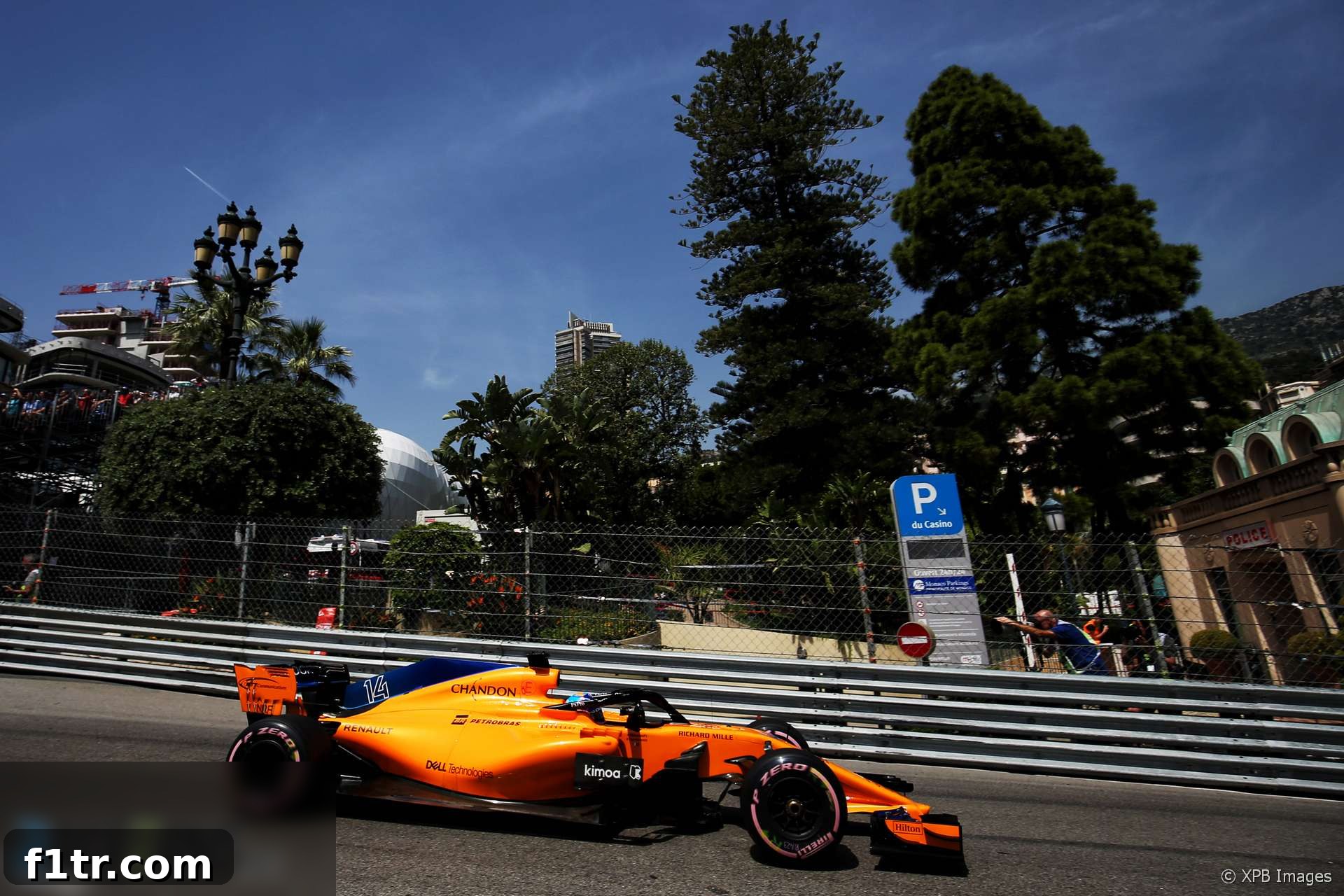
The exhilarating world of Formula 1 consistently pushes teams to their limits, demanding a delicate balance between power, aerodynamics, and driver skill. As the F1 circus heads to the iconic Circuit Gilles Villeneuve for the Canadian Grand Prix, the McLaren F1 team, specifically through the candid observations of its star driver Fernando Alonso, is bracing for what is anticipated to be a particularly challenging weekend. Their persistent Achilles’ heel – a noticeable lack of straight-line speed – is expected to be critically exposed on Montreal’s high-speed layout, threatening to undo the progress seen in recent races.
Since the very start of the 2018 Formula 1 season, McLaren has found itself consistently dwelling at the lower end of the speed trap figures. This concerning trend, a direct indicator of a car’s top-end performance, has cast a long shadow over their aspirations. Alonso, a veteran of countless F1 battles, understands the unique demands of the Circuit Gilles Villeneuve. With its long straights and heavy braking zones, the track is notorious for penalizing cars that struggle to unlock outright speed. Despite a string of encouraging performances on more aerodynamic-dependent circuits, the Spanish double world champion views Canada as a significant “test” for the Woking-based outfit, one that will truly reveal the efficacy of their current car package.
The Achilles’ Heel: McLaren’s Persistent Straight-Line Speed Deficit
The challenge for McLaren extends beyond a mere numerical deficit; it impacts their entire race weekend strategy, from qualifying to race day. A car that is consistently among the slowest in a straight line faces inherent disadvantages. On tracks like Circuit Gilles Villeneuve, where significant portions of the lap are covered at maximum velocity, this shortfall translates directly into lost lap time. Furthermore, the ability to defend positions or execute overtakes becomes significantly hampered if rival cars can simply power past down the straights. This makes the lack of top speed a fundamental performance limiter, one that McLaren has been battling to overcome since the season commenced.
Fernando Alonso did not mince words when discussing the team’s prospects. “Obviously we’ve been in Q3 in Barcelona, Q3 [in Monaco],” he noted, referencing their strong qualifying showings on tracks that prioritize downforce and cornering ability over raw straight-line pace. These results offered a glimmer of hope and suggested a foundation of a capable chassis in certain conditions. However, the optimism is tempered by the looming Canadian challenge. “It will be nice to keep that trend in the next coming races and confirm our progress,” Alonso continued, “But I think Canada is going to be challenging. It’s a tough circuit with long straights. Our lack of speed maybe is a penalty there. It will be a good test for us.” His remarks underscore the team’s awareness of their weakness and the strategic importance of the upcoming race in evaluating their true competitive standing.
From Monaco’s Triumph to Montreal’s Test: A Stark Contrast
The contrast between McLaren’s recent performances and their anticipated struggle in Canada highlights the diverse demands of the modern Formula 1 calendar. Tracks like Circuit de Barcelona-Catalunya and the iconic streets of Monaco are renowned for their intricate layouts, tight corners, and heavy reliance on aerodynamic downforce and mechanical grip. McLaren’s ability to consistently place both cars, or at least one, into the Q3 qualifying session on these circuits demonstrated the inherent strengths of their chassis and the talent of their drivers, Alonso and Stoffel Vandoorne. In Monaco, in particular, where top speed is almost irrelevant, McLaren could truly shine, leveraging its cornering prowess to compete effectively with some of the front-running teams.
However, the Circuit Gilles Villeneuve presents an entirely different proposition. Located on an island in Montreal, this semi-permanent road course features long, high-speed straights interspersed with chicanes and tight hairpins. It demands a powerful engine, excellent braking stability, and minimal aerodynamic drag to achieve competitive lap times. The emphasis shifts dramatically from pure downforce to straight-line efficiency and acceleration. For a team like McLaren, which has consistently lagged in speed trap measurements, this shift in focus could prove detrimental. The Canadian Grand Prix therefore stands as a crucial barometer, an acid test to determine whether their recent “progress” is a genuine step forward across all circuit types or merely a reflection of track-specific advantages that will vanish on more power-hungry circuits.
The Renault Power Unit Puzzle: Beyond Engine Performance
Adding another layer of complexity to McLaren’s situation is their relationship with power unit supplier Renault. For the Canadian Grand Prix, Renault is introducing a much-anticipated “B-spec” version of its power unit, an upgrade that promises increased performance and reliability. This development should, in theory, provide a boost to all Renault-powered teams, including McLaren. However, a closer look at the 2018 season’s speed trap data reveals a peculiar discrepancy: McLaren has often found itself slower than other teams utilizing the very same Renault engine, most notably Red Bull Racing. This consistent disparity strongly suggests that McLaren’s top-speed shortfall is not solely attributable to a lack of engine power, but rather points towards underlying issues with their car’s aerodynamic efficiency and overall chassis design.
In Formula 1, the pursuit of performance is a delicate balancing act. Teams strive to generate maximum downforce for cornering grip while simultaneously minimizing aerodynamic drag, which is the force that opposes motion and limits straight-line speed. It appears that McLaren’s MCL33 chassis, while potentially strong in generating downforce, may be doing so at the expense of excessive drag. This aerodynamic inefficiency means that even with a potent engine, the car struggles to cut through the air effectively on the straights. The introduction of the B-spec engine will undoubtedly provide more horsepower, but if the fundamental aerodynamic drag issue persists, the team may only see a marginal improvement in their speed trap rankings relative to other Renault users. This intricate interplay between engine and aerodynamics makes McLaren’s engineering challenge all the more complex.
Vandoorne and the Path Forward: A Clear Direction for Improvement
While the immediate challenge in Canada is daunting, the McLaren team remains focused on its long-term development strategy. Belgian driver Stoffel Vandoorne offered a perspective that, while acknowledging the team’s current deficit to top rivals like Red Bull, emphasized a clear understanding of the areas requiring improvement. “We have a clear direction for our team in terms of where the car needs to improve,” he stated. This “clear direction” is crucial for any F1 team navigating a difficult period, as it provides a roadmap for engineers and designers back at the factory in Woking. It suggests that the team is not simply guessing but has identified specific performance bottlenecks and is actively working on solutions.
Vandoorne’s insights further highlighted the continuous development cycle inherent in Formula 1. “I think the past couple of weeks we’ve made a small step forward and I think there’s a big push now in the factory to make even bigger gains over the next few weeks.” This indicates an ongoing effort to bring upgrades and refine the car’s performance characteristics. These improvements could involve various aspects: optimizing the aerodynamic package to reduce drag without sacrificing too much downforce, refining the car’s mechanical setup to improve straight-line stability and acceleration, or even exploring innovative cooling solutions that allow the power unit to run more aggressively. The “big push” signifies the intense pressure and dedication within the team to climb up the pecking order, transforming identified weaknesses into future strengths. The Canadian Grand Prix, despite its anticipated difficulties, will provide invaluable data to validate or refine these development efforts.
Navigating the 2018 Season: Hopes, Realities, and Future Outlook
The 2018 F1 season marked a pivotal moment for McLaren, having parted ways with Honda and embarked on a new chapter with Renault power. High expectations initially surrounded this transition, with many hoping it would instantly propel the team back towards the front of the grid. However, the reality has proven more complex. While reliability improved significantly compared to the Honda era, outright performance, particularly top-end speed, has remained a persistent hurdle. McLaren finds itself locked in a fierce midfield battle, often fighting for the lower points-paying positions rather than challenging the likes of Mercedes, Ferrari, and Red Bull.
Fernando Alonso, with his unparalleled experience and unwavering determination, continues to extract every ounce of performance from the MCL33, often delivering results that arguably exceed the car’s inherent capabilities. His Q3 appearances on suitable tracks are testament to his skill and McLaren’s chassis strengths in specific conditions. However, the Canadian Grand Prix serves as a stark reminder of the broader challenge: to develop a car that is competitive across all circuit types. The team’s long-term vision involves closing the gap to the front-runners, and this requires not just incremental gains but significant breakthroughs in understanding and optimizing the intricate relationship between engine, aerodynamics, and chassis. The data gathered from demanding circuits like Circuit Gilles Villeneuve will be critical in shaping their development path for the remainder of the season and into the future, as they relentlessly pursue their return to Formula 1 glory.
Advert | Become a RaceFans supporter andgo ad-free
2018 F1 season
- F1 feared “death knell” for Drive to Survive after Ferrari and Mercedes snub
- McLaren staff told us we were “totally crazy” to take Honda engines in 2018 – Tost
- ‘It doesn’t matter if we start last’: How Red Bull’s junior team aided Honda’s leap forward
- Honda’s jet division helped F1 engineers solve power unit problem
- McLaren Racing losses rise after Honda split
Browse all 2018 F1 season articles