Advert | Become a Supporter & go ad-free
Fernando Alonso Slams Rivals Over Unfair Track Limits Exploitation at Austrian Grand Prix Start
Two-time Formula 1 world champion Fernando Alonso has publicly expressed his frustration and disappointment with what he perceives as a blatant disregard for track limits by his competitors, specifically Charles Leclerc and Daniel Ricciardo, during the crucial opening moments of the Austrian Grand Prix. Alonso, driving for Alpine, claims that his strict adherence to the rules put him at a distinct disadvantage for the second consecutive race weekend at the Red Bull Ring, reigniting the contentious debate surrounding track limits enforcement in motorsport.
Alonso’s Point of Contention: The Race Start at Turn 1
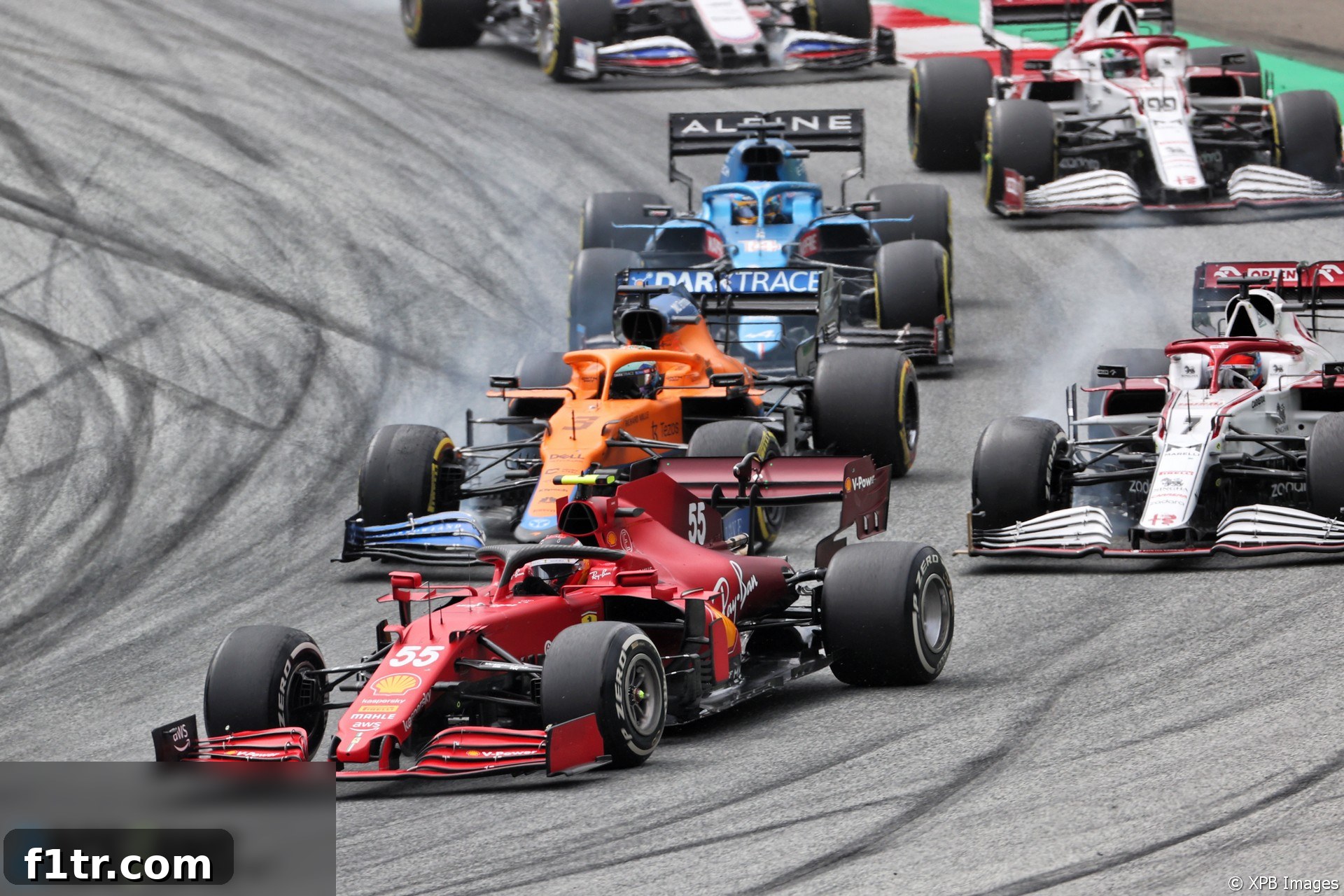
The core of Alonso’s grievance stems from the initial lap of Sunday’s Austrian Grand Prix. The Spanish veteran described how he meticulously navigated Turn 1, braking late and taking the inside line to gain positions. He successfully overtook both McLaren’s Daniel Ricciardo and Ferrari’s Charles Leclerc, only to see them regain their places—and even pull further ahead—by running wide and utilizing the run-off area at the exit of the corner.
“We raced two times here in two weekends and I was the only one overtaking cars at the start, braking very late for Turn 1 on the inside,” Alonso explained, his voice laced with clear frustration following the race. “I overtook Ricciardo and Leclerc this time and they went off-track the exit of one and they exit in front of me.”
This incident wasn’t an isolated event for Alonso; he highlighted that a similar scenario unfolded just one week prior at the Styrian Grand Prix, also held at the Red Bull Ring. For Alonso, the issue extends beyond merely losing a position. He argued that the advantage gained by going off-track allowed his rivals to carry greater speed onto the subsequent straights, setting them up for a stronger run into Turn 3. “Even more than that, they take the run into the next car in front from the slipstream into Turn 3. So I don’t know, I felt that was very unfair today, again,” he added.
The Alpine driver’s starkest comment encapsulated his feeling of injustice: “It was last weekend but today I was into Turn 1 in front of Charles and Ricciardo and I exit Turn 1 50 metres behind Ricciardo. And I was the only one making the corner. So you feel a little bit stupid.” This sentiment underscores a deeper concern among drivers: the perceived unfairness when strict adherence to regulations leads to a competitive disadvantage against those who bend or break them, especially when no penalty is issued.
The Ambiguity of F1’s Track Limits Rules at Race Starts
Formula 1’s sporting regulations often allow for a degree of flexibility in their interpretation, particularly during the frenetic opening lap of a race. It’s a commonly accepted practice that stewards tend to be more lenient with track limit infringements and wheel-to-wheel contact in the initial corners, acknowledging the heightened chaos and unpredictability. However, Alonso firmly believes that this leniency does not, and should not, extend to the actions of Leclerc and Ricciardo at Turn 1.
“It’s written and it’s quite clear that on the first lap, they are a little bit more flexible on penalties and track limits because we are fighting,” Alonso acknowledged. “Sometimes you are forced to go outside the track because you are fighting and you are forced by another car and you take the run-off area.” This distinction is crucial for Alonso. He argues that his rivals’ actions were not a result of being forced off-track by a competing car in a tight battle, but rather a deliberate choice to gain an advantage.
He continued, emphasizing the absence of external pressure: “But it was not the case. It was just a pure performance decision to go outside and to keep the throttle on. It was no one side-by-side. So I don’t think that is a grey area. It was quite clear.” For Alonso, the incident wasn’t a racing incident where drivers were inadvertently pushed wide; it was a conscious decision to gain speed and position by exploiting the track’s boundaries, an act he deems unequivocally outside the spirit and letter of the regulations.
Stewards’ Perspective: Race Director Michael Masi Weighs In
The incident naturally caught the attention of the race director, Michael Masi, and the F1 stewards. Masi confirmed that Alonso’s concerns were noted, and the incident involving Ricciardo and Leclerc at Turn 1 was thoroughly reviewed. Despite Alonso’s strong feelings, the stewards ultimately concluded that Ricciardo and Leclerc had acted within the established guidelines for such situations.
Masi clarified the stewards’ approach, referencing a specific precedent established back in 2019 following a controversial race at Paul Ricard. “One of the things that we’ve said, and this came about since Paul Ricard in 2019, was that on the first lap and those first couple of corners, if it exists, that a car needs to be back behind the car it entered the corner behind.” This guideline essentially allows for drivers to run wide provided they do not gain a lasting advantage over a car they were already behind when entering the corner, or if they immediately concede any gained position.
Applying this interpretation to the Austrian Grand Prix incident, Masi stated, “We looked at the incident which Fernando was referring to and from the angles that we could see at the time, that was exactly what had occurred.” This suggests that from the stewards’ viewpoint, even though Leclerc and Ricciardo ran wide and temporarily gained on Alonso, they were either able to demonstrate that they would have been ahead regardless, or that any advantage gained was quickly nullified according to their specific interpretation of the rules regarding rejoining the track after an excursion. The nuance here lies in the distinction between gaining a position by going off-track and simply running wide and rejoining without a net advantage over *where one would have been* had they stayed on track.
The Broader Debate on Fairness and Consistency in F1 Stewarding
This incident at the Red Bull Ring highlights the persistent challenge Formula 1 faces in maintaining consistent and fair application of its track limits rules. The Red Bull Ring, with its expansive run-off areas, is a venue particularly notorious for track limits infringements, having prompted numerous penalties and discussions in previous seasons. The debate often centers on balancing exciting, wheel-to-wheel racing with strict adherence to regulations, ensuring no driver gains an unfair advantage. Drivers like Alonso advocate for clear, non-negotiable boundaries, arguing that any perceived ambiguity can be exploited, undermining the integrity of the competition.
The stewards’ decision, while explained by Masi, does not entirely quell the concerns of drivers like Alonso, who feel that the spirit of racing dictates that positions should be gained through on-track maneuvering, not by utilizing areas outside the designated racing surface. Such incidents fuel the broader conversation about how F1 can ensure transparency, consistency, and a level playing field for all competitors, particularly in the high-stakes environment of a race start where every millimeter and split-second counts.
Looking Ahead: The Impact on Future Race Starts
The recurrence of this issue at the Red Bull Ring, coupled with Alonso’s vocal criticism, puts renewed pressure on F1 and the FIA to clarify and potentially refine the enforcement of track limits, especially at race starts. While the desire to allow hard racing is strong, the need to prevent drivers from consistently gaining an unfair advantage by simply running wide is equally important for maintaining sporting fairness. How future incidents of this nature are judged will undoubtedly be scrutinized, shaping driver behavior and strategies for the crucial opening laps of upcoming Grand Prix events.
Advert | Become a RaceFans supporter andgo ad-free
2021 Austrian Grand Prix: Further Insights and Analysis
- Vasseur on Alfa’s “huge step forward” and why he’s vexed by technical directives
- How Ricciardo “got some enjoyment back” after “really low” first race in Austria
- F1’s penalty points are not “harsh” and won’t be reviewed this year – Masi
- Austrian double showed Sainz found his feet faster than 2021’s other big-name moves
- 2021 Austrian Grand Prix Star Performers
Browse all 2021 Austrian Grand Prix articles