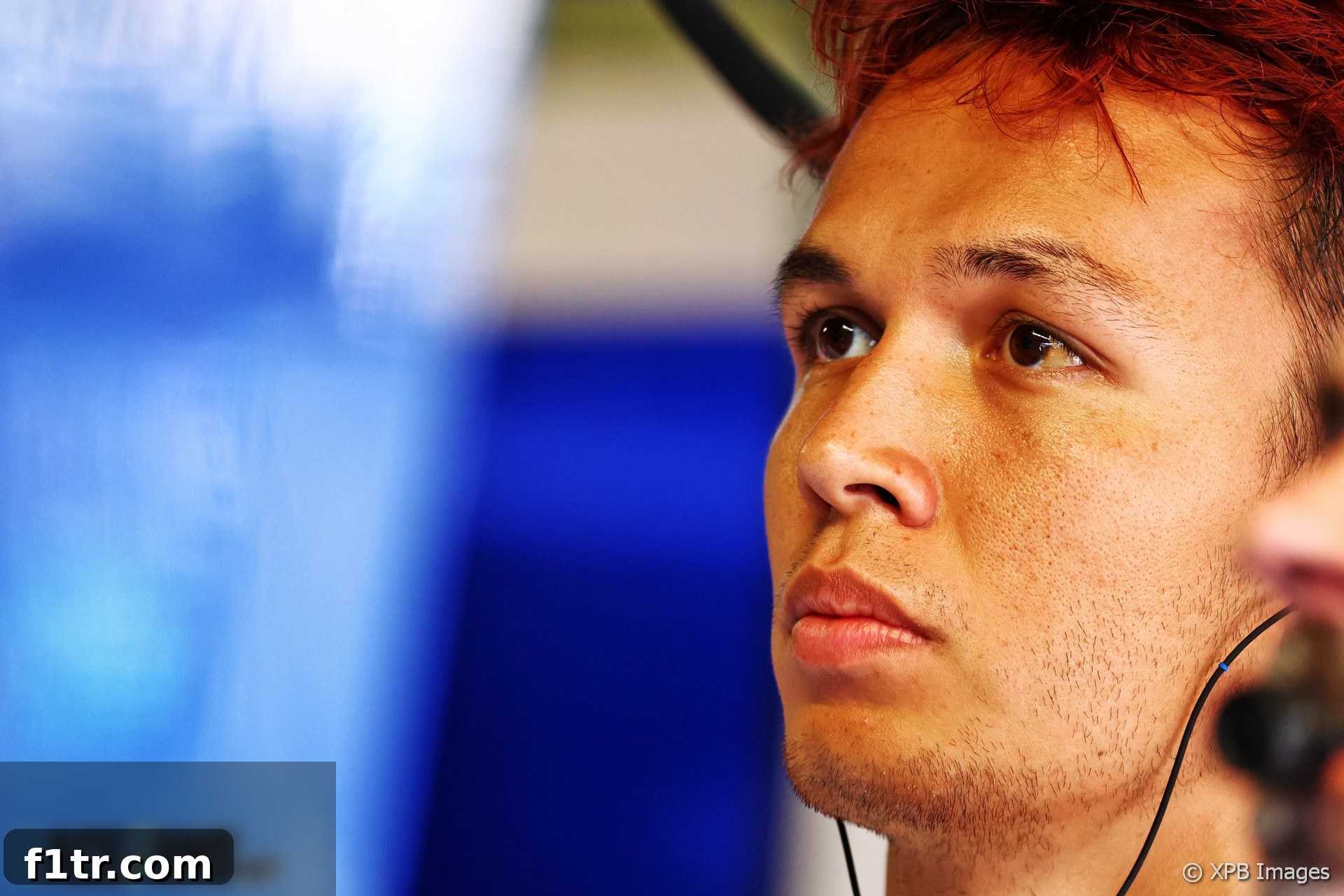
Alexander Albon’s Resilient 2022 F1 Season: A Comeback Story of Grit and Growth at Williams
The 2022 Formula 1 season marked a pivotal chapter in the career of Alexander Albon, a year defined by resilience, remarkable flashes of brilliance, and the arduous task of leading the charge for the struggling Williams Racing team. After a challenging stint with Red Bull Racing and a year spent on the sidelines as their reserve driver in 2021, Red Bull meticulously orchestrated his return to the grid. Recognizing his potential and the need for a seasoned yet still developing talent, Albon was strategically placed at Williams, replacing the Mercedes-bound George Russell. This move was not merely a second chance; it was an opportunity for Albon to redefine his narrative, shed the pressures of a top team, and grow into a leadership role within a constructor desperately seeking stability and progress.
Albon’s arrival at Williams was seen as a shrewd move for both parties. For Williams, they gained a young driver with multiple seasons of top-tier F1 experience, having raced for a championship-winning outfit. This experience, combined with his undeniable raw speed and considered approach, made him an ideal candidate to steer the Grove-based team into a new era alongside Nicholas Latifi. For Albon, it was a chance to escape the intense spotlight and develop his craft in a more nurturing environment, away from the immediate pressures of contending for wins and podiums. The objective was clear: extract every ounce of performance from the Williams FW44, contribute significantly to its development, and, crucially, score points whenever the faintest opportunity arose.
The Comeback Kid: Early Season Promise and Strategic Masterclasses
Albon’s return to Formula 1 in Bahrain was nothing short of professional. It was as if his year away had only sharpened his focus and resolve. He seamlessly re-integrated himself, guiding the often-unpredictable Williams into Q2 at the very first attempt. Finishing a respectable 13th in the season opener, he immediately demonstrated an ability to maximize the car’s potential, earning instant respect within the paddock. However, the true test of Williams’ competitiveness, or lack thereof, became starkly apparent in Jeddah. Here, Albon found himself battling at the back, culminating in an unfortunate collision with Lance Stroll in the closing laps, resulting in a three-place grid penalty for the subsequent race in Melbourne, despite his protests of innocence.
It was in Melbourne where Albon truly announced his transformed self. During his 2020 season at Red Bull, he had faced valid criticism regarding his struggle to overcome adversity and a perceived lack of aggression on track. Yet, the Australian Grand Prix proved he was now a different, more tenacious driver. Starting from the very back of the grid on hard tyres, Albon executed arguably the most ambitious and flawlessly delivered strategy of the entire season. He heroically managed his tyres for an astonishing 57 laps, pitting only on the penultimate lap. His last-gasp stop saw him emerge just metres ahead of Guanyu Zhou, securing an outstanding tenth place finish and Williams’ inaugural point of the season. This audacious drive was not just about a single point; it was a powerful statement of his renewed confidence, strategic acumen, and raw race craft.
This exceptional performance was followed by another commendable showing at Imola. After a dramatic brake explosion during Friday qualifying relegated him to 18th on the grand prix grid, Albon embarked on another inspired recovery drive. He spent the initial phase of the race battling closely with Pierre Gasly, eventually executing a clean overtake without the aid of DRS. Steadily progressing through the field, he climbed as high as 12th. Post-race, an additional position was gained due to Esteban Ocon’s penalty, classifying him just outside the points in 11th. These early performances established a reputation for Albon as a driver capable of elevating the Williams car beyond its expected performance envelope, instilling hope within the team and its fanbase.
Navigating the Mid-Season Maze: Peaks, Troughs, and Technical Hurdles
The perception of Albon consistently overachieving with his Williams grew even stronger in Miami, where he scored two more crucial points. While luck undoubtedly played a significant role—benefiting from a perfectly timed Safety Car following a collision between Sebastian Vettel and Mick Schumacher, which gifted him two places, and then a further position gained after Fernando Alonso’s post-race penalty—Albon was always in a position to capitalize. His consistent presence on the cusp of the points demonstrated his ability to stay out of trouble and maintain pace, ensuring he was there to pick up the pieces when opportunities arose.
However, the strong start to the season was momentarily overshadowed by two particularly challenging weekends in Spain and Monaco. In Barcelona, Albon suffered significant floor damage after hitting a kerb following his first pit stop, which sent him plummeting to the back of the field. His race was further complicated by a penalty for exceeding track limits four times, highlighting a struggle for consistency under pressure. The Monaco Grand Prix proved even more exasperating. After a decent qualifying effort saw him line up 16th, he gained three positions early on, only to run off the circuit at Sainte Devote. A spin-turn back onto the track cost him all three hard-earned places. Frustratingly, he repeated this error later, losing more time, before clipping the barrier while attempting to pass Guanyu Zhou at Rascasse, sustaining damage that ultimately ended his race. These weekends underscored that while his potential was immense, Albon was still “far from the finished article,” prone to unforced errors when pushing the limits of an uncompetitive car on challenging circuits.
Despite this disappointing double-header, Albon quickly rebounded. Yet, even as he regained his composure, his performances were increasingly hampered by Williams’ glaring lack of significant upgrades compared to their rivals. This dynamic shifted somewhat at Silverstone, where he received the team’s first major package of the season. Ironically, a frustrating qualifying strategy led to his elimination in Q1, while his teammate Latifi, driving the older specification car, sensationally guided it to Q3 for the very first time. The race itself brought further misfortune; Albon became an innocent victim of a secondary collision triggered by Zhou’s horrifying accident, sending him violently into the unprotected pit lane wall. Though released from hospital after precautionary checks, the incident robbed him of crucial opportunity to gather data on the team’s vital new upgrades.
Post-Summer Resilience and Unexpected Setbacks
While ‘spec II’ of the FW44 introduced some improvements, it was not the transformative step Williams had hoped for. It took until after the summer break for Albon to consistently fight for points again, leveraging the low-drag characteristics of his car at Spa-Francorchamps. He skillfully squeezed into Q3 for the first time all season, securing an impressive ninth on the grid. In the race, Albon faced near-constant pressure, leading a parade of frustrated, and arguably faster, cars through the Belgian countryside for a significant portion of the Grand Prix. Displaying incredible composure and defensive masterclass, he held his pursuers at bay, crossing the line in tenth place to secure his third and final points finish of the season—a truly standout performance under immense pressure.
Another strong showing in Zandvoort, though yielding no points, hinted at further potential. Albon knew his best opportunity for another points haul awaited him at the subsequent round on Monza’s long straights, a circuit well-suited to the Williams’ low-drag concept. However, fate intervened. After Friday practice, Albon was unfortunately diagnosed with appendicitis, forcing him to withdraw from the race weekend. His replacement, Nyck de Vries, delivered an excellent debut drive, securing ninth place, which tantalizingly suggested what Albon himself might have been capable of achieving.
Albon later candidly admitted that he was never physically “100 percent” for the remainder of the season after his appendicitis surgery. His return race in Singapore, contested in challenging mixed conditions, became one of his worst outings, culminating in a crash caused by an unforced error. This marked a low point in the second half of his campaign, clearly demonstrating the lingering physical toll. In Japan, he again found himself in an unfortunate incident, clashing with Kevin Magnussen in the spray, which damaged his radiator and ended his race prematurely. This was particularly frustrating on a day when Latifi managed to deliver the team’s final points score of the year, underscoring the missed opportunities for Albon post-illness.
A Season of Growth, Self-Assessment, and Future Prospects
Despite the physical setbacks, Albon continued to flirt with the minor points places in the USA and Mexico, often finishing ahead of cars that, on paper, should have been significantly faster. By this late stage in the season, with the car’s performance limitations evident, there was little he could do to consistently fight for points other than hope for unexpected chaos to create an opening, a testament to his persistent effort and ability to remain in contention.
As the 2022 season drew to a close, Albon reflected with conviction, believing he had successfully maximized every realistic opportunity to score points. His performance throughout the year had demonstrably obliterated that of his teammate, Nicholas Latifi, who was ultimately ranked as RaceFans’ lowest-ranked driver of the season. While this achievement should be noted, it also puts into perspective the true measure of Albon’s absolute performance. He had indeed delivered some outstanding drives, showcasing immense talent and tactical prowess. However, his worst performances were also among the most conspicuous lows of any driver on the grid, highlighting a need for greater consistency and error mitigation, particularly in high-pressure situations or when battling a tricky car.
Looking ahead to 2023, Williams Racing embarks on a new chapter with a new team principal and a fresh face in the second car alongside Albon. The team can take immense comfort in having Alexander Albon at the helm, a driver who has proven his resilience, strategic intelligence, and ability to extract performance from challenging machinery. His experience and growing maturity will be invaluable in guiding Williams through their transition period. By ironing out some of the minor kinks in his performance, primarily by minimizing unforced errors and consistently delivering at his peak, Albon is undoubtedly capable of featuring much higher on driver rankings next season, solidifying his position as a leader and a key asset in Williams’ long-term rebuild.
2022 F1 season review
- Records smashed and winning runs wrecked: The 2022 F1 season in stats
- Helmet rows, hot mics and more forgotten motorsport stories from 2022
- The RaceFans Caption Competition winners of 2022
- Verstappen voted 2022 Driver of the Year by RaceFans readers
- 22 telling stats on every driver to race in the 2022 F1 season
Browse all 2022 F1 season review articles