Alexander Albon’s Bittersweet Bahrain Grand Prix Podium: A Deep Dive into Red Bull’s Fortuitous Finish
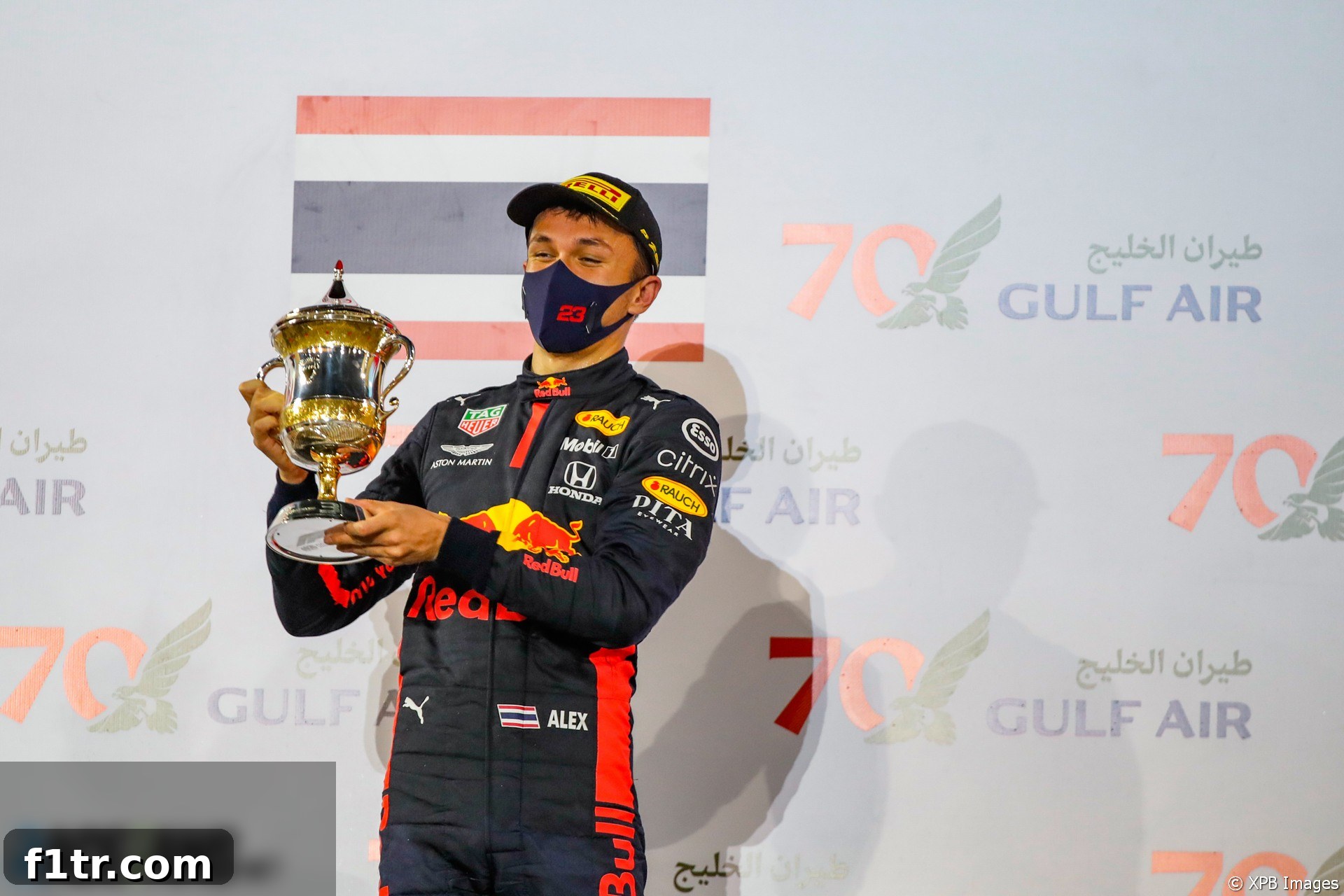
Alexander Albon’s second career Formula 1 podium at the 2020 Bahrain Grand Prix was a moment of mixed emotions for the Red Bull Racing driver. While securing a top-three finish is always a significant achievement in the highly competitive world of F1, the circumstances surrounding his P3 position left Albon with a nuanced sense of satisfaction. The young Anglo-Thai driver inherited the spot in the closing laps after a crucial MGU-K failure forced Racing Point’s Sergio Perez out of the race, adding a layer of bittersweet fortune to his accomplishment.
The Context of the 2020 Season: Pressure on Albon
The 2020 Formula 1 season was a pivotal year for Alexander Albon. Having been promoted to Red Bull Racing mid-2019, he was under intense scrutiny to consistently perform alongside teammate Max Verstappen. Despite flashes of brilliance, Albon often struggled to match Verstappen’s outright pace, leading to considerable pressure regarding his seat for the following season. Entering the Bahrain Grand Prix, Albon knew that strong results were crucial to solidify his position within the team and silence his critics. Every race presented an opportunity to demonstrate his capabilities and prove his worth in one of F1’s top-tier teams.
The unique challenges of the 2020 calendar, heavily impacted by global events, only amplified the pressure. With fewer opportunities to impress, each Grand Prix became a high-stakes affair for drivers vying for long-term contracts. For Albon, who had shown glimpses of potential but lacked consistency, the Bahrain race was another chance to deliver a tangible result that could sway opinions and secure his future with the championship-contending Red Bull team.
A Race of Strategic Patience and Tyre Management
The Bahrain International Circuit, known for its challenging conditions and high tyre degradation, demanded a shrewd approach to race strategy. From the outset, Albon focused on executing a clean start and managing his tyres effectively. He openly acknowledged that improvements in his race starts, a key area of focus for his engineering team and himself, were evident. This strong start allowed him to maintain crucial track position and engage in the strategic battles unfolding throughout the race, avoiding early skirmishes that could compromise his race pace or tyre life.
Throughout much of the race, Albon found himself entrenched in a battle for fourth place, primarily trailing world champion Lewis Hamilton, his Red Bull teammate Max Verstappen, and the highly impressive Sergio Perez. While Verstappen and Hamilton often pulled away at the front, demonstrating the superior pace of their respective cars, Albon’s primary objective became to keep pace with Perez and ensure he was in a position to capitalize on any opportunities that might arise. This required a delicate balance between pushing for lap time and preserving the Pirelli tyres, especially on a circuit known for its abrasive surface and demanding high-speed corners.
Battling Sergio Perez: A Test of Pace and Strategy
Albon candidly admitted that he “didn’t quite have the pace to overtake Sergio” during their direct on-track battle. Perez, driving a stellar race for Racing Point, demonstrated formidable car control, consistent lap times, and excellent tyre management, making it incredibly difficult for Albon to mount a sustained challenge. This period of the race was a true test of Albon’s strategic patience and discipline. Instead of forcing an overtake that might compromise his tyres, put him at risk of a collision, or push him off track, he chose to maintain close proximity, waiting for a potential pit stop error from a rival, a lapse in concentration from Perez, or an unforeseen mechanical circumstance – a strategy that ultimately proved prescient and paid dividends.
Tyre degradation was a significant factor throughout the Bahrain Grand Prix, with Albon noting his struggles “a little bit with tyre deg through the stint.” He was on a similar two-medium tyre strategy to Lewis Hamilton, which often made aggressive pushing challenging during the crucial second stint. This insight highlights the intricate details of Formula 1 racing, where managing tyre life can be as crucial as outright speed, influencing a driver’s ability to attack, defend, or maintain a strategic advantage. Understanding when to push and when to conserve is an art form, especially on a track like Bahrain.
The Turning Point: Perez’s Heartbreak, Albon’s Opportunity
With just four laps remaining in the race, the landscape of the podium dramatically shifted in an instant. Sergio Perez, who had been driving an impeccable race and was well on course for a richly deserved podium finish – a result that would have been a significant boost for his team and personal career – suffered an MGU-K failure. The MGU-K (Motor Generator Unit – Kinetic) is a vital component of the hybrid power unit in modern F1 cars, recovering kinetic energy during braking and deploying it to boost acceleration. Its sudden and catastrophic failure rendered Perez’s car powerless, forcing him into a heartbreaking retirement from what seemed like a guaranteed third place.
This unforeseen mechanical issue opened the door for Alexander Albon, who, by virtue of his steady performance, strategic positioning, and being the next car in line, inherited third place. For Albon, the moment was a stark reminder of the unpredictable and often cruel nature of Formula 1. While thrilled to secure the podium, he couldn’t ignore the unfortunate circumstances that propelled him there. “Obviously Sergio had a great race too and he had the blow-up,” Albon reflected post-race. “So I’m partly, let’s say not fully satisfied. But it was still there, we had to be there to capitalise on it.” This sentiment encapsulates the sportsmanship inherent in F1, acknowledging a rival’s misfortune while still valuing one’s own achievement in being present to seize the opportunity.
“95% Satisfied”: A Candid Assessment and Pursuit of Excellence
Albon’s self-assessment of being “95% satisfied” with his performance and result provides valuable insight into the mindset of a top-tier racing driver. This isn’t merely a casual remark; it reflects a deep understanding of his own capabilities, the car’s potential, and the exceptionally high standards expected in Formula 1. The remaining 5% likely stemmed from the acknowledged lack of outright pace to challenge Perez on merit and the keen awareness that the podium was, in part, a gift of fortune rather than a hard-fought overtake achieved through superior speed.
He articulated a clear desire to be “better,” “faster,” and “challenging more often for podiums,” highlighting his relentless pursuit of improvement and his ambitious nature. This level of self-critique is not only essential for drivers aiming to reach the pinnacle of the sport but also characteristic of elite athletes. It shows a commitment to continuous learning, a clear understanding of areas for development, and an acknowledgement that while fortune can play a role, consistent, dominant performance is the ultimate goal. For Albon, this podium was a significant step in the right direction, a confidence booster, but by no means the final destination on his journey to becoming a consistent front-runner.
Implications for Red Bull and Albon’s Future
The Bahrain Grand Prix result offered a crucial double podium for Red Bull Racing, with Max Verstappen finishing second and Albon taking third. This was undoubtedly a significant boost for the constructors’ championship standings, helping to solidify their position against rivals, and provided a much-needed morale injection for the entire team. For Albon specifically, while the podium was a positive and tangible addition to his resume, the underlying questions about his consistent pace relative to Verstappen persisted.
His place at Red Bull for the 2021 season remained unconfirmed at this point in time, amplifying the significance of every performance and result. A podium finish, regardless of how it’s achieved, undeniably contributes to a driver’s statistics and provides tangible evidence of their ability to finish races strongly under pressure. It demonstrates reliability, strategic awareness, and the capacity to be in the right place at the right time – crucial attributes in F1. For a driver facing intense pressure and speculation about their future, such results can provide a much-needed psychological boost, bolster arguments for their retention, and buy them valuable time to further prove their worth within an elite team.
Looking Ahead: The Pursuit of Consistent Excellence
Alexander Albon’s Bahrain Grand Prix podium served as a potent reminder of the complexities, drama, and unpredictable nature inherent in Formula 1. It underscored the importance of resilience, strategic thinking, effective tyre management, and the ever-present element of chance that can turn a race on its head in a split second. While Albon’s feelings were understandably mixed given the circumstances, the achievement undeniably marked a significant moment in his 2020 campaign, offering a tangible result amidst a season of intense scrutiny.
His determination to fine-tune “little things” and improve his tyre management further highlighted his dedication to mastering the intricate craft of Grand Prix racing. As Albon continued his challenging journey in Formula 1, the Bahrain podium, despite its unconventional origin, stood as a testament to his ability to seize opportunities and his unwavering commitment to challenging for top honours on a more consistent basis. The quest for outright pace and the ability to dictate his own race destiny, rather than relying on the misfortunes of others, remained Albon’s ultimate goal. The Bahrain Grand Prix, with its unique blend of strategic execution and unexpected twists, was another compelling chapter in his ongoing development as a Formula 1 driver, fueling his ambition for future successes and cementing his place among the sport’s elite.