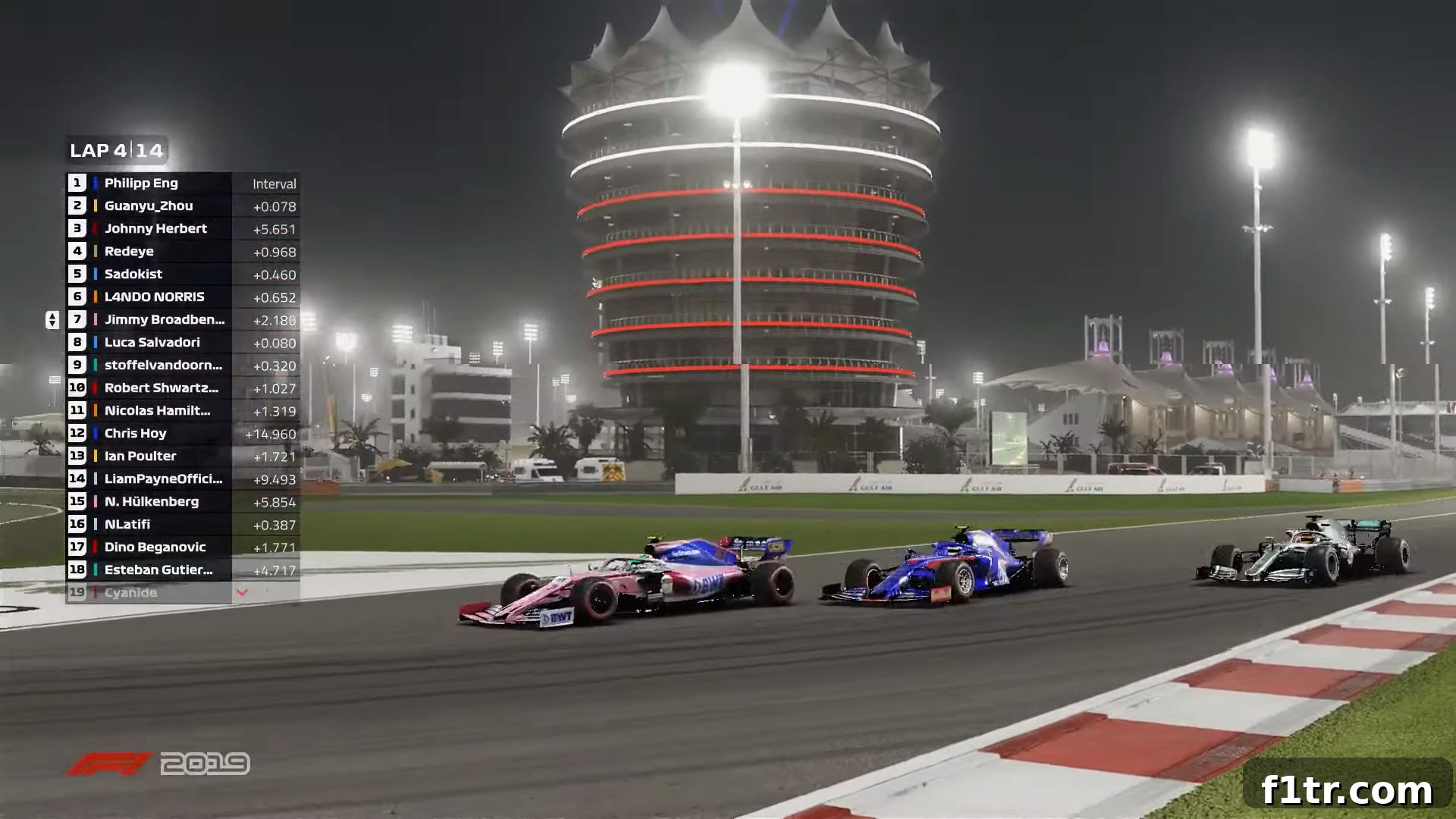
No one would claim Sunday’s Virtual Bahrain Grand Prix represented the finest example of what F1 and esports can deliver.
Advert | Become a Supporter & go ad-free
Many viewers expecting current and former F1 drivers to fill the 20-car grid were disappointed to find fewer than half the seats occupied by real competitors. Connection issues knocked Lando Norris out of qualifying and his car was controlled by an AI for most of the race.
Those technical problems caused a long delay between qualifying and the race, and the main event was shortened from 28 laps to 14. Anthony Davidson, apparently not informed of the change, missed the race and his spot was also taken by an AI.
The level of driving among those who did compete varied significantly. Sir Chris Hoy spun at the first corner in qualifying. Johnny Herbert, the only former F1 race winner on the grid, audaciously cut the first corner while trying to take the lead and received a penalty.
Multiple drivers crashed on the opening lap. Thankfully the damage model had been disabled; otherwise the field would have been thinned by more than just connection problems.
Advert | Become a RaceFans supporter andgo ad-free
There was no shortage of incidents, but a lot of action went by without proper coverage. Compared with live motorsport broadcasts, the lack of replays was noticeable and made the presentation feel uneven.
The presenters did their best to manage the chaos. Initially the hosting felt crowded and improvised, but the round-table discussion filled the extended pre-race wait. That said, watching four presenters huddled around one desk sat uncomfortably with public health advice to practice social distancing.
Despite its flaws, F1’s first remote Virtual Grand Prix deserves some leniency. Organised in just over three days, it brought together drivers and personalities of widely differing experience and skill. The event didn’t take itself too seriously, and that was appropriate given the circumstances.
With no real-world motorsport currently taking place and little on the immediate horizon, these esports events have provided many fans with a welcome distraction from an increasingly grim reality.
That demand showed in the viewing figures. According to F1’s head of esports, Julian Tan, the broadcast peaked at around 400,000 viewers across F1’s streaming platforms, with an additional roughly 100,000 tuning into Norris’s Twitch stream as he called in other drivers and personalities during the delay.
Inviting influencers and celebrities may not satisfy purist F1 fans, but it does attract new viewers. Even if some of their fans aren’t motorsport enthusiasts, bringing millions of social media followers into the fold can help grow the audience.
With the season’s suspension likely to stretch further, F1 should develop the Virtual Grand Prix into a format people will want to follow regularly instead of treating it as a one-off. The series must balance appealing to newcomers drawn by streamers and celebrities while keeping core fans engaged with quality racing.
A simple solution would be a Pro/Am format: one race for celebrities and influencers, staged as a lighter, entertainment-focused contest, and a second main event for serious competitors run under stricter rules — no driving aids, realistic damage, and more rigorous officiating. F1 drivers could choose to race in either or both events, satisfying both audiences.
Go ad-free for just £1 per month>> Find out more and sign up
F1 will likely continue to use its official Codemasters title for these events, which limits some creative options other series are exploring. For example, IndyCar’s iRacing series plans to race on tracks the real series does not visit. That kind of flexibility may prompt the official game’s future editions to incorporate broader features.
The fact F1 could fall back on esports last weekend is a result of the investment Liberty Media has made in the area since taking over the sport. It’s hard to imagine a similar response under previous ownership.
While the inaugural Virtual Grand Prix entertained, the format clearly has room for improvement. Those running the coverage are aware of that. “Next time we’ll see a much more measured race in general,” said BBC F1 radio commentator Jack Nichols, who has long experience covering virtual racing.
“The chaos down towards turn one where people were crashing at the start, it isn’t what we want to see, and I don’t think it’s what the drivers want to happen. But this is a fairly last-minute call-up for a lot of these guys.”
That assessment is fair. The Virtual Grand Prix will never replace the real thing, but it has obvious potential as enjoyable, racing-based entertainment while one of the sport’s longest race-free spells continues.
Over to you
Did you watch the Virtual Bahrain Grand Prix? Do you think the format could be improved — and if so, how? Share your thoughts in the comments.
Advert | Become a RaceFans supporter andgo ad-free
2020 F1 season
- Grosjean to make F1 test return tomorrow for first time since Bahrain horror crash
- Pictures: Wrecked chassis from Grosjean’s Bahrain fireball crash to go on display
- Bottas vs Rosberg: Hamilton’s Mercedes team mates compared after 78 races each
- F1 revenues fell by $877 million in Covid-struck 2020 season
- Hamilton and Mercedes finally announce new deal for 2021 season
Browse all 2020 F1 season articles