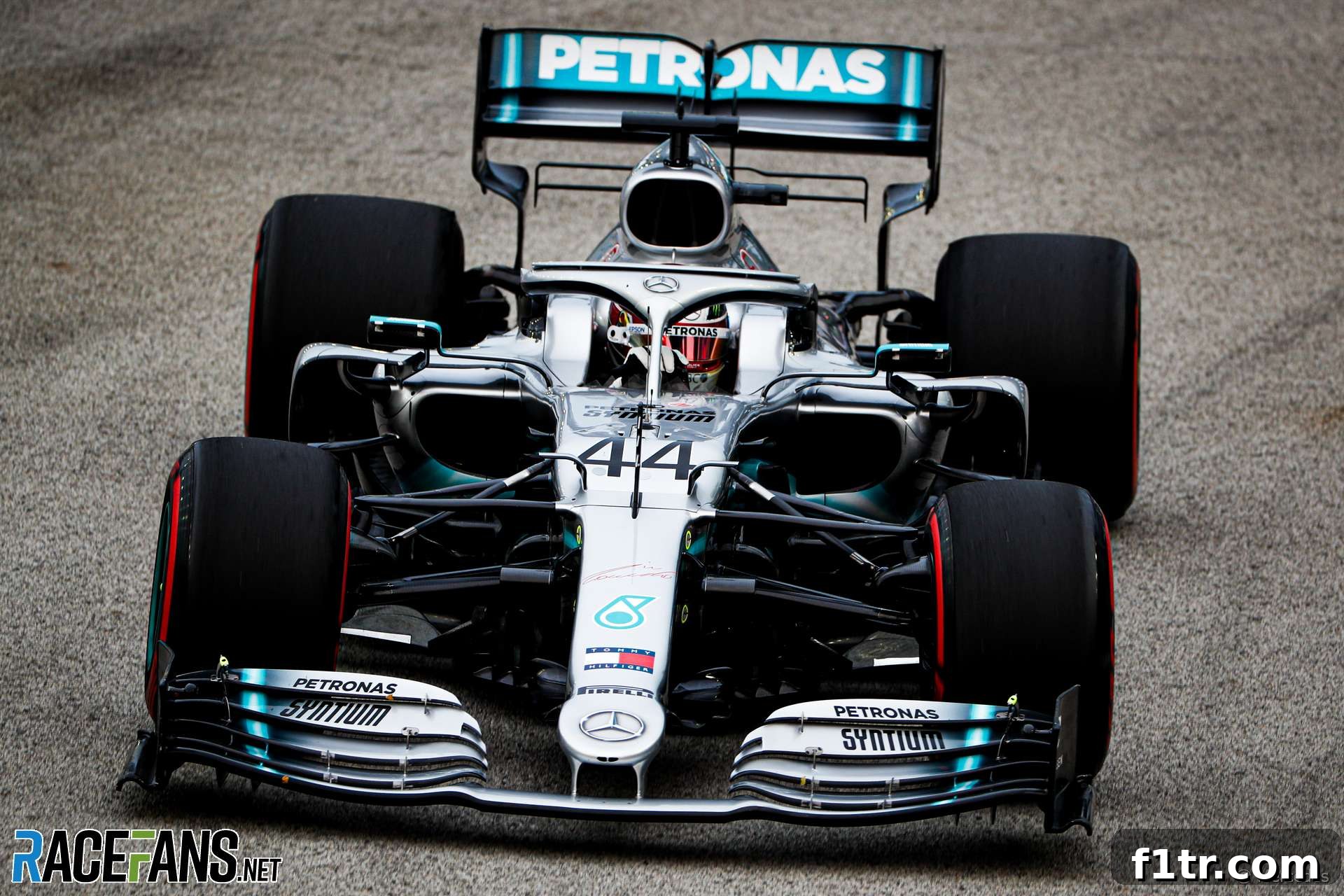
Mercedes face the prospect of their longest losing streak since the introduction of the V6 hybrid era, but Sochi has historically been one of their strongest circuits. Below are the main talking points heading into the Russian Grand Prix.
Will Mercedes extend their losing streak…
Mercedes have lost the last three grands prix, a run only previously seen once under the current power unit regulations: at the start of last season, when Ferrari won the opening two rounds and Red Bull took the third. Those results showed that dominance can shift quickly when teams find a better package.
Ferrari’s victories at Spa and Monza felt predictable given those tracks’ characteristics, but the win in Singapore was a surprise. Many observers left Monza wondering whether that circuit represented Ferrari’s final realistic chance of victory this year. Yet if the SF-90 can succeed on both the high-speed straights of Monza and the stop-start, high-downforce environment of Marina Bay, it suggests the car may be competitive across a wider variety of tracks than previously assumed.
…or will they keep their winning run at Sochi?
Sochi has been a particularly happy hunting ground for Mercedes. The team has been unbeaten at the circuit since it joined the calendar in 2014, coinciding with the introduction of the V6 hybrid turbo era. That record underlines how well the package and setup philosophy have historically suited the layout.
The circuit has also been a strong venue for Valtteri Bottas. He took his first Formula 1 win there in 2017 and narrowly missed out on victory last year due to team orders. Bottas will need a strong weekend in Russia if he is to start closing the gap to Lewis Hamilton in the championship battle. A solid result at a track where he has previously excelled would be timely.
Is Vettel back to his best?
Sebastian Vettel’s triumph in Singapore, his first victory in over a year, prompted the driver to claim that some commentators had overstated the severity of his recent downturn. While that view is open to debate—the intervening season-plus included a number of notable mistakes—the key question now is whether the win marks a genuine turning point.
A significant outstanding issue is qualifying form. Charles Leclerc has held the upper hand in qualifying for the past eight races, meaning Vettel often faces a strategic disadvantage on race day. In Singapore Vettel still appeared to struggle with the SF-90’s rear-end behaviour, whereas Leclerc seemed more comfortable with the car’s balance. If Vettel can reclaim qualifying edge, he will be better placed to capitalise on race strategies and score consistent results.
McLaren vs Renault for best of the rest
The fight for fourth in the constructors’ championship—the unofficial “best of the rest” battle between the Renault-powered teams—remains intense. Carlos Sainz Jr and Nico Hülkenberg were involved in a first-lap clash in Singapore, while Daniel Ricciardo drew the attention of the stewards and Lando Norris emerged with a strong haul of points. Those incidents underlined how tight and competitive this midfield group has become.
Norris returns to a track he knows well this weekend, which sets up another closely contested event among the four Renault-engined cars. All four made it into Q3 in Singapore, so expect another round of intense intra-group battles in qualifying and race trim.
Will Q3 be chaotic again?
Qualifying in Singapore was defined by drivers hunting clear air, and at Sochi the tow effect will be significant as well. That should lead to drivers attempting to position themselves to gain a slipstream, particularly on the long straights. While teams and drivers ought to manage the process cleanly, the potential for messy situations remains—especially as there are no additional rules yet in place to curb tactical pack-running. Fans will be hoping for a smooth session, but past experience suggests drama is possible.
Is time running out for Sochi on the F1 calendar?
Recent reporting suggests this could be one of Formula 1’s final visits to the Sochi Autodrom. The venue has struggled to produce compelling racing in recent years: the track layout is often seen as unchallenging and repetitive, the low surface abrasiveness tends to produce predictable tyre strategies, and spectators and readers have rated the circuit lower than most others on the calendar.
That said, weather can change the complexion of a race weekend. The chance of rain in Sochi this year injects hope for a more unpredictable and entertaining grand prix than the circuit has generally delivered in previous seasons.
Are you going to the Russian Grand Prix?
If you’re travelling to Russia for the race weekend, your perspective matters—local insight, paddock observations and fan experiences add depth to coverage. Share your plans and impressions with other supporters and readers.
Who do you expect to be the team to beat in Sochi? Cast your predictions for the weekend’s race; you can edit them up to the start of qualifying.
2019 Russian Grand Prix
Further reading and race-related content from the 2019 Russian Grand Prix season remain available for those interested in past coverage and analysis.