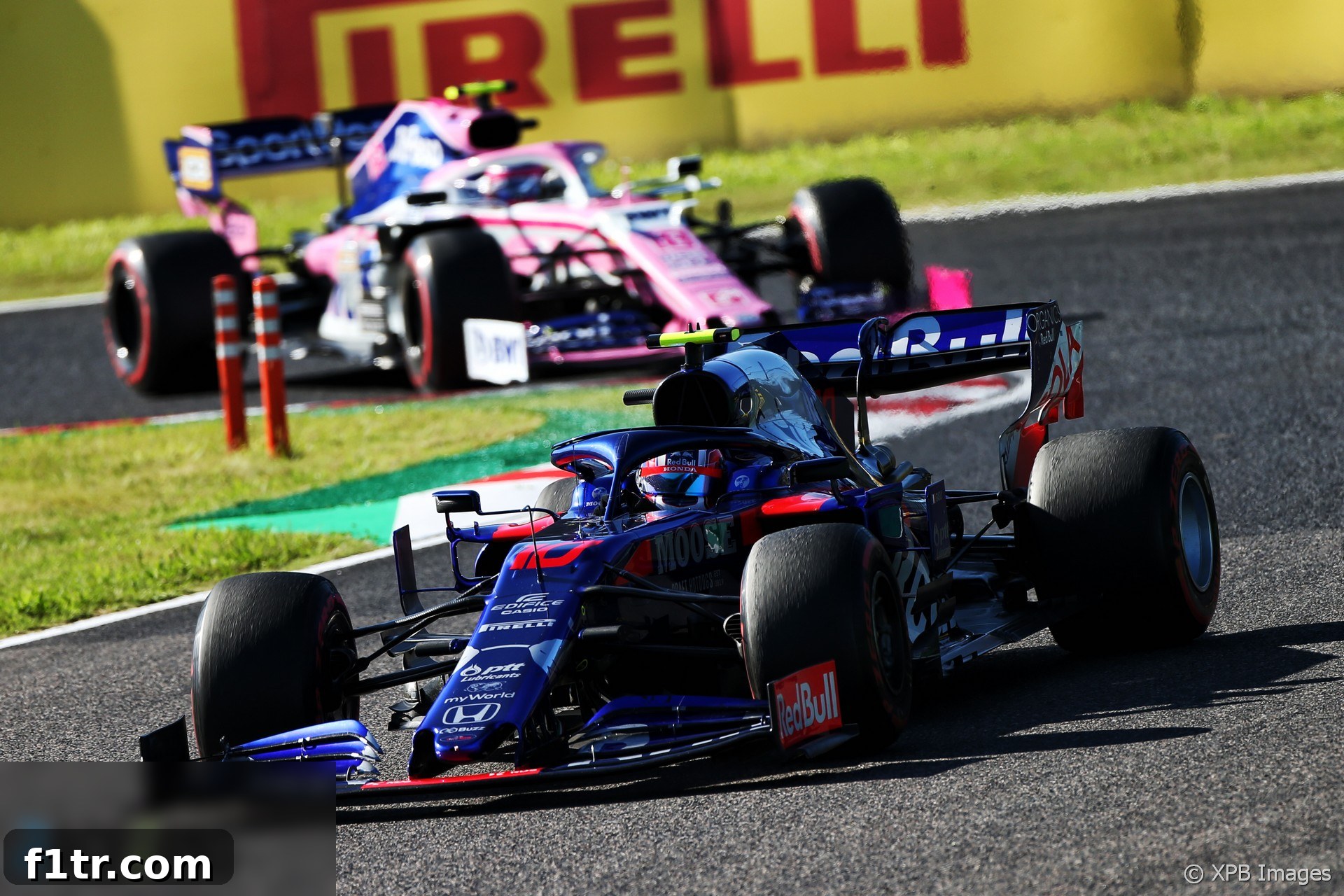
Pierre Gasly and Sergio Perez Collision: Stewards Rule No Action After Thrilling Last-Lap Drama
A thrilling Grand Prix concluded with a dramatic, last-lap collision involving Pierre Gasly and Sergio Perez, sending the Racing Point driver into the barriers. Despite the intense nature of the contact, the race stewards have concluded their investigation, announcing that no further action will be taken against either driver. Their verdict cited shared responsibility for the incident, a common outcome in the competitive realm of Formula 1 where drivers push the limits for every position.
Advert | Become a Supporter & go ad-free
Recapping the Intense Last-Lap Battle
The incident unfolded during the climactic moments of the race, as Gasly, then driving for Scuderia Toro Rosso, and Perez, piloting his Racing Point machine, found themselves locked in a fierce battle. Both drivers were vying for crucial championship points, a scenario that consistently heightens tension and prompts drivers to extract every ounce of performance from their cars. The pair entered turns one and two side-by-side, a classic high-stakes maneuver that demands absolute precision and an understanding between competitors.
Perez, in car #11, was attempting an ambitious outside pass around Gasly’s car #10. This particular move, especially on the final lap, is a high-risk, high-reward strategy. As they navigated through the Esses, Perez was marginally ahead, positioned on the outside of the track, while Gasly maintained the inside line. The critical moment arrived as they approached the apex of turn two, where racing lines naturally converge. The tight racing space, combined with the extreme pressure of the final lap, diminished the margin for error to virtually zero, leading to the inevitable contact that dramatically altered the race’s conclusion for one of the drivers.
The Stewards’ Meticulous Investigation Process
Following the race, the stewards promptly initiated a thorough investigation into the collision. This standard procedure in Formula 1 involves a rigorous review of all available evidence. Stewards analyze multiple camera angles, including onboard footage from both cars, CCTV from around the track, and broadcast replays. They also examine telemetry data, which provides precise information on speed, braking, steering inputs, and car positioning. In complex cases, drivers may even be called to present their perspectives on the incident.
In this instance, the stewards’ primary objective was to determine the degree of culpability for each driver involved in the contact. Their official statement meticulously detailed the sequence of events: “Cars 11 and 10 while transiting turns 1 and 2 side by side, with car 11 attempting an outside pass, made contact near the apex of turn 2, causing car 11 to leave the track.” This succinct summary confirmed the mechanics of the collision, setting the stage for their nuanced judgment regarding responsibility.
Shared Responsibility: A Detailed Breakdown of the Verdict
The core of the stewards’ decision rested on the principle of shared responsibility, a verdict often delivered in situations where multiple factors and driver actions contribute to an incident. They meticulously outlined the contributing factors from both Sergio Perez and Pierre Gasly:
- Sergio Perez (Car #11) – The Outside Line: The stewards noted that Perez, “who was slightly in front and on the outside of the track, took a narrow line towards the apex of turn 2.” This implies that as Perez attempted to complete his overtaking maneuver, he might have turned in more sharply than advisable, potentially not leaving adequate space for Gasly on the inside. In the heat of battle, drivers often aim to minimize the distance traveled through a corner, but this can inadvertently squeeze out a competitor.
- Pierre Gasly (Car #10) – The Inside Line: Conversely, the stewards stated that Gasly, “on the inside of the track, and likely not fully visible to car 11, did not take as tight a line as was possible through the apex prior to the contact.” This indicates that while Gasly held the inside line, he too had an opportunity to mitigate the contact by tightening his trajectory more aggressively. The comment about him “likely not fully visible” to Perez highlights a common challenge in wheel-to-wheel racing, where blind spots can contribute to misjudgments, making it incumbent upon both drivers to anticipate the other’s movements.
The unequivocal declaration, “No driver is judged wholly at fault,” is a pivotal phrase in Formula 1. It signifies that the incident was deemed a ‘racing incident’ – an unfortunate outcome stemming from aggressive, yet not maliciously reckless, competition. This ruling acknowledges the inherent risks of close-quarters racing and the split-second decisions drivers must make under immense pressure, often leading to situations where minor errors from both parties converge into a collision.
Unusual Race Ending: Impact on Results and Classification
Adding another layer of intrigue to the incident was the highly unusual circumstance surrounding the race’s official duration and results. The collision between Gasly and Perez occurred on what was originally designated as the 53rd and final lap of the Grand Prix. However, due to an operational error during the event, the race distance was prematurely cut short. Consequently, the official results and final standings were ultimately taken from the positions recorded on lap 52, the penultimate lap.
This rare administrative anomaly had a direct and significant impact on Sergio Perez’s classification. Despite his Racing Point car ending up in the barriers on the final scheduled lap, the backdated results meant that his position from lap 52 was retained. As a result, Perez was officially classified in ninth position, securing valuable championship points that might otherwise have been lost entirely had the incident’s outcome on lap 53 been the decisive factor. For Pierre Gasly, who continued his race relatively unscathed, the backdating of results meant his position on lap 52 was also upheld, unaffected by the contact’s immediate aftermath.
Such errors in race management are exceedingly rare in Formula 1 and often prompt extensive post-race reviews to prevent future occurrences. While it undeniably caused confusion among teams and fans alike, it paradoxically allowed Perez to salvage points from a race that ended prematurely and dramatically for him.
The 2019 F1 Season: Context for Gasly and Perez
The 2019 Formula 1 season was a significant and often challenging year for both Pierre Gasly and Sergio Perez, each navigating unique career paths and team dynamics. Understanding their respective seasons provides valuable context for this on-track battle.
Pierre Gasly’s Rollercoaster Year
For Pierre Gasly, 2019 represented a period of immense pressure and a pivotal learning curve. Having been promoted from Toro Rosso to the senior Red Bull Racing team at the start of the season, expectations were sky-high. However, Gasly struggled to consistently match the pace of his highly competitive teammate, Max Verstappen. This performance gap led to intense scrutiny and, ultimately, a mid-season demotion back to Toro Rosso, a move that undoubtedly tested his resilience. Despite the initial setback, Gasly showcased remarkable character, finding his rhythm again at Toro Rosso and delivering some standout performances, including a memorable maiden podium finish later in the season. Incidents like the contact with Perez, though ultimately without penalty, were part of his steep learning curve in a year characterized by both immense challenges and eventual triumphs.
Sergio Perez and Racing Point’s Midfield Scraps
Sergio Perez, a seasoned and highly respected driver, was a consistent force in the midfield for Racing Point (formerly Force India). The 2019 season saw Racing Point battling fiercely in an incredibly competitive midfield pack, where every single point was vital for their constructors’ championship standing. Perez was known for his astute race craft, exceptional tyre management, and ability to consistently extract points even in machinery that wasn’t always top-tier. His involvement in a last-lap tussle for position underscored the relentless nature of the midfield fight, where drivers are constantly pushing to maximize their team’s haul. The fact that he salvaged points despite the collision, thanks to the technicality of the race results, highlighted the fine margins that define success and failure in this part of the F1 grid.
The Philosophy of ‘Racing Incidents’ in Formula 1
The stewards’ decision to classify the Gasly-Perez collision as a shared responsibility incident and opt for no further action aligns perfectly with Formula 1’s overarching philosophy of promoting hard, fair racing. The concept of a “racing incident” is frequently invoked when contact occurs as a direct consequence of aggressive wheel-to-wheel competition, where both drivers could be deemed to have contributed to the outcome through minor errors of judgment, rather than through malicious intent or gross negligence. This approach encourages drivers to push the limits and engage in thrilling on-track battles, which is fundamental to the sport’s appeal, while still providing a framework for penalizing genuinely dangerous or unsporting conduct.
The fine line between aggressive racing and reckless driving is a perennial topic of debate within motorsport. However, in this particular instance, the stewards leaned towards allowing the race to unfold with intensity, acknowledging the high stakes and the split-second decisions made in the heat of the final lap. Such nuanced decisions are crucial not only for the immediate outcome of a race but also for setting precedents that guide future driver behavior on the track, striving to balance spectacular racing with essential safety standards and competitive fairness.
Advert | Become a RaceFans supporter andgo ad-free
Explore More from the 2019 F1 Season
For fans eager to revisit the compelling narratives and pivotal moments of that year, the 2019 F1 season remains a rich source of captivating stories. From the intense championship battles at the front to the dramatic midfield struggles and surprising individual performances, it was a year filled with indelible memories and significant developments in the world of Formula 1.
- Crying in the Melbourne car park at 2019 grand prix was my career low – Ocon
- McLaren Racing reports reduced £71 million loss in 2019
- Kvyat: Hockenheim podium last year was “my biggest achievement” so far
- How the FIA’s new encrypted fuel flow meter targets Ferrari’s suspected ‘aliasing’ trick
- “He smashed my office door”: 23 must-see moments from ‘Drive to Survive’ season two
Browse all 2019 F1 season articles