The Enduring Danger: Why F1 Drivers Like Sergio Perez Believe Their Risk Justifies Their Reward
The thrilling, high-stakes world of Formula 1 racing was brought back to stark reality during the dramatic start of the British Grand Prix. A multi-car pile-up served as a visceral reminder of the immense danger F1 drivers willingly face every time they strap into their meticulously engineered machines. In the aftermath of the harrowing incident, Red Bull Racing’s Sergio Perez voiced a compelling argument that intertwines driver safety with their unique compensation, firmly stating that the inherent risks on track fundamentally justify their substantial salaries.
The Raw Reality of Formula 1: A Glimpse into the British Grand Prix Incident
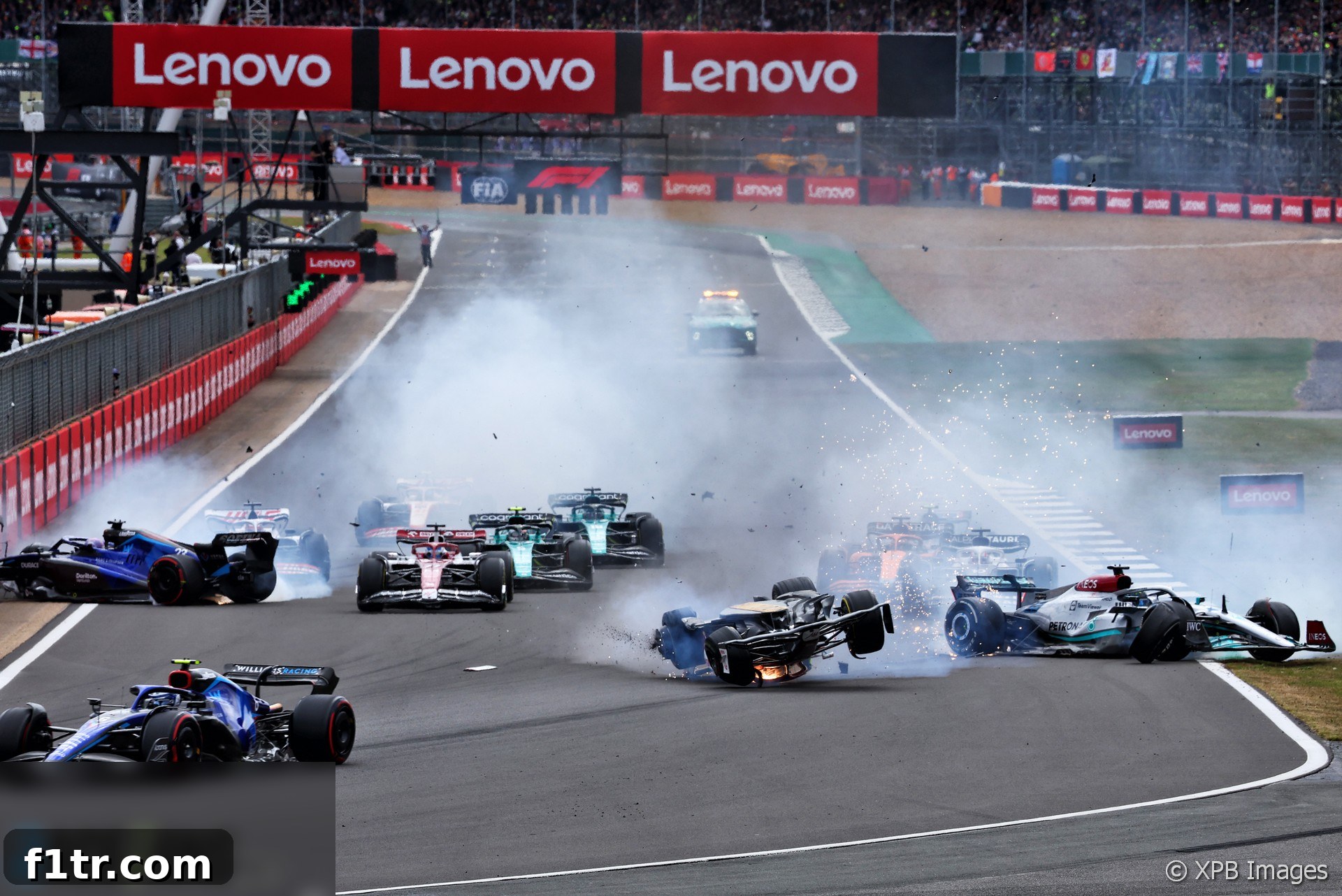
The Silverstone circuit witnessed a truly terrifying accident, involving multiple cars, which momentarily overshadowed the excitement of Grand Prix racing. Alexander Albon, caught in the chaos, was initially taken to hospital for precautionary checks before being later discharged, a testament to the robust safety measures in modern F1 cars. However, it was the airborne trajectory of Alfa Romeo’s Zhou Guanyu, whose car cleared a tyre barrier and struck a debris fence, that truly sent shockwaves through the paddock and among fans globally. Miraculously, Zhou also walked away with only minor injuries after visiting the circuit medical centre, a fact that underscored both the brutal forces involved and the extraordinary advancements in driver protection.
This incident, visible to millions worldwide, highlighted the fine line between spectacle and catastrophe that is an intrinsic part of Formula 1. Each driver, pushing the limits of speed and control, is acutely aware that a split-second misjudgment or an unforeseen mechanical failure can have life-altering consequences. It is this ever-present peril, often forgotten amidst the glamour and technological marvel, that fuels the debate around driver value and remuneration.
Sergio Perez on Driver Salaries: Risk, Reward, and the Salary Cap Debate
In recent years, Formula 1 has undertaken significant economic restructuring, most notably with the introduction of a budget cap for teams. This initiative, designed to foster greater financial sustainability and competitive fairness, aimed to curb the spiralling costs of F1 operations. While team budgets are strictly regulated, salaries for drivers and certain top team members have remained exempt from this limit. However, the possibility of extending the cap to include driver pay has been a recurring discussion point within the sport’s political landscape.
Sergio Perez, speaking with conviction after witnessing the British Grand Prix crash, passionately articulated why he believes such a cap on driver salaries would be a misstep. “When you hear people talking about putting a cap on the driver salaries, we are the ones taking all the risk out there, putting on the show,” he stated unequivocally. For Perez, the physical danger, the constant demand for peak performance under immense pressure, and their irreplaceable role in attracting global audiences are direct justifications for the salaries drivers command. He views their earnings not merely as compensation, but as an acknowledgment of their willingness to push boundaries where the stakes are inherently life or death.
The argument extends beyond mere personal gain. F1 drivers are not just athletes; they are the central figures in a multi-billion-dollar global entertainment spectacle. Their talent, charisma, and bravery are what draw in sponsors, broadcasters, and fans alike. A salary cap, some argue, could potentially deter future talent, diminish the prestige associated with reaching the pinnacle of motorsport, or even reduce the incentive for drivers to take the necessary risks that define the sport’s excitement. Perez’s comments powerfully underline the sentiment that drivers are the product, and their unique contribution, underscored by the inherent danger, must be valued accordingly.
The Mental Toll: Beyond the Physical Scars
While the immediate focus after a major crash is rightly on the physical well-being of those involved, the psychological impact on other drivers, even those not directly affected, is profound. Perez revealed his own shock upon seeing replays of the Silverstone incident. “I knew there was an accident, but I was back in the garage, and I was looking at the TV and they showed the accident and I was shocked. It’s been a while since we have seen such an accident like that,” he admitted. This reaction highlights the unique mental fortitude required to compete in Formula 1.
The ability to witness such a terrifying event, process the danger, and then immediately “delete it from your mind and try to focus on what you have to do” is a testament to the immense psychological training and resilience of F1 drivers. It speaks to a shared understanding among them that while they compete fiercely against each other, there is a deep, underlying camaraderie rooted in the common dangers they face. The relief expressed by Perez – “very pleased for them that they are here with us and they will be racing again” – underscores this bond and the human element often masked by competitive intensity.
A Legacy of Safety: FIA’s Role and Continuous Improvement
The fact that Zhou Guanyu and Alexander Albon could walk away from such a devastating crash is not merely luck; it is a direct result of decades of relentless dedication to improving safety standards within Formula 1. Sergio Perez was quick to praise the sport’s governing body, the FIA (Fédération Internationale de l’Automobile), for their continuous efforts. “Well done to the FIA because we’ve come a long way,” he acknowledged.
From the introduction of the HANS device and the HALO cockpit protection system to advancements in chassis design, impact-absorbing structures, and the rapid deployment of trackside medical teams, F1 has transformed from one of the most dangerous sports to one where severe injuries, while still possible, are increasingly rare. These innovations are not static; every significant incident, like the one at Silverstone, serves as a crucial learning opportunity for the FIA and teams.
Perez also raised an important point about continuous vigilance: “I’m sure there are still good improvements and always good lessons to make sure we learn from today, to see the accident, to make sure that there are things we can improve. I don’t know if there were photographers around that were at risk. So just have a look and see if we are able to make this a safer sport for everyone.” This proactive approach, extending beyond just the drivers to include trackside personnel, marshals, and even spectators, is integral to F1’s unwavering commitment to safety. It ensures that while the sport remains incredibly fast and thrilling, the protection of every individual involved remains paramount.
Balancing Thrills and Safety: The Core Dilemma of Motorsport
The inherent tension in Formula 1 lies in its very essence: the pursuit of ultimate speed and the electrifying spectacle of competition, balanced against the paramount need for safety. Motorsport fans crave drama, close racing, and breathtaking overtakes, all of which often involve pushing cars and drivers to their absolute limits. This desire for exhilaration, however, must always be tempered by the understanding that human lives are at stake. The FIA, in collaboration with teams and drivers, constantly navigates this delicate balance, introducing regulations that enhance safety without stifling the competitive spirit or diluting the thrill that defines F1.
Every corner designed, every regulation drafted, and every technological advancement implemented is a step towards optimizing this equilibrium. The British Grand Prix crash serves as a stark reminder that despite all progress, Formula 1 remains a dangerous sport where the extraordinary skill of its drivers, coupled with continuous safety evolution, allows for the magnificent spectacle we all cherish.
Conclusion
The dramatic scenes at the British Grand Prix served as a poignant reminder of the enduring dangers inherent in Formula 1 racing. In the wake of such a harrowing incident, Sergio Perez’s candid remarks underscore a fundamental truth: the extraordinary risks F1 drivers undertake are not merely part of the job; they are central to their value and a powerful justification for their compensation. As discussions around driver salary caps continue, Perez’s perspective offers a vital counterpoint, emphasizing that drivers are the very heart of the sport, willingly putting their lives on the line for the entertainment and passion of millions.
Ultimately, while F1 relentlessly strives for greater safety through technological innovation and regulatory improvements – a journey that has indeed come a long way – the element of danger will always remain. It is this unique blend of exhilarating performance and ever-present risk that defines Formula 1, making the exceptional talent and bravery of drivers like Sergio Perez not just admirable, but truly invaluable.
Related 2022 F1 season articles
- Mercedes told me “you’re wrong” about 2022 car’s problems – Hamilton
- FIA confirms all 10 F1 teams complied with 2022 cost cap
- Steiner “not ashamed” of panning “slow” Schumacher in Drive to Survive
- Albon believes year out of F1 improved him as a driver
- Hamilton sees diversity gains in F1 years on from his ‘traumatising’ experience of racism
Browse all 2022 F1 season articles