When Lando Norris sealed his latest contract extension with McLaren, an announcement made just before the curtain rose on the 2022 Formula 1 season, it sent a clear message about his increasingly central role within the team. At that time, while his experienced teammate Daniel Ricciardo had recently delivered McLaren’s first Grand Prix victory in nine years, Norris had demonstrably been the more consistent and impactful performer throughout the preceding season. His reward was a lucrative extension that firmly anchored him to McLaren beyond Ricciardo’s tenure, securing his services until the end of 2025.
The following year saw a pivotal shift. Ricciardo, struggling to meet expectations, was released from his contract a year early, making way for the highly anticipated rookie Oscar Piastri. This transition immediately elevated Norris to the undisputed senior driver within the McLaren stable. However, as the 2023 season commenced, it would have been entirely understandable if Norris harbored lingering doubts about his long-term commitment to the Woking-based outfit. The team’s trajectory seemed to have stalled, raising questions about its competitive future.
Indeed, McLaren’s competitive standing had shown signs of regression. While their impressive third-place finish in the 2020 Constructors’ Championship was somewhat flattered by a particularly challenging year for Ferrari, by the end of the 2022 season, they had slipped to a disheartening fifth. This downward trend continued into the 2023 season, which, for the second consecutive year, saw McLaren starting on the back foot. At the launch of their MCL60 challenger, the team candidly admitted that certain design elements required urgent rectification, hinting at underlying issues before the cars even hit the track.
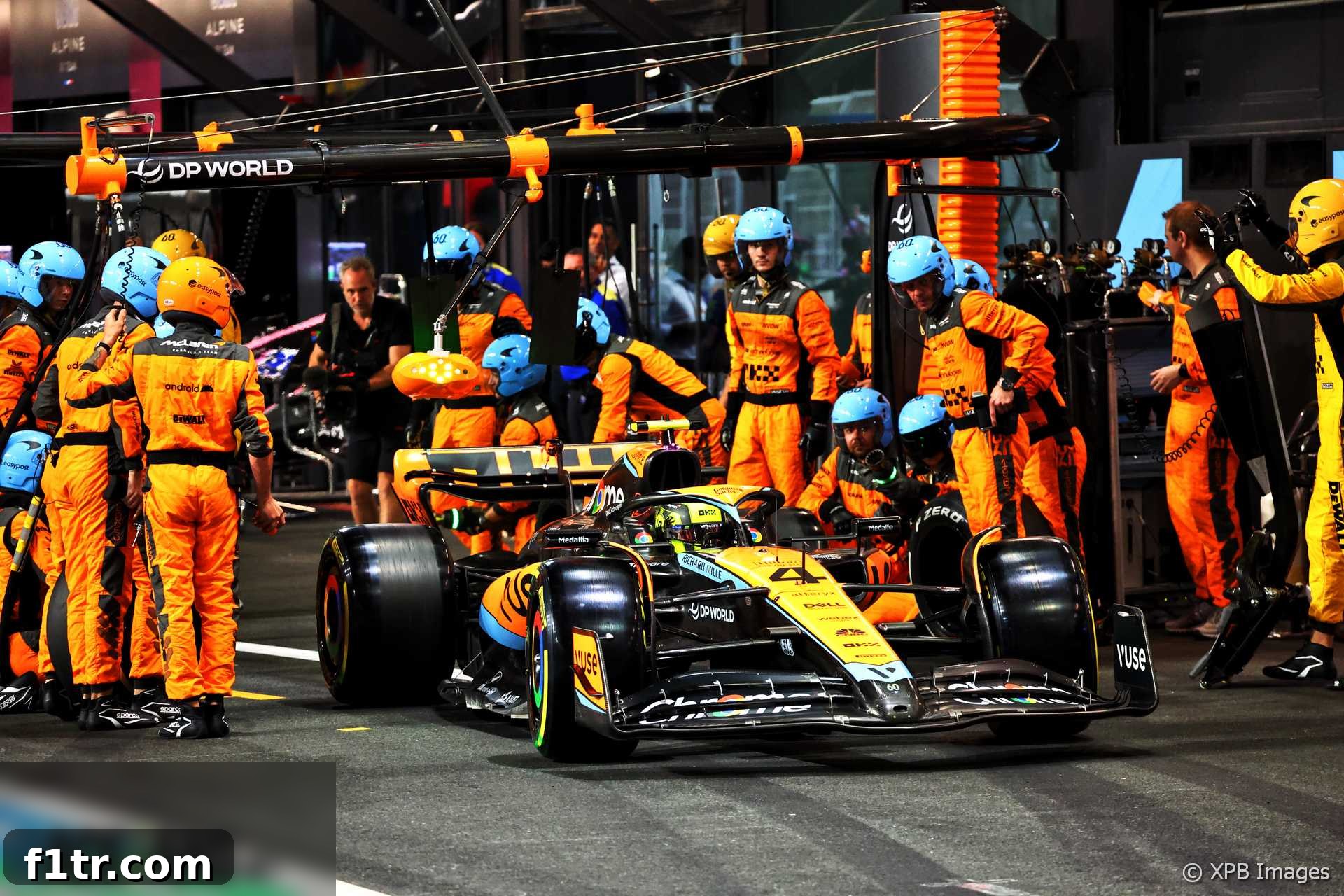
The opening race in Bahrain served as a stark illustration of McLaren’s predicament. Although Norris managed to scrape through Q1, unlike his new teammate Piastri, it was by the slenderest of margins. He clocked the same time as Logan Sargeant but advanced at the Williams driver’s expense only because he set his lap first. While Piastri’s race ended prematurely, Norris endured an agonizing Grand Prix marred by an unprecedented six pit stops, a consequence of a persistent pneumatic system fault. The weekend was a clear indicator that McLaren was far from where it needed to be, and the pressure was mounting.
Adding to the uncertainty, Andreas Seidl, the figure who had meticulously overseen McLaren’s steady ascent in the preceding seasons, had been enticed away to join the nascent Audi F1 project, set to debut with the next generation of power units in 2026. This left a void that was filled by Andrea Stella, who was promoted to the pivotal role of Team Principal for the first time in his distinguished career. The combination of underperformance, a leadership change, and Norris’s long-term commitment surely prompted reflection on his part. After five seasons with the team that nurtured him from junior formulae into Formula 1, he must have contemplated whether more favorable opportunities existed elsewhere, particularly given the sport’s impending regulatory shift.
The fundamental question loomed: Was McLaren’s recent progress now in an irreversible reverse? Should Norris, a prodigious talent, seek a move from an engine customer team to one enjoying a direct manufacturer relationship? Such a switch, many anticipate, could offer a significant competitive advantage under the 2026 engine regulations, much as it did for Lewis Hamilton when he joined Mercedes a decade ago, ultimately redefining his career and the sport itself. The decision to stay put, therefore, was a profound statement of faith.
Yet, against all odds, McLaren engineered one of the most astonishing mid-season turnarounds seen in recent Formula 1 history. By their own candid admission, the substantial upgrade package introduced at the Austrian Grand Prix not only met but significantly exceeded their most optimistic expectations, marking their most significant single step forward in performance in years. This wasn’t a minor refinement; it was a fundamental re-evaluation and improvement of the car’s core characteristics, allowing Norris and Piastri to unlock previously elusive pace.
The momentum didn’t stop there. The team delivered another potent wave of upgrades in Singapore, further solidifying their competitive position. On both critical occasions, Norris, as the team’s leading points-scorer and primary development driver, was rightly prioritized to receive the new parts first, maximizing their impact. From that pivotal race weekend at the Red Bull Ring in Austria, Norris’s performance was nothing short of sensational. He out-scored every other driver on the grid by a remarkable 34 points, with the sole exception of the dominant and runaway champion, Max Verstappen. This incredible surge underscored both Norris’s exceptional talent and the profound effectiveness of McLaren’s development strategy.
Andrea Stella’s leadership, coupled with a decisive reshuffle of the team’s technical division, was emphatically vindicated. While James Key departed to rejoin Andreas Seidl, Peter Prodromou was entrusted with the critical responsibility of overseeing aerodynamic development. Crucially, McLaren also made strategic high-profile technical recruitments from top rival teams. Rob Marshall, a highly respected engineer, joined from Red Bull, and David Sanchez, a key figure in Ferrari’s design department, also arrived, both at the beginning of the current year. These experienced additions are set to further bolster McLaren’s technical capabilities. Moreover, the team’s state-of-the-art refurbished wind tunnel became fully operational in the middle of last year, immediately commencing work on their 2024 challenger, providing an invaluable tool for future development and optimization.
Lando Norris’s latest contract, extending his tenure far into the future, means McLaren has become the first Formula 1 team to confirm both of its drivers for the fiercely anticipated 2026 season, following Oscar Piastri’s own extension signed last September. However, the true significance of Norris’s decision lies in the unprecedented earliness of his commitment. He chose to extend a deal that still had another two full seasons remaining, a rare move in the cutthroat world of F1 driver contracts. This bold act serves as an unequivocal sign that McLaren has instilled in him the profound belief that the challenging early months of 2023 were merely a temporary setback, a brief anomaly in a trajectory that is now firmly back on a winning course. It speaks volumes about the renewed confidence within the team, its clear vision for the future, and Norris’s pivotal role in achieving their ambitious goals. His decision is not just about a contract; it’s a declaration of shared ambition and a testament to the transformative power of effective leadership and relentless development.
Looking ahead, the 2026 technical regulations, particularly concerning the new power unit formula, represent a significant paradigm shift in Formula 1. Many experts predict that teams with direct manufacturer relationships will possess a distinct advantage over customer teams, given the depth of integration and proprietary knowledge they can harness. By securing Norris and Piastri so early, McLaren is signaling its robust strategy to navigate these changes, aiming to solidify its position as a front-running contender, irrespective of its engine supply status. This long-term commitment from its star drivers provides immense stability and allows the team to focus its engineering and strategic efforts without the distraction of driver market speculation. Norris’s unwavering belief in McLaren’s project, demonstrated by this early extension, will undoubtedly serve as a powerful motivator for everyone involved, from the engineers in the design office to the mechanics in the garage, as they collectively strive to return the iconic team to the pinnacle of motorsport.
Formula 1 Insights
- GT driver killed in multi-car crash at Nurburgring Qualifiers
- Should F1 change tracks or racing guidelines to tackle dangers in 2026 rules?
- Controversies, Norris, Newey and more: Five new motorsport books reviewed
- One of F1’s greatest races happened 15 years ago today. Or did it?
- “Overtaking is overtaking”: Domenicali denies F1’s yo-yo racing is “artificial”
Browse all Formula 1 articles