Sebastian Vettel: The Evolving Legacy of a Formula 1 Icon
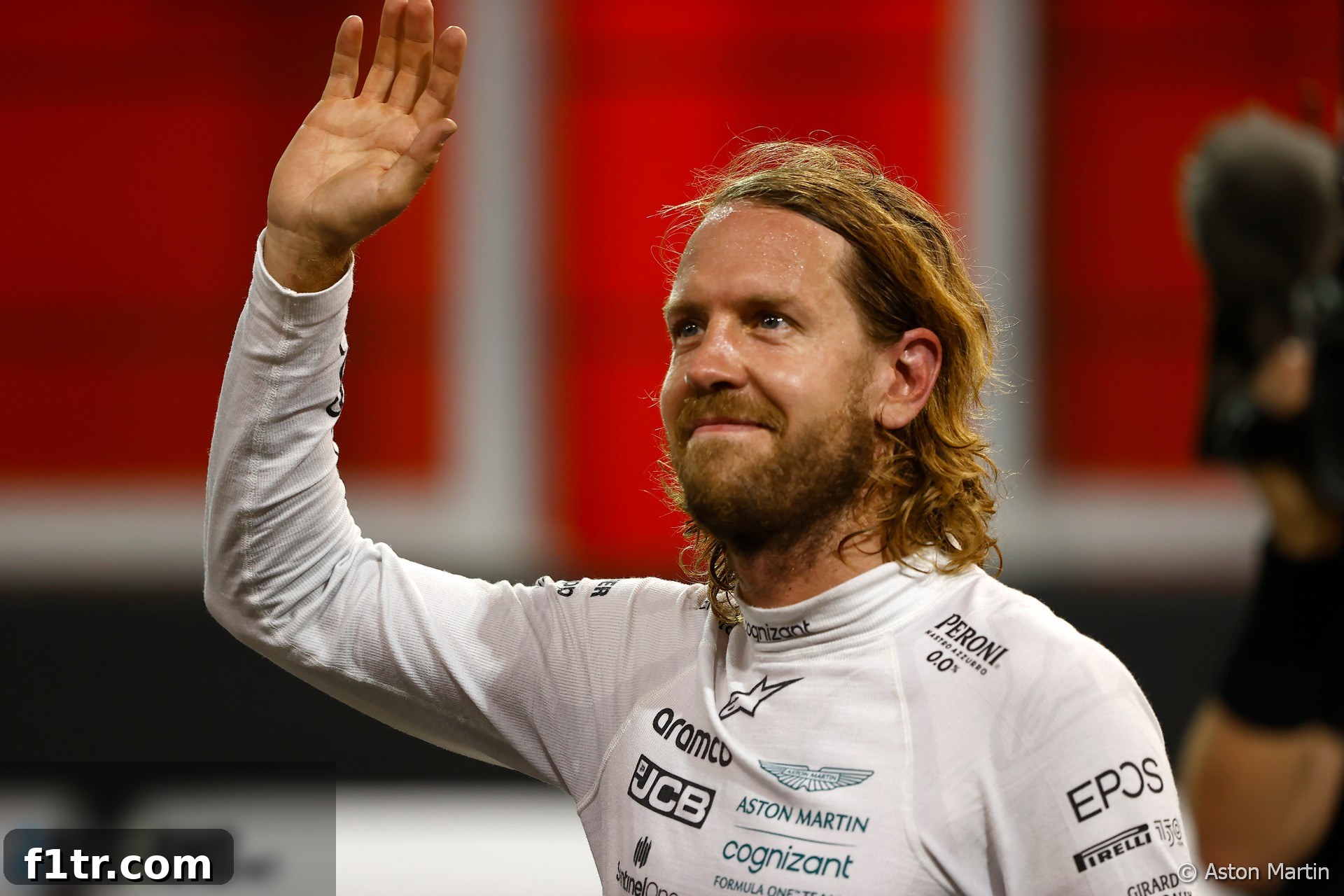
“I will take care of him at the start and the first lap.” These poignant words, spoken by Fernando Alonso, one of Formula 1’s most formidable and respected drivers, epitomized the sentiment surrounding Sebastian Vettel’s final Grand Prix start. Ahead of the emotional farewell, drivers and key personnel across the entire paddock extended their heartfelt good wishes to the four-time world champion. These touching tributes were a testament to the immense respect Vettel had garnered as he prepared to step away from the sport.
However, this widespread adulation wasn’t always the norm throughout his illustrious career. The driver who departed motorsport’s pinnacle as an inspiration to many was, at times, cast as something of a ‘pantomime villain.’ His meteoric rise to success, often propelled by a relentless and sometimes ruthless pursuit of victory, ruffled more than a few feathers along the way.
The Rise of a Champion: From Prodigy to Dominator
Sebastian Vettel’s journey to the summit of Formula 1 was nothing short of extraordinary. After a stellar junior career, he made his F1 debut in 2007, quickly making an impression with his raw speed and audacious overtakes. His record-breaking career truly began to unfold when he joined Red Bull Racing, becoming the youngest driver to ever win a World Championship in 2010 at the tender age of 23. This victory ignited an incredible streak, with Vettel clinching four consecutive titles from 2010 to 2013, firmly etching his name into the annals of Formula 1 history.
During this period of unparalleled dominance, Vettel shattered numerous records. In 2011, he secured a remarkable 15 pole positions, a record for the most front-row starts in a single season. By the time he left the sport, he held the third-most wins in F1 history, a testament to his sheer talent and the exceptional machinery provided by Red Bull and its legendary designer, Adrian Newey. The 2013 season represented the zenith of his Red Bull era, where he achieved a record-breaking nine consecutive race wins and a joint-record 13 victories in a single season, showcasing a level of supremacy rarely witnessed in the sport.
Dominance and Discontent: The ‘Multi 21’ Saga
Yet, as Red Bull team principal Christian Horner wisely remarked on the occasion of his squad’s record-breaking season, “the higher you rise, the sharper the knives.” Vettel’s unprecedented success was not without its moments of intense controversy, often fueling the ‘pantomime villain’ image that shadowed parts of his career. The infamous ‘Multi 21’ saga during the 2013 Malaysian Grand Prix stands out as a prime example.
During that race, Vettel, competing alongside his Red Bull teammate Mark Webber, blatantly defied a clear team order not to pass. This incident bore striking similarities to Max Verstappen’s refusal to yield to Sergio Perez in Brazil 2022, highlighting the perennial tension between team strategy and individual ambition in Formula 1. Vettel started the race on pole position, but Webber swiftly took the lead. With the two Mercedes cars hot on their heels, the Red Bull duo was instructed to hold their positions and avoid fighting, a coded command known as “Multi 21.”
Vettel, however, had other plans. Driven by an insatiable desire to win, he ignored the directive, making a bold move to snatch the victory from Webber. This decision irrevocably damaged their already fractious relationship. A furious Webber made his displeasure abundantly clear, famously cutting off his teammate on track after the race had concluded, a public display of the deep resentment boiling over. Initially, Vettel expressed a semblance of regret, calling it “not a victory I’m very proud of because it should have been Mark’s.”
However, his stance soon hardened. Days later in China, Vettel asserted that Webber “didn’t deserve” the win. He stated, “There is quite a conflict because, on the one hand, I am the kind of guy who respects team decisions and on the other hand, probably Mark is not the one who deserved it at the time.” He further elaborated, “I don’t like to talk ill of other people. It’s not my style. I think I said enough. The bottom line is that I was racing, I was faster, I passed him, I won.” This unyielding attitude did little to endear him to critics, particularly those who had grown tired of his consistent winning.
This incident, coupled with his overwhelming dominance in the latter half of the 2013 season, led to growing resentment among some sections of the fanbase. He was notably booed on the podium at the Singapore Grand Prix in 2013 after a flawless performance where he secured pole position, led every single lap, claimed the fastest lap, and ultimately won the race. This public reaction underscored the complex relationship between an athlete’s relentless pursuit of greatness and the public’s desire for more varied competition.
The Ferrari Dream and its Unfulfilled Promise
After clinching four world titles with Red Bull, Sebastian Vettel embarked on what many considered a dream move to Ferrari in 2015. His ambition was clear: to emulate his childhood hero, Michael Schumacher, and bring championship glory back to Maranello. Vettel joined with immense expectations, delivering 14 race victories during his six seasons with the Scuderia. Despite coming agonizingly close in 2017 and 2018, he never managed to secure that elusive fifth world title, a significant unfulfilled chapter in his illustrious career.
The dynamics within Ferrari shifted dramatically with the arrival of Charles Leclerc as his teammate in 2019. The young Monégasque talent quickly began to challenge and eventually outperform Vettel, leading to echoes of the ‘Multi 21’ era. The pair found themselves embroiled in multiple team orders disputes, most notably at the Russian Grand Prix where Vettel controversially refused to yield position to Leclerc when instructed. This internal struggle highlighted the increasing pressure on Vettel as he battled not only external rivals but also a rising star within his own garage.
Matters escalated further in Brazil, where a collision between the two Ferraris during a fierce on-track battle saw both cars eliminated from the race – a symbolic nadir for their partnership. The following year, Ferrari made the difficult decision not to offer Vettel a new contract for 2021, opting instead to sign Carlos Sainz Jnr as his replacement. This marked the end of an era, a bittersweet conclusion to Vettel’s time with the Scuderia, leaving many to ponder what might have been.
Baku 2017: A Defining Moment of Conflict and Contrition
The intense rivalry with Charles Leclerc wasn’t the only notable controversy during Vettel’s tenure at Ferrari. The 2017 Azerbaijan Grand Prix witnessed a particularly fiery confrontation with his championship rival, Lewis Hamilton. During a Safety Car period, Vettel reacted angrily to a minor contact with Hamilton’s Mercedes, subsequently appearing to deliberately steer into the side of his rival’s car. Vettel vehemently accused Hamilton of brake-testing him as they prepared for the restart, igniting a heated debate across the F1 world.
In the aftermath, after considerable public outcry and an FIA investigation, Vettel bravely backed down from his accusation, retracting his claim and offering a sincere apology. He issued a statement on his website, acknowledging with “hindsight” that he no longer believed Hamilton had any malicious intent and expressed profound regret for his actions. “In the heat of the action I then overreacted, and therefore I want to apologise to Lewis directly, as well as to all the people who were watching the race. I realise that I was not setting a good example,” he wrote. “I had no intention at any time to put Lewis in danger, but I understand that I caused a dangerous situation.” This moment of public contrition was a significant turning point, revealing a growing maturity and a willingness to admit fault, something that began to shift public perception of the German champion.
Years later, ahead of his final race, Vettel reflected on that very clash with Hamilton. Their relationship, once intensely competitive, had evolved into one of mutual respect and friendship. “I think Baku, for me, wasn’t a great moment because what I did wasn’t right,” Vettel candidly admitted. Hamilton, interjecting with a smile, added: “Our friendship got better.” This exchange perfectly encapsulated the transformation of a fierce rival into a respected peer, and eventually, a friend.
Beyond the Track: A Champion with a Conscience
The latter stages of Sebastian Vettel’s career, particularly during his time with Aston Martin, showcased a remarkable evolution beyond the pure pursuit of racing glory. While his inner toughness and competitive spirit remained, Vettel began to leverage his platform to champion pressing global issues, transforming his image from a purely sporting figure to a compelling advocate for social and environmental change. He became an outspoken voice on climate change, famously wearing t-shirts and helmets with powerful messages promoting sustainability and protecting biodiversity. His activism extended to supporting LGBTQ+ rights, speaking out against discrimination, and advocating for human rights.
This commitment to ethical leadership and social responsibility resonated deeply within and outside the paddock, shifting perceptions from the ‘ruthless’ champion to a thoughtful, conscientious individual. This profound change, coupled with his innate humility in his later years, made him one of the most respected figures in modern Formula 1.
A Farewell to a Legend: Respect, Camaraderie, and Legacy
As Sebastian Vettel approached his final race in Abu Dhabi, the outpouring of affection was palpable. It was in this context that Fernando Alonso’s pledge to “take care of him” on the first lap, as they shared the fifth row of the grid, took on special meaning. “It’s not that we tried to help him,” Alonso clarified, “but we all tried to have an eye on him when we saw him in the mirror, when he’s coming on a fast lap or whatever, because we all want a smooth weekend for him. He will start ninth and I will start tenth, so I will take care of him at the start and the first lap. Let’s hope we both see the chequered flag.” This gesture, from a rival often seen as fiercely independent, spoke volumes about the genuine regard for Vettel.
While Alonso’s car unfortunately retired early, his teammate Esteban Ocon found himself in a close battle with Vettel during the opening stages. “It was a bit stressful,” Ocon admitted, “I didn’t want to be the one touching him in his last race. But it was a good, tough fight like it always is with Seb.” Even in his final moments on track, Vettel demonstrated the competitive fire that defined his career, yet the underlying respect from his peers was undeniable.
Sebastian Vettel’s retirement marked the departure of a true titan of the sport, leaving behind more than just four world championship titles and thousands of championship points. He left with an unprecedented level of respect and camaraderie from his fellow competitors. A truly unique moment orchestrated by Lewis Hamilton saw all 20 drivers gather for a farewell dinner in Vettel’s honor – a collective act of unity and affection rarely witnessed, and one not seen since 2016. This spontaneous show of solidarity highlighted the profound impact Vettel had on the people around him.
This deep affection and widespread respect serve as the best barometer of how much Vettel’s presence will be missed. Perhaps less so for the unyielding competitor he once was, whose relentless pursuit of victory sometimes rubbed people the wrong way, but undoubtedly for the great figure of the sport he became. Sebastian Vettel’s legacy is not just defined by his numerous records and championships, but by his remarkable evolution as a person, his courage to speak out on critical issues, and the genuine warmth and respect he cultivated within the Formula 1 community. He departs as a champion, an activist, and an inspiration.