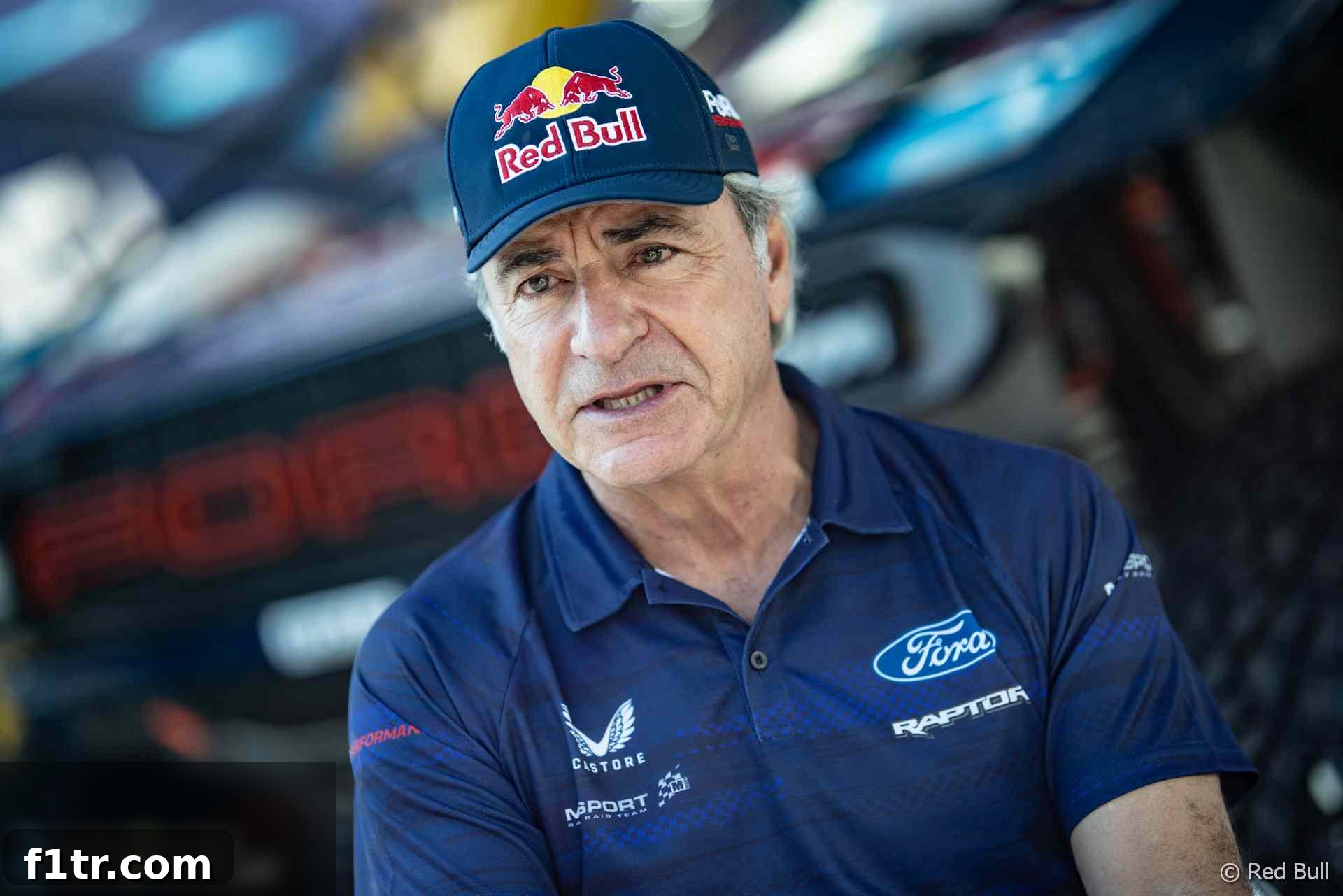
Carlos Sainz Steps Aside from FIA Presidential Election, Prioritizing Dakar Rally Ambitions
In a significant development for the global motorsport community, multiple world rally champion and revered figure, Carlos Sainz Sr., has officially declared he will not be a candidate in this year’s highly anticipated FIA presidential election. His decision, announced through social media, concludes weeks of speculation regarding a potential challenge to the incumbent, Mohammed Ben Sulayem, who has already confirmed his intention to seek a second term as president of the Fédération Internationale de l’Automobile (FIA).
The 63-year-old Spanish motorsport icon, affectionately known as ‘El Matador,’ had been widely rumoured to be weighing up a bid for the sport’s highest administrative office. Such a challenge would have pitted two giants of rallying against each other for control of the world’s governing body for motorsport and mobility. However, Sainz’s announcement clarifies his immediate priorities, redirecting his formidable focus back to the competitive arena and away from the complexities of a political campaign.
A Strategic Retreat: Commitment to Ford and the Dakar Rally
Sainz’s primary reason for withdrawing from the presidential race stems from an unwavering commitment to his current competitive endeavors. He stated unequivocally that an election campaign would present an unwelcome and significant distraction from his ongoing participation in Ford’s rally raid team. This dedication is particularly critical as he prepares for the grueling demands of the Dakar Rally, an event he has famously conquered multiple times, showcasing unparalleled endurance and skill.
“I have finally decided not to run for the presidency of the FIA in this year’s election,” Sainz conveyed in his public statement. He elaborated on the immense effort he had invested in understanding the intricacies of the FIA’s landscape, a process that ultimately led to his strategic withdrawal. “I have worked hard these past months to understand in depth the situation at the FIA and the demands and complexities that come with such an important project,” he explained, highlighting the rigorous due diligence undertaken before reaching his pivotal decision.
The Dakar Rally is not merely another race; it is a monumental test of endurance, skill, and strategic planning that pushes both man and machine to their absolute limits. For a driver of Sainz’s caliber, who recently made history as the oldest winner of the event, preparation is paramount. His commitment to Ford and his team demands complete immersion and focus, leaving little room for the rigorous demands of a political campaign. “After a thoughtful reflection, I have come to the conclusion that the present circumstances are not ideal to set the grounds for my candidacy,” he continued, underscoring the critical timing challenge. “Furthermore, I have realised that properly running for president would notably compromise my preparation for the Dakar and I do not wish to weaken my commitment to Ford and my team. These concerns have therefore inclined me to be realistic and desist from my FIA endeavour for now.”
This candid assessment reveals a deep respect for both the prestigious FIA presidency and his professional sporting obligations. It demonstrates Sainz’s character—a man who understands the magnitude of his commitments and refuses to compromise on either. The decision is a testament to his professionalism and the high standards he consistently sets for himself, whether behind the wheel or contemplating a leadership role in global motorsport governance.
The Demands and Complexities of FIA Leadership
Sainz’s exploration into the “demands and complexities” of the FIA presidency offers valuable insight into the profound challenges facing the organization. The FIA is not just a sporting body; it is a vast global federation overseeing all forms of international motorsport, from the pinnacle of Formula 1 and the World Endurance Championship to rally, karting, and emerging electric vehicle series. Beyond sport, it plays a critical role in road safety and mobility worldwide, advocating for safer, cleaner, and more accessible transportation solutions for billions of road users.
Leading such an influential institution requires an extraordinary blend of political acumen, astute managerial expertise, and a deep understanding of both sporting regulations and future technological trends. The FIA President must skillfully navigate a complex ecosystem involving manufacturers, promoters, national sporting authorities, teams, drivers, and a multitude of other stakeholders, all while upholding the integrity, safety, and future viability of motorsport globally. Issues such as sustainability, the transition to electric powertrains, equitable resource distribution across various disciplines, and ensuring the continued relevance and appeal of motorsport to new generations are constant, multifaceted challenges that demand a visionary and dedicated leader.
The role demands significant international travel, tireless diplomacy, and the ability to foster consensus among diverse and often competing interests from different continents and cultures. Sainz’s brief but intensive examination of these multifaceted aspects clearly led him to conclude that a fully committed and effective presidential campaign would be incompatible with his current professional obligations, particularly those requiring peak physical and mental readiness for ultra-challenging events like the Dakar Rally.
A Vision for Change: Sainz’s Enduring Belief in Motorsport Evolution
Despite his withdrawal from the current electoral race, Carlos Sainz remains steadfast in his conviction that significant change is needed within the governance of worldwide motorsport. This unwavering belief underscores his profound passion for the sport and his enduring desire to see it thrive and adapt in an ever-evolving global landscape.
“Despite stepping down from this race, my passion for serving and leading within the motorsport world hasn’t changed and I still believe the organisation needs important changes, which I remain genuinely hopeful will be tackled in the upcoming years,” he asserted. This statement is a powerful signal that his interest in contributing to the strategic direction and progressive development of motorsport is far from extinguished. While he may not be pursuing the presidency now, his perspective as a highly successful driver and an astute observer of the sport offers a unique and invaluable lens through which to identify areas for critical improvement.
What kind of changes might Sainz envision? Likely, they revolve around greater transparency in decision-making, enhanced representation for various stakeholders across all motorsport disciplines, a more agile and proactive response to emerging technologies and sustainability challenges, and a renewed focus on ensuring motorsport remains accessible, exciting, and globally relevant for future generations. His broad experience across different competitive disciplines provides him with a holistic view of the sport’s health, from foundational grassroots initiatives to elite-level international competition.
Sainz also affirmed his continued engagement with the motorsport world, stating, “Both racing and mobility have been my life and I will closely follow future developments with great interest. I will always support my sport and try to contribute in all meaningful ways to improve mobility for road users around the world.” This commitment extends far beyond the competitive track, touching upon the broader societal impact of mobility, a fundamental and increasingly vital tenet of the FIA’s overarching mission.
Future Ambitions: A Potential Run in the Cards?
Crucially, Sainz indicated that his decision to step down from the current race is “for now,” leaving the door explicitly open for a potential bid for the FIA presidency in the future. This suggests that his current withdrawal is a tactical pause, a strategic postponement, rather than a definitive renunciation of his political ambitions within motorsport’s highest governing body.
For Sainz, the “present circumstances” were clearly not ideal. This implies that under different conditions – perhaps after his active rally-raid career concludes, or when the timing allows for an undistracted and full-fledged campaign – he might seriously reconsider a run for the presidency. A future candidacy would undoubtedly benefit significantly from the profound understanding he has already gained regarding the FIA’s internal workings, its complex political landscape, and the multifaceted challenges it faces. This period of intense reflection and thorough research effectively serves as crucial groundwork for a more opportune future endeavor.
The messages of support he received during his contemplation reinforced his confidence and underscored the widespread respect he commands, a point he acknowledged with sincere gratitude: “The messages of support have reinforced my confidence to continue striving towards my present and future goals and I’m truly grateful.” Such encouragement from within the motorsport community would be invaluable and highly motivating should he decide to launch a full-scale campaign at a later date.
Implications for the FIA Election Landscape
Carlos Sainz’s decision not to contest the election significantly alters the landscape of the upcoming FIA presidential vote. With the rally legend stepping aside, Mohammed Ben Sulayem currently remains the sole announced candidate for the presidency. This development undoubtedly simplifies the path for Ben Sulayem to secure a second term.
Ben Sulayem, a former rally driver himself and the first non-European to hold the esteemed FIA presidency, took office in December 2021. His tenure has seen various challenges and initiatives, including navigating complex relationships with commercial rights holders like Formula 1’s Liberty Media, and focusing on global expansion and diversity within motorsport. While an uncontested election might suggest a clear path to a second term and stability, the absence of a strong challenger can sometimes lead to less public scrutiny and robust debate over the future direction of the organization and its policies.
A competitive election often serves to highlight different visions for the FIA’s future, encouraging candidates to articulate their strategies, engage with the broader membership, and present diverse plans for the sport’s evolution. Sainz’s potential candidacy would have certainly sparked such a debate, forcing a deeper and more public examination of the organization’s governance, priorities, and responsiveness to the modern motorsport landscape. His withdrawal means that, for now, the conversation around the FIA’s leadership will proceed with one dominant voice, potentially limiting the public discourse on crucial topics.
The Sainz Family and Conflict of Interest Considerations
An interesting side note during the period of intense speculation involved his son, the highly successful Williams Formula 1 driver Carlos Sainz Jr. The younger Sainz had previously addressed concerns about potential conflicts of interest should his father be elected to lead the FIA. He confidently stated that the family would ensure no such conflicts would arise, demonstrating remarkable foresight and a clear understanding of the stringent ethical responsibilities associated with such a high office.
This reassurance highlights the integrity and principled approach with which the Sainz family conducts their involvement in motorsport, both on and off the track. While the hypothetical scenario of a father-son dynamic involving the FIA presidency and a current Formula 1 driver will not materialize in this immediate election cycle, it underscored the rigorous standards of ethical conduct and transparency expected in positions of power within global motorsport.
Conclusion: A Rally Legend’s Enduring Influence
Carlos Sainz Sr.’s decision to withdraw from the FIA presidential election marks a pivotal moment, affirming his dedication to his active rally-raid career while keeping his long-term ambitions for motorsport leadership firmly in view. It reflects a man deeply committed to his sport, both as an unparalleled competitor and a thoughtful visionary.
While the immediate future of the FIA presidency appears to be heading towards an uncontested re-election for Mohammed Ben Sulayem, Sainz’s articulate reasoning and his enduring belief in the need for significant change will undoubtedly resonate throughout the motorsport community. His passion for “serving and leading within the motorsport world” remains undiminished, promising that his influential voice and potential leadership will likely continue to shape discussions about the future of global motorsport for years to come, irrespective of his current political stance.
For now, the legendary ‘El Matador’ will continue to chase victories on the challenging terrains of rally raid, embodying the relentless spirit of competition that has defined his illustrious career. The motorsport world will undoubtedly watch with keen interest, not just his performance behind the wheel, but also for any signs of a future return to the political arena of the FIA, when the circumstances are finally “ideal” for his profound contributions.