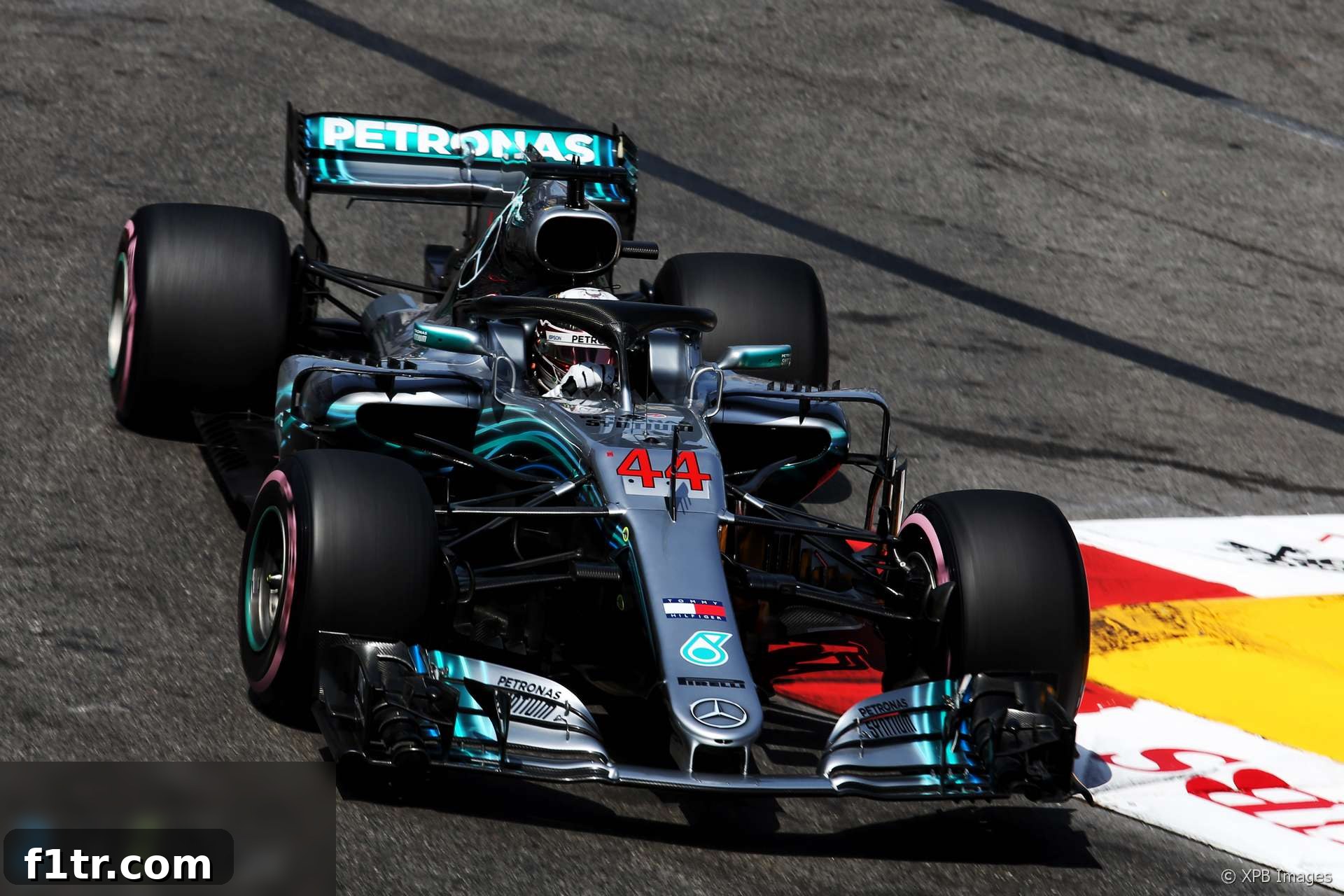
Lewis Hamilton Brands Monaco Grand Prix “Most Boring Race” Amidst Tyre Frustration
The iconic streets of Monte Carlo, usually synonymous with unparalleled glamour and high-octane drama, were the scene of an unusually muted affair according to multiple world champion Lewis Hamilton. Following the Monaco Grand Prix, Hamilton voiced significant disappointment, openly declaring the event “the most boring race I think I’ve ever participated in” as he was compelled to “back off massively” throughout the entire duration due to pervasive tyre issues.
Hamilton’s candid assessment came after an uneventful drive to third place, where he found himself unable to mount any credible challenge to the leading duo of Daniel Ricciardo and Sebastian Vettel. His sentiments, initially conveyed to race engineer Peter Bonnington over team radio, quickly became a focal point of post-race discussions, highlighting a growing concern among drivers and fans alike regarding the spectacle – or lack thereof – in one of Formula 1’s most prestigious races.
Speaking to the assembled media after stepping out of his Mercedes, Hamilton elaborated on the underlying reasons for his frustrating Sunday afternoon. The core issue, he explained, revolved around aggressive graining on his front tyres, a problem that dictated an exceptionally conservative driving style far removed from the flat-out aggression typically associated with F1 racing.
The Tyranny of Tyre Graining: A Driver’s Nightmare
Tyre graining, a phenomenon where rubber from the tyre surface effectively tears away in small chunks, can severely compromise grip and consistency, making high-speed cornering and braking incredibly challenging. For Hamilton, this technical hurdle transformed what should have been a relentless pursuit into a delicate balancing act. “It’s just insane how little we were pushing,” Hamilton confessed, reflecting on a race where the pace was deliberately reined in to protect the fragile Pirelli compounds. “The least that I can probably ever remember. Just trying to stop the fronts from graining.”
The severity of the issue was such that even with his conscious efforts to manage the tyres, the problem persisted. “And even when I did it, when I wasn’t pushing, the tyre grained,” he added, underscoring the perplexing nature of the situation. This created an unusual paradox: a Formula 1 race where the premier drivers were not, by their own admission, pushing the limits of their machinery. Such a scenario is fundamentally at odds with the spirit of Grand Prix racing, where the fastest cars and most skilled drivers are expected to demonstrate peak performance at all times.
The Monaco circuit, with its tight turns and unforgiving walls, is already notoriously hard on tyres due to the constant steering input and braking. When coupled with tyre compounds that are highly susceptible to graining, drivers are left with little choice but to adopt strategies that prioritize preservation over aggression. This imperative to nurse the tyres effectively turned the race into a high-speed procession, where strategic calculations and endurance superseded overt overtaking attempts and raw pace.
Monaco’s Identity Crisis: Glamour vs. Grand Prix Racing
Despite his critical comments on the race itself, Hamilton was quick to reaffirm his affection for the venue. Describing Monaco as the “most special race of the year,” he acknowledged its unparalleled prestige and unique atmosphere. However, he drew a stark distinction between the magnificent spectacle surrounding the event and the underwhelming action unfolding on the tarmac. “I just remember driving thinking that it’s a shame that the race is not as exciting as the whole spectacle and what the track is like,” he lamented.
Indeed, the Monaco Grand Prix is a jewel in the F1 crown, drawing celebrities, royalty, and global attention like no other event on the calendar. Its breathtaking backdrop, luxurious yachts, and historic circuit create an irresistible allure. Yet, for Hamilton, the on-track product simply isn’t living up to its billing. He highlighted the stark contrast between qualifying and the race, stating, “In qualifying, it’s epic. Through practice, there’s nothing like it.” Qualifying on the streets of Monaco is a true test of nerve and precision, where drivers push their cars to the absolute limit, mere inches from the barriers, to extract every thousandth of a second. It’s a breathtaking display of skill and bravery.
The race, however, tells a different story. The very characteristics that make Monaco so challenging and spectacular in qualifying – its narrowness and lack of overtaking opportunities – become significant deterrents to exciting racing on Sunday. Modern F1 cars, with their increasing size and aerodynamic wake, struggle immensely to follow closely, let alone pass, on a circuit where even the slightest misjudgment can end a race. This inherent difficulty, exacerbated by conservative tyre strategies, transforms the Grand Prix into a strategic game of cat and mouse rather than a thrilling gladiatorial contest.
The One-Stop Dilemma: A Call for F1 Rule Changes
Hamilton’s frustration extended beyond mere observation, leading him to suggest that Formula 1 itself needs to “apply a different schedule or something to a different race.” His primary target for reform was the pervasive one-stop pit strategy, which he believes suffocates genuine competition. “You shouldn’t be able to do a one stop here,” he asserted, pointing out how a single pit stop minimizes strategic variation and encourages tyre preservation over outright speed.
The ability for teams to comfortably complete almost an entire Grand Prix distance on a single set of tyres means that the emphasis shifts from aggressive driving and tactical battles to meticulous tyre management and hitting precise delta times. This eliminates the need for multiple strategic windows, different tyre compound attacks, and the kind of dynamic racing that fans crave. Hamilton even posed a direct question to the media, “Did any of you find that exciting at all?” – a clear indication of his belief that the current format is failing to engage even the most dedicated observers.
For a racing driver, the core thrill lies in pushing the car to its absolute limit, extracting every ounce of performance. When circumstances dictate a “massive back-off” from the very beginning, especially due to tyre struggles, the fundamental joy and challenge of racing are diminished. Hamilton’s comments spark a broader debate within F1 regarding how to maintain the historical significance of circuits like Monaco while simultaneously ensuring that the racing product remains compelling and worthy of a global sporting spectacle. Suggestions often include mandatory multi-stop races, different tyre allocations for specific events, or even revisiting track layouts to introduce more overtaking zones, although the latter is a near-impossible feat in Monaco.
A Pragmatic Third Place: Satisfaction Amidst Disappointment
Despite the criticisms and the perceived lack of excitement, Lewis Hamilton maintained a pragmatic perspective on his own performance. Finishing third after failing to challenge Ricciardo and Vettel, he expressed genuine satisfaction with the outcome of his weekend. “I really, really am happy with the weekend,” he affirmed, acknowledging the difficulties faced by his Mercedes team.
His satisfaction stemmed from a realistic assessment of his car’s performance relative to the competition. “To come away with third after this difficult weekend for us car wise – we were the third quickest team this weekend and we almost got second so I’m really happy in that respect.” This statement reveals a seasoned competitor who understands that not every race can be a win, and maximizing points on a challenging weekend is just as crucial for a championship campaign. His ability to extract a podium finish, even when his car wasn’t the fastest, demonstrated his characteristic skill and resilience.
Furthermore, Hamilton’s sportsmanship shone through as he extended his congratulations to the race winner, Daniel Ricciardo. “I’m really happy for Daniel because he’s a great dude,” he remarked, highlighting the camaraderie and respect that often exist between competitors at the pinnacle of motorsport. This blend of critical assessment of the sport and gracious acceptance of his own result underscores Hamilton’s complex relationship with Formula 1 – a desire for exhilarating competition coupled with an unwavering drive to achieve the best possible outcome under any circumstances.
The Broader Implications for Formula 1’s Future
Hamilton’s outspoken critique of the Monaco Grand Prix resonates with an ongoing discussion within Formula 1 about the balance between tradition, spectacle, and thrilling on-track action. While Monaco’s place on the calendar is almost sacred due to its history and unique charm, the increasing frequency of “procession” races raises legitimate questions about the sport’s entertainment value. Modern F1 cars, with their complex aerodynamics and reliance on intricate tyre management, often struggle on circuits not designed for high-speed overtaking, and Monaco is perhaps the most extreme example of this.
For Formula 1 to continue to captivate its global audience, finding solutions to these challenges will be paramount. Whether it involves modifications to the regulations governing tyres, changes to race formats, or even a re-evaluation of how iconic circuits are utilized, the conversation sparked by drivers like Hamilton is crucial. It highlights the need for continuous innovation not just in car design, but also in the very structure of the race weekend, to ensure that the sport remains an exhilarating contest of skill, strategy, and pure speed.
2018 F1 Season Insights and Related Articles
The 2018 Formula 1 season, the context for Lewis Hamilton’s observations at Monaco, was a pivotal year with intense championship battles and significant technical developments. Dive deeper into the events and behind-the-scenes stories from that era:
- F1 feared “death knell” for Drive to Survive after Ferrari and Mercedes snub
- McLaren staff told us we were “totally crazy” to take Honda engines in 2018 – Tost
- ‘It doesn’t matter if we start last’: How Red Bull’s junior team aided Honda’s leap forward
- Honda’s jet division helped F1 engineers solve power unit problem
- McLaren Racing losses rise after Honda split
Browse all 2018 F1 season articles