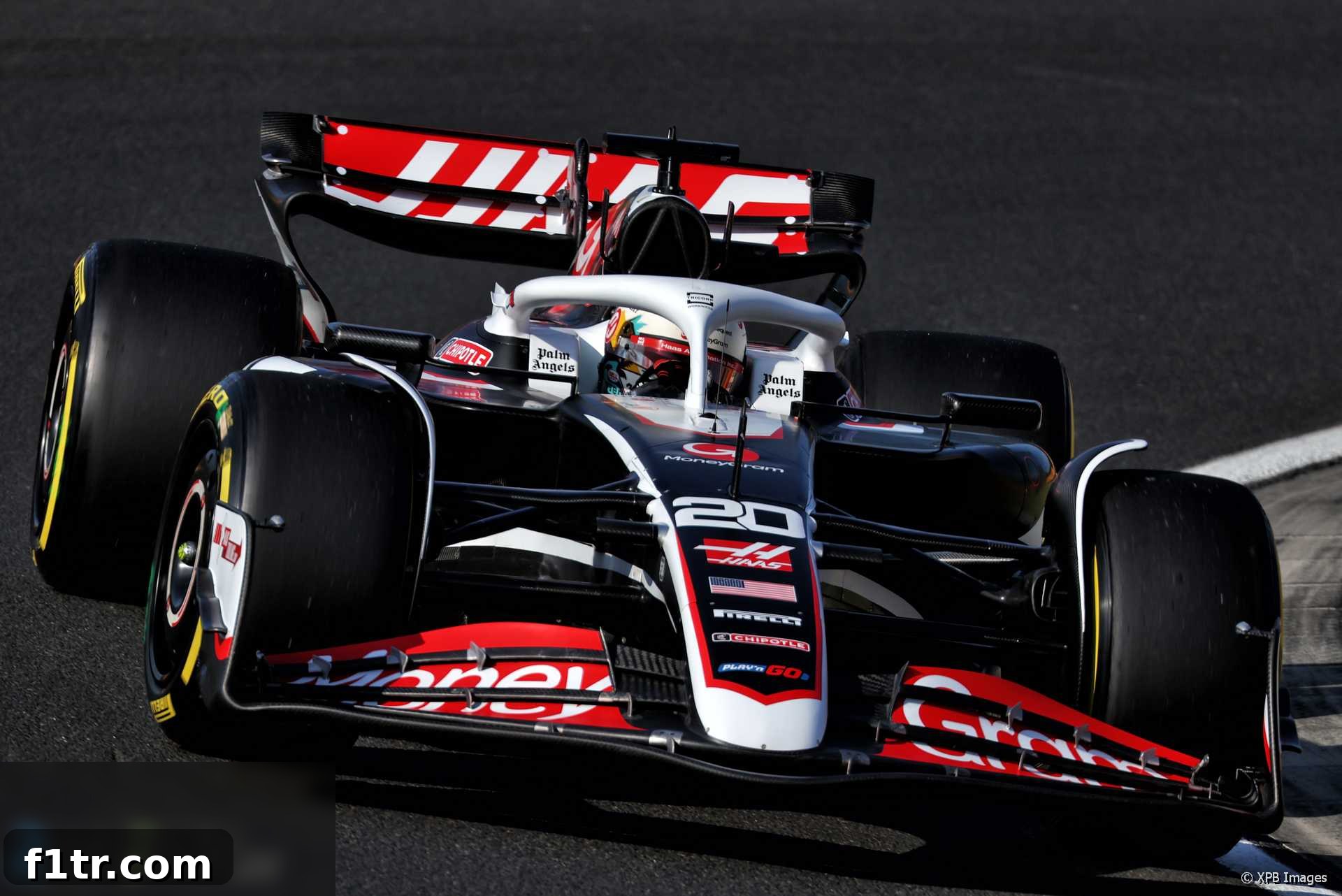
Haas F1 Team Resolves Uralkali Dispute, Cleared for Italian Grand Prix
The Haas Formula 1 Team has successfully concluded a contentious financial dispute with its former title sponsor, Uralkali, just days before the highly anticipated Italian Grand Prix. This critical resolution prevented a potential logistical nightmare that had seen the team’s equipment impounded in the Netherlands, jeopardizing their ability to compete at Monza this weekend.
Advert | Become a Supporter & go ad-free
The dispute escalated dramatically following the Dutch Grand Prix in Zandvoort, where Haas’s critical equipment – including race cars, tools, and logistical infrastructure – was forbidden from being transferred to Italy. This drastic measure was taken until a sum owed to the Russian fertilizer producer, Uralkali, was repaid. The former sponsor had initiated legal action to secure the outstanding payment, bringing the internal workings of an F1 team to a temporary halt.
The Genesis of a High-Stakes Sponsorship
To fully understand the recent standoff, one must look back at the origins of the partnership between Haas and Uralkali. In 2021, Uralkali became the title sponsor for the Haas F1 Team, a deal that was inextricably linked to the arrival of Russian driver Nikita Mazepin. Nikita, the son of Uralkali’s billionaire owner Dmitry Mazepin, secured a seat with the American-owned team, bringing substantial financial backing through the sponsorship agreement.
The partnership was significant for Haas, a team operating on one of the smaller budgets in Formula 1. Uralkali’s investment provided crucial financial stability and allowed the team to develop its operations. The cars even adopted a livery that mirrored the Russian flag, a visual representation of the deep ties between the team and its primary backer. This arrangement, common in motorsport, saw Uralkali as a cornerstone of Haas’s F1 presence, ensuring Nikita Mazepin’s place on the grid and providing vital resources for the team’s ambitions.
Abrupt Termination Amidst Geopolitical Turmoil
The landscape of this seemingly stable partnership was irrevocably altered in February 2022 with Russia’s full-scale invasion of Ukraine. The global response was swift and severe, with numerous countries implementing wide-ranging sanctions against Russian entities, businesses, and prominent individuals. Formula 1, like many other international sports, was compelled to respond to the rapidly evolving geopolitical situation.
In a decisive move, the Haas F1 Team announced the immediate termination of its sponsorship deal with Uralkali. Simultaneously, Nikita Mazepin’s contract as a driver was also cancelled. This decision was largely driven by the moral imperative to distance the team from a sponsor and driver directly linked to the Russian state amidst the escalating conflict. The termination occurred just days before the start of the 2022 F1 season, leaving Haas with a significant financial void and a sudden vacancy in their driver lineup. While necessary for ethical and reputational reasons, the move plunged the team into unexpected financial uncertainty, forcing them to scramble for alternative funding and a replacement driver in Kevin Magnussen.
The initial wave of European Union sanctions specifically targeted Dmitry Mazepin and, for a period, Nikita Mazepin himself, further complicating any potential dealings or financial transfers between Haas and Uralkali. These sanctions formed the legal and political backdrop against which the subsequent financial dispute unfolded.
Legal Ramifications and the Arbitration Ruling
Following the termination, Uralkali quickly moved to recover the sponsorship money it had already paid to Haas for the unfulfilled portion of the 2022 season. Uralkali argued that the termination constituted a breach of contract by Haas and that they were entitled to a refund. They also claimed that, under the terms of the sponsorship agreement, Haas had promised to deliver an example of its 2021 chassis to the company.
The dispute was referred to a Swiss court of arbitration, a common mechanism for resolving complex international commercial disagreements, especially in sports where swift, confidential resolutions are often preferred. In June of this year, the tribunal delivered its ruling, largely siding with Uralkali. It mandated that Haas repay the Russian firm a significant sum, representing the portion of the sponsorship fees that had been paid for services not rendered. This ruling underscored the complexities of international sports contracts, particularly when unexpected geopolitical events force an abrupt end to agreements.
While the ruling brought clarity to the financial obligation, executing the repayment proved to be anything but straightforward for Haas.
The Standoff in Zandvoort: A Logistical Nightmare
Despite the tribunal’s ruling, Haas encountered substantial difficulties in transferring the required funds to Uralkali. Although sanctions on Nikita Mazepin were lifted in April of this year, broader international restrictions on conducting business with Russian entities remained firmly in place. These sanctions created significant bureaucratic and banking hurdles, making it exceedingly challenging for Haas to process a large financial transfer to a Russian company without violating international law or facing further complications.
Frustrated by the protracted delay in receiving their owed payment, Uralkali decided to take decisive action. They sought an interim measure from Dutch authorities, leading to the dramatic seizure of Haas’s equipment at the Circuit Zandvoort following the recent Dutch Grand Prix. This move effectively locked down the team’s entire operation, preventing them from packing up and transporting their critical freight to Monza, Italy, for the upcoming race. The situation cast a dark cloud over Haas’s participation in one of Formula 1’s most iconic events, creating intense pressure on the team to find an immediate resolution.
Haas team principal Ayao Komatsu addressed the media on Friday at the Monza circuit, acknowledging the severity of the situation. He reiterated the team’s respect for the arbitration tribunal’s decision and their commitment to comply with it. “It’s a complicated process to transfer that funds across,” Komatsu stated. “We’ve been working on it, it’s been taking longer than I would like, but we are fully focused on making it across as soon as possible.” His comments highlighted the team’s proactive efforts amidst the legal and logistical quagmire.
Advert | Become a RaceFans supporter andgo ad-free
Resolution and Future Implications
The tense situation finally de-escalated on Monday when Uralkali confirmed that the dispute had been fully resolved. In an official statement, the company announced: “Uralkali has received in full the payment owed by Haas (including interest and fees) following the ruling of the Swiss court of arbitration. We have also collected the race car owed to us under the terms of the sponsorship agreement.” This comprehensive settlement included not only the principal sum but also additional interest and fees, confirming Haas had met all its obligations.
Crucially, Uralkali also notified Dutch authorities that they could “release Haas’ assets from arrest as an interim measure,” thereby freeing the team’s equipment to leave the Netherlands. This timely resolution meant that Haas could finally begin the arduous logistical process of transporting their cars and associated equipment to Monza, ensuring their presence on the grid for the Italian Grand Prix.
Broader Impact on Formula 1 and Sports Sponsorship
This high-profile dispute between Haas and Uralkali serves as a stark reminder of the increasing interconnectedness of sports, global politics, and international law. It highlights several key takeaways for Formula 1 and the wider sports industry:
- Geopolitical Risks in Sponsorship: The incident underscores the inherent risks for sports teams and sponsors when political events intervene in commercial agreements. Teams must now factor in robust force majeure clauses and contingency plans to mitigate such exposures.
- Complexity of International Sanctions: Navigating the intricate web of international sanctions can severely complicate even straightforward financial transactions, creating unforeseen delays and legal challenges.
- Importance of Arbitration: The reliance on bodies like the Swiss court of arbitration demonstrates their vital role in providing a framework for resolving complex disputes efficiently, helping sports entities avoid prolonged court battles.
- Team Resilience: Haas’s ability to navigate such a severe financial and logistical challenge while maintaining focus on racing reflects the resilience required in elite motorsport.
As Haas now turns its full attention back to the racing action at Monza, this episode marks the definitive end of a tumultuous chapter. The team, having successfully navigated a challenging legal and financial gauntlet, can now look forward to competing without the shadow of this significant off-track distraction. The resolution ensures the stability of the team and reaffirms the sport’s commitment to maintaining its integrity while adapting to an ever-changing global environment.
Formula 1 Insights
- GT driver killed in multi-car crash at Nurburgring Qualifiers
- Should F1 change tracks or racing guidelines to tackle dangers in 2026 rules?
- Controversies, Norris, Newey and more: Five new motorsport books reviewed
- One of F1’s greatest races happened 15 years ago today. Or did it?
- “Overtaking is overtaking”: Domenicali denies F1’s yo-yo racing is “artificial”
Browse all Formula 1 articles