Glued Gravel: The Future of Formula 1 Track Limits Enforcement?
The perennial debate surrounding track limits in Formula 1 continues to evolve, with teams and the governing body, the FIA, actively exploring innovative solutions. Among the most promising ideas gaining traction is the strategic application of glue to gravel traps. This seemingly simple modification, first implemented at the Zandvoort circuit, could offer a balanced approach to enforcing regulations while simultaneously mitigating the risks of tire damage, a critical concern for manufacturers like Pirelli.
The Persistent Challenge of Track Limits in Formula 1
Track limits have been a consistent point of contention in Formula 1 for many years. The core issue revolves around drivers gaining an unfair advantage by running wide beyond the defined boundaries of the track. Historically, enforcement has relied on a combination of white lines, electronic sensors, and post-race scrutiny by stewards. While these methods aim to ensure fair play, they often lead to inconsistencies, lengthy investigations, and sometimes, unpopular penalties that can overshadow the racing itself.
In response to these challenges, the FIA has increasingly advocated for physical deterrents. The logic is straightforward: if exceeding track limits automatically results in a time loss or a clear disadvantage, drivers will naturally police themselves. This has led to the expansion or introduction of gravel traps at various circuits globally. The intention is clear: run wide, hit the gravel, lose time, and avoid a penalty controversy.
Gravel Traps: An Effective Deterrent with a Critical Flaw
From a driver’s perspective, gravel traps serve as an unequivocal reminder to stay within the lines. Venturing into the loose stones inevitably slows the car, often causing a significant time penalty, and sometimes even leading to retirement from the race if a car gets beached. This makes them a highly effective, immediate deterrent that requires no steward intervention or camera analysis.
However, the traditional gravel trap isn’t without its drawbacks. The primary concern, particularly for tire suppliers like Pirelli, is the risk of stones being dragged onto the racing line. When cars cut across the gravel, they pick up stones that are then deposited back onto the tarmac. These sharp, abrasive pieces of aggregate pose a significant threat to the delicate structure of Formula 1 tires, potentially causing cuts, punctures, or even sudden failures. This creates a dilemma: a tool designed to enhance fairness inadvertently introduces a new safety and performance risk.
Pirelli’s chief engineer, Simone Berra, highlighted this conundrum, acknowledging that while gravel traps are “the right direction for the track limits,” the issue of loose stones remains. The balance between enforcing rules and preserving tire integrity is a fine one, and it’s here that innovative solutions are desperately sought.
Zandvoort’s Glued Gravel: A Promising Innovation
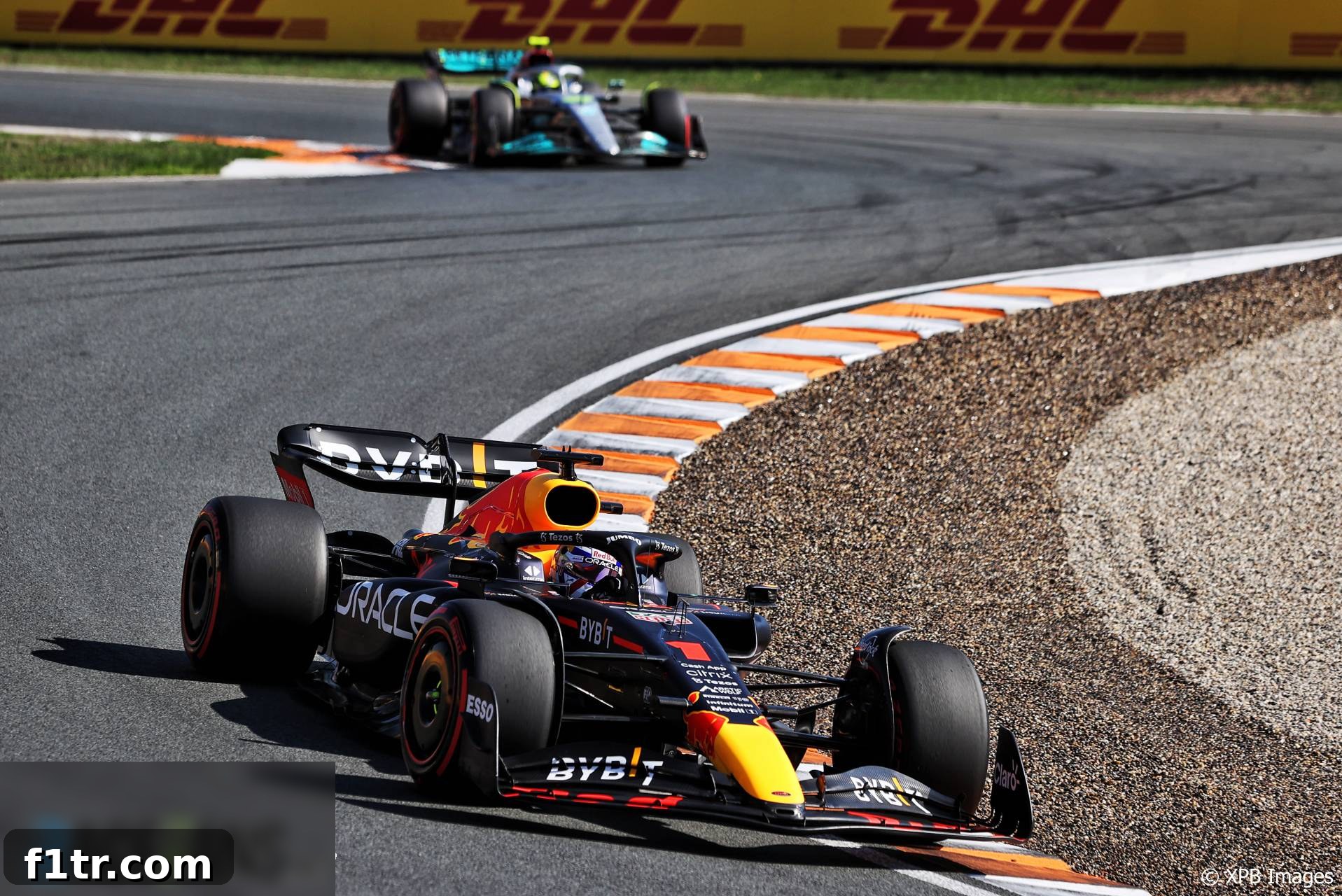
The Dutch Grand Prix circuit at Zandvoort, which made a celebrated return to the F1 calendar in 2021, introduced a novel approach to gravel traps. Circuit operators applied a special adhesive to the edges of some of their gravel run-off areas. This “glued gravel” is designed to keep the stones firmly in place, even when a car briefly touches or runs over the very edge of the trap.
The ingenuity of Zandvoort’s solution lies in its dual benefit. Firstly, it maintains the deterrent effect of a traditional gravel trap; drivers are still penalized for running wide, as even glued gravel will slow a car more than tarmac. Secondly, and crucially, it drastically reduces the likelihood of stones being scattered onto the active racing surface. This mitigates the risk of tire damage, a concern that has plagued traditional gravel applications.
Simone Berra of Pirelli spoke enthusiastically about this innovation, stating, “Probably the best solution, and it’s something that I know that the teams are speaking with FIA and FIA is speaking with the teams, is trying to use a solution like we have in Zandvoort where they glue the gravel. That could be a good solution because you don’t bring a gravel into the racing line.” This endorsement from the sole tire supplier underscores the potential impact of this technology on the sport.
Pirelli’s Stance on Tire Integrity and Circuit Design
The issue of track limits and their impact on tires is a constant focus for Pirelli. The company meticulously monitors tire performance and damage throughout every Grand Prix weekend. For instance, following the addition of two new strips of gravel at turns nine and ten during the Austrian Grand Prix weekend, Pirelli engineers detected an increase in minor cuts to tires. While these cuts were not deep enough to compromise tire integrity or durability on that specific occasion, they served as a stark reminder of the potential hazards.
Pirelli’s motorsport director, Mario Isola, emphasized the necessity of finding circuit-specific solutions, drawing parallels with experiences in Qatar where drivers were forced to avoid aggressive kerbs that led to tire failures. Isola explained, “Obviously gravel has some pros and cons, and the kerbs as well, because if we use very high kerbs as well to oblige drivers to respect the track limits, we take the risk to damage the tyres as happened in Qatar.” This highlights the tightrope walk between effective enforcement and tire preservation. High kerbs can be effective, but too aggressive, and they become a destructive force.
Isola further elaborated on the trade-offs: “On the other side, with gravel, you slow down the car if the car is going on the gravel. But the risk is that you have then stones coming on the track.” While carbon fiber debris from accidents is far more dangerous, the consistent presence of stones, even small ones, necessitates continuous monitoring. The Zandvoort glued gravel solution appears to offer a way to gain the benefits of gravel without incurring its most significant drawback.
Balancing Car and Motorcycle Racing Demands
The complexity of track design is further amplified when circuits host both car and motorcycle racing events. What constitutes a safe and effective run-off area for a Formula 1 car can be a significant hazard for a motorcyclist. Traditional gravel traps, designed to slow down a four-wheeled vehicle, pose a severe risk to riders who might fall and slide into them, as stones can cause severe injuries or further impact during a slide.
This inherent conflict means that many circuits have historically been reluctant to implement extensive gravel traps at certain corners, especially those that are critical for motorcycle safety. Mario Isola acknowledged this challenge: “I understand that the FIA has to work together with FIM [Federation Internationale de Motocyclisme] to find a solution that is common across from road or car racing and motor racing. They have different requirements, they have different needs and so sometimes it’s not easy.”
The current workaround, as observed in Austria, involves the costly and labor-intensive process of replacing gravel sections with tarmac for motorcycle events and then converting them back for car races. Isola noted, “What I learned from Austria is that they are going to replace the gravel path with Tarmac when the motorbikes are racing with Austria. And obviously this is a cost for the circuit, quite a big cost, replacing every time gravel with Tarmac, Tarmac with gravel. I can imagine that is not easy and we cannot ask all the circuits to do that.” This logistical and financial burden makes the search for a versatile, shared solution even more pressing.
Looking Ahead: The Evolution of Circuit Safety and Design
The discussions between Formula 1 teams, the FIA, and Pirelli regarding glued gravel traps represent a proactive step towards refining circuit safety and track limit enforcement. The Zandvoort model demonstrates that innovative, practical solutions are achievable. While there might not be a single “perfect solution” applicable to every corner of every circuit worldwide, the glued gravel concept offers a strong template for future development.
The sport’s continuous pursuit of excellence extends beyond car performance to the very infrastructure of racing. As Formula 1 cars become faster and the margins for error shrink, the importance of clearly defined and safely enforced track limits will only grow. Solutions like glued gravel not only enhance the fairness of competition but also contribute to the overall safety ecosystem of motorsport by minimizing ancillary risks like tire damage from loose debris.
The collaborative efforts between governing bodies, circuit operators, and suppliers like Pirelli are crucial in navigating the complex demands of modern motorsport. The integration of technology, whether through advanced sensors or modified track surfaces, will continue to shape how drivers push the boundaries without exceeding them, ensuring that the spectacle of Formula 1 remains thrilling, fair, and above all, safe for all participants.