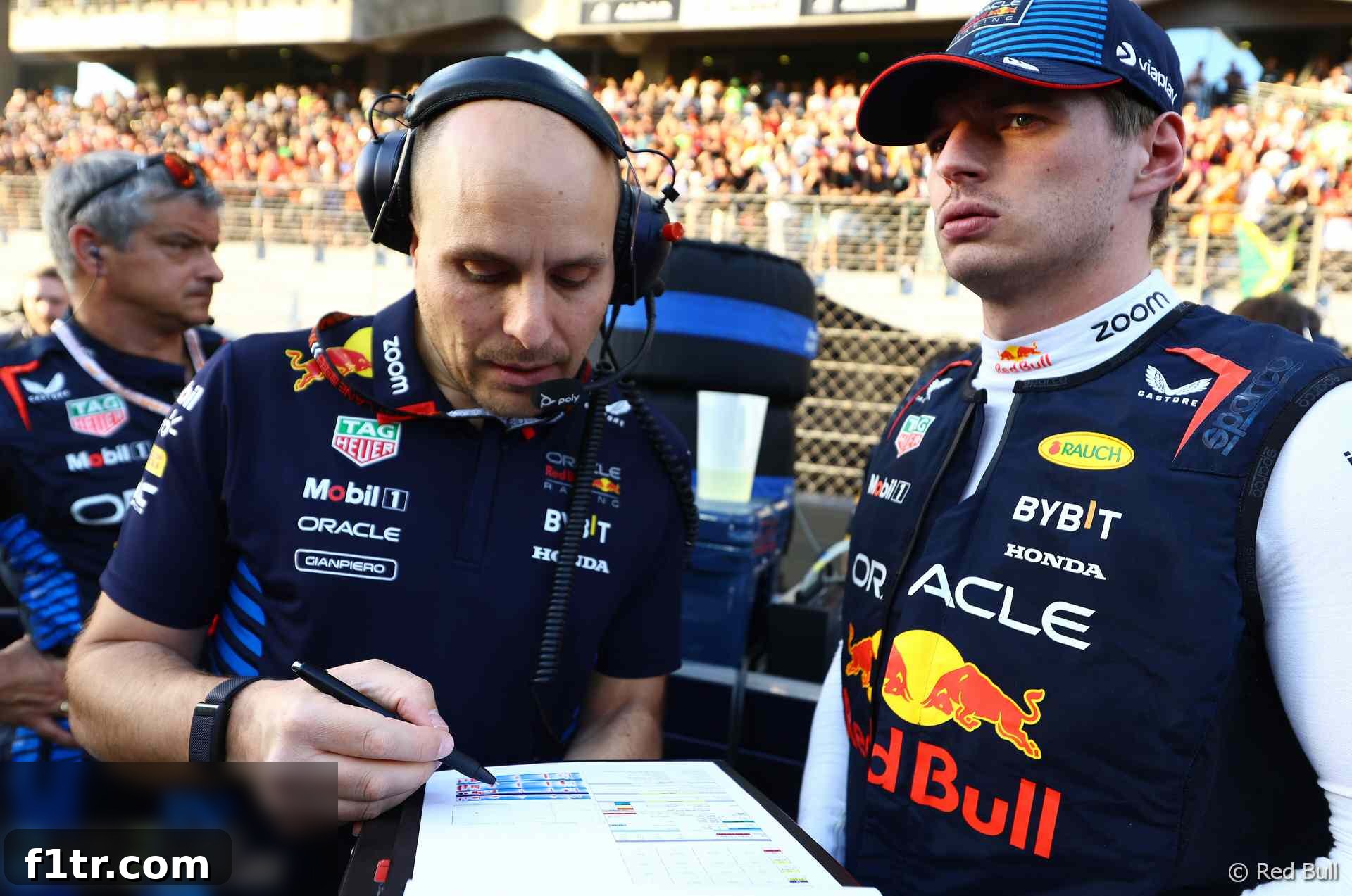
The world of Formula 1 thrives on speed, precision, and raw emotion. However, the Fédération Internationale de l’Automobile (FIA), under the leadership of President Mohammed Ben Sulayem, is signaling a potential tightening of rules around one of the sport’s most unfiltered elements: driver radio communications. Recent remarks from Ben Sulayem indicate a growing concern over the use of profanity, hinting at a future where the intimate exchanges between drivers and their teams might face increased scrutiny, or even censorship.
This development isn’t entirely new; Ben Sulayem has adopted a firm stance on drivers’ use of explicit language since last year. High-profile incidents have already resulted in penalties, sending a clear message across the paddock. For instance, championship contender Charles Leclerc received a fine for his language, while reigning world champion Max Verstappen was mandated to perform “public work” at an FIA event in Rwanda following similar infractions during official FIA press conferences. These actions underscore the FIA’s commitment to upholding a certain standard of conduct, particularly in public-facing roles. The rationale appears to be rooted in presenting a professional image of the sport to a global audience, which includes a significant demographic of younger fans.
The FIA president has now indicated that the governing body might extend its efforts to curb drivers’ swearing beyond press conferences and into the real-time thrill of race weekends. Speaking at the FIA officials summit at the Jarama circuit in Spain, Ben Sulayem posed significant questions about the future of live radio broadcasts. “Do we go on and then shut down the radios of live communication? Maybe,” he mused, adding, “Do we delay it? Maybe.” These comments open up a range of possibilities, each with profound implications for the sport’s authenticity, fan engagement, and strategic depth.
Currently, radio messages broadcast on the main world television feed already undergo a degree of censorship. Any instances of swearing are typically “bleeped” to render them unintelligible, ensuring that profanity does not reach a broad, general audience. However, the live onboard feeds available through F1 TV – often favored by dedicated fans for their raw, unedited perspective – do not apply the same level of bleeping. Nevertheless, these F1 TV messages are subject to a delay, allowing Formula One Management (FOM), the sport’s commercial rights holder and promoter, the discretion to omit certain transmissions altogether. This usually occurs when a car has just crashed, or when a driver’s tone and language are deemed excessively agitated or potentially too graphic for unedited broadcast. The dynamic between FOM, as the promoter, and the FIA, as the championship owners, is crucial in determining the ultimate policy on such broadcasts. “There’s a lot of things that would work now with our promoter,” Ben Sulayem commented, highlighting this collaborative aspect.
The debate around driver profanity gained particular traction after last year’s Hungarian Grand Prix. During that event, Max Verstappen was noted for swearing on his radio at least seven times, with six of these instances being broadcast (albeit bleeped) on the world feed. This incident brought to the forefront the sheer frequency of explicit language from some drivers during the heat of competition, prompting renewed discussions about what constitutes acceptable broadcast content in a global sport. While fans often appreciate the raw emotion that comes through team radio, a line must be drawn, particularly when considering the diverse audience demographics.
Beyond general profanity, drivers have also faced severe penalties for other types of controversial remarks made over their radios. Last year, Yuki Tsunoda received a substantial fine of €40,000 (£33,900), half of which was suspended, for using an ableist slur during the Austrian Grand Prix. This penalty underscored the FIA’s zero-tolerance policy for discriminatory language, highlighting that certain forms of expression are absolutely unacceptable, regardless of context or competitive pressure. Similarly, Sergio Perez received a formal warning at the 2023 season finale for commenting that “the stewards are a joke.” While perhaps less severe than a slur, this remark still represented a breach of conduct regarding respect for race officials, demonstrating the FIA’s broad scope in policing driver communications for professionalism and sportsmanship.
In anticipation of the current season, the FIA proactively revised its rules concerning “misconduct,” explicitly outlining potential fines and bans for drivers who contravene these regulations. These revisions cast a wider net, potentially encompassing not only overt profanity but also any behavior deemed detrimental to the sport’s image or integrity. The very definition of “misconduct” is subject to interpretation, giving the FIA significant leeway in applying these rules, and signaling a more structured approach to maintaining discipline among competitors. This proactive step reflects a strategic pivot towards a more controlled environment, balancing the innate passion of motorsport with the need for a polished, global entertainment product.
The controversy surrounding Max Verstappen’s penalty last year, which involved community service in Rwanda, sparked considerable public and media debate. Ben Sulayem, however, offered a different perspective, emphasizing the positive impact of the experience. He recounted the conversation with Verstappen: “When he sat down – and he was nervous – I said, how about injecting back in the society, going and inspiring young girls and boys in Rwanda? [He said] oh please, I will do that.” According to Ben Sulayem, Verstappen embraced the opportunity, engaging happily with local communities. “He was there, he was happy, he went there, hugged them, and it was a big plus for them. To see Max Verstappen coming to these people in Africa and then inspiring them, giving them the good words. They were so happy.” This portrayal aims to highlight the beneficial, rehabilitative aspect of the penalty, rather than simply its punitive nature. It also serves to counter narratives that might have downplayed or misrepresented the severity and nature of the consequence.
Ben Sulayem also addressed what he perceived as exaggerated media coverage surrounding Verstappen’s penalty. “I remember, when the community service was given to Max Verstappen, what did some of the journalists say? They said, the president is going to have him cleaning the toilets.” He used this anecdote to illustrate how certain reports sensationalized or trivialized the FIA’s disciplinary actions. This public clarification underscores the FIA’s desire to control the narrative surrounding its decisions, particularly when they involve high-profile athletes and attract intense media scrutiny. It also highlights the ongoing tension between governing bodies and the press in interpreting and reporting sporting incidents.
The FIA’s tougher stance hasn’t been universally welcomed, particularly by the very individuals it governs. Last year, F1 drivers collectively issued an open letter criticizing Ben Sulayem, expressing their concerns not only about his position on swearing but also about other broader issues affecting the sport. This unusual display of unity among drivers signaled a notable disconnect between them and the governing body. Despite this, Ben Sulayem maintains that his relationship with the drivers is overwhelmingly positive. “Most of the drivers that speak to me, they have my phone, I am the most accessible president ever,” he stated. “You will see they speak to me, they are very happy.” He attributes any complaints to the natural competitive spirit inherent in motorsport. “But of course, when I was a driver I used to complain. And when I don’t win, I will complain more. But I tried to be quiet and then wait for the next race to win. So you see, that’s natural, that’s human.” He concluded by reiterating his paternalistic approach: “How do I treat the drivers? Like my sons and my daughters. Honestly, I treat them with passion, with love. I treat them with understanding. I have been there. I want them to succeed.”
The potential for increased censorship of F1 radio communications represents a significant shift in how the sport balances raw, unscripted moments with its global broadcast image. While measures like bleeping profanity are already in place, the prospect of delaying or even shutting down live radio feeds raises questions about the authenticity and immediacy that fans value. The FIA, in collaboration with FOM, is navigating a complex landscape where the desire to present a professional, family-friendly product often clashes with the inherent passion and occasional frustration of high-stakes racing. As Formula 1 continues to expand its global reach and appeal, the decisions made regarding driver communications will undoubtedly shape the fan experience and the very character of the sport for years to come.
Ultimately, the goal is to find a harmonious balance. A balance that allows the sport to maintain its integrity and professionalism without stifling the genuine human element that makes Formula 1 so captivating. Whether through more stringent penalties, broader censorship, or a revised approach to broadcast delays, the FIA is clearly determined to refine the public perception of its elite drivers and the sport as a whole. The unfolding debate on F1 radio communications will certainly remain a key talking point among fans, drivers, and officials alike, as the sport continues to evolve in the modern media landscape.
Miss nothing from RaceFans
Get a daily email with all our latest stories – and nothing else. No marketing, no ads. Sign up here:
Formula 1
- GT driver killed in multi-car crash at Nurburgring Qualifiers
- Should F1 change tracks or racing guidelines to tackle dangers in 2026 rules?
- Controversies, Norris, Newey and more: Five new motorsport books reviewed
- One of F1’s greatest races happened 15 years ago today. Or did it?
- “Overtaking is overtaking”: Domenicali denies F1’s yo-yo racing is “artificial”
Browse all Formula 1 articles