The high-octane world of Formula 1 racing, where milliseconds dictate victory and defeat, also demands an unwavering commitment to safety and reliability. This commitment was starkly tested during the inaugural Qatar Grand Prix, as F1’s official tyre supplier, Pirelli, launched an immediate and thorough investigation into a series of alarming tyre failures that struck multiple drivers. The incident at the Losail International Circuit cast a shadow over an otherwise thrilling race, prompting serious questions about track characteristics and their impact on tyre integrity, particularly under the extreme stresses of top-tier motorsport.
Pirelli Launches Comprehensive Investigation into Qatar GP Tyre Failures
The 2021 Qatar Grand Prix, a much-anticipated new addition to the Formula 1 calendar, quickly turned into a significant challenge for drivers, teams, and most notably, for Pirelli. Four prominent drivers — Valtteri Bottas, Lando Norris, and Williams teammates George Russell and Nicholas Latifi — all experienced front-left tyre failures during the demanding race. These incidents, occurring at high speed on a circuit new to the Formula 1 machinery, immediately triggered widespread concern and a detailed inquiry by Pirelli, whose primary role is to ensure both peak performance and uncompromising safety across all F1 circuits globally.
The Unprecedented Challenge of the Losail International Circuit
For many, the Losail International Circuit in Qatar presented an exciting unknown. However, it quickly became apparent that its unique characteristics posed a severe challenge to the delicate balance of Formula 1 tyres. Mario Isola, Pirelli’s head of F1, confirmed early suspicions, stating the track was “a very high energy circuit, especially on the front left, that is clear.” This assessment highlighted the immense lateral and vertical loads placed upon the tyres, particularly through Losail’s sweeping, high-speed corners. The front-left tyre, in particular, bore the brunt of these relentless forces, continuously being stressed through the circuit’s predominant right-hand turns. This continuous loading contributed to an exacerbated wear rate and an increased risk of structural fatigue, an issue compounded by the aggressive nature of the track’s kerbing and surface.
The severity of the circuit’s impact extended beyond just the cars that suffered punctures. Pirelli’s meticulous post-race inspection revealed a broader pattern of accelerated wear, with “tyres that were completely worn, both front left and rear left” observed on several cars that miraculously managed to complete the race without immediate failure. This discovery underscored the intense and systemic demands of the Losail track layout and its abrasive surface, indicating that the challenges were deeply rooted in the track’s design rather than isolated incidents specific to a single driving style or car setup.
Sequence of Events: Who Suffered and When
The first driver to experience a critical tyre failure was Valtteri Bottas, driving for Mercedes, on lap 34. Bottas had been running on the medium compound tyres since the start of the race, enduring a particularly long stint that ultimately proved too demanding for the rubber under the given track conditions. Later in the race, the issue resurfaced, affecting three other drivers. George Russell and Nicholas Latifi, both driving for Williams, and Lando Norris from McLaren, all suffered punctures on their hard compound tyres during their second stints. The fact that failures occurred on both medium and hard compounds suggested that the root cause was not solely specific to a particular tyre construction or compound, but rather an overarching issue related to the track environment and the sustained, high-intensity stresses placed upon the tyre structure.
The timing and nature of these failures were crucial from a safety perspective. While the punctures were sudden, they were notably “not immediate,” meaning the tyre did not instantly deflate in a catastrophic blowout. This allowed drivers to maintain some semblance of control and safely return to the pits for a tyre change. Isola described the failures as “sudden but not immediate,” explaining that drivers “have been able to go back to the pit and change the tyre.” This critical aspect prevented more serious incidents, demonstrating the inherent safety margins built into the tyre design, even when pushed beyond anticipated limits. However, losing pressure at high speed undeniably impacts vehicle control and demands immediate, precise corrective action from the driver, highlighting the ever-present dangers in Formula 1.
The Kerb Conundrum: Pirelli’s Primary Suspect
In the immediate aftermath of the race, Pirelli’s initial suspicion heavily focused on the circuit’s kerbs as the primary culprit behind the tyre failures. Mario Isola articulated this theory with clarity, stating, “I believe that part of the cause of that was the high-speed impact on kerbs because here we have a lot of run-off areas with kerbs they were hitting.” The Losail circuit features aggressive, robust kerbing designed to strictly deter drivers from exceeding track limits. However, the unique combination of their design, the incredibly high speeds at which Formula 1 cars were traversing them, and the repeated impact over a full race distance appears to have exacted a heavy and damaging toll on the tyre structures.
The high-speed interaction with these kerbs can induce significant and localized stress on the tyre’s sidewall and internal structure. Such impacts, when repeated lap after punishing lap, can lead to subtle cuts, abrasions, or even micro-structural damage that progressively weakens the tyre until it can no longer withstand the immense aerodynamic and cornering forces of Formula 1 racing. Evidence supporting this theory emerged not only from the tyres but also from observations of the cars themselves. “It’s not a secret, I believe that some cars have damage to the floor, to the chassis, to the wings,” Isola revealed. This collateral damage strongly indicated that drivers were encountering the kerbs with considerable and repeated force, transferring those destructive impacts directly to the sensitive tyre structures and surrounding car components.
Further visual confirmation came from the tyres themselves. “We have some cuts that are visible on the sidewall, that is the weaker part of the tyre and we have to understand,” Isola added. The sidewall, while designed to be robust, is inherently more vulnerable to sharp impacts and abrasive forces than the thick tread compound. These visible cuts served as a clear, physical indicator of external trauma, directly guiding Pirelli’s investigation towards the precise mechanism of failure and the role of the circuit’s unique elements.
The In-Depth Investigation Process
To conclusively determine the exact cause of the failures, Pirelli initiated its standard, rigorous investigation process. This involves transporting the damaged tyres, along with a carefully selected sample of ‘good’ tyres that successfully completed the race, back to its state-of-the-art research and development facility in Milan, Italy. In Milan, a dedicated team of engineers and scientists conducts a forensic analysis, employing various advanced techniques including X-ray imaging to detect internal structural damage, microscopic examination of rubber samples to identify material fatigue, and destructive testing to assess ultimate strength. The ultimate aim is to identify any structural fatigue, material degradation, or external damage not immediately apparent to the naked eye.
The ‘good’ tyres that finished the race without issue are equally vital to this process. As Isola noted, “I would say they are not destroyed, we can investigate on those tyres. And as usual, we will also make an investigation on the tyres used for long runs.” These undamaged tyres provide a crucial baseline for comparison, helping to isolate the precise factors that differentiated the failing tyres from the resilient ones. By comparing stress patterns, wear characteristics, and internal structures, Pirelli can pinpoint the exact thresholds and conditions that led to the failures.
This comprehensive approach also incorporates extensive data analysis from the Formula 1 teams themselves. Telemetry data provides critical insights into how each tyre was used: precise tyre pressures, core temperatures, vertical and lateral load cycles, and the exact moments and magnitudes of impacts with the kerbs. Correlating this rich stream of data with the physical analysis of the tyres allows Pirelli to build a complete and intricate picture of the stress profile each tyre experienced, ultimately pinpointing the exact cause or complex combination of causes behind the unexpected failures.
Fernando Alonso: A Case Study in Tyre Management
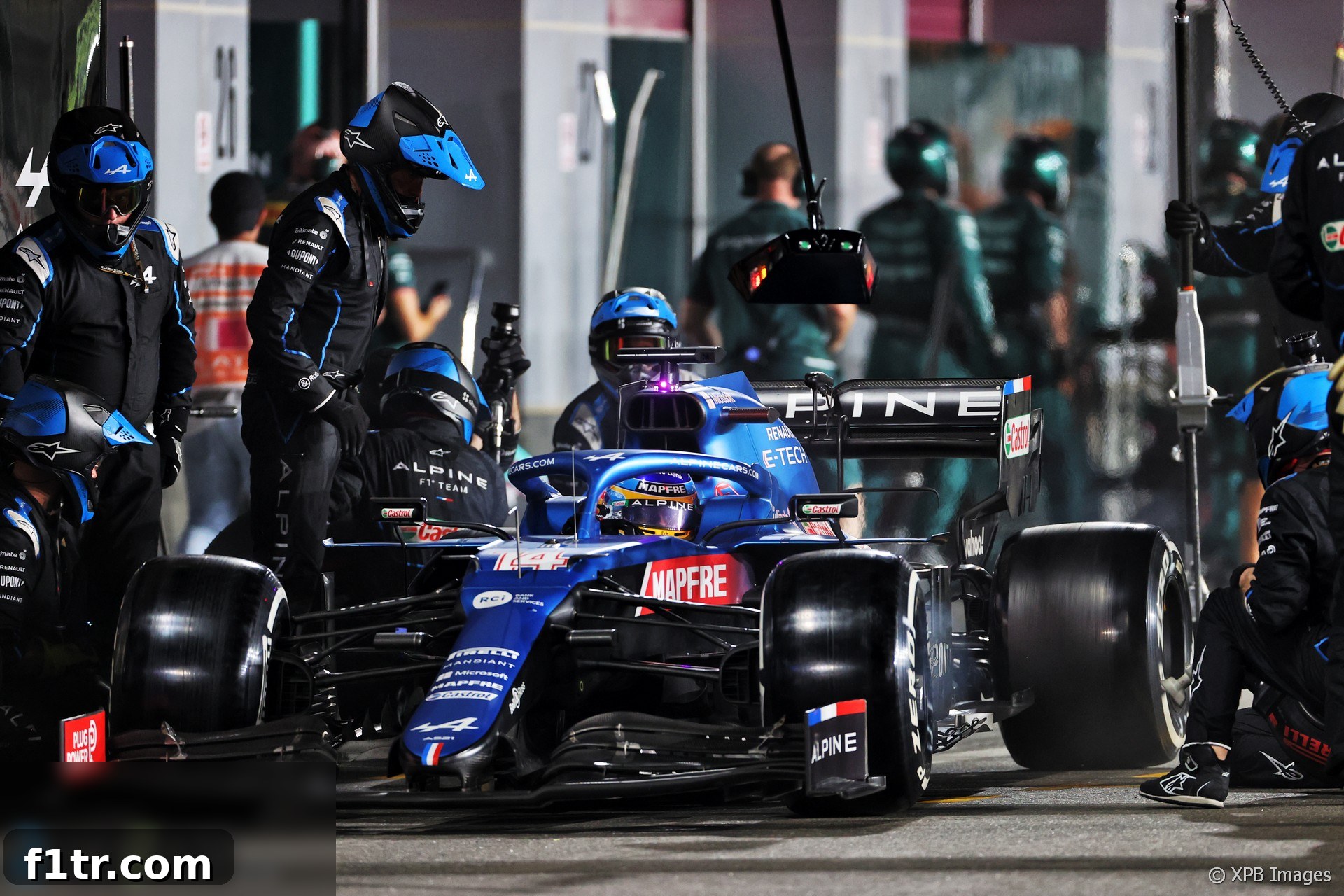
One of the most compelling pieces of empirical evidence supporting the kerb impact theory came from the exemplary performance of two-time world champion Fernando Alonso. The veteran Spaniard, renowned for his exceptional race craft and tyre management skills, managed to complete the entire race on a single-stop strategy, a truly remarkable feat given the widespread tyre issues encountered by other competitors. Isola specifically highlighted Alonso’s careful approach: “Fernando was avoiding kerbs and his tyres are still in [good condition].” This observation provides a direct and compelling link between driving style, cautious kerb usage, and prolonged tyre longevity.
Alonso’s ability to successfully manage his tyres throughout the demanding race, reportedly by consciously minimizing aggressive contact with the track’s abrasive kerbs, strongly suggests that these track features played a decisive role in the failures suffered by other drivers. His performance acts as a powerful empirical data point, reinforcing the hypothesis that high-impact kerb strikes were the primary catalyst for the punctures. It also serves as a testament to the fact that meticulous driving, even on the ragged edge, can sometimes mitigate unforeseen track-specific challenges, underscoring the delicate interplay between driver skill, vehicle setup, and track characteristics.
Implications for Future Races and Tyre Development
The incidents at the Qatar Grand Prix carry significant implications for the future of Formula 1. Firstly, they underscore the critical importance of pre-event circuit analysis, especially for new venues. While extensive simulations and track inspections are always conducted, the real-world stresses of Formula 1 cars pushing to their absolute limits can reveal unforeseen challenges. This event will likely lead to even more stringent assessments of kerb designs and track surfaces at future new circuits, potentially even resulting in adjustments to kerb specifications if they are deemed excessively aggressive for contemporary F1 machinery. The governing bodies will need to carefully balance track design for excitement and challenge with the paramount need for driver safety and equipment integrity.
Secondly, it highlights the continuous and dynamic evolution of tyre technology. Pirelli is tasked with the challenging responsibility of developing tyres that are not only high-performing and capable of enabling record-breaking speeds but also supremely safe across an increasingly diverse range of circuits and conditions. Lessons learned from the Qatar GP will undoubtedly feed into future tyre design and construction, aiming to enhance resistance to impacts and structural fatigue without compromising on the essential performance attributes that F1 demands. The incident serves as a stark reminder of the delicate and complex balance Pirelli must strike between constructing tyres that enable breathtaking performance and ensuring they can withstand the most punishing conditions Formula 1 can possibly throw at them.
Ultimately, the comprehensive investigation by Pirelli into the Qatar Grand Prix tyre failures is a vital step in enhancing overall safety and furthering our understanding of the complex interaction between Formula 1 cars, their high-performance tyres, and the unique challenges presented by different track environments. The detailed findings from Milan will be crucial not only for thoroughly explaining the events of the 2021 Qatar Grand Prix but also for shaping future tyre development strategies, influencing circuit design standards, and refining driver safety protocols in the pinnacle of motorsport, ensuring a safer and more predictable racing future for all.
2021 Qatar Grand Prix Related Articles
- Pirelli’s investigation into Qatar tyre failures indicates kerbs caused punctures
- Horner rejects talk of title fight pressure after criticism over marshal comment
- “I don’t know how much slower I can go”: Inside Ricciardo’s unnecessary economy run
- ‘No regulator in the world will be popular’ with a title fight this intense – Masi
- Why drivers backed Hamilton’s call for clarity after meeting over Verstappen incident
Browse all 2021 Qatar Grand Prix articles