In the thrilling world of Formula 1, where milliseconds define success and failure, qualifying sessions are often as strategically intense as the races themselves. Teams meticulously plan every detail, from tyre selection to track positioning, all to gain the slightest edge. This quest for perfection frequently leads to daring tactics and intricate mind games, as vividly exemplified by two notable incidents involving motorsport titans Mercedes and Ferrari during the high-stakes 2019 season.
The first episode unfolded with a clever manoeuvre by Mercedes at the Baku Grand Prix, where they masterfully outsmarted Ferrari. During the critical Q3 session, Mercedes drivers performed deceptive dummy practice starts as they headed out for their final runs. This shrewd ploy led Ferrari to believe that Sebastian Vettel needed to create a larger gap ahead of him to avoid infringing on rival out-laps, inadvertently compromising his optimal track position and losing the crucial slipstream advantage he sought. The result was a subtle yet significant disruption to Vettel’s preparation, highlighting Mercedes’ tactical brilliance in exploiting the psychological and strategic pressures inherent in top-tier qualifying.
A deeper dive into F1 strategy:
Understanding the intricate dance of Q3 strategy provides crucial context for the main event we’re about to explore. Every driver aims for the perfect ‘tow’ or slipstream from a car ahead, which can shave valuable tenths off a lap time by reducing aerodynamic drag. However, securing this advantage without compromising tire temperature, track position, or the critical time margin to cross the start/finish line before the chequered flag falls is a delicate balancing act. Teams are constantly monitoring rivals, calculating gaps, and issuing rapid-fire instructions to their drivers, often relying on complex algorithms and real-time data analysis.
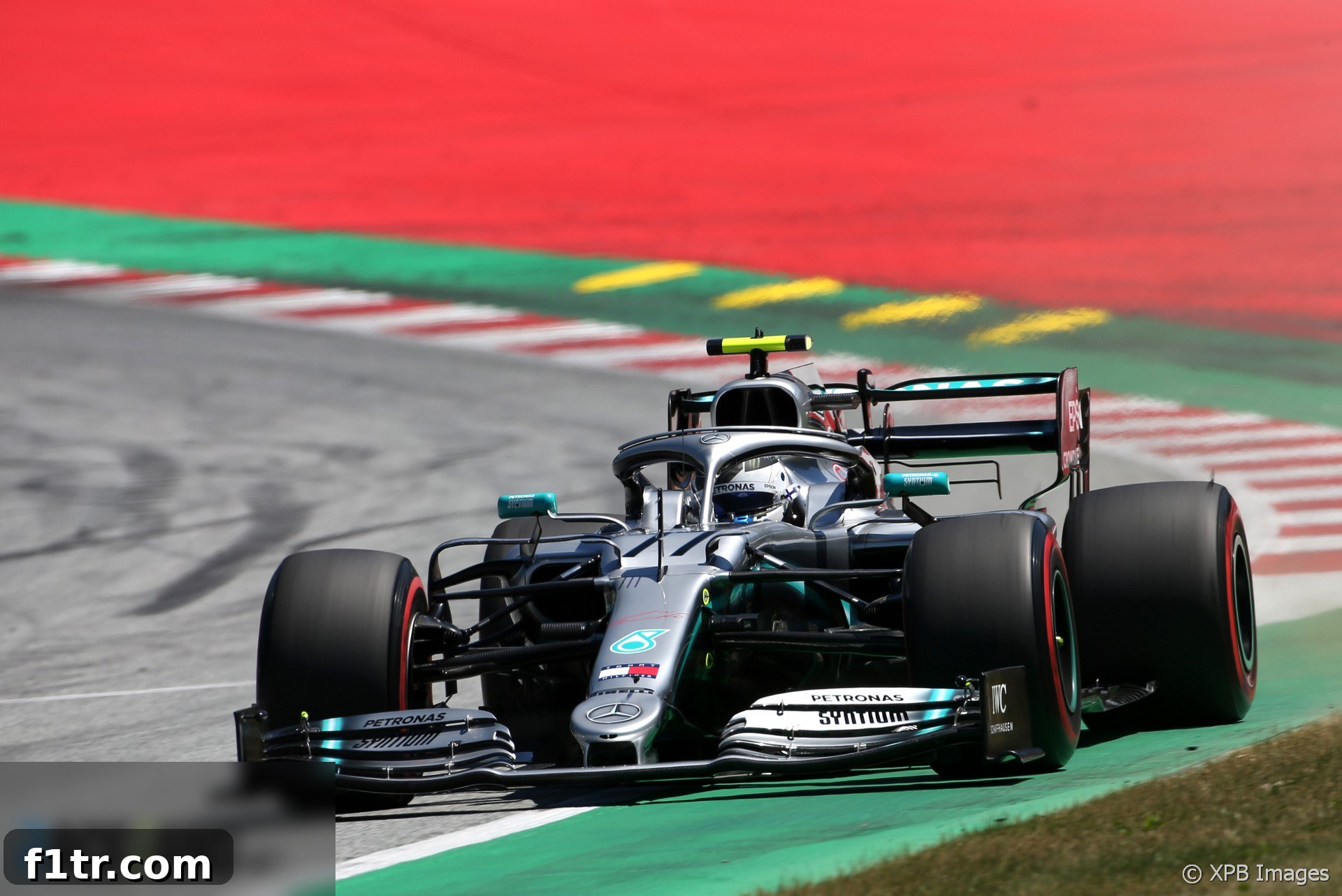
However, Ferrari, a team renowned for its rich history and strategic acumen, proved that in Formula 1, what goes around often comes around. At the Austrian Grand Prix, they seized their opportunity to exact payback. As both teams prepared for their final Q3 assaults, Charles Leclerc, with decisive intent, executed a bold move, diving past Valtteri Bottas. This manoeuvre not only set Leclerc up for a brilliant pole position lap – a testament to his raw speed and strategic awareness – but also critically disrupted Bottas’s preparation for his own crucial final effort. This demonstrated Ferrari’s ability to turn the tables with a perfectly timed tactical play, showcasing the fierce rivalry and strategic depth that defines the pinnacle of motorsport.
The art of navigating the Q3 out-lap has become a critical skill, demanding impeccable coordination between driver and pit wall. Throughout the 2019 season, we witnessed numerous instances of teams going to extraordinary lengths to ensure their drivers found the optimal starting position for their final Q3 runs. The objective is multifaceted: to benefit from the slipstream of another car, to have sufficient clear air for aerodynamic efficiency, and most importantly, to bring the tyres into their optimal operating window for a single, blistering flying lap. In China, for example, Sebastian Vettel controversially passed Max Verstappen moments before beginning his final Q3 run. This was a calculated risk taken to ensure Vettel started his last lap on time, but it consequently left Verstappen with insufficient time to complete his preparatory lap and begin a final attempt, highlighting the fine margins and potential pitfalls of such strategies.
The situation in Austria, while sharing common themes with these intense Q3 battles, had its own distinct nuances and complexities. While Bottas wasn’t cutting it quite as fine on time with Leclerc as Verstappen had been with Vettel, a critical miscommunication between Bottas and his Mercedes pit wall introduced an element of profound uncertainty. This breakdown in information left the Finnish driver unsure about the precise time margin he had to cross the start/finish line before the clock expired, adding immense pressure to an already high-stakes scenario where every second counted.
“It was a bit of a messy Q3 in terms of traffic,” Bottas candidly explained after the session, reflecting on the chaotic nature of the final qualifying segment. “We left it already quite late for the first run and then there were some cars backing off and everything. The first one was still all good I think from that side. My second one, everyone pretty much parked in the last sector, creating a highly congested traffic jam on the out-lap.” The inherent challenges of navigating such traffic were significantly compounded by a crucial communication issue within the team. “We did have a bit of an issue with the communications as well,” Bottas elaborated. “The message for me was that it was going to be super-close but I would make it, which, as it turned out, proved to be somewhat misleading and contributed to my compromised lap.”
The scramble for optimal track position began even before Bottas hit the track for his final effort. When he initially left the pits to commence his final run, the message from his race engineer was stark and urgent: he was “tight on time.” This urgency was partly exacerbated by his teammate, Lewis Hamilton, who had left the pits just ahead and, perhaps inadvertently, dawdled slightly during his own out-lap. Mercedes’ immediate and hurried radio calls to Hamilton underscored the precarious nature of the situation and how close they were cutting it to get both cars around to start their final lap times within the allowed window. “Lewis, we can’t wait on time,” he was told in a rushed tone, “get going, get going.” Hamilton’s subsequent radio messages indicated that this brief delay had cost approximately three seconds, an eternity in the context of F1 qualifying and potentially enough to prevent a final flying lap.
Deep dive into F1 team strategies:
The communication methods employed by teams during qualifying are highly sophisticated and tailored to individual driver preferences. However, even the most advanced systems can falter under extreme pressure or when faced with unexpected events on track. The subtle but significant difference in how Mercedes and Ferrari communicated vital time margins to their respective drivers played a pivotal role in the unfolding drama in Austria, illustrating how varying communication protocols can influence driver decisions in critical moments.
The core of the confusion for Bottas stemmed from the differing methods of communication employed by the two leading teams. Mercedes updated Bottas on his progress around the lap by referring to his position relative to an “out-lap” reference point. This meant he was told whether he was ahead or behind a benchmark out-lap, requiring him to interpret this comparative information in real-time, often under immense pressure. Ferrari, on the other hand, provided Charles Leclerc with similar, yet crucially more direct, information by means of a precise countdown in seconds. At each significant point on the lap, Leclerc would know exactly how many seconds he had remaining to reach the start/finish line before the chequered flag fell. This direct, quantitative countdown offered Leclerc a clearer, more immediate, and less ambiguous understanding of his exact time margin.
As Bottas neared the end of his out-lap, he felt reasonably safe in terms of his track position, believing he had sufficient time to set his lap. However, Mercedes engineers were simultaneously growing concerned about Charles Leclerc, who was rapidly closing in on their driver. Their fears were soon realized as Leclerc executed precisely what they had anticipated: a late, opportunistic, and strategically timed pass. This decisive move occurred at Turn 9, a critical, high-speed corner on the Red Bull Ring. By then, Bottas had very little of the lap left to react, back off, and ensure he wasn’t too close to Leclerc’s rapidly slowing car, which would have compromised his own flying lap.
“After Leclerc went ahead of me then I was right behind him in the last corner, going super-slow,” Bottas recounted, detailing the immediate aftermath of Leclerc’s pass. The abrupt reduction in pace forced upon him had a cascading and detrimental effect. “[I was] a bit too close to him, got a very poor exit from the last corner so I lost already quite a chunk of time into turn one.” This compromised exit meant he carried less speed onto the main straight and into the crucial opening corners of his flying lap, directly impacting his potential lap time for the entire lap. The ripple effect of such a seemingly small incident can be enormous in Formula 1.
Beyond the immediate time loss due to a poor exit, Bottas’s relatively slow pace at the very end of his out-lap, a direct consequence of having to react to Leclerc’s pass, also severely compromised his tire preparation. Paradoxically, he had sped up earlier in the lap to gain time, only to be forced to slow dramatically at the worst possible moment, preventing his tyres from reaching their ideal operating temperature. “The tyre prep wasn’t there with cruising around sector three,” he explained. Proper tire temperature management is absolutely paramount in F1 qualifying, especially with soft compound tyres designed for maximum grip over a single lap. “It’s been quite on the limit this weekend for us to get even the soft tyre to work for lap one. For sure for the last one I couldn’t get it into the sweet spot. So just a bit messy,” Bottas concluded, underscoring how this multi-faceted disruption ultimately contributed to his sub-optimal performance and cost him valuable grid positions.
The outcome was a significant disappointment for Bottas, who saw his potential second-place grid slot slip to fourth. In the ruthless world of Formula 1, such slip-ups are immediately scrutinized, and lessons are swiftly learned. Mercedes, known for its meticulous debriefing processes and relentless pursuit of excellence, wasted no time in analyzing the incident and making plans to avoid a repeat. “We already had a quick debrief and discussed about the communications and for sure there’s something we’ve learned today in terms of what kind of information I need that would help me,” Bottas confirmed, indicating a proactive and constructive approach to the setback and highlighting the team’s commitment to continuous improvement.
He further elaborated on what might have been, had the communication been clearer and more precise: “In the end when I crossed the line there was much more than 10 seconds still margin so I would have easily left a bigger gap a bit earlier, get a good head of speed out of the last corner and possibly warmer tyres.” This crucial realization highlights the critical difference clear and precise communication can make, allowing a driver to manage their out-lap optimally, ensure perfect tire preparation, and ultimately maximize their potential for the flying lap, turning a potential P4 into a P2 or even P1.
Understanding real-time F1 radio communications:
The raw, unfiltered exchanges between drivers and their engineers offer a unique and compelling window into the pressure cooker environment of Formula 1 qualifying. The following transcripts provide a vivid, real-time narrative of the final moments of Q3 in Austria for both Valtteri Bottas and Charles Leclerc, revealing the contrasting communication styles of their respective teams and the immediate impact of Ferrari’s strategic maneuver on the track.
Bottas and Leclerc Radio from the End of Q3: A Tale of Two Strategies
Valtteri Bottas’s Radio Transcript
| To Bottas: | So four cars on out-laps ahead of Lewis and Verstappen. |
| To Bottas: | Exit Turn one We are tight on time. |
| To Bottas: | Turn three Out-lap is at turn three, need to catch up so speed up a bit. |
| To Bottas: | Turn four approach Now we are ahead. |
| To Bottas: | So out-lap is at turn four. |
| To Bottas: | Leclerc will try to overtake because it’s tight. |
| To Bottas: | Strat two. |
| To Bottas: | Turn seven Out-lap is at turn six, got a bit of time in hand. |
| To Bottas: | Watch out for Leclerc. |
| To Bottas: | Leclerc passes him in turn nine Out-lap is turn seven, out-lap approaching turn eight. |
| To Bottas: | Leclerc slows approaching turn 10 Out-lap still at turn eight. |
| To Bottas: | 25 seconds in hand. |
| To Bottas: | Bottas accelerates out of the final corner 21 seconds in hand. |
| To Bottas: | Bottas completes his lap OK Valtteri that’s P4. Leclerc 03.0, Lewis managed to improve in heavy traffic, 3.2. Versatppen P3, 3.4. Watch the delta. |
| Bottas: | Fucking traffic. |
| To Bottas: | We are boxing. |
| Bottas: | What was the margin. You said 20 seconds? |
| To Bottas: | Affirm. |
| Bottas: | I could have left a lot bigger gap if you’d told me at the start. |
| To Bottas: | You need to be negative on the delta. |
| To Bottas: | Stay negative on the delta, positive eight seconds. |
| To Bottas: | You need to hurry up, the Safety Car Line is early, we’re still quite positive. |
| To Bottas: | Coming in the pits. |
Charles Leclerc’s Radio Transcript
| Leclerc: | Can you remind me the time that needs to be remained at the apex of turn seven? 25 seconds, right? |
| To Leclerc: | Apex of turn six is 30 seconds. |
| Leclerc: | Copy. |
| To Leclerc: | 25 at the entry of seven. |
| Leclerc: | Copy. |
| Leclerc: | Are we tight? |
| To Leclerc: | Go, go. |
| To Leclerc: | Mercedes will be in front. |
| Leclerc: | He follows Hamilton and Bottas out Are we tight? |
| To Leclerc: | We don’t have margin. We don’t have margin. |
| To Leclerc: | You need one minute from turn three. |
| To Leclerc: | Turn three exit You have five seconds margin. |
| To Leclerc: | Bottas in front is 1.2 seconds in front. |
| To Leclerc: | We have nine seconds margin. We have nine seconds margin. |
| To Leclerc: | Bottas in front one second. We need a bit more gap. |
| To Leclerc: | We need a bit more gap. |
| To Leclerc: | He passes Bottas at turn nine and almost stops Mode push for last corner. Mode push. |
| To Leclerc: | Leclerc complete his lap And slow button on, slow button on. |
| To Leclerc: | Stay negative. P1, P1, Hamilton P2, Verstappen P3, stay negative. |
| Leclerc: | Come on baby, yes! Feels good. It feels good. On the other hand I’m very sorry for the team about what happened to Seb. Thank you. |
| To Leclerc: | Stay negative. |
| Leclerc: | I’m trying but I need to overtake other cars to be negative. |
| To Leclerc: | Amazing job. You can overtake to be negative. |
| Leclerc: | It’s OK now. |
| Leclerc: | What’s the second-best time? I’m going to the grid. |
| To Leclerc: | 03.2 |
The Unwritten Rules of F1 Qualifying: Strategic Masterclass or Calculated Risk?
The incidents in Baku and Austria are prime examples of the intricate mind games and strategic depth present in Formula 1 qualifying. These sessions are not merely about raw speed; they are a high-speed chess match played at over 200 mph, where a team’s ability to anticipate, react, and even mislead rivals can yield significant dividends. Ferrari’s successful retaliation against Mercedes in Austria highlights the fierce competitive spirit and the constant evolution of tactics in F1. Such maneuvers, while often causing frustration for the affected driver, are largely considered a legitimate, albeit aggressive, part of the sport’s unwritten rules, constantly pushing teams to operate at the peak of their strategic capabilities.
Ultimately, the Austrian Grand Prix Q3 session became a compelling case study in communication efficacy and strategic execution. While Bottas’s frustration was palpable and understandable, his team’s immediate commitment to review and refine their internal processes underscores the relentless pursuit of perfection that defines top-tier motorsport. Every race, every qualifying session, offers valuable lessons, constantly shaping the strategies and communication protocols that will be deployed in future battles on the track. As Formula 1 continues to evolve, these intricate dance moves and tactical duels in qualifying will only become more refined and critical to securing those precious grid positions, making every Saturday afternoon a thrilling spectacle for fans worldwide.
Explore More From the 2019 F1 Season
- Ocon Reflects: “Crying in the Melbourne car park at 2019 Grand Prix was my career low”
- McLaren Racing Reports Reduced £71 Million Loss in 2019
- Kvyat on Hockenheim 2019: “Podium last year was my biggest achievement so far”
- FIA’s New Fuel Flow Meter Targets Ferrari’s Suspected ‘Aliasing’ Trick (2019 Context)
- “He smashed my office door”: 23 Must-See Moments from ‘Drive to Survive’ Season Two (Featuring 2019 Season)
Browse all 2019 F1 season articles for more insights into a pivotal year.