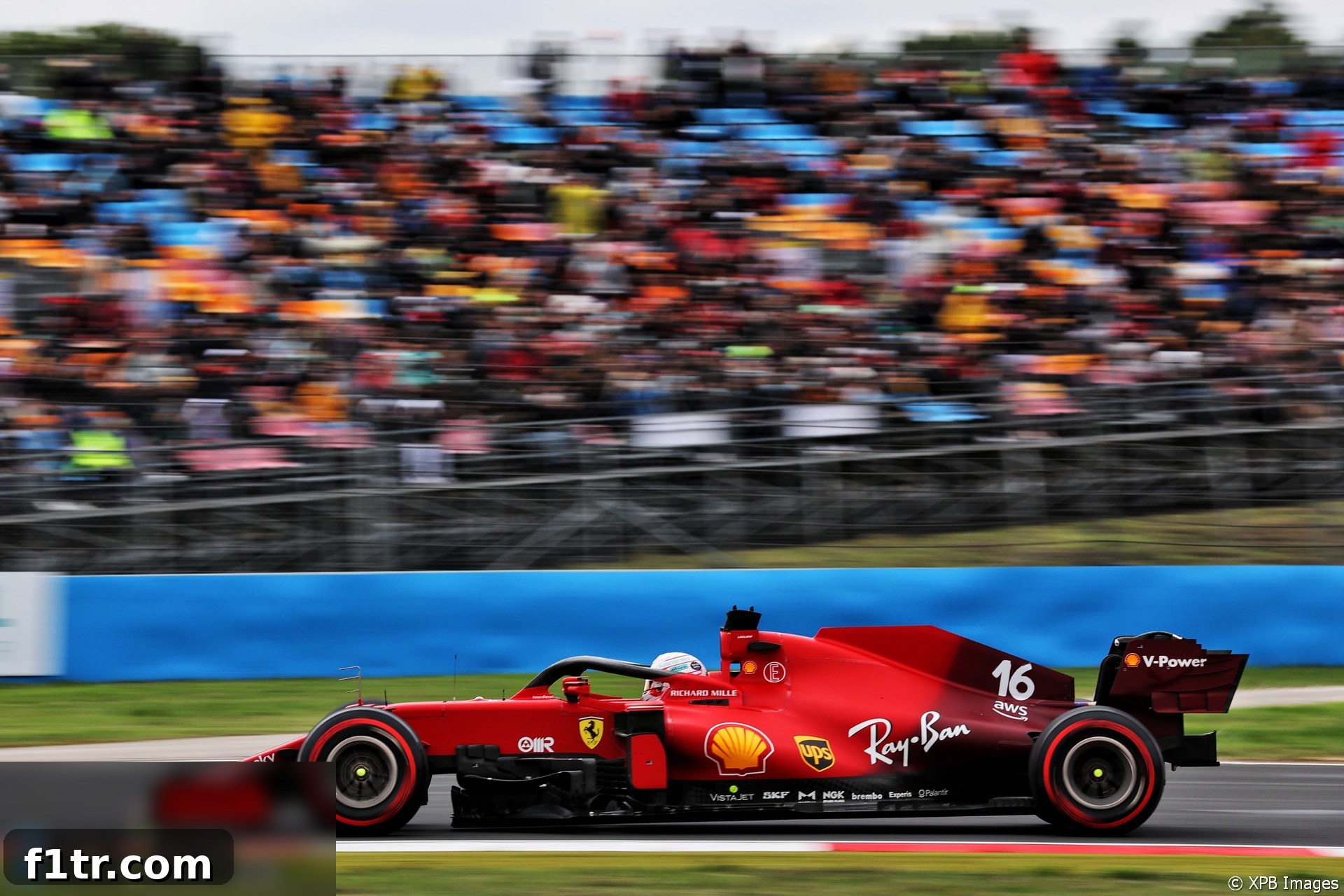
The 2021 Formula 1 Turkish Grand Prix qualifying session delivered a thrilling spectacle, culminating in an impressive third-place grid slot for Ferrari’s talented driver, Charles Leclerc. Against the backdrop of a crucial championship battle unfolding between Mercedes and Red Bull, Leclerc managed to split the front-runners, placing his Scuderia Ferrari SF21 behind only pole-sitter Valtteri Bottas and championship contender Max Verstappen. What made this achievement even more remarkable was Leclerc’s candid admission that he wasn’t entirely sure how his Ferrari machine found such competitive pace around the challenging Istanbul Park circuit. His surprise performance, moving up a position after grid penalties, injected an element of heightened anticipation and unpredictability into Sunday’s race, providing a significant morale boost for the Prancing Horse and its passionate fanbase. This unexpected surge in performance during a session known for its strategic complexities and fluctuating track conditions has certainly set the stage for a captivating Grand Prix, with Ferrari aiming to convert their strong Saturday form into a substantial points haul on race day.
Leclerc’s unexpected speed was particularly intriguing given Ferrari’s strategic approach to the weekend. The team had opted for a low-downforce setup on his SF21, a decision primarily geared towards optimizing race performance rather than outright single-lap pace in qualifying. This aggressive strategy, while potentially beneficial for Sunday’s Grand Prix, inherently posed challenges for the qualifying session itself. “I knew it was going to be a tricky session, because we decided to go for a low-downforce set-up for this qualifying, for tomorrow. Which eventually, I think, is the right choice. But for today it was going to be tricky,” Leclerc explained after the session. A low-downforce configuration typically reduces drag, leading to higher straight-line speeds – a definite advantage on some circuits. However, it also means less grip through corners, demanding more from the driver and making the car more prone to instability, especially in tricky conditions like those experienced at Istanbul Park. The Monegasque driver’s ability to extract such impressive lap times despite this setup choice underscores his exceptional talent and the team’s meticulous preparation. This bold engineering decision by Scuderia Ferrari illustrates their commitment to maximizing their potential on race day, even if it meant navigating a more precarious path through the demanding qualifying stages.
A crucial factor in Leclerc’s progression through the qualifying stages, particularly Q2, was the invaluable assistance provided by his Ferrari teammate, Carlos Sainz Jnr. Sainz, having already incurred a significant power unit change penalty that relegated him to the back of the grid for Sunday’s race, had no imperative to set a competitive lap time himself. Recognizing this opportunity, the team devised a clever strategy to utilize Sainz’s track presence. The Spanish driver went out specifically to offer Leclerc a slipstream, allowing his teammate to benefit from reduced aerodynamic drag down the straights. This maneuver can yield precious tenths of a second, which often prove decisive in the tightly contested midfield. Leclerc openly acknowledged the critical nature of this team effort: “For Q2 – obviously, thanks to Carlos for the tow, otherwise it would have been a bit tight to get to Q3 with the traffic I had in the last three corners.” This demonstration of selfless teamwork highlights the collaborative spirit within Scuderia Ferrari and their commitment to maximizing the performance of both cars. Sainz’s willingness to sacrifice his own session, knowing his grid position was already determined, provided a tangible advantage that undoubtedly played a role in propelling Leclerc into the all-important Q3, setting the stage for his eventual strong grid slot.
Understanding the unique demands of the Istanbul Park circuit is paramount to achieving success, and Ferrari’s focus on front tyre management proved to be a pivotal factor in their qualifying performance. The Turkish Grand Prix venue is notorious for its challenging layout, particularly the multi-apex Turn 8, a relentless left-hander that places immense lateral load and stress on the front-left tyre. This sustained demand for grip can quickly lead to overheating and degradation, making effective tyre management a critical component of both single-lap pace and long-run consistency. Leclerc emphasized the team’s dedicated efforts in this area: “I think we worked hard to take off as much, as possible, this front limitation on our cars. We know it’s a bit of a weakness. I think we did the right work, and the right preparation for it.” Ferrari’s proactive approach to address this inherent weakness paid dividends, allowing Leclerc to push the limits of his car without prematurely exhausting the front tyres. The ability to maintain optimal tyre temperatures and performance throughout a lap, especially under high-stress conditions, is a testament to the engineering team’s diligence and the drivers’ feedback. This strategic focus on overcoming the circuit’s specific challenges enabled Ferrari to unlock unexpected performance and demonstrate a clear understanding of what it takes to be competitive at Istanbul Park.
While Leclerc’s initial fourth-fastest time in Q3 was already commendable, his starting position received an additional boost due to grid penalties affecting a key championship contender. Mercedes driver Lewis Hamilton, who had initially set the fastest time in qualifying, incurred a 10-place grid penalty for exceeding his allocation of internal combustion engine (ICE) components. This penalty meant that Hamilton, despite his superior pace, would start significantly further down the grid, effectively promoting drivers behind him. For Charles Leclerc, this translated into an automatic one-position gain, elevating him from fourth to a formidable third place on the starting grid. Such penalties have become a common, albeit contentious, feature of the modern Formula 1 season, often dramatically reshaping the complexion of the race before it even begins. Hamilton’s penalty, while a setback for his championship aspirations, provided a clear advantage for Leclerc and Ferrari, placing them in an even stronger strategic position to challenge for a podium finish. The ripple effect of these grid adjustments means that Sunday’s race promises an even more dynamic and unpredictable battle, with drivers like Leclerc aiming to capitalize fully on the opportunities presented by a shuffled starting order and the absence of one of the sport’s dominant figures from the very front.
Leclerc’s impressive qualifying performance also highlighted the significant strides Ferrari has made throughout the 2021 Formula 1 season. After a challenging 2020 campaign, Scuderia Ferrari has steadily climbed back into contention as a strong force in the midfield, consistently battling with rivals like McLaren for crucial points. The team’s efforts to improve the SF21’s overall package, particularly in areas like engine performance and aerodynamic efficiency, are clearly paying off. What was particularly encouraging for Leclerc and the team was the perceived narrowing of the gap to the absolute front-runners. “Also, the midfield seems to be working quite well, because we are very close to pole position, everyone. It’s good to see that,” he noted. This suggests that in certain conditions and on specific tracks, Ferrari is capable of getting remarkably close to the pace of Mercedes and Red Bull, rather than simply dominating the midfield. The intense competition within the midfield, often referred to as ‘Formula 1.5’, pushes teams to constantly innovate and refine their strategies. Ferrari’s ability to occasionally break away from this pack and challenge higher up the grid signals a positive trajectory for the legendary Italian team, reinforcing hopes for even greater competitiveness in future seasons.
Looking ahead to Sunday’s Turkish Grand Prix, Charles Leclerc is understandably optimistic about his chances of securing a strong result, potentially even a podium finish. His strong qualifying position, combined with the strategic low-downforce setup, puts him in a promising position to convert pace into points. “Anything is possible,” he declared, embodying the cautious optimism prevalent within the Ferrari garage. “I hope in good conditions, like today, or even better than qualifying, it would be great.” However, the ever-unpredictable weather at Istanbul Park casts a shadow of uncertainty over these aspirations. Leclerc openly acknowledged a potential vulnerability should the conditions shift dramatically: “If it’s more wet, then I feel like we might struggle a little bit with the set-up on my side.” A low-downforce configuration, while beneficial for dry speed, can significantly compromise grip and stability in wet conditions, making the car much harder to control. Managing this delicate balance between potential dry-weather advantage and wet-weather vulnerability will be a key challenge for both Leclerc and the Ferrari strategists. Their ability to react to evolving track conditions and make timely decisions regarding tyre choices and driving style will be crucial in determining whether Leclerc can maintain his strong form and push for a coveted spot on the podium.
Beyond the immediate excitement of the Turkish Grand Prix, Charles Leclerc’s comments also offered a glimpse into his broader aspirations and Ferrari’s long-term vision. While pleased with the qualifying result, he expressed a yearning for more significant challenges, implicitly highlighting the team’s current position within the Formula 1 pecking order. “This year, it’s not that exciting, fighting for sixth place in the drivers’ championship. So hopefully, we will be fighting for a much better position very soon,” he admitted. This statement reflects the competitive spirit inherent in a driver of Leclerc’s caliber, who consistently aims for the very top of the sport. For Ferrari, a team steeped in racing history and synonymous with championship glory, the ultimate goal is undeniably to return to winning races and challenging for both the Drivers’ and Constructors’ titles. Leclerc’s consistent performances, coupled with the team’s ongoing development, offer a strong foundation for this ambition. His drive and dedication, despite the current championship standings, are crucial for motivating the entire Scuderia. The progress seen in 2021, particularly in instances like this surprising qualifying result, serves as a vital stepping stone towards a more competitive future, fueling hopes that Leclerc will indeed soon be fighting for positions that truly excite him and the Tifosi worldwide.
In conclusion, Charles Leclerc’s third-place qualifying performance at the Turkish Grand Prix was a standout moment, blending strategic brilliance from Ferrari with the Monegasque driver’s undeniable skill. His ability to extract maximum performance from a low-downforce setup, aided by the selfless teamwork of Carlos Sainz and the team’s focus on Istanbul Park’s unique tyre demands, positioned him perfectly for Sunday’s race. With Lewis Hamilton’s grid penalty further enhancing his starting position, Leclerc now finds himself in an excellent spot to challenge for a highly coveted podium finish. While the threat of unpredictable weather looms, the overall trajectory for Ferrari in 2021 and their promising qualifying display offer a strong testament to their ongoing efforts to return to the forefront of Formula 1. All eyes will now be on Istanbul Park as Leclerc aims to translate his impressive Saturday showing into a memorable Sunday result, underscoring Ferrari’s renewed competitiveness and their unwavering pursuit of championship glory.