Austrian Grand Prix FP3: Mercedes Maintains Lead as Rivals Intensify Challenge
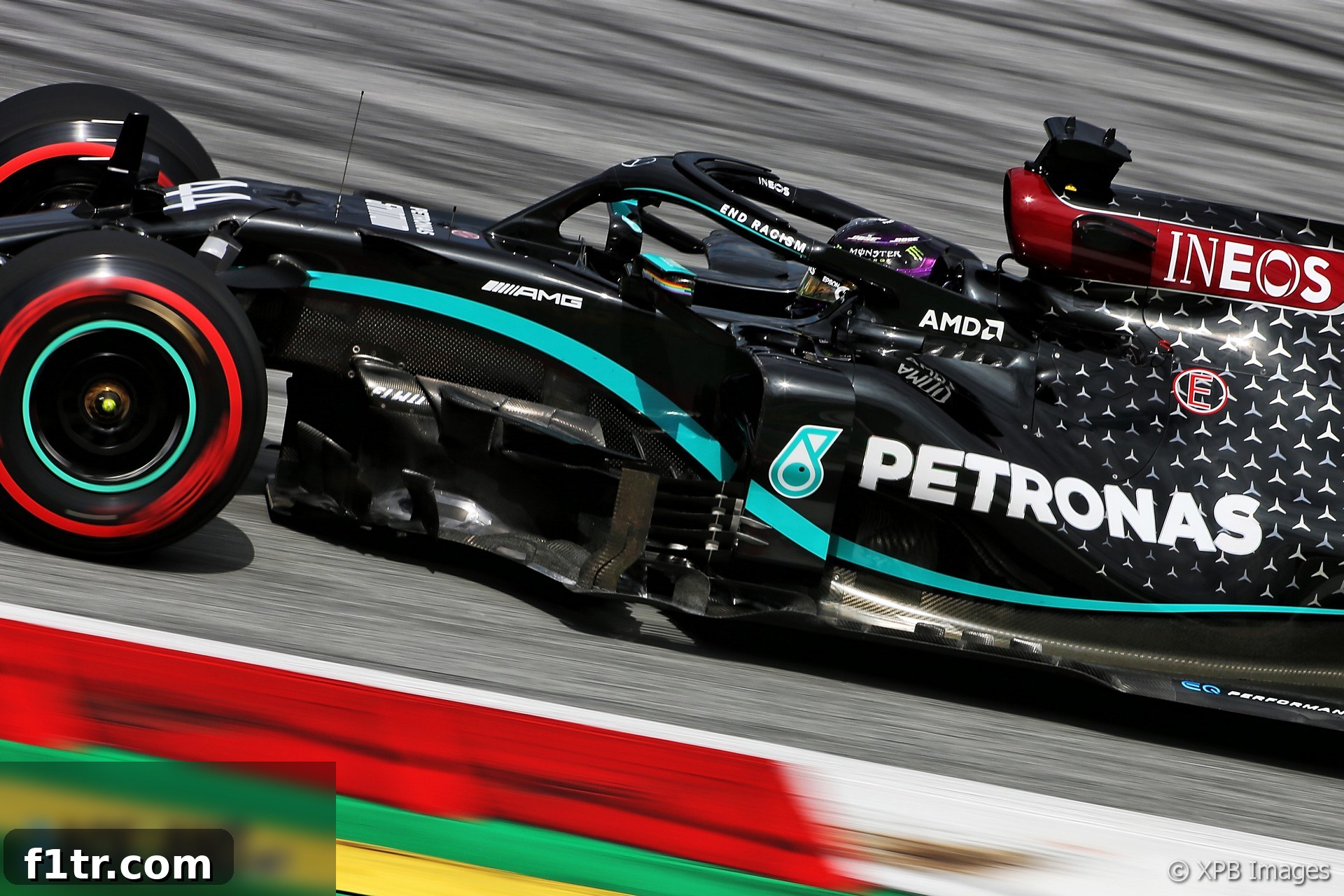
The final practice session ahead of the highly anticipated Austrian Grand Prix delivered a familiar sight at the top of the leaderboard: a Mercedes one-two, marking their third consecutive dominance in practice over the weekend. Spearheading this impressive performance, as he has consistently, was the reigning world champion, Lewis Hamilton. However, beneath the surface of Mercedes’ continued supremacy, a pivotal shift was observed. Competitors showcased a marked improvement in pace compared to Friday’s sessions, suggesting a much closer fight as teams fine-tune their setups for qualifying and the race.
Mercedes’ Unyielding Performance with a Hint of Pressure
Lewis Hamilton once again proved why he is a force to be reckoned with, clocking a best lap time of 1’04.130. This put him a mere tenth of a second ahead of his talented teammate, Valtteri Bottas, demonstrating Mercedes’ formidable pace and their deep understanding of the Red Bull Ring circuit. Their consistent top-tier performance throughout all practice sessions underscores the effectiveness of their W11 chassis and power unit package, cementing their status as strong contenders for pole position. The team’s ability to extract maximum performance from their cars, even as track conditions evolve, highlights their operational excellence. Yet, the narrowing gap to the chasing pack suggests that their dominance might not be as absolute as initially perceived, injecting an exciting element of uncertainty into the weekend’s proceedings.
Red Bull Racing’s Significant Gains on Home Soil
In a promising development for the home team, Red Bull Racing, Max Verstappen managed to significantly reduce the deficit to the leading black arrows. The Dutch sensation ended the session just three-tenths of a second shy of Hamilton’s benchmark, more than halving Red Bull’s gap to Mercedes seen in earlier sessions. This surge in performance from Verstappen and the Red Bull-Honda package signals a potential resurgence for the team, indicating that they are quickly getting to grips with the circuit and extracting more speed from the RB16. His teammate, Alexander Albon, also posted a respectable time, slotting in behind the Ferraris, suggesting a collective step forward for the Milton Keynes squad. With their home Grand Prix atmosphere, albeit without fans, Red Bull will be pushing hard to challenge for the top spots in qualifying.
Racing Point Emerges as a Formidable Contender
The ‘pink Mercedes’ of Racing Point continued to impress, solidifying their position as a genuine threat in the upper midfield, and potentially even challenging the established front-runners. Sergio Perez once again led the charge for the team, setting the fourth-fastest time of the session. His performance was particularly notable as he was separated from his eighth-placed teammate, Lance Stroll, only by the two Ferraris and Alexander Albon’s Red Bull. This strong showing from both Racing Point drivers highlights the effectiveness of their car design, which has drawn considerable attention for its similarities to last year’s championship-winning Mercedes. Their consistent pace throughout practice suggests they could be dark horses in qualifying and the race, capable of upsetting the traditional pecking order.
The Midfield Battle Heats Up
Beyond the top four teams, the midfield battle proved to be as tight and competitive as ever. Two additional cars managed to break into the top ten, showcasing the intense competition for crucial points. Pierre Gasly’s AlphaTauri continued its solid form, while Lando Norris demonstrated McLaren’s speed by also securing a top-ten slot. However, it wasn’t a flawless session for McLaren, as Norris’s teammate, Carlos Sainz Jnr, became the latest victim of the Red Bull Ring’s notoriously severe kerbs, damaging his front wing. This incident underscores the demanding nature of the circuit and the fine margins drivers operate within. The Renault duo of Esteban Ocon and Daniel Ricciardo, who had undertaken extensive testing at the circuit in a two-year-old car, finished just outside the top ten, indicating that their preparations may still be yielding results, albeit not immediately in the top tier.
Williams’ Encouragement Amidst Latifi’s Ordeal
For the Williams team, the session presented a mixture of encouragement and setback. George Russell delivered a commendable performance, guiding his Williams to the 16th-fastest time. This was a significant achievement for the British driver, placing him ahead of both Alfa Romeo cars and Kevin Magnussen’s Haas, offering a glimmer of hope for the struggling team. However, the session took a dramatic turn for his teammate, Nicholas Latifi. The Canadian rookie’s inaugural Formula 1 race weekend suffered a significant setback when he crashed his Williams heavily at Turn 1. The impact was severe enough to trigger the medical warning light in his car, prompting the immediate deployment of the Medical Car to the scene. Fortunately, the team quickly reported that Latifi emerged from the incident unharmed. Unfortunately, the same could not be said for his car, which sustained substantial front-end damage, presenting a significant repair challenge for the Williams crew before qualifying.
The Demands of the Red Bull Ring
The Red Bull Ring, nestled in the picturesque Styrian mountains, is a circuit known for its challenging layout, high-speed sections, and unforgiving kerbs. Drivers must navigate a delicate balance between aggression and precision, as evidenced by the incidents throughout practice, particularly Sainz’s front wing damage and Latifi’s crash. The track’s characteristics often lead to close racing and provide ample opportunities for overtaking, promising an exhilarating Grand Prix. Optimal car setup is crucial to master the rapid changes in direction and manage tire degradation effectively, especially with the high temperatures anticipated over the weekend. Each corner, from the fast downhill approach to Turn 1 to the technical final sector, demands peak performance from both car and driver, making the practice sessions vital for data gathering and setup optimization.
Outlook for Qualifying and the Race
The final practice session has set the stage for a thrilling qualifying showdown. While Mercedes demonstrated their raw speed, the closing gap from Red Bull, particularly Max Verstappen, suggests that pole position might not be a foregone conclusion. Racing Point’s impressive pace also indicates that they could disrupt the usual hierarchy, potentially challenging for a front-row start. Ferrari, while showing competitive times, still appears to be chasing the ultimate pace of the leaders. The midfield battle promises to be incredibly tight, with only fractions of a second separating multiple teams, meaning small errors could have significant consequences. For Williams, the focus will be on repairing Latifi’s car and hoping Russell can capitalize on his encouraging pace. As teams head into the crucial qualifying session, every millisecond will count, and strategy, tire management, and driver skill will be paramount for Sunday’s race.
Austrian Grand Prix FP3 Session Results
| Pos. | No. | Driver | Car | Best lap | Gap | Laps |
|---|---|---|---|---|---|---|
| 1 | 44 | Lewis Hamilton | Mercedes | 1’04.130 | 21 | |
| 2 | 77 | Valtteri Bottas | Mercedes | 1’04.277 | 0.147 | 22 |
| 3 | 33 | Max Verstappen | Red Bull-Honda | 1’04.413 | 0.283 | 20 |
| 4 | 11 | Sergio Perez | Racing Point-Mercedes | 1’04.605 | 0.475 | 19 |
| 5 | 16 | Charles Leclerc | Ferrari | 1’04.703 | 0.573 | 19 |
| 6 | 23 | Alexander Albon | Red Bull-Honda | 1’04.725 | 0.595 | 22 |
| 7 | 5 | Sebastian Vettel | Ferrari | 1’04.851 | 0.721 | 20 |
| 8 | 18 | Lance Stroll | Racing Point-Mercedes | 1’04.918 | 0.788 | 18 |
| 9 | 10 | Pierre Gasly | AlphaTauri-Honda | 1’04.949 | 0.819 | 19 |
| 10 | 4 | Lando Norris | McLaren-Renault | 1’04.950 | 0.820 | 22 |
| 11 | 31 | Esteban Ocon | Renault | 1’05.037 | 0.907 | 11 |
| 12 | 3 | Daniel Ricciardo | Renault | 1’05.088 | 0.958 | 13 |
| 13 | 55 | Carlos Sainz Jnr | McLaren-Renault | 1’05.177 | 1.047 | 24 |
| 14 | 26 | Daniil Kvyat | AlphaTauri-Honda | 1’05.290 | 1.160 | 24 |
| 15 | 8 | Romain Grosjean | Haas-Ferrari | 1’05.363 | 1.233 | 18 |
| 16 | 63 | George Russell | Williams-Mercedes | 1’05.565 | 1.435 | 21 |
| 17 | 20 | Kevin Magnussen | Haas-Ferrari | 1’05.648 | 1.518 | 18 |
| 18 | 99 | Antonio Giovinazzi | Alfa Romeo-Ferrari | 1’05.654 | 1.524 | 16 |
| 19 | 7 | Kimi Raikkonen | Alfa Romeo-Ferrari | 1’05.773 | 1.643 | 19 |
| 20 | 6 | Nicholas Latifi | Williams-Mercedes | 1’07.049 | 2.919 | 6 |
Third Practice Lap Time Differences
Visualizing the performance gaps between drivers provides a clearer picture of the competitive landscape emerging at the Austrian Grand Prix:
- Lewis Hamilton – 1’04.130 (Mercedes)
- Valtteri Bottas – 1’04.277 (+0.147, Mercedes)
- Max Verstappen – 1’04.413 (+0.283, Red Bull-Honda)
- Sergio Perez – 1’04.605 (+0.475, Racing Point-Mercedes)
- Charles Leclerc – 1’04.703 (+0.573, Ferrari)
- Alexander Albon – 1’04.725 (+0.595, Red Bull-Honda)
- Sebastian Vettel – 1’04.851 (+0.721, Ferrari)
- Lance Stroll – 1’04.918 (+0.788, Racing Point-Mercedes)
- Pierre Gasly – 1’04.949 (+0.819, AlphaTauri-Honda)
- Lando Norris – 1’04.950 (+0.820, McLaren-Renault)
- Esteban Ocon – 1’05.037 (+0.907, Renault)
- Daniel Ricciardo – 1’05.088 (+0.958, Renault)
- Carlos Sainz Jnr – 1’05.177 (+1.047, McLaren-Renault)
- Daniil Kvyat – 1’05.290 (+1.160, AlphaTauri-Honda)
- Romain Grosjean – 1’05.363 (+1.233, Haas-Ferrari)
- George Russell – 1’05.565 (+1.435, Williams-Mercedes)
- Kevin Magnussen – 1’05.648 (+1.518, Haas-Ferrari)
- Antonio Giovinazzi – 1’05.654 (+1.524, Alfa Romeo-Ferrari)
- Kimi Raikkonen – 1’05.773 (+1.643, Alfa Romeo-Ferrari)
- Nicholas Latifi – 1’07.049 (+2.919, Williams-Mercedes)
Drivers more than ten seconds off the pace are omitted from this summary.
Cumulative Performance Overview: FP1, FP2, and FP3
A comprehensive look at performance across all three practice sessions offers insights into team progression and driver consistency leading up to qualifying. The table below details the best lap times from each session for every driver, along with their overall progress and total laps completed.
| Pos | Driver | Car | FP1 | FP2 | FP3 | Fri/Sat diff | Total laps |
|---|---|---|---|---|---|---|---|
| 1 | Lewis Hamilton | Mercedes | 1’36.566 | 1’04.130 | -32.436 | 53 | |
| 2 | Valtteri Bottas | Mercedes | 1’36.256 | 1’04.277 | -31.979 | 51 | |
| 3 | Max Verstappen | Red Bull-Honda | 1’36.807 | 1’04.413 | -32.394 | 50 | |
| 4 | Sergio Perez | Racing Point-Mercedes | 1’37.637 | 1’04.605 | -33.032 | 50 | |
| 5 | Charles Leclerc | Ferrari | 1’36.642 | 1’04.703 | -31.939 | 49 | |
| 6 | Alexander Albon | Red Bull-Honda | 1’37.288 | 1’04.725 | -32.563 | 52 | |
| 7 | Sebastian Vettel | Ferrari | 1’36.691 | 1’04.851 | -31.84 | 48 | |
| 8 | Lance Stroll | Racing Point-Mercedes | 1’37.985 | 1’04.918 | -33.067 | 50 | |
| 9 | Pierre Gasly | AlphaTauri-Renault | 1’37.770 | 1’04.949 | -32.821 | 55 | |
| 10 | Lando Norris | McLaren-Renault | 1’37.918 | 1’04.950 | -32.968 | 54 | |
| 11 | Esteban Ocon | Renault-Ferrari | 1’05.037 | 11 | |||
| 12 | Daniel Ricciardo | Renault-Ferrari | 1’38.400 | 1’05.088 | -33.312 | 38 | |
| 13 | Carlos Sainz Jnr | McLaren-Renault | 1’37.834 | 1’05.177 | -32.657 | 56 | |
| 14 | Daniil Kvyat | AlphaTauri-Renault | 1’37.651 | 1’05.290 | -32.361 | 58 | |
| 15 | Romain Grosjean | Haas-Honda | 1’37.601 | 1’05.363 | -32.238 | 35 | |
| 16 | George Russell | Williams-Mercedes | 1’39.512 | 1’05.565 | -33.947 | 52 | |
| 17 | Kevin Magnussen | Haas-Honda | 1’38.080 | 1’05.648 | -32.432 | 49 | |
| 18 | Antonio Giovinazzi | Alfa Romeo-Ferrari | 1’38.464 | 1’05.654 | -32.81 | 48 | |
| 19 | Kimi Raikkonen | Alfa Romeo-Ferrari | 1’38.415 | 1’05.773 | -32.642 | 49 | |
| 20 | Nicholas Latifi | Williams-Mercedes | 1’07.049 | 6 |
More on the 2020 Austrian Grand Prix:
- FIA issues new Austrian GP results after correcting Kvyat error
- Russell sees Mercedes as only possible alternative to Williams in 2021
- Hamilton: No “bad blood” with Albon after second collision in three races
- 2020 Austrian Grand Prix interactive data: lap charts, times and tyres
- 2020 Austrian Grand Prix Star Performers
Browse all 2020 Austrian Grand Prix articles