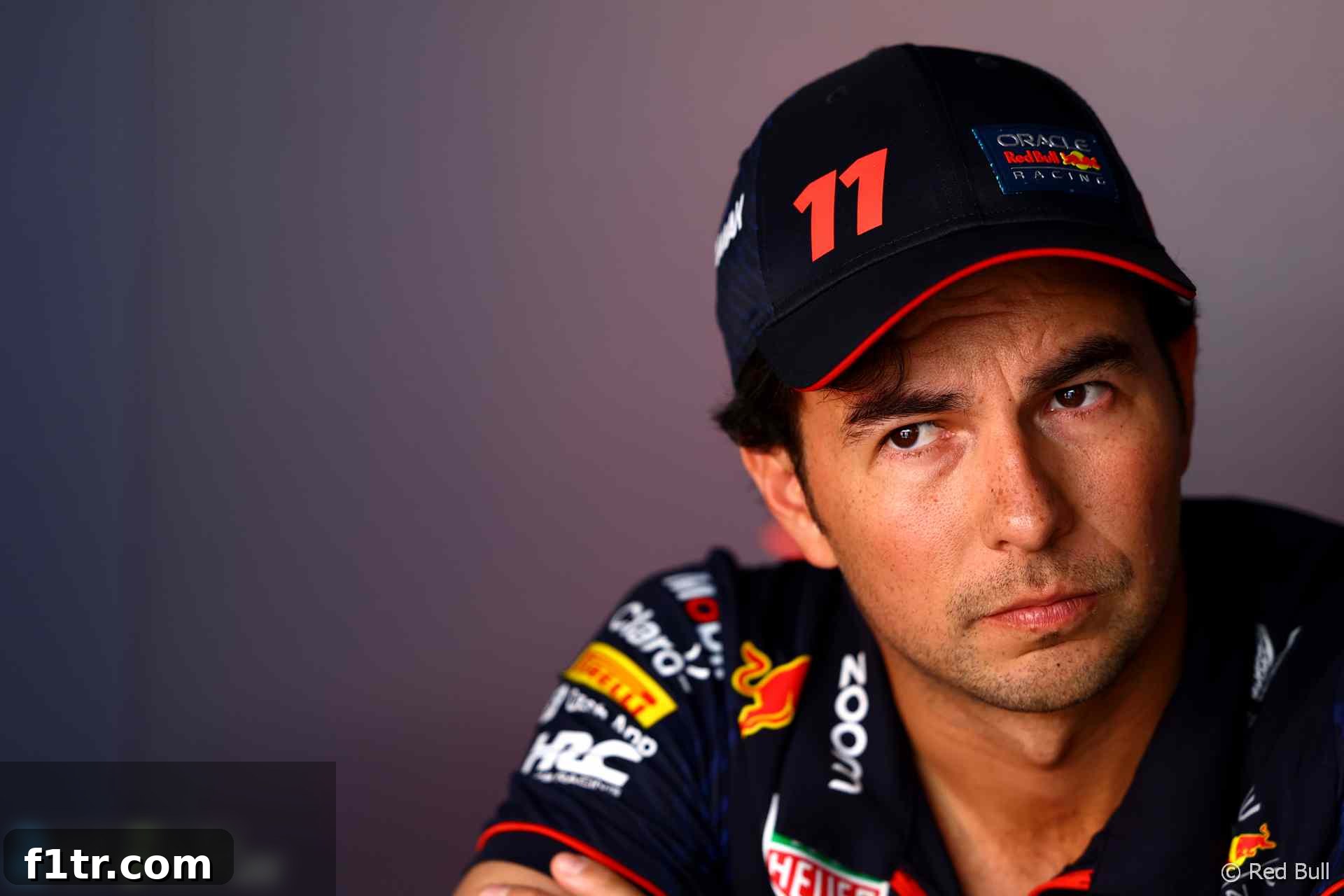
In the high-octane world of Formula 1, where speed, precision, and relentless competition define the very essence of the sport, a new challenge is emerging: the sheer physical and mental toll of an increasingly demanding calendar. Sergio Perez, the seasoned Red Bull Racing driver, has vocalized a growing concern within the paddock: Formula 1 must prioritize the quality and sustainability of its events over simply increasing the quantity of races. His message is clear: the sport should not add races merely for the sake of having them, especially when the human cost is becoming increasingly evident.
The sentiment articulated by Perez resonates deeply within the Formula 1 community, particularly after the grueling conclusion of the most recent season. The final stretch of the 2023 calendar subjected drivers, team personnel, and the entire traveling circus to an unprecedented level of strain. This intense period featured an astonishing five races within a six-week span, spanning three different continents. The logistical nightmare and physiological burden culminated in back-to-back events in Las Vegas and Abu Dhabi, presenting a severe test of endurance.
The Las Vegas Grand Prix, a highly anticipated spectacle, was scheduled with unconventional timings, with practice sessions extending into the early hours of the morning, sometimes not concluding until 4 AM. This was followed by a monumental 12-hour time zone shift to Abu Dhabi for the season finale. Such a dramatic and rapid transition left many battling severe jet lag, sleep deprivation, and overall exhaustion. The immediate consequences were alarming: several drivers reported falling ill during these final rounds, and a significant number of team staff members suffered from various ailments or debilitating fatigue. These incidents served as a stark reminder of the physical and mental resilience required to operate at the pinnacle of motorsport, and the potential breaking point when that resilience is pushed too far.
The expansion of the Formula 1 calendar has been a consistent trend over recent years, driven by the sport’s global appeal and commercial aspirations. The 2023 schedule, featuring 22 races, was tied for the longest in F1 history, only to be eclipsed by the ambitious plans for 2024. Perez, a veteran who has competed in every F1 season since 2011, has firsthand experience of this escalation. He remarked, “The travel demands have definitely been more than other years.” He underscored the severity of the situation, adding, “This last part of the season has been super-intense with the traveling backwards and forwards. The amount of races is definitely at the limit, not just for the drivers but also for all the mechanics out there.”
While Formula 1 has made efforts to optimize logistics by grouping events regionally to reduce travel distances and time, Perez believes these measures do not go far enough. He advocates for a more radical overhaul of the scheduling philosophy. “The schedule really has to be more efficient and try to look after everyone in this world a lot more,” he asserted. His primary concern, he revealed, lies with his dedicated mechanics, whose unseen efforts often go unacknowledged but are fundamental to a team’s success. The rigorous demands placed on these individuals, who are often the first to arrive and the last to leave the circuit, day in and day out, highlight the silent struggles behind the glamour of F1.
The 2024 F1 calendar is set to break new ground, featuring an unprecedented 24 events. This includes the highly anticipated return to the Shanghai International Circuit in China, a venue F1 has not visited since before the Covid-19 pandemic, and the reinstatement of the Imola Grand Prix, which was tragically canceled in 2023 due to severe flooding in the Emilia Romagna region. While the return to these historic tracks is met with enthusiasm, it simultaneously intensifies the pressure on the sport’s personnel.
Perez stressed that with an expanding calendar, the onus is on Formula 1 to ensure that every single event earns its place on the schedule. “We just have to make sure that we keep delivering and we just don’t make a lot of races for the sake of doing them,” he urged. “I think the quality level is still very important to have in the sport to make sure we keep this upward route.” This emphasis on quality over sheer volume is critical not only for the health of the participants but also for maintaining the spectacle and competitive integrity that draws millions of fans worldwide. A diluted calendar, where certain races might lack the necessary engagement or infrastructure, could inadvertently diminish the sport’s overall appeal.
While drivers have collectively voiced their apprehension regarding the relentless schedule, Perez acknowledged that significant adjustments to the 2024 calendar, which was announced in July, may now be impractical. However, this does not diminish the urgency of the matter for future seasons. “Obviously, it’s something that we’re going to raise up to try and see what can be done,” he stated. “Probably now is late for next year, but for the year after to really try to maximise it.” He painted a vivid picture of the toll, recalling, “I remember seeing people so exhausted in the last race, so I think it’s something that we’ve got to be taking very seriously because it’s important for the sport, for the drivers to obviously keep having this long careers that we’ve seen from the staff, from the mechanics, we want them to have very long careers as well. So I think it’s something we’ve got to consider.” The sentiment underscores a fundamental truth: the longevity and well-being of all individuals involved are paramount to the sustainable growth and success of Formula 1.
Perez’s concerns are echoed by his team principal, Christian Horner, who readily agreed that the end of the 2023 season presented a “pretty brutal regime” for everyone involved. Horner emphasized the need for substantial improvements in future seasons, stating, “This is five races in six weeks. So for the mechanics in the garage, for the traveling staff, it is a brutal end to the season.” He elaborated on the specific hardships, explaining, “Of course, that’s a little accentuated by the time difference. We were effectively working in the Japanese time zone in Vegas, and then a 12-hour swing to come here.” Such extreme shifts disrupt circadian rhythms, impacting sleep quality, cognitive function, and overall health, making peak performance incredibly challenging.
Horner confirmed that these pressing concerns have been formally raised with Formula 1 management and the FIA (Fédération Internationale de l’Automobile). He noted that personnel within these governing bodies also experience the strain, acknowledging the collective nature of the challenge. “Their personnel, they feel it as well, and I think solutions are being put in place to the future to take into account the toll that it does take on not just the staff, but all the traveling circus that is associated with Formula 1,” Horner affirmed. This collaborative approach from all stakeholders is essential to finding viable solutions that balance the commercial imperatives of a global sport with the fundamental human needs for rest, recovery, and well-being.
The discussion around calendar density highlights a crucial juncture for Formula 1. As the sport continues to expand its global footprint, it must thoughtfully address the logistical and human challenges that accompany such growth. Striking the right balance between showcasing the sport to new audiences and ensuring the health and sustainability of its core participants will define F1’s trajectory in the coming years. The calls from figures like Sergio Perez and Christian Horner serve as a timely reminder that while the pursuit of speed and spectacle is paramount, the well-being of the people who make it all possible must never be overlooked.
Join our community of passionate F1 fans and get an ad-free experience! Become a RaceFans supporter today.
Championing Independent F1 Journalism
RaceFans is committed to delivering insightful, original news directly from the heart of Formula 1. Our ability to provide this unique perspective is made possible, in part, by the invaluable support of our dedicated RaceFans Supporters.
By contributing just £1 per month or £12 annually (or the equivalent in your local currency), you directly help us cover the essential costs of producing high-quality, independent journalism. Your contribution fuels our efforts in travelling to races, conducting interviews, writing compelling stories, creating engaging content, hosting our platform, and continuously developing our coverage.
For over a decade, our readers have been our proudest supporters. If you value our independent reporting and in-depth analysis of Formula 1, we warmly invite you to consider becoming a RaceFans Supporter today. As an added benefit, all our Supporters enjoy an uninterrupted, ad-free browsing experience across the site. Learn more or sign up via the links below:
- Become a RaceFans Supporter
- RaceFans Supporter FAQ
Explore More Formula 1 Insights
- GT driver killed in multi-car crash at Nurburgring Qualifiers
- Should F1 change tracks or racing guidelines to tackle dangers in 2026 rules?
- Controversies, Norris, Newey and more: Five new motorsport books reviewed
- One of F1’s greatest races happened 15 years ago today. Or did it?
- “Overtaking is overtaking”: Domenicali denies F1’s yo-yo racing is “artificial”
Browse all Formula 1 articles