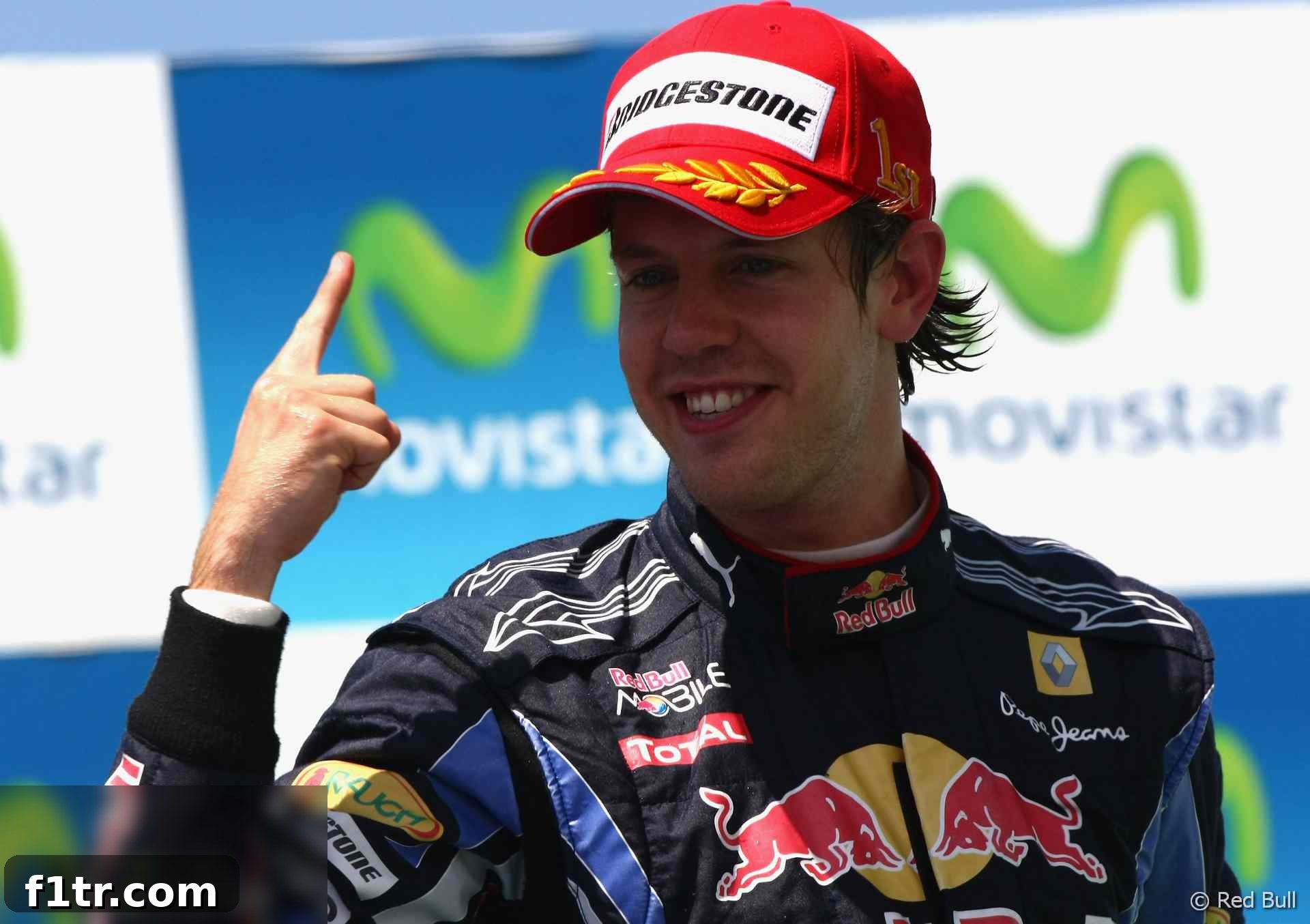
Sebastian Vettel Masterclass: Unpacking the Drama of the 2010 European Grand Prix in Valencia
The 2010 Formula 1 season was a thrilling spectacle of fierce competition, strategic gambles, and high-stakes drama. Among its most memorable races was the European Grand Prix held on the challenging Valencia Street Circuit, a race that saw Red Bull’s Sebastian Vettel clinch his second victory of the season. Far from a straightforward lights-to-flag win, this race was an unforgettable blend of spectacular accidents, controversial penalties, and strategic masterstrokes that profoundly impacted the championship narrative. Vettel’s commanding performance, however, was just one layer of a chaotic event defined by a dramatic safety car period and remarkable individual efforts, particularly from the likes of Lewis Hamilton and Kamui Kobayashi.
Pre-Race Buzz and Championship Stakes
Heading into the ninth round of the 2010 season, the championship battle was incredibly tight, featuring a multi-team fight that epitomized the era. McLaren’s Lewis Hamilton led the drivers’ standings, closely followed by his teammate Jenson Button. Red Bull Racing, with their formidable RB6, were strong contenders, but mechanical reliability and occasional errors had prevented Sebastian Vettel and Mark Webber from truly dominating. Valencia, a unique street circuit known for its close walls and limited overtaking opportunities, was expected to favor strong qualifying performances, and indeed, Vettel had secured pole position, with Webber alongside him on the front row. The stage was set for a critical race that could significantly swing the momentum in the title fight, especially with the high probability of incidents on such a unforgiving track.
The Race Begins: Early Drama and Webber’s Horrific Crash
From the moment the lights went out, the 2010 European Grand Prix immediately delivered action. While Sebastian Vettel made a clean getaway to maintain his lead, his teammate Mark Webber endured a nightmare start. Dropping rapidly from second position, he found himself swallowed by the pack, losing seven places on the opening lap alone as drivers like Lewis Hamilton and Fernando Alonso surged past. Frustrated and eager to make up lost ground, Webber pitted early, attempting an undercut strategy. However, a slow front-left wheel change during his pit stop further compounded his woes, costing him crucial seconds and dropping him behind the backmarkers, including Heikki Kovalainen’s Lotus. What followed was one of the most terrifying crashes of the season. On lap 14, while attempting to overtake Kovalainen, Webber’s Red Bull made contact with the Lotus. The Australian’s car launched spectacularly into the air, flipping over before crashing into a tire barrier. Miraculously, Webber emerged unharmed, but the incident necessitated the immediate deployment of the safety car, completely altering the complexion of the race and setting the stage for major strategic shifts and controversies.
Safety Car Chaos and Hamilton’s Controversial Penalty
The deployment of the safety car following Mark Webber’s dramatic airborne collision was the turning point of the race, but it also plunged the event into immediate controversy. As the field bunched up behind the safety car, a moment of confusion led to a crucial error by Lewis Hamilton. The McLaren driver, caught between the safety car and his pit wall’s instructions, appeared to hesitate before passing the safety car just before the first corner, a clear breach of Formula 1 regulations. While replays later showed he was behind the safety car at the control line, the initial infraction led to a drive-through penalty, casting a shadow over his otherwise strong performance. This safety car period proved particularly disruptive for many, as cars streamed into the pits for their mandatory tire changes. Ferrari, in particular, suffered a strategic blunder, as Felipe Massa was forced to queue behind his teammate Fernando Alonso for his pit stop, costing him valuable track position and ultimately ruining his race. The strict rules governing safety car procedures, designed for driver safety and fair competition, often lead to intense strategic dilemmas, and Valencia 2010 was a prime example of their dramatic impact.
Strategic Brilliance: Kamui Kobayashi’s Unforgettable Drive
Amidst the safety car chaos and penalty drama, one driver’s unorthodox strategy and exceptional race craft truly stood out: Kamui Kobayashi. The Sauber driver started the race on medium compound tires, a less conventional choice, and crucially, did not pit under the safety car. This bold gamble propelled him into an astonishing third place, a position he defended valiantly for a significant portion of the race. His prolonged stint on the medium tires became a thorn in the side of Jenson Button and, inadvertently, a savior for Lewis Hamilton. By the time Hamilton received and served his drive-through penalty, Kobayashi and Button had dropped sufficiently far back that McLaren could bring Hamilton in without him losing track position to the tenacious Sauber. Kobayashi meticulously managed his tires, delaying his mandatory switch to super-soft tires until just three laps remained. Returning to the track, he found himself battling for seventh place with Fernando Alonso and Sebastien Buemi. With the advantage of fresh, grippy super-softs, Kobayashi unleashed a stunning display of aggressive overtaking. He dramatically dived down the inside of Alonso at Turn 17 on the penultimate lap, then executed another daring pass on Buemi at the very last corner of the final lap, securing a sensational seventh place finish – a performance that earned him widespread acclaim and solidified his reputation as a fearless racer.
Vettel’s Command and the Podium Finishers
While much of the drama unfolded behind him, Sebastian Vettel executed a near-perfect race from pole position. Despite the safety car period and the subsequent chaos, he maintained his composure and control at the front, demonstrating the formidable pace of the Red Bull RB6. His performance was a masterclass in managing the race from the lead, fending off any potential challenges and capitalizing on the opportunities presented by others’ misfortunes. Taking the checkered flag, Vettel secured a crucial victory, his second of the 2010 season, which propelled him significantly up to third in the drivers’ championship standings. This win was a vital boost for his title aspirations, proving his capability to win even under pressure. Finishing second was Lewis Hamilton, marking his third consecutive second-place finish at Valencia. Despite the drive-through penalty, his resilience and the car’s pace allowed him to retain his championship lead. Completing the podium was Jenson Button, who finished third, ensuring a strong points haul for McLaren and maintaining his second position in the championship, just behind his teammate. The podium ceremony reflected a tight championship battle, with three of the main protagonists staking their claim for the ultimate prize.
Midfield Battles and Unsung Heroes
Beyond the podium, the 2010 European Grand Prix saw intense battles throughout the midfield, with several drivers delivering standout performances. Rubens Barrichello had an outstanding race for Williams, bringing his car home in an excellent fourth place. This result underscored the improving form of the historic British team, though a potential double points finish was unfortunately lost when his teammate Nico Hulkenberg retired with eight laps to go. Robert Kubica continued to impress for Renault, securing a solid fifth position, showcasing his consistent performance and the competitiveness of his package. Adrian Sutil drove a strong race for Force India, finishing sixth, a result he cemented with an earlier overtake on Sebastien Buemi. Following Kamui Kobayashi’s heroics in seventh, Fernando Alonso salvaged eighth place for Ferrari after their pit stop drama, while Sebastien Buemi claimed ninth. The final point scorer was Pedro de la Rosa, securing a valuable tenth place for Sauber, ahead of Vitaly Petrov and Nico Rosberg. Meanwhile, Felipe Massa finished a disappointing 14th, ahead of Jaime Alguersuari and the returning legend Michael Schumacher, who endured a challenging race with three pit stops.
The New Teams and Further Incidents
The 2010 season marked the introduction of several new teams, and their journey was often one of significant challenge and learning. In Valencia, Lucas di Grassi emerged as the best of the new entries, showcasing the progress of his Virgin Racing team. He engaged in an early battle with his teammate Timo Glock, swapping positions before solidifying his lead among the new contenders. Later in the race, Glock was involved in a collision with Bruno Senna, an incident that occurred as the leaders, Kamui Kobayashi and Jenson Button, came up to lap them. Despite the setback, Glock managed to recover and finish just behind his teammate. The last of the finishers were Karun Chandhok, Bruno Senna, and Jarno Trulli, highlighting the persistent difficulties faced by the fledgling teams in a highly competitive Formula 1 environment. Their efforts, however, were crucial for gaining experience and developing their machinery throughout the season.
Post-Race Scrutiny: The Safety Car Investigation
The drama of the 2010 European Grand Prix didn’t conclude with the waving of the checkered flag. The controversial safety car period sparked a significant post-race investigation by the stewards. An astonishing nine drivers were placed under investigation for allegedly speeding behind the safety car, a serious infringement designed to maintain order and safety during caution periods. This level of scrutiny underscored the confusion and varying interpretations of the rules that many drivers faced during the critical phase of the race. Such investigations often lead to time penalties, which could drastically alter the final standings and points distribution. The potential for such widespread penalties added another layer of uncertainty to an already turbulent Grand Prix, leaving fans and teams anxiously awaiting the stewards’ decisions. Ultimately, this incident highlighted the complexities of modern F1 regulations and the immense pressure on drivers and teams to adhere to them flawlessly in high-speed, high-stress situations.
Championship Implications and Looking Ahead
The 2010 European Grand Prix proved to be a pivotal race in a fiercely contested Formula 1 season. Sebastian Vettel’s victory was crucial, boosting his championship campaign and signaling Red Bull’s serious intent. Lewis Hamilton, despite his penalty, held onto his championship lead with his second-place finish, demonstrating McLaren’s strong form and resilience. Jenson Button’s third place kept him firmly in the hunt, ensuring the McLaren duo remained at the forefront of the title battle. With multiple teams and drivers vying for the championship, every point, every strategic decision, and every on-track incident carried immense weight. Valencia, with its blend of triumph and controversy, only served to tighten the championship standings and set the stage for an even more thrilling second half of the season. The race will forever be remembered not just for Vettel’s win, but for the dramatic twists and turns that kept fans on the edge of their seats until the very end, encapsulating the unpredictable nature of Formula 1 racing.
More from the 2010 European Grand Prix
- The physics of Webber’s Valencia crash
- Technical review: European Grand Prix
- Sauber “thrilled” by Kobayashi’s passes
- 2010 European Grand Prix – the complete F1 Fanatic race weekend review
- Alonso retracts Valencia criticism
- FIA must learn from Valencia shambles
- Best finish of 2010 (Williams race review)
- Di Grassi shines (Virgin race review)
- Double finish at home (HRT race review)
- Buemi slips to ninth (STR race review)
Browse all 2010 European Grand Prix articles