Advert | Become a Supporter & go ad-free
Toto Wolff Unleashes Fury: Masi “Robbed” Hamilton of World Championship in Abu Dhabi
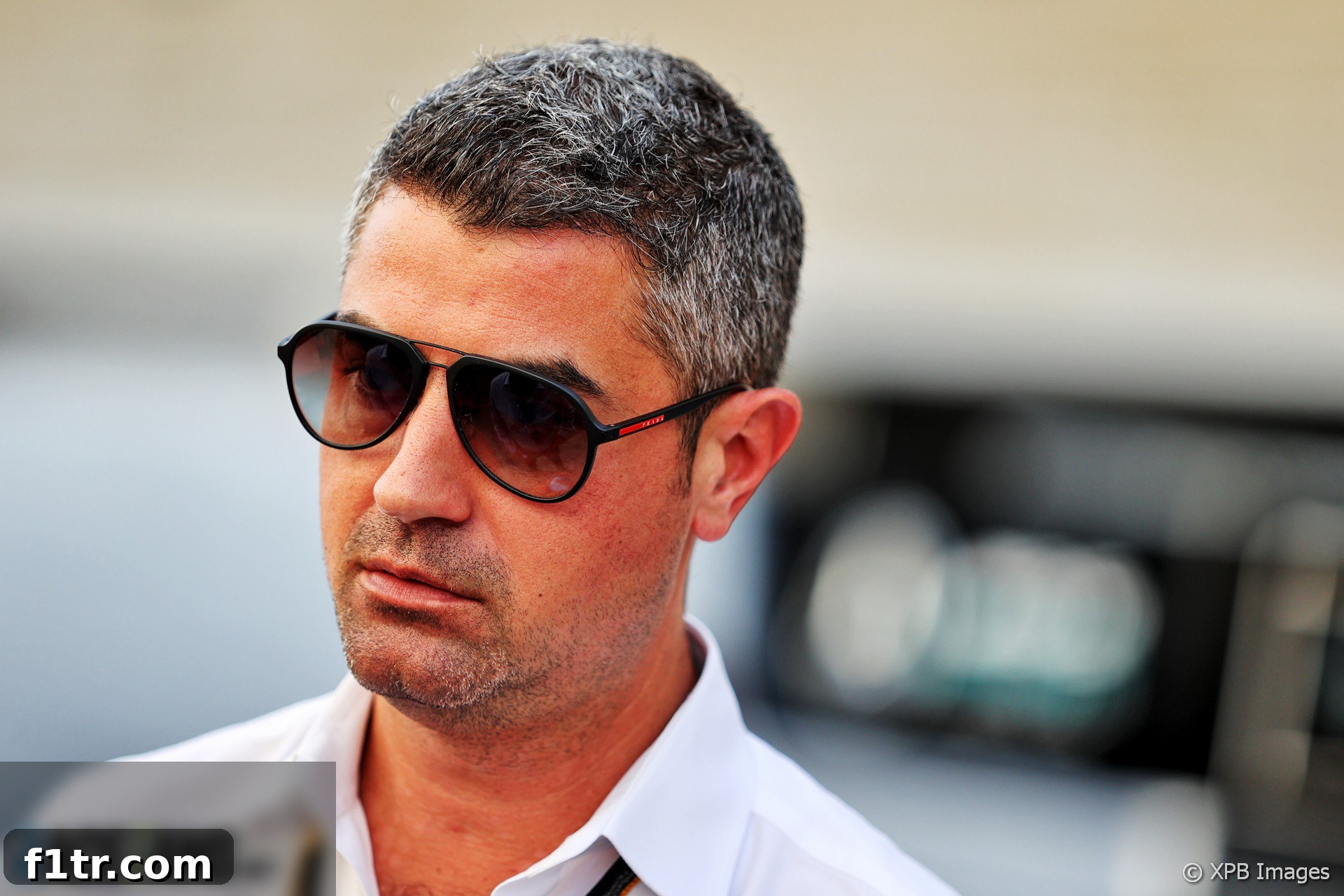
Mercedes-AMG Petronas Formula 1 Team Principal, Toto Wolff, has unequivocally declared that FIA Formula 1 Race Director Michael Masi directly cost Lewis Hamilton the 2021 World Championship. Wolff’s scathing accusation stems from Masi’s controversial handling of the decisive Abu Dhabi Grand Prix, a race that concluded in a blaze of contention and left an indelible mark on the sport’s history.
The Dramatic Climax: A Championship Decided in Controversy
The 2021 Formula 1 season finale at Yas Marina Circuit was poised to be a thrilling showdown between two titans: seven-time world champion Lewis Hamilton and the formidable challenger Max Verstappen. Hamilton had dominated much of the Abu Dhabi race, establishing a commanding lead that seemed destined to secure him a record-breaking eighth title. However, a late-race safety car period, triggered by a crash involving Nicholas Latifi, set the stage for one of the most contentious conclusions in F1 history.
During this safety car period, Masi issued a series of directives regarding lapped cars that ultimately had a profound impact on the race’s outcome. Initially, it appeared that no lapped cars would be allowed to un-lap themselves, a standard procedure under safety car conditions designed to prevent drivers from gaining an unfair advantage. This would have left several backmarkers between Hamilton, who was leading on older hard tires, and Verstappen, who had strategically pitted for fresh soft tires, effectively shielding Hamilton and making an overtake extremely difficult on a single remaining lap. However, in a sudden and unprecedented change of decision, Masi instructed *only* the five cars positioned directly between Hamilton and Verstappen to un-lap themselves, while those behind Verstappen remained in position.
This selective un-lapping, combined with the safety car being brought in a lap earlier than stipulated by the regulations, created a direct head-to-head battle on the final lap. With Hamilton’s aged tires no match for Verstappen’s fresh rubber, the Red Bull driver swiftly overtook the Mercedes to claim victory in the race and, crucially, the 2021 Drivers’ World Championship. The immediate aftermath saw widespread outrage from the Mercedes garage and a deluge of criticism from fans and pundits alike, all questioning the fairness and legality of the race director’s decisions.
Wolff’s Uncompromising Verdict: “Robbed of a Deserved Championship”
Despite confirming on Thursday that Mercedes would not proceed with an appeal over the outcome of Sunday’s championship-deciding round, Toto Wolff’s fury remains palpable. In a candid interview, Wolff made it unequivocally clear that he holds Michael Masi directly responsible for Hamilton’s loss of the title to Max Verstappen. His frustration was so profound that he stated he was “not interested in having a conversation with Michael Masi,” highlighting the deep rift created by the incident and the perceived lack of accountability.
Wolff passionately articulated his belief that Hamilton was unjustly deprived of the championship. “The decisions that have been taken in the last four minutes of this race have robbed Lewis Hamilton of a deserved world championship,” Wolff stated, his words carrying the weight of a season’s effort and a career’s legacy. He praised Hamilton’s performance throughout the latter part of the season, emphasizing that his driving, “particularly in the last four races, was faultless.”
The Mercedes boss underscored Hamilton’s dominant run in Abu Dhabi, noting, “He had a commanding lead on Sunday in Abu Dhabi from the get-go. He won the start and he never gave the lead away again.” To have this victory, and with it the championship, snatched away in the final moments was deemed “unacceptable” by Wolff. He stressed that these contentious decisions stood in stark opposition to his personal and professional values, as well as his fundamental sense of integrity. For Wolff, the responsibility now squarely rests with the FIA to implement measures that will prevent such situations from ever reoccurring, ensuring the sport’s credibility remains intact.
Breach of Regulations: Inconsistency and Lack of Sporting Integrity
Central to Wolff’s criticism is the glaring inconsistency in the application of Formula 1’s own sporting regulations. The FIA had previously announced a “detailed analysis and clarification exercise” in response to the controversy, but for Wolff, the issue was clear: Masi’s handling of the restart directly contradicted established precedents and written rules. He highlighted how this incident was merely the latest in a series of “unnecessary rows” that plagued the 2021 season, all stemming from what he perceived as inconsistent enforcement of regulations on track.
Wolff drew a direct comparison to the 2020 Eifel Grand Prix, where Masi’s explanation for a prolonged safety car period was precisely the opposite of his actions in Abu Dhabi. “How can it be that 14 months ago at the Eifel Grand Prix the explanation that was given was exactly the contrary to what has happened on Sunday?” Wolff questioned. In the Eifel GP, the explanation provided for keeping the safety car out for an extended duration was that *all* cars needed to un-lap themselves, in strict adherence to the sporting regulations. Yet, in Abu Dhabi, only a select few were permitted to do so, and the safety car was recalled prematurely, creating an unprecedented and highly criticized scenario.
The F1 Sporting Regulations, specifically Article 48.12, state that “any cars that have been lapped by the leader will be required to pass the cars on the lead lap and the safety car.” Article 48.13 then specifies that “once the last lapped car has passed the leader the safety car will return to the pits at the end of the following lap.” Wolff unequivocally stated, “None of that happened. None of that happened. Randomly, cars were allowed to overtake and to un-lap themselves.” He queried why drivers like Carlos Sainz, who was positioned behind Verstappen, were not afforded the same opportunity to potentially influence the race outcome, and why the safety car was recalled against regulatory guidelines. “So the ad-hoc decision-making just caused this mayhem,” Wolff concluded, pointing to a severe breakdown in procedural integrity.
Advert | Become a RaceFans supporter andgo ad-free
Broader Implications for Formula 1’s Sporting Integrity
The ramifications of the Abu Dhabi Grand Prix extend far beyond a single race result; they touch upon the very core of Formula 1’s sporting integrity and credibility. Wolff’s frustration mirrors a wider concern within the sport about the consistency and transparency of officiating. When rules are perceived to be applied subjectively or changed on the fly, it undermines the trust that teams, drivers, and fans place in the governing body. This creates an environment ripe for “controversies” and “polarisation,” as Wolff articulated, detracting from the purity of competition and raising uncomfortable questions about fairness.
The principle of fair play dictates that all competitors should operate under the same, consistently enforced rules. The selective application of un-lapping procedures not only created an artificial scenario for the final lap but also raised questions about whether the outcome was unduly influenced. For a sport that prides itself on being the pinnacle of motorsport, such accusations of inconsistent decision-making can deeply tarnish its image and erode its fan base’s confidence in the fairness of its championship battles. The passionate loyalty of fans hinges on the belief that championships are won on merit and adherence to established rules.
Wolff’s stern critique serves as a poignant call to action for the FIA to reassess its governance structures, particularly concerning race management. The objective should be to establish clear, unambiguous protocols that leave no room for arbitrary interpretation, thereby safeguarding the sport against future controversies of this magnitude. Restoring faith in the integrity of the rules and their consistent application is paramount for Formula 1’s long-term health and reputation, ensuring that the spectacle on track is always backed by transparent and equitable governance.
Respect for the Champion, Demand for Future Change
Crucially, despite his deep frustration with the race management, Toto Wolff was quick to clarify that his objections took nothing away from Max Verstappen or Red Bull Racing’s triumph. “I would have been totally okay with Max and Red Bull winning the championship on Sunday,” he affirmed, demonstrating a clear distinction between his respect for the competitors and his disdain for the officiating decisions. He lauded Verstappen as a “worthy champion,” acknowledging his “exceptional” driving throughout the season, and praised Red Bull as a “fierce competitor” for whom he holds “the greatest respect.”
Wolff’s desire was simply to have seen a fair and sporting conclusion to an epic season. He lamented the “damage that has been done to the sport by just unsporting and unfair decision-making on Sunday.” This perspective reinforces that the core issue was not *who* won, but *how* the victory was facilitated in the final moments, and the ripple effect this has on the perception of the sport. His primary concern is for the future of Formula 1 and ensuring that such a scenario, which undermines the very essence of competitive integrity, is prevented from ever happening again.
The Mercedes Team Principal expressed cautious optimism about the FIA’s commitment to address these issues. “The FIA needs to decide how they are going forward. We had a good dialogue with the FIA over the last days,” he noted, indicating ongoing discussions behind the scenes. Wolff placed his “trust and faith” in the commission established by the FIA to undertake a thorough review. His hope is that, in collaboration with all competitors, drivers, and other teams, “the right decisions and actions” will be formulated to avoid a recurrence of such a controversial and damaging scenario in the future. The ultimate goal is to restore clarity, consistency, and unquestionable fairness to Formula 1’s race management, ensuring that the sport continues to captivate its audience for all the right reasons.
Advert | Become a RaceFans supporter andgo ad-free
2021 Abu Dhabi Grand Prix: Further Insights and Discussions
Dive deeper into the controversy and its lingering effects with these related articles:
- Masi ‘basically gifted the championship’ to Verstappen says 2021 FIA steward Sullivan
- Norris called out F1 over its farcical 2021 finale. Will it get it right this time?
- Why Mercedes put ‘a reminder of joy and pain’ on display in their factory lobby
- Hamilton would be an eight-time champion if Whiting was still alive – Steiner
- Verdict on error in GT race suggests Mercedes would have lost 2021 Abu Dhabi GP appeal
Browse all 2021 Abu Dhabi Grand Prix articles