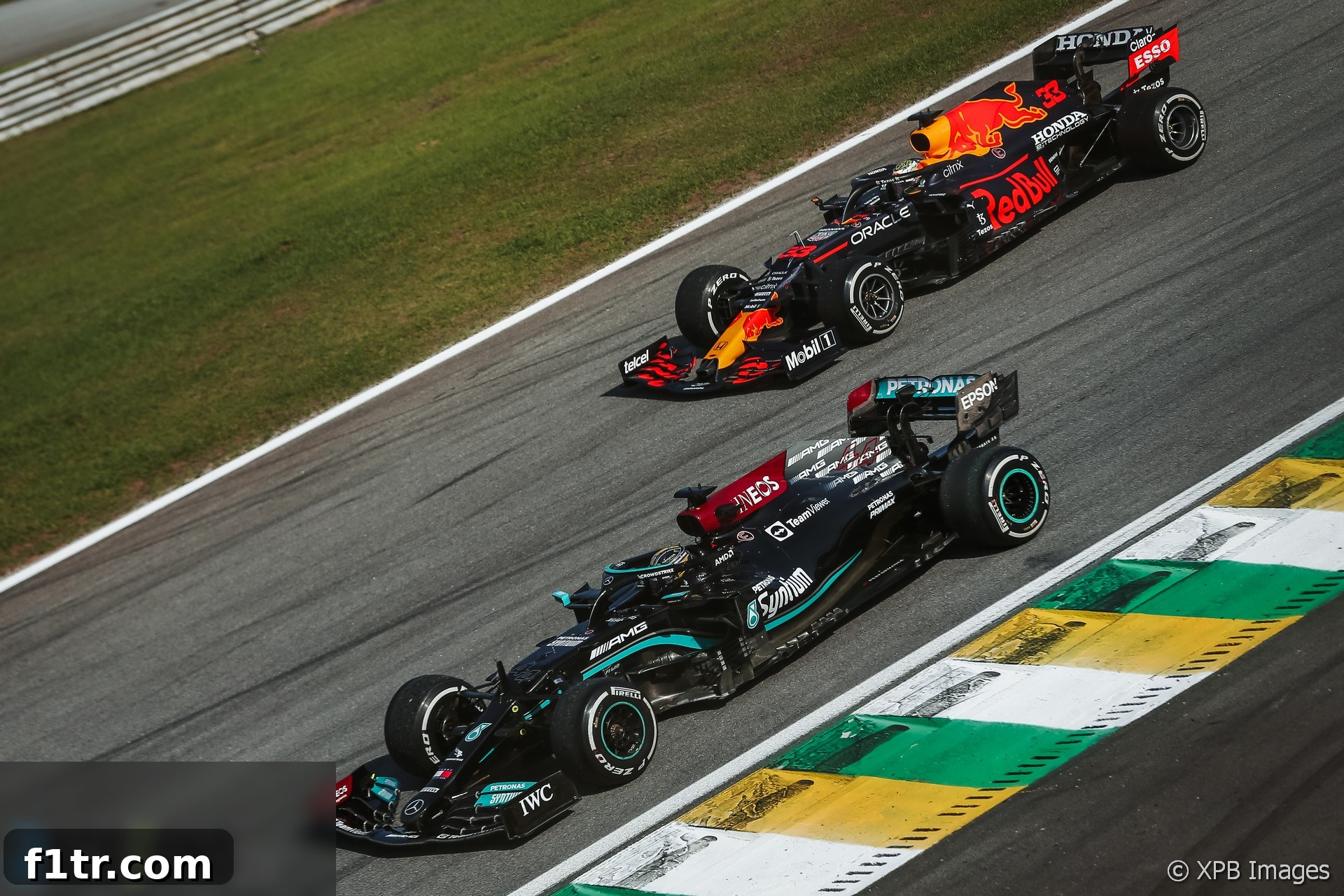
The 2021 Formula 1 season will forever be etched in the annals of motorsport history as one of the most enthralling and fiercely contested championships in decades. After years of unrivaled supremacy, Mercedes-AMG Petronas Formula One Team, architects of the V6 hybrid turbo era’s most dominant period, found their reign subjected to an unprecedented assault from a revitalized Red Bull Racing. What unfolded was a year-long saga of engineering prowess, strategic masterstrokes, and breathtaking on-track battles, ultimately culminating in a dramatic finale that captivated a global audience.
Mercedes entered 2021 fresh off their most dominant season to date, securing both the Constructors’ and Drivers’ Championships with remarkable ease in 2020. Their consistent performance and innovation had set an incredibly high bar for the rest of the grid. However, the 2021 season proved to be a stark departure from the familiar script. Red Bull, armed with a potent Honda power unit and the formidable talent of Max Verstappen, mounted a challenge that was not only robust but, at times, overwhelming. Beyond the immediate threat from Milton Keynes, glimpses of competitive pace from teams like Ferrari and McLaren hinted at a broader convergence within the field, signaling a shift in the established order.
A significant factor contributing to this seismic shift was a subtle yet impactful change in the technical regulations for 2021. While the cars largely carried over from their predecessors, anticipating a radical overhaul for 2022, specific modifications to the floor and rear diffuser area of the cars had a disproportionate effect. These rule changes, aimed at reducing downforce to manage tire wear, particularly penalised teams operating with a ‘low-rake’ aerodynamic philosophy – a design concept where the rear of the car runs closer to the ground. Mercedes and their engine customer, Aston Martin, were prominent proponents of this design, and the revised regulations demonstrably hindered their performance from the outset.
The immediate consequences of these technical adjustments were evident from the very first race. Red Bull snatched pole position at the season opener, a clear indication of their newfound potency. Yet, Lewis Hamilton, demonstrating the strategic acumen and racecraft that defines his career, clinched victory for Mercedes in Bahrain, largely thanks to a shrewd team strategy and a late-race error by Max Verstappen. This initial skirmish foreshadowed the epic duel that would define the entire season, a testament to the fine margins at play.
However, by the fifth round in Monaco, the balance of power had undeniably tipped. Red Bull, with Max Verstappen at the wheel, unveiled a car that was unequivocally the fastest on the grid, a position they hadn’t held consistently since the advent of the V6 turbo-hybrid era in 2014. From the principality through to the Austrian Grand Prix, Red Bull embarked on a remarkable run, securing five consecutive victories. This devastating streak inflicted Mercedes’ longest winless period since 2013, a testament to the combined strength of the Verstappen, Red Bull, and Honda package. Ferrari’s Charles Leclerc managed to secure two surprise pole positions during this period, benefiting from red flag interventions in qualifying, which perhaps were the only instances preventing Verstappen from an even longer pole streak. These moments vividly demonstrated the sheer single-lap pace and raw power Red Bull commanded during the mid-season.
While Mercedes had faced stiff competition in previous hybrid seasons, most notably from Ferrari in 2017 and 2018, the threat posed by Red Bull and Honda in 2021 felt different. It was a challenge of unparalleled intensity, demanding a swift and decisive response from the reigning champions. True to their nature, Mercedes reacted, bringing their final major upgrade package of the season to the British Grand Prix, just before the summer break. The impact was tangible, with Lewis Hamilton securing a pivotal victory at Silverstone, albeit after a controversial clash with Max Verstappen. Yet, a series of highly eventful races that followed – characterised by unpredictable weather conditions and unconventional outcomes – somewhat obscured the true potential of both championship contenders at the front of the field.
The latter half of the season witnessed several races significantly impacted by adverse weather. Downpours in Hungary, Russia, and Turkey, coupled with a complete wash-out at the Belgian Grand Prix, shifted the focus away from the leading battle and towards the tumultuous midfield. Indeed, 2021 proved to be a year of dramatic performance fluctuations among the chasing pack.
Ferrari, having endured a truly woeful 2020 season, appeared to have staged a significant comeback in the early stages of 2021, consistently scoring solid points. However, their struggles with tyre management at the French Grand Prix saw them dramatically fall down the order, swallowed by the field and dropping out of the points. This single poor outing allowed McLaren to capitalise, gaining crucial ground in the Constructors’ Championship and momentarily seizing third place. But McLaren was not the only midfield team to experience a surge in form around the summer break.
The middle phase of the season saw a fascinating convergence of several teams. McLaren, Ferrari, AlphaTauri – largely propelled by the exceptional performances of Pierre Gasly – and even Alpine and Aston Martin frequently saw their relative pace fluctuate on a race-to-race basis. While McLaren’s triumph at Monza was undoubtedly aided by Max Verstappen’s slow pit stop and the eventual collision that eliminated both title rivals, Daniel Ricciardo’s race pace in Italy was genuinely strong enough to give him a realistic shot at victory regardless of the dramatic events involving Hamilton and Verstappen. This period underlined the intense competition and strategic depth pervading the midfield, where every point was fiercely contested.
By the conclusion of the season, a distinct ‘B-tier’ had solidified, comprising Ferrari, McLaren, and AlphaTauri, with improved results from Yuki Tsunoda also bolstering the latter. Ferrari, having overcome their mid-season dip, steadily regained their consistently quicker pace relative to McLaren. They gradually overtook their long-time rivals in the standings, pulling away to secure a comfortable third place in the Constructors’ Championship by season’s end, a significant achievement following their struggles just a year prior.
Amidst all the fluctuating fortunes, one team remained consistently at the opposite end of the spectrum: Haas. Their performance throughout the season was remarkably consistent, primarily because they were considerably slower than every other rival on the grid, often by a significant margin. This stark reality highlighted the immense gap between the front-runners and the backmarkers, even in a year of such intense competition.
As the season drew to a close, Mercedes appeared to have largely overcome their mid-season deficit, transforming it into a definitive advantage at most venues, albeit with some notable exceptions. The introduction of a fresh power unit provided an extra boost, vividly demonstrated by Lewis Hamilton’s spectacular charge through the field in Brazil, both in the Sprint race and the Grand Prix. This was a visceral display of Mercedes’ raw strength and Hamilton’s unparalleled driving ability. Despite this resurgence, Max Verstappen still managed to secure victories for Red Bull in the United States and Mexico, which proved to be the final occasions where Red Bull held a clear upper hand in terms of sheer race pace over Mercedes in the concluding stages of the championship.
Hamilton followed his heroic performance in Brazil with a commanding victory in Qatar and a hard-fought win in Saudi Arabia, completing a hat-trick after a messy, race-long battle with Verstappen. Heading into the highly anticipated season finale and championship decider in Abu Dhabi, Max Verstappen’s pole position offered a fleeting lead, allowing him to stay ahead of Hamilton for only the first hundred meters or so of the race. Despite an aggressive lunge on the opening lap, he couldn’t reclaim the championship-clinching position from his rival. That is, until the dramatic and contentious final lap, the moment which ultimately decided the destiny of the 2021 world championship in a truly unforgettable manner.
When analysing the raw performance data from the 2021 season, the figures reveal an astonishingly close championship fight. Mercedes, on average, was a minuscule 0.058% quicker than Red Bull over the course of the season. To put this into perspective, over a typical 90-second lap, this translates to an advantage of just five-hundredths of a second. By the standards of past Formula 1 seasons, where dominant teams often held margins of several tenths of a second, this is an incredibly tight gap, underscoring the relentless competition at the pinnacle of motorsport.
However, even this incredibly narrow margin might not fully reflect the true competitiveness of Red Bull, particularly in qualifying. There were several instances where Max Verstappen’s potential pole positions were thwarted by external factors. In Portugal, for example, Verstappen lost his fastest Q3 lap due to exceeding track limits – a lap that would have undoubtedly put him on pole. In Monaco, he was visibly furious when Charles Leclerc’s crash prematurely ended qualifying, securing the Ferrari driver pole while Verstappen was halfway through what was shaping up to be his fastest lap of the weekend. Furthermore, in Mexico City, both Red Bull drivers were compromised in Q3 at a track where they appeared to hold a significant pace advantage over Mercedes. And perhaps most dramatically, in Saudi Arabia, what could have been Verstappen’s most impressive qualifying lap of the season ended abruptly in the wall on the 24th and final turn, denying him a certain pole.
When these mitigating factors are taken into account, by reinstating Verstappen’s lost lap in Portugal and theoretically placing Red Bull on par with Mercedes in Mexico City (given their evident pace), the adjusted performance figures paint an even more astonishing picture. Under these considerations, Mercedes’ average advantage shrinks to an almost imperceptible 0.017%, or just 0.015 seconds over a 90-second lap. It is also important to acknowledge that the analysis of performance data often excludes races significantly affected by weather conditions, such as the Belgian and Russian Grand Prix in 2021. These venues, with their specific track characteristics and often wet conditions, likely played to Mercedes’ strengths, making their overall numerical advantage potentially appear even tighter when viewed through a different lens.
Despite the incredibly slender performance advantage, Mercedes’ overall consistency and depth throughout the season enabled them to secure their record-extending eighth consecutive Constructors’ Championship. This achievement, however, came with their slimmest performance margin of any season since their dominance began in 2014. Crucially, the fine margins often brought the title contenders within the margin of error of each other, creating numerous scenarios where the team that simply executed a better job on the day ultimately won the race. This heightened the strategic tension and put immense pressure on every decision made both in the garage and on the pit wall.
The profound impact of the 2021 technical regulations, particularly on the low-rake aerodynamic concept, was further highlighted by the season’s final performance rankings. Apart from Haas, which remained consistently at the back, Mercedes and Aston Martin were the only teams to experience a relative loss of performance compared to the previous season. Both chassis were designed around the low-rake philosophy, underscoring how directly the regulatory changes affected their competitive standing.
Typically, performance data from a completed season provides valuable insights and sets expectations for the upcoming year. However, heading into 2022, this conventional wisdom was rendered largely irrelevant. The sheer magnitude of the comprehensive changes to bodywork aerodynamics, along with the increased minimum weight and scaled restrictions on aero testing based on championship position, were revolutionary in themselves. Adding to this complexity was the critical fact that many teams abandoned development on their 2021 cars far earlier than in a typical season, shifting their resources entirely towards designing for the radical new 2022 regulations. This confluence of circumstances created a truly complex cocktail, making any speculation about which team would emerge as the benchmark in Bahrain nothing more than an educated guessing game.
After years of incremental convergence in car performance across the ten teams, culminating in one of the most competitive and utterly enthralling seasons in recent memory, the question of whether 2022 could deliver a similarly close championship remained a tantalizing unknown. The 2021 season, however, firmly cemented its place as a watershed moment in Formula 1, a testament to relentless competition and the spirit of innovation.
2021 F1 Season Insights
- Masi ‘basically gifted the championship’ to Verstappen says 2021 FIA steward Sullivan
- Las Vegas race backers looking to extend F1 deal beyond 2025
- Why Mercedes put ‘a reminder of joy and pain’ on display in their factory lobby
- Verdict on error in GT race suggests Mercedes would have lost 2021 Abu Dhabi GP appeal
- Title ‘stolen’ from Mercedes made us ‘underdogs people cheer for’ – Wolff
Browse all 2021 F1 season articles