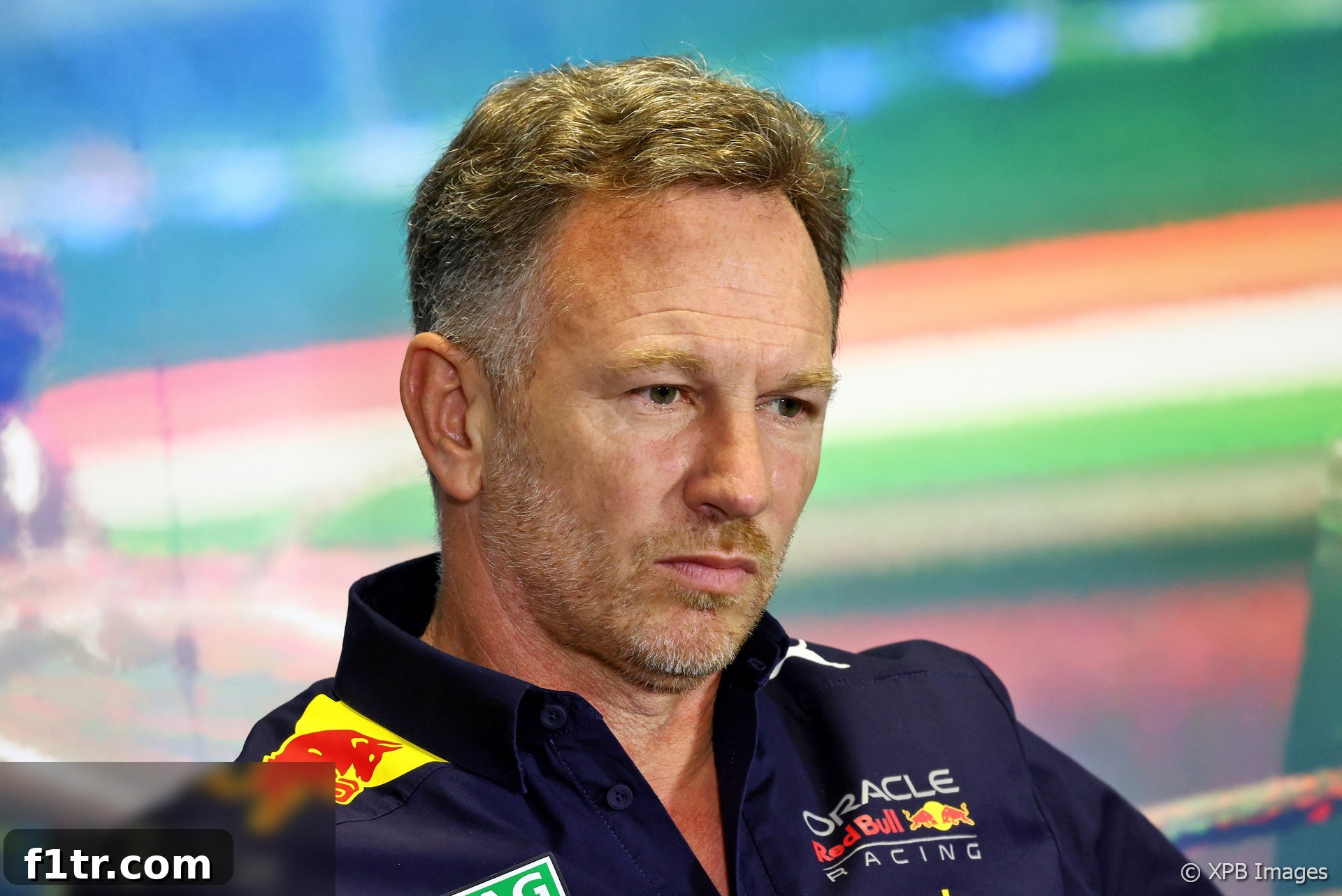
Red Bull-Porsche F1 Deal Hinges on 2026 Engine Regulations, Confirms Christian Horner
The future of Formula 1 could see a monumental partnership between Red Bull Racing and automotive giant Porsche, but a definitive agreement remains in limbo. Red Bull team principal Christian Horner has made it clear that any deal for Porsche to join the championship as a power unit supplier cannot progress further until Formula 1’s eagerly anticipated 2026 engine regulations are officially finalized and agreed upon by all stakeholders.
This week brought to light the significant news that Porsche is reportedly acquiring a 50% stake in Red Bull Technology, the division responsible for manufacturing the F1 team’s chassis and technical operations. While this reveals a clear intent from both parties, Horner emphasized that this substantial step forward is merely an initial move. Further, crucial advancements are on hold until the sport’s governing body, the FIA, conclusively defines the technical, sporting, and financial framework for the new engine formula set to be introduced from 2026.
The Crucial 2026 Engine Regulations: A Foundation for Future Partnerships
The impending 2026 regulations represent a pivotal moment for Formula 1. They are designed not only to make the sport more sustainable and cost-effective but also to attract new manufacturers. The current V6 turbo-hybrid era, while technologically impressive, has been criticized for its immense development costs and the complexity of its power units, particularly the MGU-H component. The new rules aim to address these issues by:
- Simplifying the Power Unit: Reducing complexity by removing the MGU-H, a highly intricate and expensive component.
- Increasing Electrical Power: Significantly boosting the electrical component of the hybrid system, aligning with automotive industry trends.
- Sustainable Fuels: Mandating the use of 100% sustainable fuels, a key step towards Formula 1’s net-zero carbon target by 2030.
- Cost Caps: Implementing stricter financial regulations around engine development to level the playing field and make entry more feasible for newcomers.
For a brand like Porsche, or indeed Audi, the clarity and fairness of these regulations are paramount. Entering Formula 1 is a multi-million-dollar commitment requiring years of research, development, and significant human capital investment. Without a clear and stable regulatory framework, such an investment carries an unacceptable level of risk.
Christian Horner’s Call for Fairness and Equity
Christian Horner articulated Red Bull’s position with directness, stating, “There’s healthy dialogue with Porsche and I think it’s great that companies like Porsche and Audi are looking at seriously coming into Formula 1.” However, he quickly tempered this enthusiasm with a dose of reality: “But there are some major caveats that we need to get past first before things can get anywhere near progression.”
The primary concern, according to Horner, revolves around the very nature of these future power unit regulations. “That primarily focuses on what are the final technical, sporting and financial regulations for the power unit going to be?” he questioned. “Are they going to be fair and equitable to the newcomers versus the current incumbents?”
This point is critical. Existing manufacturers – Mercedes, Ferrari, and Renault – have had years, even decades, of experience and infrastructure dedicated to Formula 1 engine development. New entrants, despite their extensive automotive expertise, would be starting from a comparatively blank slate in the highly specialized world of F1 power units. Horner’s insistence on “fair and equitable” rules is a plea for measures that genuinely reduce the barrier to entry, perhaps through specific concessions or a more aggressive cost-cap structure that prevents established teams from simply outspending new arrivals during the crucial development phase.
“So that is the first piece of the jigsaw that needs to be completed,” Horner affirmed. He added that he is aware the FIA is diligently working on these regulations, expressing hope that they will be unveiled in the coming weeks. “At that point then obviously we’re able then to sit down and have a further discussion with the guys at Porsche.”
Denials from Incumbents and the Lengthy Negotiation Process
The discussions around the 2026 rules have not been without controversy. Rival manufacturers like Mercedes and Ferrari have previously faced accusations of strategically delaying these discussions, potentially to disadvantage new entrants like Porsche and Audi. Both teams have vehemently denied these claims, insisting their contributions to the regulatory talks are solely aimed at ensuring the best outcome for the sport as a whole.
Horner acknowledged that even once the regulations are clear, the negotiations with Porsche would be “a reasonably lengthy process” with “many things to discuss” between them. Despite the intricate details of a potential partnership, he reiterated, “But the most fundamental thing is what are those regulations for 2026. And are they attractive enough for an entity like a Porsche or an Audi to come into Formula 1?” The attractiveness of the regulations, both technologically and financially, is the cornerstone upon which any major manufacturer’s decision to enter the sport will rest.
Porsche’s F1 Ambitions and Red Bull’s Long-Term Vision
Porsche has consistently indicated its strong desire to enter Formula 1 in 2026. The brand’s motorsport heritage is legendary, and a return to the pinnacle of open-wheel racing aligns perfectly with its global marketing and technological development strategies, particularly with the emphasis on hybrid technology and sustainable fuels in the new F1 era. Despite the significant news of Porsche’s proposed buy-in to a part of Red Bull’s F1 operation, Horner stressed that the parties are “really only at a discussion stage,” underscoring that the current understanding is heavily conditional. “There’s so many caveats based on regulations that are the fundamental part,” he added.
Beyond the technical and financial specifics, Horner emphasized that any new partner of the team would have to “fit within the long-term plans that Red Bull have for its commitment in Formula 1.” Red Bull’s journey in Formula 1 is a testament to unwavering commitment and ambition.
“Red Bull has demonstrated its commitment to Formula 1, its longevity in the sport as initially as a sponsor and then as a team owner and then as a double team owner and then as a promoter with a circuit and so on,” he elaborated. Since acquiring the Jaguar F1 team in late 2004 and rebranding it as Red Bull Racing for the 2005 season, the company has transformed from a relative newcomer to a multi-championship-winning powerhouse. Their expansion to include Scuderia Toro Rosso (now AlphaTauri) and their investment in the Red Bull Ring in Austria further solidify their deep roots in motorsport. The establishment of Red Bull Powertrains following Honda’s departure also showcases their determination to maintain control over their destiny, even in the highly complex engine department. This journey underscores a strategic vision that extends far beyond short-term gains.
For Red Bull, a partnership with Porsche would be strategic, potentially offsetting the immense costs of running Red Bull Powertrains independently in the long run, while also gaining access to world-class automotive engineering expertise. However, this must align with their fiercely independent ethos. “I think anything that we look at is very much with the long-term in mind. We’re not looking at a short-term solution,” Horner concluded, highlighting that any collaboration must be a foundational piece of their enduring Formula 1 legacy.
The coming weeks will therefore be crucial for the future landscape of Formula 1. The FIA’s finalization of the 2026 engine regulations will not only dictate Red Bull and Porsche’s potential alliance but also set the tone for competition, innovation, and sustainability at the pinnacle of motorsport for years to come.
Related F1 Insights and Analysis
- Explore more F1 news and updates
- Insights into F1 technical regulations
- In-depth Formula 1 features
- Expert F1 commentary and opinion
Browse all F1 2026 Engine Regulations articles