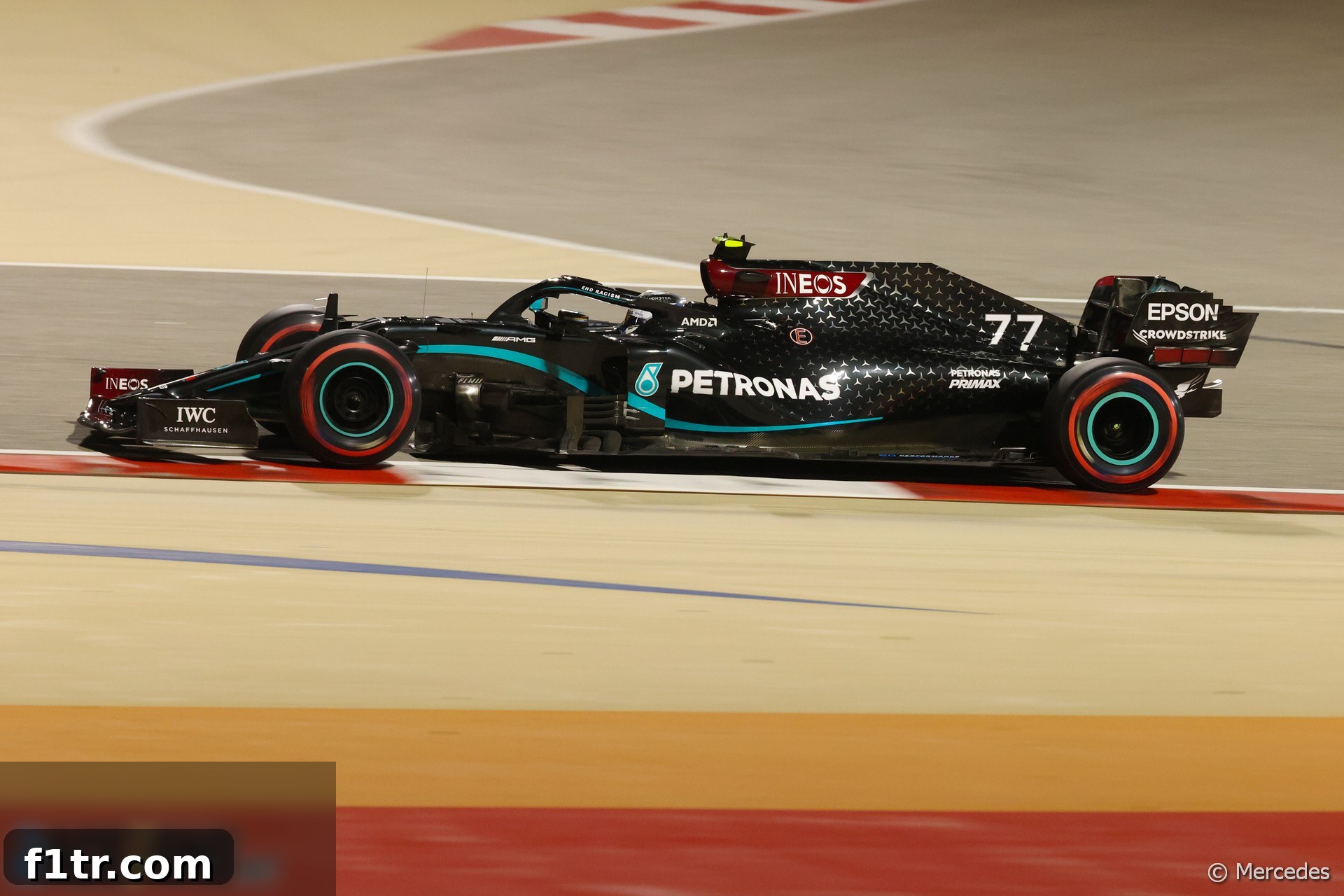
A New Benchmark: Valtteri Bottas Rewrites F1 Lap Record History at Sakhir
In a mesmerizing display of speed and precision, the record for the shortest ever lap of a Formula 1 circuit was not merely broken but emphatically shattered by Valtteri Bottas during qualifying for the Sakhir Grand Prix. On the unique Bahrain Outer circuit, Bottas delivered a performance that will be etched into the annals of F1 history, securing pole position with a lap time that redefined what was thought possible on such a compact layout. This astonishing achievement not only highlights the cutting-edge engineering of modern F1 cars but also the exceptional skill of the drivers pushing them to their absolute limits, setting the stage for a thrilling race weekend.
Bottas’s Blazing Lap: Sakhir’s Outer Circuit Conquered
Valtteri Bottas piloted his Mercedes W11 to an astounding 53.377-second lap, securing pole position for the Sakhir Grand Prix. This incredible feat instantly rewrote the record books, marking the fastest lap ever recorded in Formula 1 history. The Bahrain Outer circuit, a temporary modification for this event, measures 3.543 kilometers (2.202 miles) and is characterized by its high-speed straights and minimal technical sections. It demands absolute commitment from the drivers and perfect synchronization with their machinery. Bottas’s lap was a masterclass in maximizing every ounce of performance, demonstrating sublime control and an unflinching approach to the throttle, especially through the flat-out sections that dominate the circuit.
Achieving such a rapid time on a high-speed layout requires an intricate balance of raw power, aerodynamic efficiency, and mechanical grip. Bottas seamlessly blended these elements, carrying immense speed through the few corners and optimizing his exit speeds onto the long straights. The pressure to deliver a flawless lap on a track where even the smallest error can cost precious tenths of a second is immense, yet the Finn executed with clinical precision. This record-breaking performance not only earned him pole position but also sent a clear message about his form and determination heading into the race, showcasing his ability to extract every fraction of a second from his potent Mercedes package.
Echoes of the Past: Niki Lauda’s Dijon Record and F1’s Evolution
For decades, the benchmark for the shortest F1 lap had been held by the legendary Niki Lauda. In 1974, at the compact Dijon-Prenois circuit in France, Lauda, then driving for Ferrari, set a pole position lap of 58.790 seconds. This record stood as a testament to both Lauda’s driving prowess and the raw, visceral nature of Formula 1 in that era. The Dijon circuit, at 3.289 kilometers (2.044 miles), was shorter than the Bahrain Outer circuit, yet Lauda’s sub-minute lap was a rare occurrence even then, reflecting the different technological landscape of the sport.
Comparing Lauda’s Ferrari 312B3 from 1974 to Bottas’s Mercedes W11 from 2020 highlights the monumental evolution of Formula 1 technology. Lauda’s car was a marvel of its time, powered by a naturally aspirated flat-12 engine, featuring rudimentary aerodynamics by today’s standards, and running on narrower, less sophisticated tires. In contrast, Bottas’s W11 is a hybrid-era behemoth, boasting a highly complex turbocharged V6 power unit with advanced energy recovery systems, sophisticated aerodynamics generating immense downforce, and cutting-edge Pirelli tires. These advancements allow modern F1 cars to achieve significantly higher cornering speeds and unparalleled acceleration, fundamentally altering the performance envelope and making Bottas’s significantly faster average speed an understandable, though still astounding, consequence of nearly five decades of technological progress.
A Tale of Two Circuits: Bahrain Outer vs. Dijon-Prenois
While both the Bahrain Outer circuit and Dijon-Prenois are characterized by their relatively short lengths, the direct comparison of lap times and average speeds offers fascinating insights into F1’s development. Bottas’s average lap speed at Bahrain Outer was a staggering 238.9 kph (148.4 mph), dwarfing Lauda’s 201.4 kph (125.1 mph) at Dijon. This substantial difference in average speed, despite the Bahrain track being slightly longer, underscores the extraordinary performance capabilities of contemporary Formula 1 machinery. The modern power units, with their immense horsepower and efficiency, combined with highly refined aerodynamic packages, allow cars to maintain blistering speeds through corners and accelerate with incredible force.
The Bahrain Outer circuit’s design, with its long straights interspersed with fast, flowing corners, is inherently conducive to higher average speeds. Dijon, while compact, featured more complex and winding sections that naturally limited top-end performance compared to the modern-day “flat-out” sections of the Sakhir layout. This direct comparison not only emphasizes Bottas’s individual achievement but also serves as a vivid illustration of how far Formula 1 engineering has come, continually pushing the boundaries of speed and efficiency on various track configurations around the world.
George Russell’s Stolen Limelight: A Debut for the Ages
While Bottas clinched the headlines for his record-breaking lap, arguably the more compelling narrative of qualifying was woven by his temporary teammate, George Russell. Making his sensational debut for Mercedes, filling in for the absent Lewis Hamilton, Russell came agonizingly close to snatching pole position himself, finishing just 0.026 seconds behind Bottas. This fractional margin of separation instantly elevated Russell’s performance from impressive to truly extraordinary, especially considering the circumstances of his last-minute call-up.
Russell’s transition from the back-of-the-grid Williams to the championship-winning Mercedes W11 was a monumental leap, requiring rapid adaptation to a completely different car, steering wheel, and operational philosophy. Yet, with only limited practice sessions, the young Briton demonstrated an astonishing ability to get up to speed, immediately showcasing the talent that has earned him widespread acclaim. His performance was not just a testament to his raw speed but also to his mental fortitude and adaptability under immense pressure. Being able to challenge a seasoned Mercedes driver like Bottas in an unfamiliar car highlights Russell’s potential as a future F1 superstar and sparked intense speculation about his long-term prospects within the sport, particularly regarding a permanent seat at Mercedes.
The internal battle between Bottas and Russell created an enthralling dynamic, as both drivers pushed each other to their limits. While Bottas ultimately prevailed, Russell’s near-miss spoke volumes about his capability to extract peak performance from a top-tier car, leaving fans and pundits alike to wonder what he might achieve with more time and experience in the dominant W11. His debut performance certainly solidified his reputation as one of the most promising talents on the grid, proving he belongs at the pinnacle of motorsport.
The Sakhir Grand Prix Grid: A Microcosm of Motorsport Drama
The unique characteristics of the short Bahrain Outer circuit also led to an incredibly tight qualifying field, creating a grid where margins were minuscule and every tenth of a second was fiercely contested. Less than one and a half seconds covered the fastest team to the slowest, an exceptionally narrow spread rarely seen in modern Formula 1. This compression of performance across the grid amplified the intensity of qualifying, as drivers had to be absolutely perfect to gain even a single position.
The inherent brevity of the lap meant that any small mistake or imperfection had a disproportionately larger impact on the overall time. Unlike longer circuits where drivers might recover from a minor error over subsequent corners, the Sakhir Outer circuit offered no such luxury. This created a high-stakes environment where precision was paramount and daring commitment was rewarded. The proximity of the cars promises an exhilarating race, with strategic variations, slipstreaming battles, and the potential for multiple overtakes on every lap. This unique grid configuration sets the stage for a race that could feature constant wheel-to-wheel action and unexpected results, making the Sakhir Grand Prix an unmissable event for fans.
The Intense Pressure of a Compressed Lap
Driving on such a short, high-speed circuit like the Bahrain Outer layout imposes unique pressures on Formula 1 drivers. With fewer corners and less track length, the opportunity to make up time or rectify a small error is significantly reduced. This means drivers must be absolutely flawless, not just in their technique but also in their mental focus, for the entire 50-plus seconds of a qualifying lap. The smallest lock-up, a slight misjudgment of a braking point, or an imperfect apex can mean the difference between pole position and several places down the grid. The Sakhir qualifying session highlighted this intense demand, as drivers wrestled with their powerful machines on the knife-edge of performance, striving for that elusive perfect lap within a compressed window of opportunity.
Sakhir’s Place in F1 History: Beyond the Lap Record
The decision to host two races in Bahrain, utilizing a novel “Outer Circuit” configuration for the second event, was a creative solution to the challenges posed by the 2020 global calendar. This experimental approach not only provided an exciting new challenge for teams and drivers but also injected a fresh burst of excitement into the latter stages of the championship. The Sakhir Grand Prix, with its record-breaking lap times and incredibly tight grid, demonstrated the value of exploring new circuit layouts and pushing the boundaries of traditional F1 venues. It created a unique spectacle that will be remembered not just for Bottas’s record or Russell’s debut, but for the overall thrilling and unpredictable nature it brought to Formula 1 racing, proving that innovation in circuit design can lead to truly memorable moments.
What to Expect from the Sakhir Grand Prix Race
Based on the electrifying qualifying session, the Sakhir Grand Prix promises to be a race filled with drama and strategic intrigue. The short, fast nature of the Outer Circuit is likely to lead to plenty of slipstreaming opportunities, potentially enabling more overtakes than typically seen on longer tracks. The incredibly tight margins across the grid also suggest that race pace will be crucial, and any small advantage in tire management or pit stop strategy could be decisive. Drivers will face a relentless challenge, lap after lap, as they navigate the high-speed layout in close proximity to their rivals. Expect a high probability of Safety Car periods due to the condensed racing, which could further shake up the order and open doors for unexpected heroes.
The Broader Implications for Driver Line-ups and Team Strategies
Beyond the immediate excitement, the Sakhir Grand Prix qualifying session, particularly George Russell’s performance, carries significant long-term implications for Formula 1. Russell’s remarkable showing will undoubtedly intensify the discussions surrounding driver contracts and team strategies for future seasons. His ability to perform at such a high level in a championship-contending car, on a challenging debut, has undoubtedly put him in an even stronger position for a top-tier drive. Teams across the grid will be closely scrutinizing the race performance to further evaluate drivers under immense pressure, making Sakhir a pivotal moment for several careers and potentially influencing the competitive landscape for years to come.
Browse all 2020 Sakhir Grand Prix articles