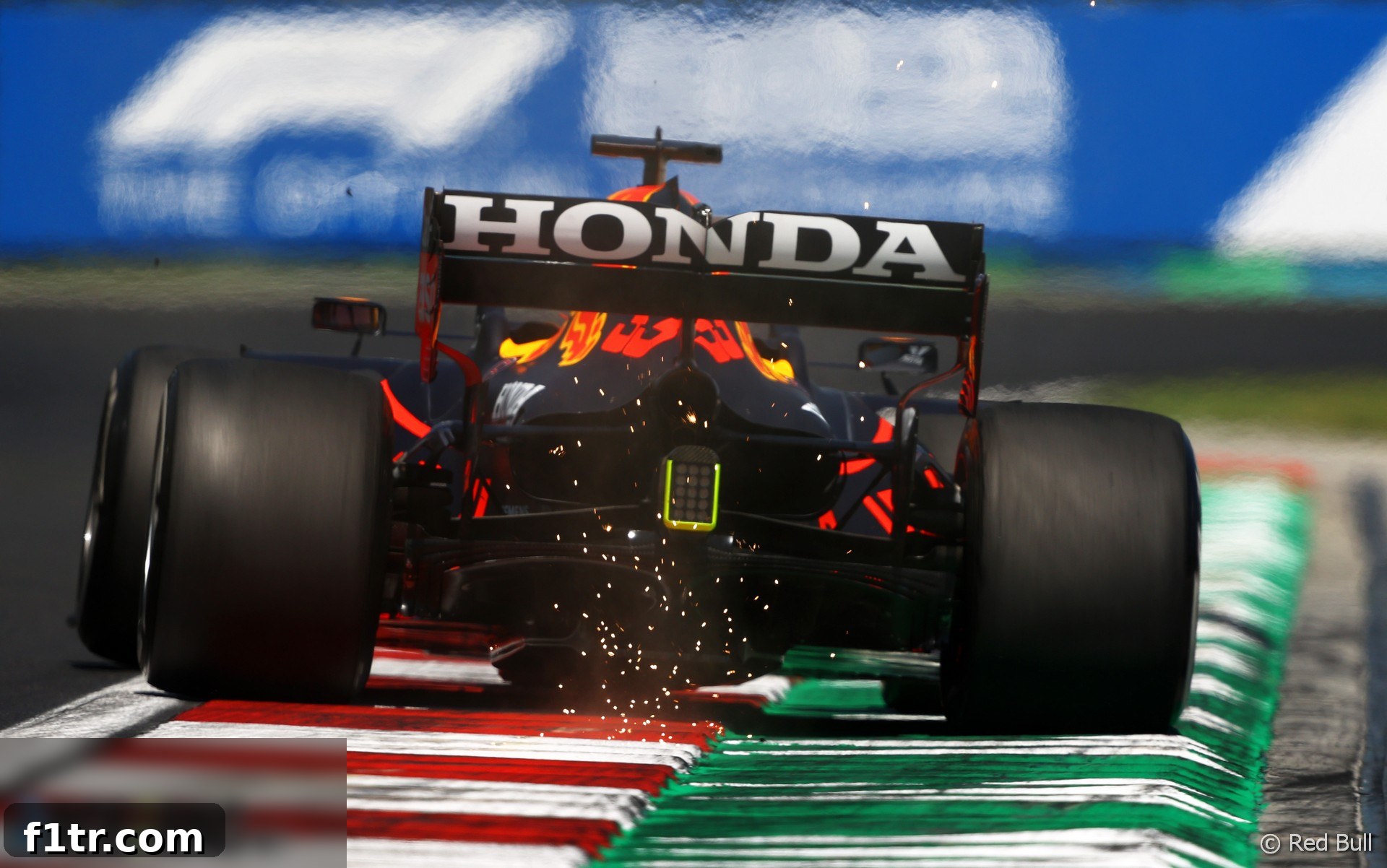
Honda’s enduring relationship with Formula 1 has been a captivating narrative of dynamic entry and strategic withdrawal, a pattern that has defined its presence in the pinnacle of motorsport for decades. This cyclical involvement, characterized by bold returns and often surprising departures, begs a crucial question: has the Japanese automotive giant once again misjudged the timing of its exit?
Advert | Become a Supporter & go ad-free
The announcement in mid-2020 that Honda would cease its Formula 1 engine supply at the close of the 2021 season was met with a blend of disappointment and a distinct lack of surprise across the paddock and among fans. Amidst the global upheaval of the pandemic, many speculated that any major car manufacturer could justifiably reassess and potentially curtail their extensive motorsport programs. Indeed, other prominent brands, including BMW and Audi, opted to scale back or withdraw from certain motorsport endeavors during this period.
However, for Honda, the decision to depart F1 carries a unique historical weight. Its history in the sport is punctuated by a series of comings and goings, establishing a reputation for an intermittent, yet impactful, presence. This latest withdrawal, therefore, felt somewhat familiar, resonating with a pattern of strategic shifts that have marked its F1 journey.
A Legacy of Departures and Returns: Honda’s F1 Saga
Honda’s engagement with Formula 1 spans four distinct eras, each leaving an indelible mark on the sport. Its inaugural foray in the 1960s saw it compete as a full constructor, achieving race victories and demonstrating its engineering prowess. Following this, the 1980s and early 1990s witnessed Honda’s resurgence as a dominant engine supplier, powering iconic teams like Williams and McLaren to multiple championship triumphs, cementing its status as a technological powerhouse.
The turn of the millennium brought Honda back to F1, initially as an engine manufacturer, before re-establishing itself as a full factory team. This particular stint, however, culminated in what is arguably its most ill-timed departure. Despite challenging campaigns in 2007 and 2008, the meticulously developed car for the radical 2009 regulatory changes held immense promise. Yet, Honda withdrew at the end of 2008, selling the team for a symbolic sum. This very car, rebranded as Brawn GP and powered by Mercedes engines, went on to clinch both the Constructors’ and Drivers’ championships in 2009 – a stark reminder of what could have been. Just six years later, Honda would return yet again, embarking on a new, monumentally challenging journey to master the complex hybrid power unit regulations.
With a cumulative presence of 27 years in Formula 1, Honda has been an integral part of approximately 38% of the sport’s entire history – a duration just two years shy of Mercedes’ total involvement. However, unlike Mercedes, which, after an initial departure in the 1950s, has maintained a continuous F1 presence since its re-entry in 1994, Honda has twice exited the sport in the intervening decades. The most recent departure, occurring as its partnership with Red Bull Racing reached unprecedented heights, strikes many observers as particularly peculiar.
The Curious Timing: Departing at the Peak of Success
As the 2021 season unfolded, the constructors’ championship battle saw Mercedes hold a slight advantage in the latter stages. Yet, the momentum could shift with just one exceptional combined performance from Red Bull Racing. Heading into pivotal races like the United States Grand Prix, Honda-powered Max Verstappen had reclaimed the lead in the drivers’ championship, signaling a fierce contest that showed no signs of Hamilton easily running away with the title. The prospect of a non-Mercedes power unit clinching the constructors’ or drivers’ title in the hybrid era was a monumental achievement, one that Honda was on the cusp of realizing.
Winning a championship would undoubtedly mark a historic milestone, being the first time since the introduction of the hybrid power units that a Mercedes competitor had achieved such a feat. This makes Honda’s decision to leave all the more perplexing. Furthermore, with power unit specifications slated for a development freeze in the upcoming seasons – a consequence partly influenced by Honda’s withdrawal – their departure appears strategically puzzling. While Honda-designed power units might continue to achieve victories in 2022 and beyond, they will no longer bear the Honda badge, instead being rebranded and managed by Red Bull Powertrains. The irony of relinquishing direct credit for potential future success, just as years of immense investment and relentless effort were poised to yield the ultimate reward, is palpable.
F1 Hybrid Prowess vs. Road Car Electrification
In the immediate future, Formula 1 presents arguably Honda’s most significant global platform for showcasing its advanced hybrid and electrified technology. For years, the manufacturer poured resources into developing cutting-edge hybrid power units for F1, evolving from a challenging return with McLaren in 2015 to title contenders with Red Bull Racing. This journey demonstrated a remarkable capacity for innovation and technical mastery at the very forefront of automotive engineering.
However, this spectacular F1 success stands in stark contrast to Honda’s relatively slower progress in the electrification and hybridisation of its road car lineup compared to many of its key competitors. While companies like Nissan pioneered the mass-market battery electric vehicle with the Leaf, and Toyota’s Prius became synonymous with hybrid technology for two decades, Honda’s consumer-focused electric offerings have been more modest. The charming, albeit niche, Honda E represents its sole all-electric model, and its hybrid range, despite recent additions like the CR-V’s recovery system, has never achieved the widespread market penetration of rivals.
This lag in the crucial electric vehicle segment has driven Honda to undertake a surprising collaboration with General Motors. Utilizing the American automotive group’s Ultium electric vehicle platform, Honda plans to build its first four electrified models. In a remarkable reversal of roles from its F1 strategy, where it developed its own cutting-edge powertrains, Honda will effectively become a powertrain customer for its future road cars. This outcome is particularly striking given its position on the bleeding edge of power unit technology in Formula 1, evolving from the humiliation of its 2015 return with McLaren to its current status as a title contender with Red Bull. The disconnect between its motorsport innovation and its commercial vehicle strategy raises fundamental questions about its overarching corporate direction.
The Complexities Behind the Departure
Of course, the decision to withdraw from Formula 1 is rarely purely about on-track performance or immediate market perception; it is often far more complicated, rooted in broader corporate strategy and political considerations. In an era of immense change within the global automotive industry, F1’s “road relevance” – the direct transferability of racing technology to consumer vehicles – is often debated and can be perceived as limited. The enormous financial and human capital investment required for a top-tier F1 program must be constantly justified against other pressing research and development priorities, particularly the industry’s pivot towards carbon neutrality and mass electrification.
As AlphaTauri team principal Franz Tost alluded, internal sentiments within Honda concerning the departure were not entirely unified. “I can’t talk in the name of the management and of the board from Honda,” Tost stated, “But, as you know, the great manufacturers, there are some people, some managers who were happy to do Formula 1 and others that think the company should go in another direction.” This suggests a tension between different factions within the company regarding its long-term strategic direction and the allocation of resources. While Honda has formally decided to step back, a close cooperation with Red Bull Technology is set to continue, with Honda providing power units for 2022, before Red Bull Powertrains takes over manufacturing from 2023. Tost’s parting thought, “Whether then Honda will come back, I don’t know,” leaves the door open, albeit slightly, to future possibilities, reinforcing the cyclical nature of Honda’s F1 story.
It’s genuinely difficult to fully comprehend the reasoning behind Honda’s decision to walk away from F1 precisely when they were poised to reap the greatest rewards of their substantial investment and effort. They had succeeded in challenging the dominant Mercedes-Benz in a way that Ferrari and Renault had struggled to achieve. Yet, the argument persists that the intense competition and cutting-edge technology of F1 are increasingly far removed from the practicalities and mass-market demands of the road cars Honda actually sells. A multitude of justifications – from reallocating engineering talent to electrification projects, to ensuring brand focus remains squarely on consumer product development – can be marshaled to support such a withdrawal.
The immense pressures and intense scrutiny that Formula 1 brings to a car manufacturer’s image are undeniable. Honda experienced the highs and lows, from the initial struggles with McLaren that severely impacted its reputation, to its triumphant resurgence with Red Bull. Now, having navigated through those challenges and finally emerging victorious, there’s a distinct risk that Honda may, yet again, be leaving the sport precisely at the precipice of sustained greatness, leaving many to wonder if history is indeed repeating itself.
Advert | Become a RaceFans supporter andgo ad-free
2021 United States Grand Prix
- Mercedes encouraged despite ‘toughest race for a long time’ in Austin
- For the sake of the title fight, F1 must get a grip on its track limits problem
- Pit stop problems costing Ferrari “quite a lot of points” – Sainz
- Sold-out crowd of 380,000 at COTA shows F1 can add third US race – Brawn
- While the pressure’s off I can “push myself” more – Russell
Browse all 2021 United States Grand Prix articles