Franco Colapinto’s Sprint Qualifying Rollercoaster: Unlocking Williams’ Potential Amidst Personal Frustration
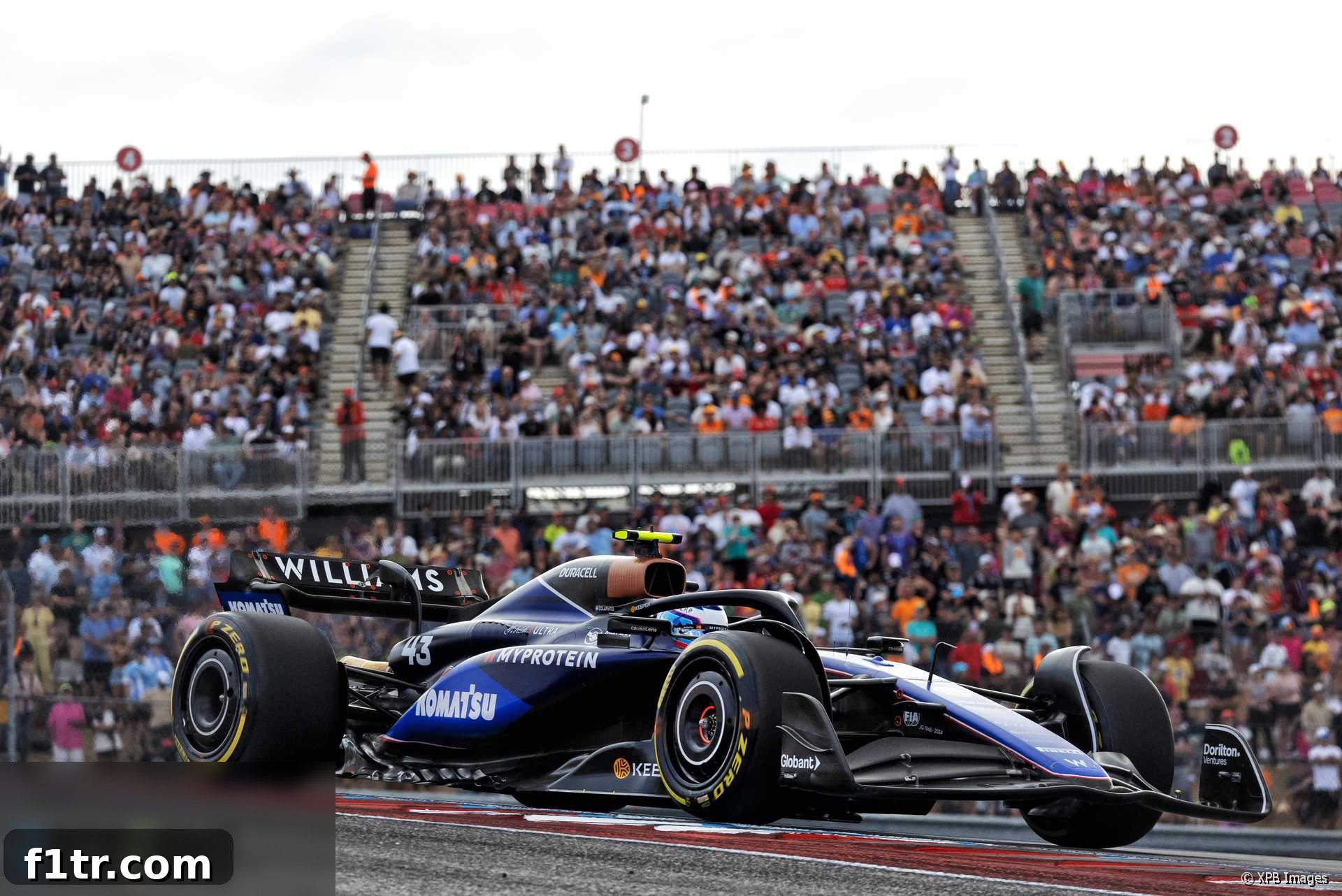
In a compelling display of raw talent and unwavering self-critique, Franco Colapinto delivered a noteworthy performance for Williams Racing in the recent Sprint Qualifying session. The Argentine driver successfully navigated his way into the crucial final round, SQ3, making him the sole Williams representative in the top ten shootout. While this achievement marked a significant milestone for both Colapinto and the team, his post-session reflections were surprisingly devoid of outright celebration, instead highlighting a profound sense of annoyance at what he perceived as missed opportunities for an even stronger result.
The highly condensed nature of Formula 1 Sprint Qualifying demands immediate performance and precision, leaving little room for error. The session proved challenging for many, including Colapinto’s seasoned teammate, Alexander Albon, who unfortunately saw his qualifying bid end prematurely with a spin in SQ1. This early exit placed additional pressure, and indeed spotlight, on Colapinto to perform. While Colapinto himself experienced a spin later in SQ3, his ability to reach that stage demonstrated promising pace and a solid understanding of the circuit, even if the ultimate outcome left him yearning for more.
The Cost of Missed Opportunities: Colapinto’s Self-Critique
Colapinto’s frustration stemmed not from a lack of pace, but from specific errors he identified in his critical SQ3 lap. Speaking to the official F1 channel, he articulated his disappointment with a candid self-assessment. “I’m just a bit upset because I was in a good place and we were looking like we could beat the cars or at least fight with the cars that are around, and I did a mistake in my lap in Turn One,” he explained. This initial error set the tone for a sequence of events that ultimately derailed his pursuit of a higher grid position.
The unforgiving demands of Formula 1 racing mean that even a minor slip can have cascading effects on lap time. Colapinto further elaborated on the challenging moments during his lap: “Then I just had a slide in [Turn] One, I had a slide in Seven. I tried to recover the time but it just didn’t work.” The subtle loss of grip, particularly in high-speed corners, demands immediate and precise correction from the driver. While Colapinto attempted to mitigate the damage and regain lost milliseconds, the cumulative effect proved too great, culminating in a spin off the track at Turn 12, forcing him to abandon the lap and settle for 10th position.
The young driver’s high expectations were palpable as he lamented the lost potential. “So it was not a clean lap in Q2 and I just feel bad for that because it felt like we should have been in the top eight, I think, as we finished in SQ2,” he reflected. This aspiration to be among the top eight underscores his belief in the car’s capabilities and his own potential, making the errors even more galling. For a driver in a midfield team, every position gained in qualifying is crucial, especially in the sprint format where points are awarded for the top eight finishers. Missing out by just two positions can be the difference between securing valuable championship points or leaving empty-handed.
Williams’ Encouraging Pace Amidst Development Freeze
Despite his personal disappointment, Colapinto found significant encouragement in the overall performance of the Williams team. This particular race weekend saw the Grove-based outfit arrive without any major car upgrades, making their competitive showing even more impressive. In a sport where incremental gains through development are paramount, performing strongly without the latest enhancements speaks volumes about the team’s underlying package and the drivers’ ability to extract its maximum potential.
Colapinto highlighted the tight margins and the team’s proximity to the points-paying positions in the upcoming sprint race. “There are not many points [in the sprint race], but we are still close to the points,” he observed. This statement reflects a realistic outlook on the sprint format, where the fewer available points make every position fiercely contested. However, the fact that Williams, without upgrades, could genuinely contend for these points is a testament to the hard work put in by the entire team and provides a significant boost to morale. It suggests that the FW46 chassis, in certain conditions, possesses a commendable baseline level of performance.
Furthermore, Colapinto acknowledged the limited track time available to adapt to both the circuit and the nuances of the F1 car during a sprint weekend. “I think in only an hour of track time, to learn the track and a bit the car, there was good progress and good improvement but just feel like there was more there.” This speaks to the steep learning curve for any driver, particularly a less experienced one, in mastering a new circuit and extracting peak performance from a complex F1 machine in a compressed timeline. The fact that he felt there was “more there” indicates untapped potential and a rapidly improving understanding of his machinery and surroundings.
The Setup Conundrum: A Lesson Learned (Again)
Adding another layer to his self-analysis, Colapinto revealed a crucial error in judgment regarding a setup change on his car just before his final, decisive run. This decision, in hindsight, proved to be a critical misstep. He recounted his thought process, trying to leverage the unique characteristics of an F1 car: “I was pushing more. The F1 [car] has a lot of downforce, they say the quicker you go the more grip you have so I tried that technique and it worked.” Indeed, the aerodynamic design of an F1 car generates immense downforce, meaning that at higher speeds, the car is effectively pushed harder into the track, increasing mechanical grip and allowing for greater cornering speeds.
However, the application of this principle requires meticulous setup and understanding of the car’s dynamic balance. Colapinto candidly admitted to making an aero change that, mirroring a previous mistake, had adverse effects. “But it was a good quali, I’m just pissed off with myself because I had a change on the aero that I shouldn’t have done and it was the same I did in Baku and it didn’t work in Baku and it looks like I didn’t learn from that and I asked for it again for SQ3 and it didn’t work again.” This revelation highlights a recurring theme in a young driver’s career: the importance of learning from past errors and not repeating them, especially when making critical decisions under pressure.
The decision to alter the aerodynamic setup, driven by a desire for more speed, inadvertently disrupted the car’s balance and his confidence. This particular experience served as a sharp reminder for the aspiring F1 talent. “So it’s something I need to learn, to control a bit more and to understand where is the limit of the tyres. We’ll get better.” His commitment to understanding the intricate relationship between car setup, tire performance, and his own driving style is paramount for long-term success in Formula 1. The fine line between aggressive optimization and overstepping the car’s operational window is one that even the most seasoned drivers constantly grapple with.
Looking Ahead: The Path of Driver Development
Franco Colapinto’s sprint qualifying performance encapsulates the essence of driver development in Formula 1: flashes of brilliance, combined with learning opportunities and the relentless pursuit of perfection. While the immediate emotion was frustration, the underlying message is one of immense potential and a dedicated work ethic. For Williams, having a driver capable of reaching SQ3, even with self-confessed errors, is a positive indicator for the future. It signifies that the team has a talent on its hands who is not only fast but also deeply analytical and committed to continuous improvement.
The lessons learned from this challenging sprint qualifying session will undoubtedly be invaluable for Colapinto as he navigates the rest of the season and his Formula 1 career. Understanding the nuances of car setup, managing tire limits, and refining his driving approach under pressure are all critical components of becoming a complete F1 driver. His ability to openly acknowledge his mistakes and articulate his areas for improvement speaks volumes about his maturity and hunger for success. Williams Racing, with its renewed focus on development and performance, will be eager to support Colapinto in translating this raw potential into consistent points-scoring finishes.
This weekend’s experience serves as a microcosm of the intense competition and learning process inherent in Formula 1. Colapinto’s journey is a testament to the fact that even impressive achievements can be viewed through the lens of what could have been, pushing drivers to constantly elevate their game. The blend of encouragement from the team’s performance and the personal drive for perfection suggests that Franco Colapinto is a name to watch closely as he continues to evolve in the pinnacle of motorsport.
Related Articles
- McLaren insist stewards made ‘provable error’ after losing bid for review of Norris’ penalty
- Why McLaren’s focus on Verstappen’s driving failed to overturn Norris’ penalty
- Stewards reject McLaren’s request to review Norris’ United States GP penalty
- McLaren know Norris’ penalty is likely to stand – so what do they hope to gain?
- McLaren request review of Norris’ penalty for off-track pass on Verstappen
Browse all 2024 United States Grand Prix articles