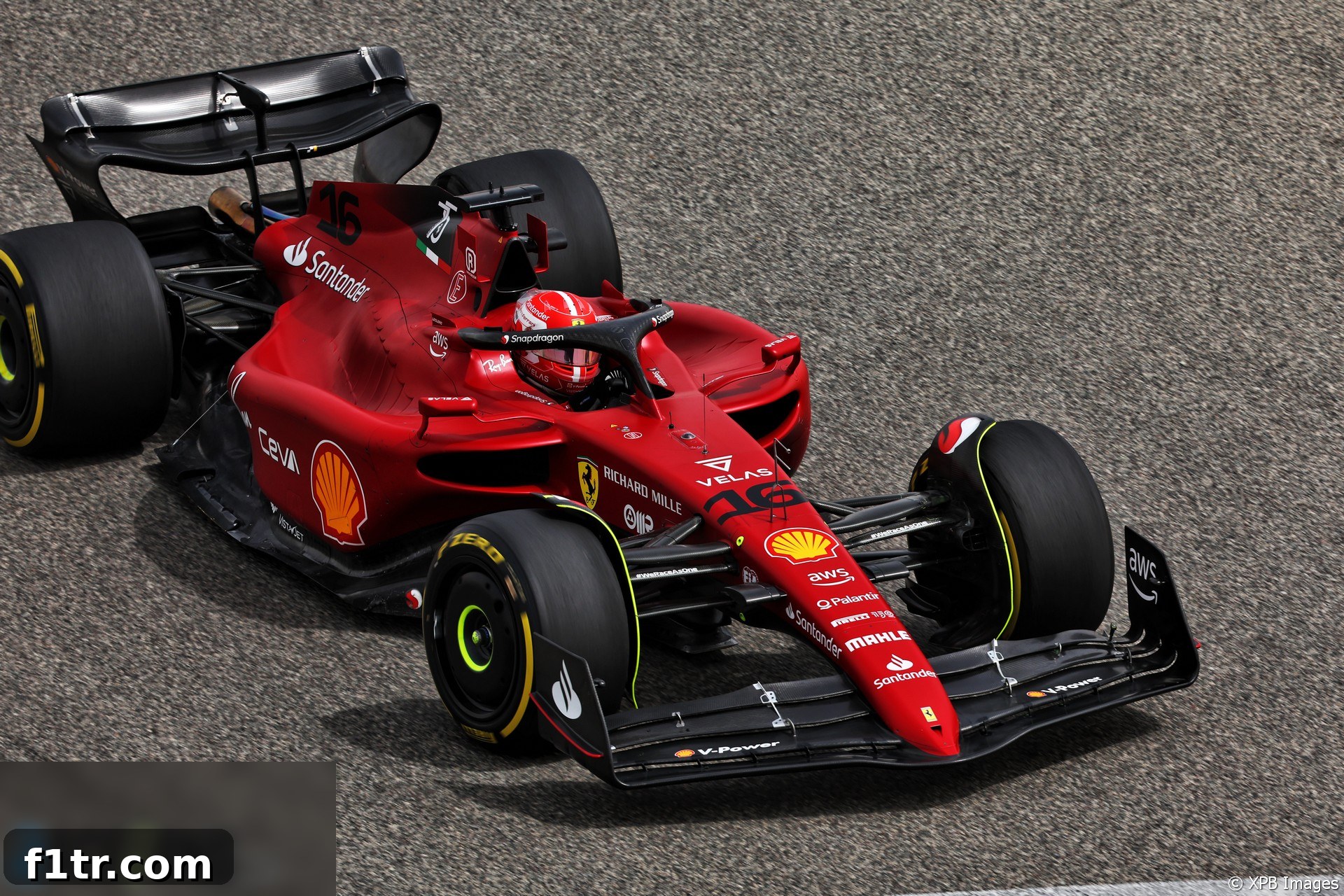
Ferrari’s Prudent Optimism: Leclerc and Sainz Navigate the Post-Testing Landscape Ahead of the 2024 F1 Season
Formula 1’s pre-season testing in Bahrain has concluded, leaving Scuderia Ferrari drivers Charles Leclerc and Carlos Sainz Jnr with a mix of satisfaction over their car’s reliability and a healthy dose of skepticism regarding their true competitive standing. While the iconic Italian team completed an impressive number of laps, largely avoiding significant technical glitches, both drivers urged caution against premature celebrations, highlighting the notorious unpredictability of testing times. The overarching sentiment from Maranello is one of measured confidence, tempered by the knowledge that rivals often obscure their true pace until the season opener.
Charles Leclerc’s Smooth Sail: A Promising Start for Ferrari’s New Challenger
For Charles Leclerc, the six days of pre-season running were remarkably uneventful, a stark contrast to some previous campaigns where technical snags often plagued Ferrari’s initial outings. He succinctly described it as “definitely one of the smoothest preparations I’ve had for a season,” noting the conspicuous absence of any major mechanical issues. This newfound reliability is a crucial indicator, especially given the sweeping technical regulation changes introduced for the new Formula 1 season. Such regulatory shifts frequently present teams with a myriad of unexpected challenges and unforeseen design flaws, making a seamless testing period a significant achievement.
Ferrari’s ability to run consistently and cover more kilometres than almost any other team (second only to Mercedes, who only managed a handful more laps) suggests a solid foundation for their 2024 challenger. In an era where every lap counts for data collection and understanding complex aerodynamic interactions, this extensive mileage provides an invaluable head start in optimising the car. Leclerc lauded the team’s efficiency in adapting to the new project, explaining, “On such a new project you always expect to find some barriers in the way. For now, apart from proposing which is still kind of an issue in some conditions, it’s been quite smooth and we managed to just keep improving.” This continuous improvement throughout the sessions indicates a car that responds well to adjustments and has a significant development potential.
Despite the overall positivity, Leclerc did acknowledge one persistent hurdle: “porpoising.” This aerodynamic phenomenon, where the car bounces rapidly at high speeds due to ground effect issues, remains a concern under certain conditions. While not crippling, it represents an area where the team will undoubtedly be focusing its efforts to optimise performance and driver comfort. Tackling this issue effectively could unlock even more speed and stability for the Scuderia.
The Elusive Pace: Why Pre-Season Testing Often Deceives
Yet, despite the encouraging signs of reliability and development, Leclerc was quick to temper expectations regarding Ferrari’s outright pace compared to rivals. His pragmatic assessment underscores a fundamental truth of F1 pre-season testing: it’s notoriously difficult to gauge the true competitive order. “It’s very, very difficult to know how much they have in margin,” he stated, referring to the strategic practice of “sandbagging” – where teams deliberately conceal their full performance potential during testing by running sub-optimal engine modes, fuel loads, or tyre compounds.
Leclerc pointed to specific examples to illustrate this point. He highlighted Red Bull’s introduction of a “quite a new package [on the final day],” suggesting they hadn’t shown their full hand until late in the testing window. Similarly, he noted Mercedes’ historically understated approach, often running their cars below their maximum capacity to avoid revealing their true pace. “Mercedes had a complete new car and didn’t really show their potential. Actually everyone seems to be quite close at some point or another,” he observed, highlighting the deceptive tight grouping of lap times which often obscures the genuine pecking order.
This inherent uncertainty makes drawing definitive conclusions a fool’s errand. While Ferrari might have a clear understanding of their own car’s limits and the performance gains they’ve achieved, the critical unknown remains the capabilities of their direct competitors. “We know how much margin we have but we have no idea how much they hide their gains,” Leclerc confessed, encapsulating the perplexing nature of pre-season form. His cautious message resonates strongly: “So for now it’s very difficult and that’s why I think we need to really stay cautious because it’s nice to be in the front but it doesn’t mean anything for now.” This responsible approach aims to manage both internal and external expectations, preventing the kind of premature hype that can often lead to disappointment.
Carlos Sainz Jnr: The Voice of Seasoned Skepticism
Reinforcing his teammate’s pragmatic stance, Carlos Sainz Jnr dismissed any premature excitement surrounding Ferrari’s testing performance. The Spanish driver, a veteran of several F1 seasons, expressed a palpable frustration with the perennial cycle of over-analysis during testing. His blunt assessment served as a strong warning against reading too much into the numbers generated during these simulated sessions. “Everyone is impressed like everyone was impressed in ’18, ’19, ’17 and we all know testing means nothing,” he asserted, recalling past instances where promising pre-season form failed to translate into competitive race pace. He criticized the tendency for fans, media, and even some within the paddock to “keep falling into the same trap year after year of trying to analyse testing too much.”
Sainz didn’t shy away from directly addressing comments made by Mercedes driver Lewis Hamilton, who had speculated that the testing times indicated a likely Ferrari or Red Bull one-two at the first race. With a wry tone, Sainz brushed off Hamilton’s prediction, stating: “Same thing. Typical Mercedes, typical Lewis. Nothing new to me.” This remark underscores the strategic mind games often played during testing, where rival teams try to downplay their own performance while simultaneously attempting to hype up others, potentially to put them under pressure or divert attention. Sainz’s wealth of experience tells him to disregard such pronouncements, focusing instead on the team’s internal data, development progress, and meticulous preparation for the actual race weekend.
Navigating the New Technical Era: Ferrari’s Foundations for Development
The 2024 season marks another chapter under the current generation of technical regulations, which demand sophisticated aerodynamic solutions and robust mechanical reliability. Ferrari’s strong showing in terms of mileage and the relative absence of major issues during testing suggest they have built a fundamentally sound package. The substantial changes in technical regulations over the past few seasons have continually reshaped the competitive landscape, making a reliable base car paramount for successful development throughout the year. The initial ‘smoothness’ observed by Leclerc is therefore a significant positive, indicating a well-understood and stable platform from which to launch their campaign.
In modern Formula 1, the true test of any car’s potential isn’t just its initial performance, but its capacity for iterative development. A stable platform allows engineers to push updates with greater confidence, knowing they are building on a solid foundation rather than constantly fighting fundamental flaws. Ferrari’s diligent work in testing, covering extensive distances and gathering valuable data, will be crucial for the continuous improvement process that defines a successful F1 season. Every data point collected on tyre degradation, aerodynamic efficiency, and power unit performance contributes to a deeper understanding of the car’s behaviour, informing future upgrades and setup choices.
The Road to Bahrain: Anticipation Builds for the Season Opener
As the Formula 1 circus prepares to relocate from the testing grounds to the grid for the opening round, the Bahrain Grand Prix, all eyes will be keenly fixed on the Scuderia. While the drivers remain cautiously optimistic, the underlying message is clear: the real battle begins when the lights go out for qualifying. The desert circuit of Bahrain, with its abrasive track surface, demanding corners, and unique night racing conditions, will provide the first true gauge of where each team stands in the pecking order. The consistent performance Ferrari displayed during testing has undoubtedly raised hopes among the passionate Tifosi, but the team’s pragmatic approach, championed by both Leclerc and Sainz, ensures that expectations are kept firmly in check until the critical moments of true competition arrive.
The journey from a new car concept to a championship contender is long and arduous, fraught with technical challenges and intense competition. For Ferrari, pre-season testing has been a positive first step, marked by encouraging reliability and incremental improvements. However, the true pace and competitive order of the 2024 Formula 1 season remain shrouded in mystery, a secret that will only be fully revealed under the dazzling floodlights of Bahrain. The cautious optimism emanating from Maranello serves as a timely reminder that in the high-stakes world of Formula 1, predictions are fleeting, and only race day holds the definitive answers.
Related Insights from the 2022 F1 Season
- Mercedes told me “you’re wrong” about 2022 car’s problems – Hamilton
- FIA confirms all 10 F1 teams complied with 2022 cost cap
- Steiner “not ashamed” of panning “slow” Schumacher in Drive to Survive
- Albon believes year out of F1 improved him as a driver
- Hamilton sees diversity gains in F1 years on from his ‘traumatising’ experience of racism
Browse all 2022 F1 season articles