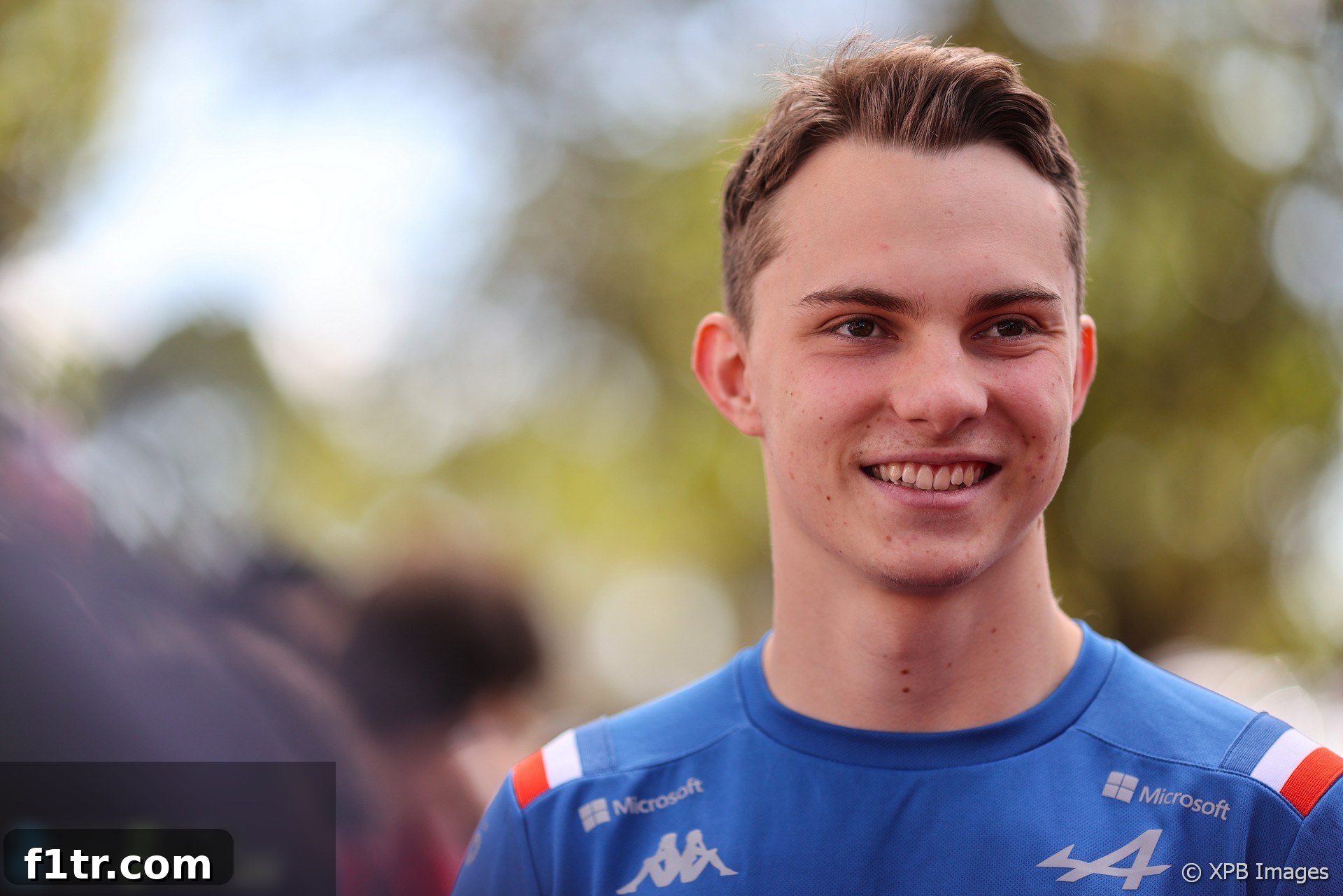
Oscar Piastri, Alpine F1, and the Unprecedented Contract Dispute: A Deep Dive into the 2023 Driver Saga
The exhilarating world of Formula 1, renowned for its high-octane racing and fierce rivalries, periodically throws up gripping sagas off the track. Few have generated as much intrigue and discussion as the complex contract dispute involving the highly promising young driver Oscar Piastri and the Alpine F1 Team. What initially appeared to be a straightforward promotion for a shining talent from their esteemed driver academy quickly morphed into a contentious legal battle, poised to be adjudicated by the sport’s highest contractual authority: the Contract Recognition Board (CRB).
Central to this unfolding drama is the assertion from Alpine Team Principal Otmar Szafnauer, who claims Piastri expressed genuine pleasure at the prospect of making his Formula 1 debut with the team for the 2023 season. This positive initial reception, however, was starkly contradicted by Piastri’s subsequent public denial of any such agreement, thrusting both driver and team into an unforeseen and deeply public contractual entanglement that has captivated the motorsport world.
The Genesis of the Dispute: Alonso’s Surprise Exit Paves the Way for Chaos
Advert | Become a Supporter & go ad-free
The unexpected departure of two-time world champion Fernando Alonso served as the surprising catalyst for the entire controversy. Alonso, a pivotal figure within the Alpine team, announced his startling decision to leave for Aston Martin in 2023, filling the seat vacated by the retiring Sebastian Vettel. This sudden move created an immediate and significant vacancy in Alpine’s driver lineup, prompting the team to look internally to its acclaimed driver development programme for a successor.
In swift response to Alonso’s declaration, Alpine issued a statement confidently announcing Oscar Piastri’s promotion to their 2023 Formula 1 race team. Piastri, a former Formula 2 and Formula 3 champion, was widely regarded as one of the most exciting prospects in motorsport. Alpine’s press release was intended to project stability and continuity, assuring fans and stakeholders of a robust future lineup even after the loss of a seasoned champion like Alonso.
However, the seamless transition Alpine had envisioned quickly unraveled. A critical detail within Alpine’s announcement immediately raised eyebrows: it conspicuously lacked any direct quote or comment from Piastri himself. This omission, unusual for such a significant announcement, inadvertently laid the groundwork for the ensuing drama. Just hours after Alpine’s statement, Piastri took to his social media platforms to issue an unequivocal denial, stating he would not be racing for the team in 2023. This concise yet powerful rebuttal sent shockwaves through the paddock, igniting one of Formula 1’s most public and acrimonious contractual battles in recent memory.
Otmar Szafnauer’s Perspective: A Team Principal’s View on the Unfolding Events
Alpine Team Principal Otmar Szafnauer has been at the forefront of the team’s response, offering his first-hand account of the events leading up to the public disagreement. His narrative provides crucial insight into Alpine’s perception of the situation and their staunch belief in the validity of their contractual claims.
The Initial Offer and Piastri’s Reaction
Szafnauer detailed his personal interaction with Piastri regarding the 2023 F1 seat. “I told Oscar before the announcement was made,” he stated during an FIA press conference at Spa-Francorchamps. He located Piastri in the team’s simulator, where the young Australian was performing his duties. Szafnauer recalled Piastri’s reaction as genuinely positive and appreciative: “He smiled and was thankful.” This interaction, from Szafnauer’s perspective, solidified an understanding and an acceptance of the opportunity, prompting Alpine to proceed with their official press release “very quickly.”
The Rush to Announce and the Social Media Blowback
The notable absence of a quote from Piastri in Alpine’s initial announcement was a point of contention and speculation. Szafnauer clarified the team’s decision, citing the rapid pace of developments following Alonso’s unexpected move. “Things happened very quickly and we too reacted quickly and didn’t want to go back and forth with his management, which is why we put the release out,” he explained. This suggests Alpine felt confident in their existing arrangement with Piastri and the personal assurances given, enough to forego the standard procedure of obtaining an immediate public statement from the driver himself.
The subsequent public denial from Piastri, however, delivered via social media rather than direct communication, caught Alpine off guard. Szafnauer candidly admitted, “We heard through social media,” underscoring a significant breakdown in communication channels at a pivotal moment. This public repudiation from a driver nurtured by Alpine’s academy for years deeply intensified the dispute, transforming it from an internal issue into a high-profile public controversy.
Unyielding Confidence in Alpine’s Contract
Amidst a flurry of speculation, including reports that Alpine had supposedly missed a critical July 31st deadline to exercise an option on Piastri, Szafnauer remained steadfast and dismissed these claims. He expressed profound confidence in Alpine’s legal position, asserting the team’s unwavering belief that their contract with Piastri is legally robust and enforceable. “I’ve seen both sides of the argument,” he affirmed, adding, “We’re confident that Oscar signed with us back in November and there are certain things that need to be in the contract, and I’m confident they’re in that.” This statement reinforces Alpine’s stance that a binding agreement was in place well before any alleged discussions Piastri may have had with other teams, particularly McLaren.
Advert | Become a RaceFans supporter andgo ad-free
Szafnauer articulated Alpine’s deep sense of disappointment, viewing Piastri’s actions as a breach of trust and a failure to honor a fundamental commitment. “The disappointing thing really is that he signed something with us in November, we delivered everything that we were meant to – in addition to that, actually over-delivered – and his promise to us was to race with us if we put him in our car,” he elaborated. This sentiment highlights the substantial financial and developmental investment Alpine has poured into Piastri’s career, guiding him through junior categories, providing extensive F1 testing, and countless hours in the simulator, all under the premise that he would eventually transition into their Formula 1 race seat.
The Contract Recognition Board (CRB): Formula 1’s Legal Arbiter
The crux of this intricate legal battle now lies with the Formula 1 Contract Recognition Board (CRB). This independent, FIFA-sanctioned body serves as the ultimate arbiter in disputes concerning driver contracts within Formula 1. Its rulings are legally binding and represent the definitive word on which team legitimately holds a claim to a driver’s services, making its decision paramount in the Piastri saga.
Understanding the CRB’s Function and Process
The CRB is typically composed of a panel of highly experienced and impartial lawyers, possessing specialized knowledge in sports and contract law. When a dispute such as Piastri’s arises, both the contending parties are required to present their arguments, all relevant contracts, and supporting evidence to the board. The CRB then undertakes a meticulous examination of all documentation, including the precise legal wording of clauses, options, and specified deadlines, to ascertain which contract is legally valid and therefore enforceable. The proceedings of the CRB are conducted in strict privacy to protect sensitive contractual details, though the outcomes of its deliberations are, by necessity, made public.
The Piastri-Alpine-McLaren Trilemma
The specific challenge confronting the CRB in this complex scenario involves Alpine’s asserted contract with Piastri, which they claim was signed in November of the previous year, versus Piastri’s alleged discussions and potential subsequent agreement with McLaren. Piastri’s legal representatives and McLaren are widely believed to be arguing that Alpine either did not possess a fully valid and enforceable contract with Piastri or that they failed to properly exercise an option within a contractually stipulated timeframe, thereby freeing Piastri to pursue alternative opportunities. Conversely, Alpine steadfastly maintains that their November agreement is robust, fully binding, and takes precedence over any later developments or purported agreements.
The CRB’s forthcoming decision is awaited with bated breath across the Formula 1 paddock, as it carries profound implications. A ruling in favor of Alpine would legally compel Piastri to race for them in 2023, potentially placing him in a team he has publicly stated he does not wish to join. Conversely, a ruling in Piastri’s favor would validate his position, freeing him to join McLaren or another team of his choice, and leaving Alpine scrambling to find an alternative high-caliber driver.
Historical Parallels: The Jenson Button Precedent and Professional Reconciliation
While the Piastri dispute feels acutely modern in its public nature and social media element, Formula 1 history is rich with examples of fierce contractual battles. Otmar Szafnauer himself thoughtfully referenced a significant historical precedent – that of Jenson Button – to underscore the notion that productive and even championship-winning relationships can, in fact, emerge from the ashes of acrimonious contractual disagreements.
The Button-Williams-BAR Honda Saga: A Case Study in Resilience
Szafnauer vividly recalled the events surrounding Jenson Button’s career in the early 2000s. Button, a talented British driver, had reportedly signed a preliminary agreement with Williams, seemingly setting the stage for a return to the team where he had commenced his illustrious F1 career. However, his then-current team, BAR Honda, held a crucial option on his services, which they unequivocally exercised. The ensuing dispute was escalated to the CRB, which, after careful deliberation, ultimately ruled in favor of BAR Honda, affirming their legal right to retain Button’s services.
“I just happened to be there when what happened to Jenson Button when he signed for Williams but BAR Honda rightfully took up their option on Jenson,” Szafnauer explained, drawing a direct and poignant parallel to the current Piastri situation. Despite Button’s clear and public desire to move to Williams, he was legally bound to remain with BAR Honda, which subsequently evolved into Honda Racing F1. This situation mirrors the potential outcome for Piastri should the CRB rule against him.
Crucially, Szafnauer highlighted the remarkably positive long-term outcome of that past dispute: “BAR Honda won at the CRB and then had a great relationship with Jenson, culminating in a world championship, albeit that was the year after Honda left, but it was still basically the same team.” Button famously clinched the 2009 Formula 1 World Championship with Brawn GP, the triumphant successor to the Honda team. This extraordinary achievement powerfully demonstrated that a driver can not only continue to perform but also excel at the highest level for a team, even after a significant contractual disagreement. This precedent, Szafnauer suggested, lends credence to the belief that, should Alpine prevail at the CRB, a constructive and professional working relationship with Piastri remains a viable possibility, notwithstanding his current public sentiments.
Other Noteworthy F1 Contractual Confrontations
While the Jenson Button case offers a particularly apt parallel due to Szafnauer’s direct connection, the rich tapestry of F1 history is replete with similar contractual sagas. Legendary figures such as Michael Schumacher (during his move from Jordan to Benetton), Alain Prost, and Ayrton Senna all encountered contractual complexities and disputes throughout their celebrated careers. These high-stakes incidents serve as powerful reminders of the immense value placed on talent, the substantial financial and developmental investments made by teams, and the intricate legal frameworks that underpin elite-level motorsport, where ambition and legal obligations frequently clash.
The Future for Alpine and Piastri: Awaiting the CRB’s Definitive Verdict
The immediate and long-term future trajectories for both the Alpine F1 Team and Oscar Piastri now hang entirely in the balance, awaiting the Contract Recognition Board’s definitive decision. Alpine has unequivocally stated its intention not to rush into appointing a second driver for the 2023 season until the critical legal clarity provided by the CRB’s ruling has been established. “I don’t know when they’ll rule,” Szafnauer acknowledged. “It will be soon thereafter. And then once we have all the information in front of us, we’ll start looking at who will fill the open seat.”
Should the CRB rule in Alpine’s favor, Piastri would be legally and contractually bound to race for the team. The subsequent challenge for Alpine would then be to effectively integrate a driver who has publicly expressed a clear desire to be elsewhere. However, Szafnauer’s strategic reference to the Jenson Button case indicates a strong belief within Alpine that professionalism, mutual respect, and a focus on performance can ultimately prevail over past disagreements. In such a scenario, Alpine would successfully secure a highly-rated young talent, albeit one whose initial loyalty might be a subject of intense scrutiny.
Conversely, if the CRB sides with Piastri, he would be legally free to pursue his preferred path, which is widely speculated to be a move to McLaren. This outcome would undoubtedly place Alpine in a challenging position, having invested heavily in Piastri’s development only to ultimately lose him. They would then be compelled to swiftly identify and secure another high-caliber driver, with potential options possibly including Daniel Ricciardo (who would be leaving McLaren), Pierre Gasly, or other available and experienced talents on the F1 driver market.
Piastri’s Continued Professionalism Amidst the Storm
Remarkably, despite the highly public, emotionally charged, and contentious nature of the ongoing dispute, Oscar Piastri has maintained his professional duties with Alpine. Szafnauer confirmed that Piastri remains actively engaged with the team, emphasizing that their working relationship has, for the time being, remained largely intact. “He’s back in Enstone, he is driving our simulator, helping with the car set-up,” Szafnauer stated. “And we continue to prepare Oscar in no different manner than we have in the past. So the relationship hasn’t wavered and we continue.” This continuation of duties underscores the high level of professionalism expected within Formula 1, even amidst intense legal battles, as both parties await a resolution that will undeniably shape their respective futures in the pinnacle of motorsport.
Advert | Become a RaceFans supporter andgo ad-free
Conclusion: A Watershed Moment for Driver Contracts in Formula 1
The Oscar Piastri-Alpine saga unequivocally represents a watershed moment for driver contracts, team-driver relationships, and the broader legal landscape of modern Formula 1. It starkly highlights the immense value placed upon promising young talent, the significant and often long-term investments that teams make in their driver academies, and the complex legal frameworks that govern elite motorsport at its very highest level.
As the Contract Recognition Board meticulously prepares to deliver its eagerly anticipated verdict, the entire F1 community holds its collective breath. The outcome of this unprecedented dispute will not only determine the immediate fate of a rising star and the precise composition of a prominent team’s 2023 lineup but will also establish crucial legal precedents for how driver contracts are interpreted, enforced, and challenged going forward. Regardless of the CRB’s final decision, this intricate dispute has already served as a profound reminder that in the high-stakes, hyper-competitive world of Formula 1, the battle for supremacy frequently extends far beyond the confines of the racetrack, delving deep into the realms of legal agreements and human ambition.
Related Articles: 2022 Belgian Grand Prix and F1 Driver Market Updates
- How many victory chances did Hamilton have in his first winless F1 season?
- Sainz doesn’t believe Red Bull’s huge Spa advantage is here to stay
- Alonso: Hamilton’s nationality explains “huge” media reaction to radio comment
- “Big question marks” remain over policing of Formula 1’s budget cap – Ferrari
- Williams: Points-scoring Belgian GP pace not just due to straight line speed
Browse all 2022 Belgian Grand Prix articles