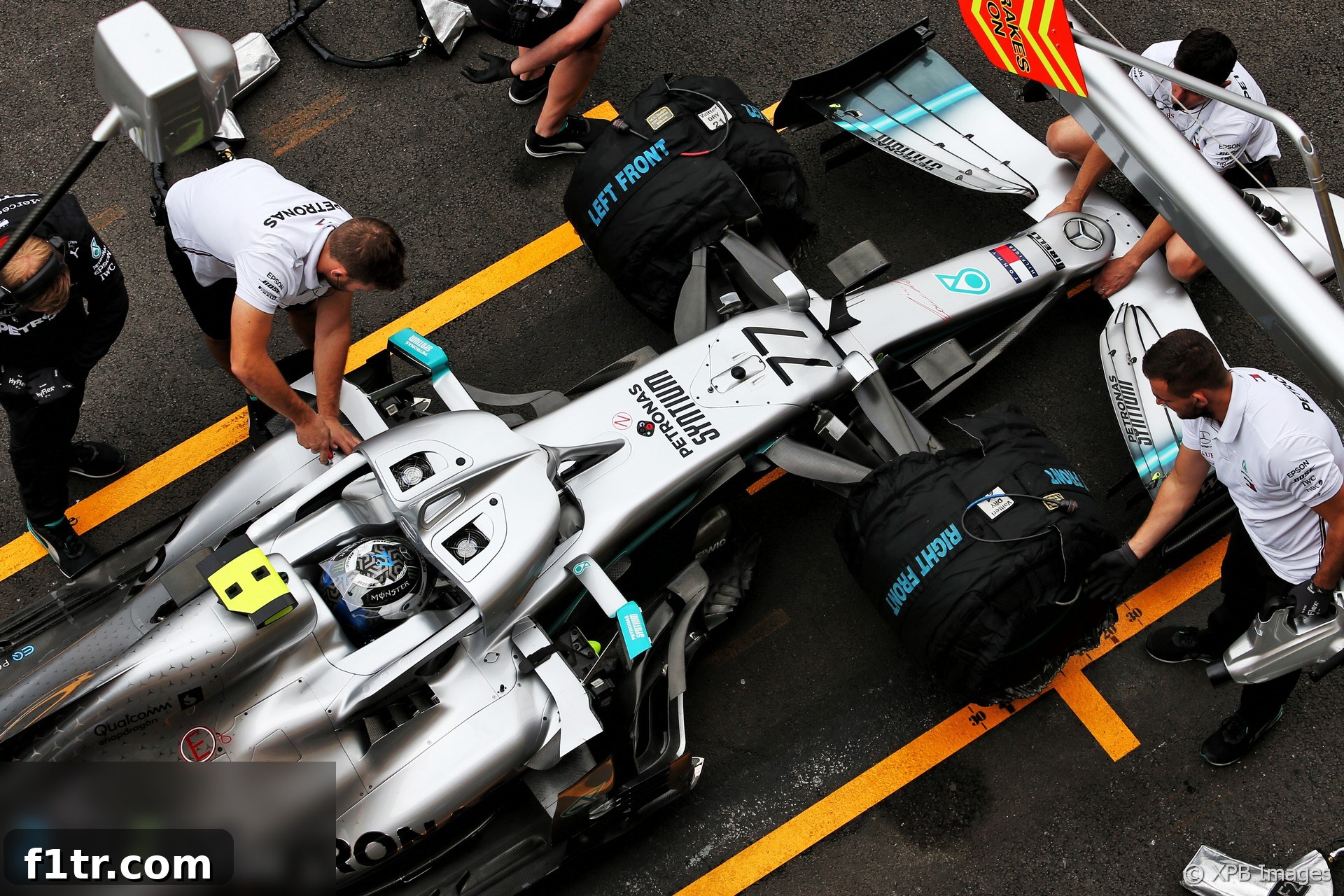
Valtteri Bottas Faces Back-of-Grid Start in Abu Dhabi After Power Unit Change
Valtteri Bottas, the formidable Mercedes driver, is poised for a challenging conclusion to the 2019 Formula 1 season. He is confirmed to start the highly anticipated Abu Dhabi Grand Prix from the very back of the grid. This significant grid penalty stems from an essential, albeit unwelcome, power unit change ahead of the final race weekend.
The decision to replace key components of his power unit comes on the heels of a problematic Brazilian Grand Prix. Bottas was forced to retire from the race at Interlagos after encountering a critical issue with his engine, denying him a strong finish and potentially impacting Mercedes’ strategy for the constructor’s championship, which they had already secured.
Mercedes-AMG Petronas Motorsport confirmed that Bottas’s car will be fitted with a new internal combustion engine (ICE), turbocharger (TC), and motor generator unit-heat (MGU-H) for the season finale at Yas Marina. While these new components are crucial for ensuring optimal performance and reliability, they push Bottas beyond the maximum number of power unit elements permitted under Formula 1 regulations for a single season. Consequently, the FIA mandates a grid penalty, which for exceeding multiple component limits, translates directly to a start from the back of the grid.
The regulations are strict and designed to control costs and prevent teams from constantly upgrading engines throughout the year. Each driver is allotted a certain number of power unit components – specifically three ICEs, TCs, and MGU-Hs; two MGU-Ks, energy stores (ES), and control electronics (CE) – for the entire 21-race season. Exceeding any of these allocations triggers a grid drop. The severity of the penalty increases with the number of components replaced, quickly leading to a full back-of-grid start for multiple new elements.
This penalty adds another layer of complexity to Bottas’s 2019 campaign, a season that saw him secure a career-best second place in the Drivers’ Championship behind his teammate, Lewis Hamilton. Despite a strong start to the year, including a dominant win in Australia, the latter half of his season has been marked by a mix of impressive performances and occasional setbacks, often related to reliability or strategic challenges. The power unit failure in Brazil was a particularly bitter pill, occurring as it did in a race that promised a strong points haul.
A Season of Power Unit Headaches for Mercedes-Powered Teams
Valtteri Bottas’s grid penalty in Abu Dhabi highlights a broader trend for Mercedes-powered cars throughout the 2019 season. Remarkably, with the exception of world champion Lewis Hamilton, every single driver using a Mercedes power unit has been forced to take grid penalties at some point during the year due to exceeding their allocated power unit component limits. This pattern raises questions about the long-term reliability of certain components within the Mercedes power unit architecture, or perhaps the aggressive usage strategies adopted by the customer teams.
The first Mercedes-powered driver to incur such a penalty was George Russell, the talented rookie at Williams, who took his grid drop at the French Grand Prix. Williams, operating with a notoriously difficult car throughout 2019, likely pushed their engines harder or faced specific reliability challenges that necessitated early changes. Following suit were the Racing Point drivers: Lance Stroll received a penalty at the Belgian Grand Prix, and his teammate Sergio Perez faced one at the Italian Grand Prix. Both penalties occurred in quick succession after the summer break, suggesting potential issues that emerged during that intense period of racing. Robert Kubica, Russell’s teammate at Williams, also took a power unit grid penalty at the Russian Grand Prix, further underscoring the challenges faced by the Williams team regarding engine longevity.
While Mercedes themselves secured both championships comfortably, these penalties for their customer teams, and now for Bottas, indicate that maintaining peak reliability across a demanding 21-race calendar with complex hybrid power units remains a significant challenge, even for the most dominant engine manufacturer in the hybrid era. Each component, from the internal combustion engine to the energy recovery systems, is under immense stress, operating at the very limits of engineering design. A single weak link can lead to costly grid penalties and compromise a driver’s race weekend.
For Bottas, starting from the back in Abu Dhabi presents a formidable task, but not an impossible one. The Yas Marina Circuit, while not known for abundant overtaking opportunities, has seen drivers make significant progress from lower grid positions in the past. Mercedes’ superior car performance, coupled with Bottas’s skill, means he will undoubtedly be aiming to climb through the field rapidly. The team’s strategy will be crucial, potentially involving aggressive tire management and capitalizing on any safety car periods or incidents.
Engine Components Used So Far: A Season-Long Reliability Challenge
The intricate dance between performance and durability in Formula 1’s hybrid era is starkly illustrated by the component usage figures across the grid. Each team and driver meticulously manages their power unit elements, aiming to extract maximum performance without incurring grid penalties. The table below provides a snapshot of how many components each driver had used up to the point of Bottas’s latest change, offering valuable insight into the reliability landscapes of different engine manufacturers throughout the 2019 season.
| No. | Car | Engine | Driver | ICE | TC | MGU-H | MGU-K | ES | CE |
|---|---|---|---|---|---|---|---|---|---|
| 26 | Toro Rosso | Honda | Daniil Kvyat | 7 | 7 | 7 | 6 | 3 | 3 |
| 10 | Toro Rosso | Honda | Pierre Gasly | 7 | 5 | 5 | 5 | 3 | 3 |
| 55 | McLaren | Renault | Carlos Sainz Jnr | 6 | 5 | 5 | 5 | 5 | 4 |
| 27 | Renault | Renault | Nico Hulkenberg | 6 | 4 | 4 | 3 | 2 | 3 |
| 23 | Red Bull | Honda | Alexander Albon | 5 | 5 | 5 | 4 | 3 | 3 |
| 11 | Racing Point | Mercedes | Sergio Perez | 5 | 5 | 5 | 4 | 2 | 2 |
| 3 | Renault | Renault | Daniel Ricciardo | 5 | 4 | 4 | 4 | 3 | 4 |
| 33 | Red Bull | Honda | Max Verstappen | 5 | 4 | 4 | 3 | 3 | 3 |
| 4 | McLaren | Renault | Lando Norris | 4 | 4 | 4 | 4 | 4 | 4 |
| 99 | Alfa Romeo | Ferrari | Antonio Giovinazzi | 4 | 4 | 4 | 2 | 2 | 4 |
| 31 | Williams | Mercedes | Robert Kubica | 4 | 4 | 4 | 2 | 2 | 2 |
| 77 | Mercedes | Mercedes | Valtteri Bottas | 4 | 4 | 4 | 2 | 2 | 2 |
| 18 | Racing Point | Mercedes | Lance Stroll | 4 | 4 | 4 | 2 | 1 | 1 |
| 7 | Alfa Romeo | Ferrari | Kimi Raikkonen | 4 | 3 | 3 | 2 | 2 | 3 |
| 16 | Ferrari | Ferrari | Charles Leclerc | 4 | 3 | 3 | 2 | 2 | 2 |
| 63 | Williams | Mercedes | George Russell | 3 | 3 | 3 | 2 | 3 | 3 |
| 20 | Haas | Ferrari | Kevin Magnussen | 3 | 3 | 3 | 2 | 2 | 3 |
| 5 | Ferrari | Ferrari | Sebastian Vettel | 3 | 3 | 3 | 2 | 2 | 3 |
| 8 | Haas | Ferrari | Romain Grosjean | 3 | 3 | 3 | 2 | 2 | 2 |
| 44 | Mercedes | Mercedes | Lewis Hamilton | 3 | 3 | 3 | 2 | 2 | 2 |
An analysis of the component usage reveals interesting trends. Drivers utilizing Honda power units, particularly Daniil Kvyat and Pierre Gasly at Toro Rosso, stand out for having used the highest number of ICEs, TCs, and MGU-Hs. Kvyat’s tally of seven for each of these three primary components is significantly above the permitted three, explaining multiple grid penalties throughout his season. This suggests that while Honda made significant strides in performance during 2019, reliability, especially with their customer team, was a persistent challenge requiring frequent component swaps.
Renault-powered McLaren and Renault factory team drivers also show relatively high component usage for some elements, particularly Carlos Sainz Jr. who used six ICEs and five of the other main components. This indicates that Renault too faced its share of reliability hurdles, necessitating extra parts to ensure their cars could finish races. The Ferrari-powered cars, including the factory team, Alfa Romeo, and Haas, generally show lower usage of ICE, TC, and MGU-H (mostly three or four), suggesting a more robust design in these areas, although some drivers like Giovinazzi and Raikkonen show higher usage of CE.
Mercedes-powered teams demonstrate a mixed bag. While Hamilton managed to stay within the limits for ICE, TC, and MGU-H (using three of each), his teammate Bottas now moves beyond those numbers. The customer Mercedes teams like Racing Point and Williams, as noted, have accumulated several penalties due to needing extra components, putting them in the mid-range for component usage. This data underscores that while a championship-winning engine provides immense performance, managing its reliability across various chassis designs and driving styles, under the intense pressures of a Formula 1 season, is an ongoing battle for all manufacturers.
The Abu Dhabi Grand Prix serves as the final proving ground for these highly complex machines, where every component’s endurance is tested one last time. For Valtteri Bottas, it’s an opportunity to demonstrate his ability to overcome adversity and finish the season on a high note, regardless of his starting position. His performance from the back of the grid will be a testament to both his skill and the raw pace of his Mercedes W10.
2019 F1 season
- Crying in the Melbourne car park at 2019 grand prix was my career low – Ocon
- McLaren Racing reports reduced £71 million loss in 2019
- Kvyat: Hockenheim podium last year was “my biggest achievement” so far
- How the FIA’s new encrypted fuel flow meter targets Ferrari’s suspected ‘aliasing’ trick
- “He smashed my office door”: 23 must-see moments from ‘Drive to Survive’ season two
Browse all 2019 F1 season articles