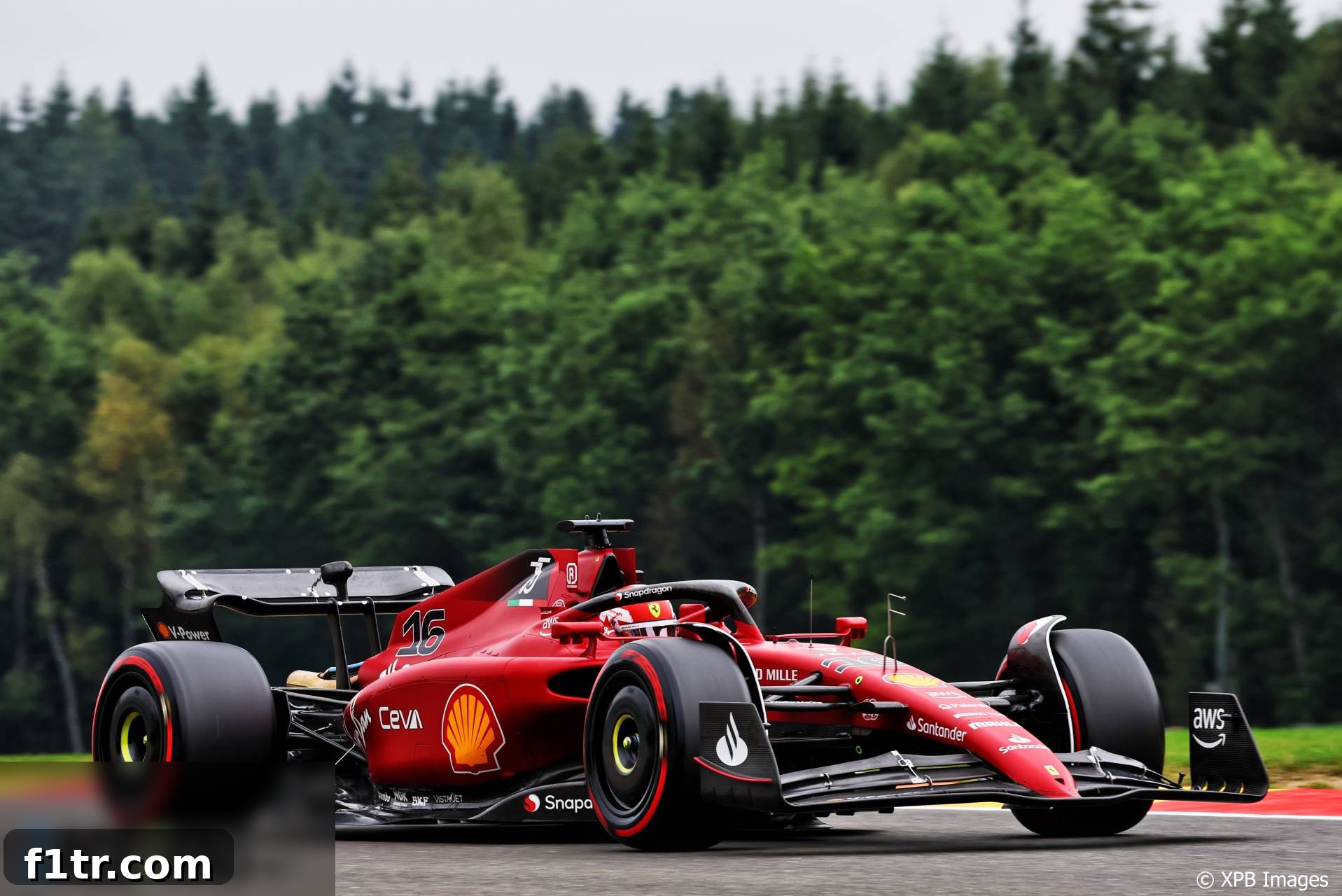
The exhilarating world of Formula 1 is often a blend of speed, strategy, and intricate regulations. At the 2022 Belgian Grand Prix, the spotlight wasn’t just on the high-speed action at Spa-Francorchamps but also on a significant clarification from the stewards regarding grid penalties, particularly impacting championship contender Charles Leclerc. A series of accumulated infringements ultimately led to Leclerc, along with several other prominent drivers, being relegated to the very back of the starting grid, sparking discussions about the interpretation of F1’s complex rulebook.
Navigating Formula 1’s Grid Penalty System: A Comprehensive Overview
Formula 1’s regulations concerning power unit and gearbox components are designed to control costs, promote reliability, and introduce a strategic element to engine management throughout a grueling season. Each driver is allocated a limited number of specific power unit components – including the Internal Combustion Engine (ICE), Motor Generator Unit-Kinetic (MGU-K), Motor Generator Unit-Heat (MGU-H), Turbocharger (TC), Energy Store (ES), and Control Electronics (CE) – as well as gearboxes, for the entire championship. Exceeding these allocations triggers grid penalties, a consequence teams meticulously try to avoid.
Typically, the first time a driver uses an extra component beyond their allocation, they incur a 10-place grid penalty. Subsequent new components of the same type often result in a 5-place penalty. However, a crucial aspect of Article 28.3 of the FIA Formula One Sporting Regulations states that any driver who accumulates “a penalty exceeding 15 grid places” will be compelled to “start the race from the back of the starting grid.” This rule aims to prevent absurdly long individual grid drops by simply grouping severe offenders together at the rear.
Advert | Become a Supporter & go ad-free
The 2022 Belgian Grand Prix saw an unusual number of top drivers exceeding their component limits, a testament to the high demands placed on modern F1 machinery and the strategic choices teams make at specific circuits. Six drivers in total – Charles Leclerc, Max Verstappen, Lando Norris, Esteban Ocon, Mick Schumacher, and Zhou Guanyu – found themselves facing the severe back-of-the-grid penalty due to accumulating more than 15 places of grid penalties. Each of these drivers had breached their allowance for various power unit components or gearboxes, triggering the cumulative threshold that dictates a back-of-the-grid start.
The Charles Leclerc Controversy: A Deep Dive into Ferrari’s Component Changes
Charles Leclerc’s situation at Spa was particularly complex and drew significant attention, especially given his tight championship battle with Max Verstappen. Ferrari, perhaps eyeing the long straights of Spa as an ideal place to take engine penalties given the potential for overtaking, made several strategic component changes to Leclerc’s car.
Initially, on Friday, Ferrari fitted a fifth MGU-K and a third energy store to Leclerc’s car for the first practice session. These component changes alone resulted in a substantial 15-place grid penalty. However, the saga didn’t end there. Following this initial penalty, Ferrari then opted to replace his control electronics with a new third unit, once again exceeding his allocation for the season. This additional change garnered another five-place grid penalty, bringing Leclerc’s total accumulated penalties to 20 grid places.
What caused the initial confusion was that despite accumulating a total of 20 grid place penalties, the race stewards did not immediately rule that Leclerc would start from the back of the grid. This ambiguity led to speculation and concern, particularly as it meant Leclerc might potentially start the race ahead of his primary championship rival, Max Verstappen, who was also facing a back-of-the-grid start. The championship implications of such a decision were substantial, as any advantage for Leclerc in starting position could have significantly altered the race outcome and title fight dynamics.
Stewards’ Clarification: Interpreting Cumulative Penalties
Addressing the ambiguity, the stewards issued a crucial clarification today, ruling that Charles Leclerc had indeed earned the full penalty of starting from the back of the grid, aligning his fate with Verstappen, Norris, Ocon, Schumacher, and Zhou. Their decision hinged on a specific interpretation of Article 28.3 of the FIA Formula One Sporting Regulations.
The stewards clarified that the regulation should consider the total value of grid places penalised across multiple actions over a race weekend, rather than just individual instances. They stated, “As car 16 [Leclerc] has accumulated 20 grid place penalties (documents 14 and 31) for this competition under article 28.3 of the FIA Formula One Sporting Regulations, this is in excess of the 15 permitted under the regulation and therefore the car will be required to start the race from the back of the starting grid.”
Advert | Become a RaceFans supporter andgo ad-free
The reasoning behind their interpretation was further elaborated. While acknowledging that the wording of the third paragraph of Article 28.3 uses the singular “a penalty” – “if a driver incurs a penalty exceeding 15 grid places, [they] will be required to start the race from the back of the starting grid” – they highlighted that neither of Leclerc’s individual penalty documents (one for 15 places, one for 5 places) exceeded 15 places on its own. This presented a potential loophole for a singular interpretation.
However, the stewards emphasized that the very first paragraph of the regulation clearly states that “penalties will be applied according the following table and will be cumulative (in each competition).” This crucial detail underpinned their decision. They argued that penalties, especially those related to power unit usage, are designed to accumulate over the course of a race weekend. To support this logic, they drew parallels to other instances in the regulations where penalties accumulate over time, such as super license penalty points, which build up until they trigger a separate decision.
The stewards explicitly stated, “It is important to note that the ‘start the race from the back of the starting grid’ penalty is fully embedded in article 28 (power unit usage), was specifically introduced in response to nonsensically high grid penalties from PU [power unit] changes, and has never been used to accumulate grid penalties imposed from other articles of the regulations. It should be read holistically as part of Article 28.3 and does not refer to other articles.” This holistic approach ensures the rule’s original intent – preventing individual drivers from facing 50+ place penalties – is maintained.
This clarification was particularly significant as it marked the first time this precise situation had arisen since the rule’s introduction in 2018. The stewards’ detailed explanation established a crucial precedent for future interpretations of cumulative grid penalties, ensuring consistency and fairness in the application of the regulations.
Broader Impact: Other Drivers and the Grid Shuffle
The 2022 Belgian Grand Prix saw a significant reshuffling of the grid even before qualifying, a direct consequence of numerous teams making strategic component changes. Beyond Charles Leclerc, five other drivers also faced the back-of-the-grid penalty: Max Verstappen, Lando Norris, Esteban Ocon, Mick Schumacher, and Zhou Guanyu. Each of these drivers had similarly exceeded their respective allocations, primarily for power unit components, accumulating penalties well over the 15-place threshold.
Interestingly, Valtteri Bottas presented a unique case that further illuminated the nuances of the regulations. Bottas was also penalized 20 places on the grid following qualifying – 15 places for exceeding power unit components and a further five places for exceeding gearbox allocations. However, crucially, Bottas was *not* sent to the very back of the grid. The reason? His *power unit* penalties alone did not reach the 15-place threshold. The “back of the starting grid” penalty is specifically tied to penalties incurred under Article 28.3 relating to power unit usage, not a combined total of all penalties (e.g., gearbox penalties from other sections of the regulations). Therefore, Bottas started ahead of the six drivers who were fully relegated to the back, showcasing the precise application of the rule.
Advert | Become a RaceFans supporter andgo ad-free
Ferrari, in a final strategic move on Sunday, fitted even further fresh power unit parts to Leclerc’s car. While these additional changes would have been sufficient to trigger yet another ‘back of the grid’ penalty on their own if he hadn’t already been there, they primarily served to ensure he had the freshest possible components for the race, knowing he would start from the rear regardless.
Strategic Implications and Future Outlook for F1 Penalties
The sheer number of grid penalties at the Belgian Grand Prix highlights the delicate balance teams must strike between performance, reliability, and managing component lifespans within the restrictive FIA regulations. Circuits like Spa, with its long straights and high-speed sections, often become strategic locations for teams to introduce new power unit components and absorb penalties, gambling on their ability to overtake. The stewards’ clarification on cumulative penalties reinforces the FIA’s commitment to a consistent and clear application of these rules, preventing any potential loopholes that could undermine the intended deterrent effect.
This precedent-setting decision ensures that teams cannot strategically split penalties across multiple infringements to avoid the most severe back-of-the-grid consequence. Such clarity is vital for maintaining the integrity of the sport and ensuring fair competition, especially in closely contested championship battles. As Formula 1 continues to evolve, with new engine regulations on the horizon, the meticulous interpretation and consistent enforcement of rules will remain paramount.
Advert | Become a RaceFans supporter andgo ad-free
More from the 2022 Belgian Grand Prix
- How many victory chances did Hamilton have in his first winless F1 season?
- Sainz doesn’t believe Red Bull’s huge Spa advantage is here to stay
- Alonso: Hamilton’s nationality explains “huge” media reaction to radio comment
- “Big question marks” remain over policing of Formula 1’s budget cap – Ferrari
- Williams: Points-scoring Belgian GP pace not just due to straight line speed
Browse all 2022 Belgian Grand Prix articles