Formula 1, a sport synonymous with blistering speed and precision, faces a growing paradox during its crucial qualifying sessions: dangerously slow out-laps that are creating alarming closing speed differences between cars. This emerging safety concern has prompted strong warnings from drivers, who are increasingly vocal about the perilous conditions created by managing hypersensitive tyres in the quest for optimal performance.
The issue came to a head in the sweltering conditions at the Circuit de Catalunya, where drivers were forced to treat their soft compound tyres with extreme delicacy during their out-laps. The objective is to ensure these high-performance tyres are in their precise operating window for maximum grip and longevity over a single qualifying run. However, achieving this delicate balance often means significantly reducing speed, creating a hazardous environment on track.
The Perilous Balancing Act: Why Drivers Go So Slow
The primary reason behind these glacial out-laps lies in the inherent characteristics of modern F1 tyres. Designed for peak performance over a very narrow temperature window, these soft compounds demand careful thermal management. Push them too hard on the out-lap, and they overheat, degrading performance for the actual flying lap. Go too slow, and they don’t reach optimal temperature, leading to a lack of grip. In hot conditions like those experienced in Barcelona, this balancing act becomes even more critical, particularly for the final, often crucial, sector of the lap.
Adding to this complexity is the drivers’ desperate need to find “several seconds of clear space” to start their hot laps. Running in the turbulent air, or “dirty air,” of another car can severely compromise aerodynamic performance, costing vital tenths of a second. This combination of tyre sensitivity and the search for clean air frequently results in long queues of slow-moving, and sometimes even stationary, traffic at the end of the lap, transforming a high-speed racing circuit into a congested motorway.
Drivers Speak Out: A Unified Call for Change
The frustration and safety concerns among the F1 paddock are palpable. Several prominent drivers have openly shared their experiences and proposed potential solutions to mitigate the risks.
Daniel Ricciardo: “Literally in Neutral”
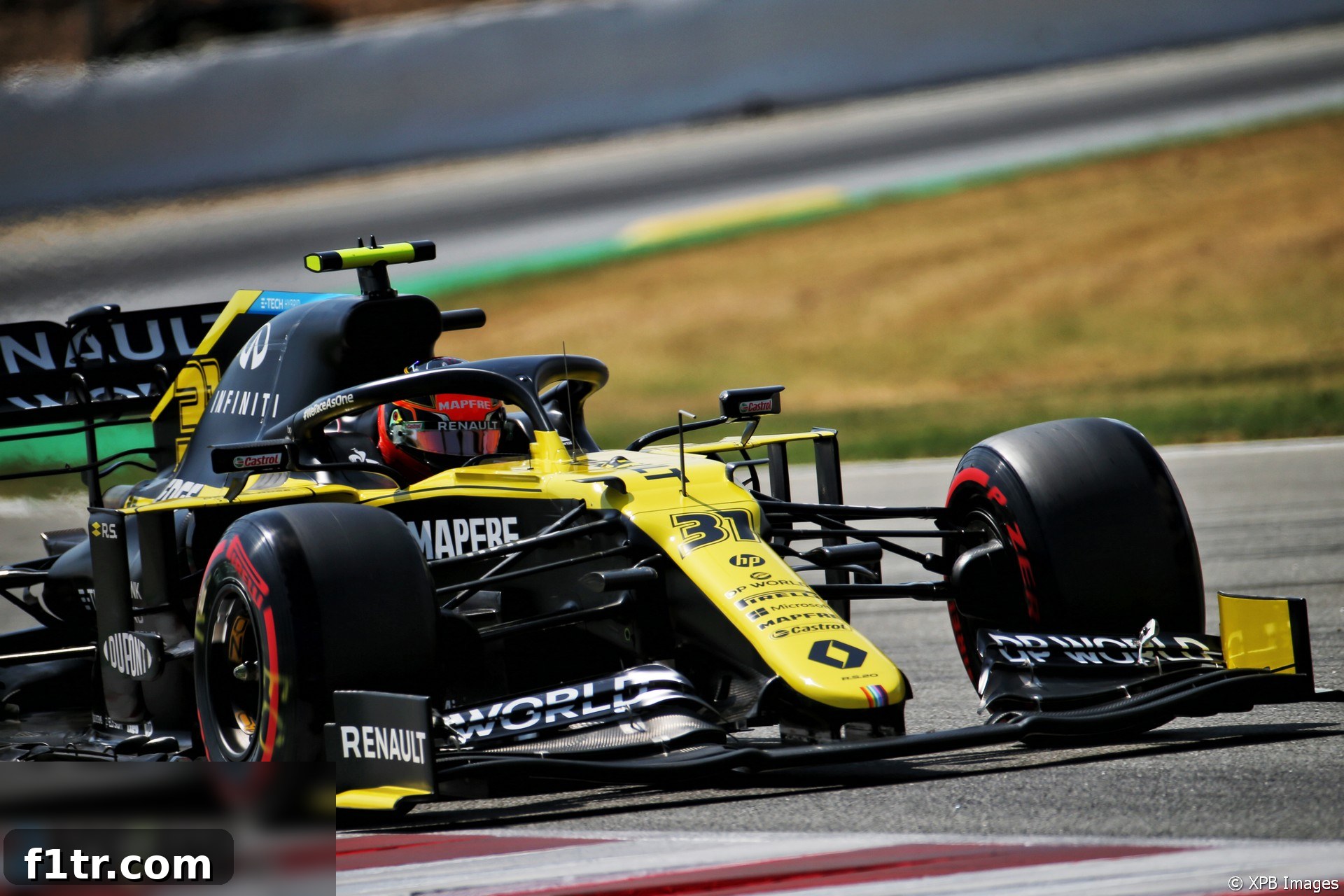
Renault driver Daniel Ricciardo painted a vivid picture of the qualifying chaos. “On my last run in Q2 there was all of us backed up into the last chicane,” he recounted. “I was just literally in neutral, rolling down the hill before the last chicane, trying to get some space.” His comments underscore the extreme measures drivers are taking to manage their tyres and find a clean gap. Ricciardo emphatically stated, “The reality is, it’s the tyres. They’re so sensitive and if you push them too much on an out-lap, they don’t last the whole lap.”
He further elaborated on the strategy: “Everyone’s trying to figure out the best way to get them cool and prepared for the lap. In these conditions with this heat and with the third sector being so critical on lap time, that’s where your biggest gains can be just on pure grip. Everyone’s trying to just keep the tyres good for the last sector so that’s why we’re protecting them on that out-lap or on a cool-down lap.” While acknowledging the necessity, Ricciardo expressed the collective sentiment of drivers: “We don’t want to be doing that, of course, it’s not fun when another car comes flying past you or you’re always pulling off line and getting marbles on your tyres.” The danger arises from the enormous speed differentials, where a car on a slow out-lap might be doing 50 km/h while another on a hot lap or an aggressive out-lap approaches at over 250 km/h.
Esteban Ocon: A Call for Maximum Out-Lap Times
Ricciardo’s teammate, Esteban Ocon, took a firmer stance, suggesting that Formula 1 should seriously consider introducing a maximum lap time for out-laps. This measure, he believes, would prevent drivers from going excessively slow and eliminate the hazardous queues. “It’s not really acceptable to have a queue of cars,” Ocon asserted. “If there is someone coming up at race speed it can be dangerous.”
Ocon highlighted the severity of the problem by noting the significant drop in speed compared to previous years. “This has been the trend; in hot conditions we are a minute slower in a cool-down lap or to prep the lap. It’s very, very slow. So I would say we would need to limit it, that would be a good thing.” He even described a situation where he had to come to a complete stop on the track during qualifying. “To start my last lap, I was basically clutch in and I was stopped, I was literally doing zero kph in the middle of the line. That’s the state where I was. It’s the first time that’s happened to me. In ’16, ’17, ’18, I’ve never saw something like that. So it’s very, very extreme nowadays.” This anecdote powerfully illustrates the unprecedented and dangerous nature of the current situation, where drivers are effectively bringing their multi-million dollar machines to a standstill on a live racetrack.
Alexander Albon: The Failure of “Gentleman’s Agreements” and Tire Solutions
Alexander Albon, driving for Red Bull at the time, also weighed in, highlighting the breakdown of an unwritten rule among drivers. “A ‘gentleman’s agreement’ between drivers to not overtake each other before starting a qualifying lap is not working,” Albon observed. This agreement, designed to maintain order and safety, is increasingly being ignored as drivers jostle for track position and clear air. “I didn’t want to do the same thing as Hungary, basically. I was like, if it comes to it, I’m going to overtake these cars in front,” he admitted. He also pointed out the risky manoeuvres he witnessed: “But I was watching and some guys were overtaking right into the last corner, which looked a bit sketchy.” Such last-minute overtaking attempts dramatically increase the risk of collisions.
Albon, much like his peers, believes the core of the problem lies with the tyres. He suggested that a more forgiving tyre design could be the ultimate solution. “We have all these tyre blanket rules now and just the way the tyres are, we have to drive so slowly on an out-lap. Our cool-down laps are insanely slow, it just creates issues.” He elaborated, “If we had a more forgiving tyre where you could just go out and push and not worry so much about being in the perfect one, two degrees of the operating window then you wouldn’t have these issues.” The current restrictions on tyre blankets and the narrow operating windows force drivers into these extreme thermal management strategies on track, directly contributing to the problem.
The Bigger Picture: Tire Design, Regulations, and Safety
The concerns raised by Ricciardo, Ocon, and Albon collectively paint a clear picture: the current F1 qualifying format, combined with the characteristics of the Pirelli tyres and associated regulations, is creating an unacceptable safety risk. The “tyre blanket rules” mentioned by Albon, which limit the temperature to which tyres can be pre-heated, play a significant role. This forces drivers to spend more time heating their tyres on track, extending the out-lap and exacerbating the traffic problem. Furthermore, the relentless pursuit of performance and the impact of turbulent air mean that finding a clean gap is paramount, leading to the deliberate creation of large time gaps and the subsequent backing up of cars.
The proposals put forward by the drivers offer concrete avenues for the sport to explore. A maximum out-lap time, as suggested by Ocon, could be implemented by the FIA, penalising drivers who exceed a predefined slow-lap threshold. This would force a minimum pace, reducing the drastic speed differences. Alternatively, Albon’s suggestion for a “more forgiving tyre” points to a fundamental change in tyre design, perhaps with a wider operating window that is less susceptible to temperature fluctuations. This would allow drivers to push harder on their out-laps without compromising their flying laps, thereby naturally increasing speeds and reducing congestion.
Ultimately, addressing this issue will require a collaborative effort between the FIA, Formula 1 management, and the tyre supplier, Pirelli. The inherent thrill of Formula 1 qualifying should never come at the expense of driver safety. Finding a solution that balances the competitive demands of performance with the imperative of safety is crucial for the integrity and future of the sport.
2020 F1 season
- Grosjean to make F1 test return tomorrow for first time since Bahrain horror crash
- Pictures: Wrecked chassis from Grosjean’s Bahrain fireball crash to go on display
- Bottas vs Rosberg: Hamilton’s Mercedes team mates compared after 78 races each
- F1 revenues fell by $877 million in Covid-struck 2020 season
- Hamilton and Mercedes finally announce new deal for 2021 season
Browse all 2020 F1 season articles