Verstappen Optimistic: Red Bull Unlocks Bahrain GP Puzzle Ahead of Chinese GP
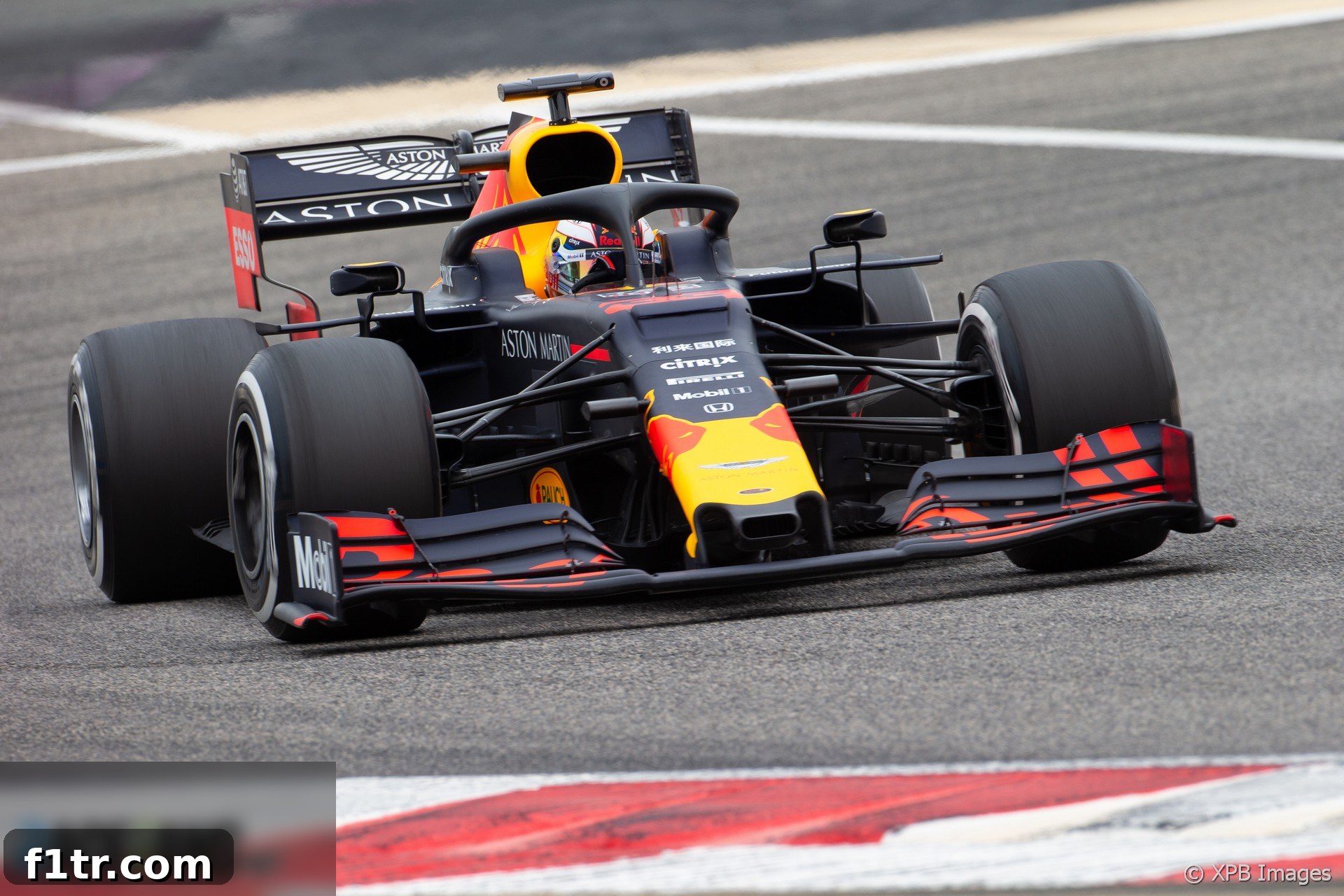
Following a challenging performance at the 2019 Bahrain Grand Prix, Max Verstappen expressed a renewed sense of confidence, believing that Red Bull Racing has made significant strides in deciphering the issues that plagued their competitiveness. His comments came after a crucial test session held at the Sakhir circuit, a venue that had delivered a sobering reality check just days prior.
Despite securing a fourth-place finish in Sunday’s race, Verstappen’s performance was overshadowed by a substantial gap to the leaders. At one stage, he trailed the race frontrunner by as much as 44 seconds before the deployment of a Safety Car compressed the field. Such a significant deficit was a clear indicator that the team was far from its optimal setup and required immediate investigation. The subsequent Tuesday test proved to be an invaluable opportunity for Red Bull to delve deep into their car’s characteristics and address the underlying problems.
Productive Test Session Yields Crucial Insights
Even with intermittent rain affecting the track conditions, Verstappen remained positive about the day’s work. “It’s been a bit rainy,” Verstappen noted after clocking the quickest time of the day, “but in general I think we did a good amount of laps to understand what went wrong on the weekend.” The sentiment among the team was one of productive learning rather than frustration over the weather. Gathering comprehensive data and feedback was paramount, and despite the elements, Red Bull achieved their objectives.
The Dutchman further elaborated on the benefits of dedicated testing. “We learned a lot already from it so in that way I think it’s very positive. We don’t have that many days anyway to really understand the car and during a weekend it all goes that quick. You’re just always doing one-and-a-half-hour sessions, it’s not amazing. To have a day like this was very helpful.” This highlights the stark contrast between a race weekend’s constrained schedule, where focus shifts rapidly between practice, qualifying, and race simulations, and a dedicated test day, which allows for systematic experimentation and deeper analysis of car behaviour and setup changes.
Unpacking the Bahrain Struggles: A Setup Misstep
Verstappen was candid in his assessment of the Bahrain Grand Prix performance, attributing it to fundamental errors in their approach. “It was clear the team did something wrong during the weekend,” he stated, emphasizing the direct link between their preparation and the lack of pace. This admission points towards a critical area in Formula 1 where even the slightest misjudgment in car setup can have profound implications for overall performance, affecting everything from aerodynamic balance and tire degradation to driver confidence and lap times.
When pressed on his expectations for the upcoming Chinese Grand Prix, Verstappen’s response was indicative of his belief in the team’s ability to rebound. “Well it cannot be worse than what we showed here,” he asserted, a clear declaration of the team’s determination to rectify their issues. He pinpointed the root cause: “We made some mistakes I think in terms of set-up.” This “mistake” likely encompassed a range of factors, from wing angles and suspension settings to differential configurations, all of which contribute to how the car interacts with the track and manages its tyres. The Sakhir circuit, with its challenging mix of high-speed sections and heavy braking zones, demands a very specific and finely tuned setup, which Red Bull evidently missed.
Comparing Performances: Australia vs. Bahrain
To further contextualize Red Bull’s performance fluctuations, Verstappen drew a comparison to the season-opening Australian Grand Prix, where the team had shown more promising pace. “I think if you look back to Australia we were actually quite happy,” he reflected. While he finished 20 seconds behind race winner Valtteri Bottas in Melbourne, Verstappen felt the underlying potential of the car was significantly higher. “I mean of course it was still 20 seconds to Valtteri but in that race I couldn’t go and push like I wanted to because basically I was held up by cars so I think we can do a lot better than what we’ve showed so far.”
This comparison is crucial. The Albert Park circuit in Australia is notoriously unique, often serving as an outlier in terms of car performance due to its semi-street circuit nature. However, for Verstappen, the feeling within the car was better, suggesting that their baseline setup was more robust. The frustration of being “held up by cars” implies that his true pace was masked, and with clearer track conditions, he believed he could have extracted more from the RB15. The Bahrain outcome, therefore, represented a regression that needed immediate and decisive action, which the test session seemingly provided.
The Importance of In-Season Development for Red Bull
For Red Bull Racing, a team with championship aspirations and a new engine partnership with Honda for the 2019 season, understanding and rectifying performance issues quickly is paramount. Early season races are critical for establishing momentum and gathering data that informs the entire development trajectory. A single test day, especially after a disappointing race, provides an unparalleled opportunity to isolate variables, conduct extensive aerodynamic mapping, and experiment with mechanical setups in a controlled environment, free from the pressures of competitive sessions.
The feedback provided by a driver of Verstappen’s caliber is instrumental in this process. His nuanced understanding of the car’s handling characteristics, how it reacts to different settings, and its interaction with the tyres, guides the engineers in their analysis. This synergy between driver feel and telemetry data is the bedrock of Formula 1 development, enabling teams to pinpoint subtle deficiencies that can cost precious tenths of a second per lap over a race distance.
Looking Ahead: The Chinese Grand Prix Challenge
The focus now firmly shifts to the Chinese Grand Prix, the third race on the 2019 calendar. The Shanghai International Circuit presents a different set of challenges with its long straights, sweeping corners, and a unique snail-like Turn 1 and 2 complex. Red Bull will be keen to demonstrate that the lessons learned in Bahrain have been effectively translated into tangible improvements.
Verstappen’s conviction that their performance “cannot be worse” serves as a powerful motivator for the team. It implies a deep dive into the data, a clear identification of their errors, and a planned course of action to ensure that the RB15 performs closer to its full potential. The competitive landscape of Formula 1 is unforgiving, and every point gained or lost in the early stages can prove decisive in the championship battle. Therefore, a strong showing in China is not just about redemption for Bahrain but about solidifying Red Bull’s position as a genuine contender.
The path to consistent success in Formula 1 is paved with continuous learning and adaptation. Red Bull’s swift response to their Bahrain struggles, epitomized by the productive test session and Verstappen’s renewed optimism, underscores their commitment to challenging for top honours. With crucial insights gained and a clear direction for improvement, the team heads to China with the belief that they can turn their recent setback into a springboard for future triumphs.
2019 F1 season Related Articles
- Crying in the Melbourne car park at 2019 grand prix was my career low – Ocon
- McLaren Racing reports reduced £71 million loss in 2019
- Kvyat: Hockenheim podium last year was “my biggest achievement” so far
- How the FIA’s new encrypted fuel flow meter targets Ferrari’s suspected ‘aliasing’ trick
- “He smashed my office door”: 23 must-see moments from ‘Drive to Survive’ season two
Browse all 2019 F1 season articles